ECO-WORTHY standard 10W review: inspect the delivered instructions before installing
At a Glance
KEY FEATURES
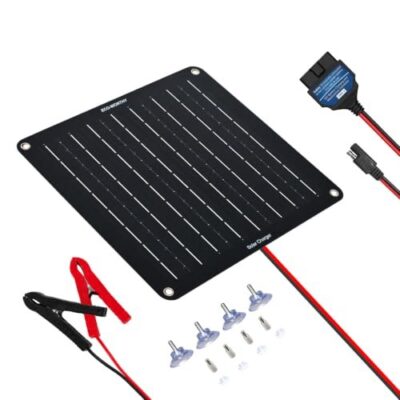
- Standard 10W connection offer, not the OBD package
- Current listing and older manual differ
- Wiring and environmental-label concerns remain explicit
CONS
- Weather-label discrepancy in supplied feedback
- Serious but unverified wiring allegation
- Standard offer must not inherit OBD-kit specifications
Price and availability subject to change
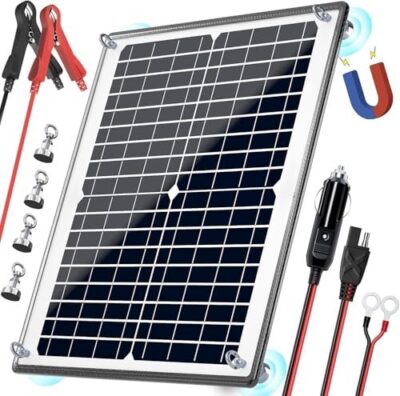
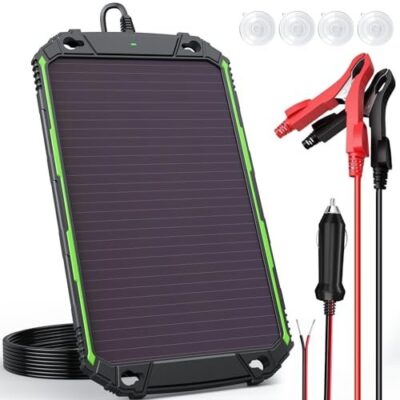
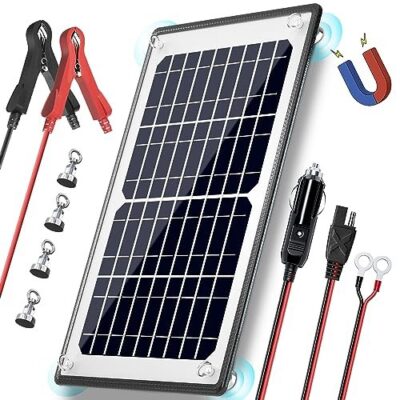
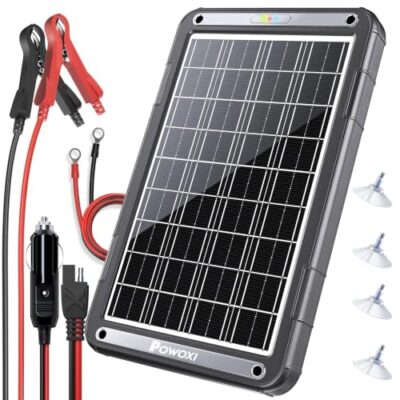
This standard-connection ECO-WORTHY 10W offer must be kept separate from the newer OBD package. The supplied feedback raises questions about indication, weather labeling and wiring condition that matter more than treating both as equivalent 10W products.
Research-based analysis of the selected offer and customer accounts; not our hands-on test.
The official download does not settle the current revision
| Source | What it establishes | What remains unresolved |
|---|---|---|
| Current exact-ASIN listing | Names L02EP10BB18V-1 and advertises an upgraded protection circuit. | The listing does not identify the matching manual revision. |
| Manufacturer’s 5W/10W portable manual | Describes clip and accessory-socket connections, not the OBD accessory. | It warns that reverse battery connection can damage the panel; the listing advertises reverse protection. |
| Buyer’s decision | Match the delivered label and instructions before installation. | Do not assume a protection claim permits a reversed connection. |
The current picture and connection text disagree
Ask for the instructions that match the label
The manufacturer’s download library provides a portable 5W/10W manual, but it does not resolve the protection discrepancy for the current offer. It also describes different dimensions from the catalog entry. Those differences may reflect revisions or catalog errors; neither source should silently overwrite the other.
A labeling disagreement is a reason to pause
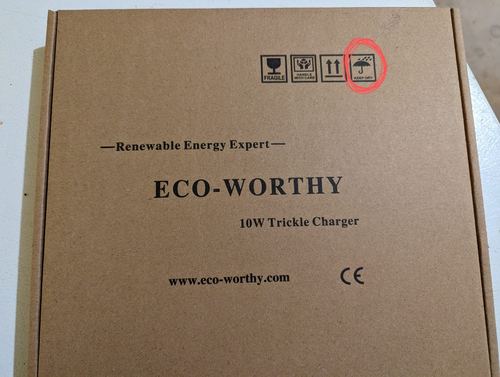
The customer photograph shows a keep-dry symbol on the 10W packaging. That does not establish the panel’s operating exposure limit or prove a mislabeled enclosure. Obtain the instructions for the delivered revision rather than treating the shipping mark as an electrical or weather certification.
No-start accounts do not isolate one cause
Another owner describes similar battery readings with and without the panel. A longer account was updated after receiving a replacement. These records cannot establish whether a particular new setup is underpowered, incorrectly connected or defective; they do argue against judging success from time in sunlight alone.
A serious wiring allegation must stay an allegation
Inspect the exact package
- Product label and corresponding instructions
- Documented exposure limits
- Connector and cable condition
- Supported battery connection and protection requirements
Pros & Cons Analysis
Based on documented specifications and owner feedback
Pros
- A distinct conventional connection option. This offer can be compared separately from OBD convenience, but only after the delivered instructions are reconciled.
Cons
- Protection documentation conflicts. The older manual’s reverse-connection warning is not reconciled by a newer marketing protection claim.
- A serious allegation cannot be ignored. One customer reports melted insulation and fire; the cause is unverified, not a population-wide finding.
- Weather labeling needs clarification. A keep-dry report does not resolve the exact revision’s permitted exposure.
Not an automatic substitute for the OBD version
Keep this standard 10W on hold for a firm recommendation until its current instructions and wiring arrangement are reconciled. A shared brand and wattage are not enough to transfer the newer kit's accessories, protection claims or owner outcomes.
Frequently Asked Questions
Can I assume the newer reverse-polarity claim makes mistakes harmless?
No. The manual/listing discrepancy remains unresolved, and neither permits intentionally reversed connections.
Does the 5W/10W download cover OBD charging?
It describes conventional clip and socket connections, not the separate OBD accessory.
Is the reported fire a proven product defect?
No cause or incidence is established. Damaged or overheating wiring is nevertheless a stop-use condition requiring qualified assessment.