Sun Energise 5W PRO review: convenience for lightly used equipment
At a Glance
KEY FEATURES
- 5W PRO small-maintenance candidate
- Recovered owner labels identify color, not wattage
- Shed-storage convenience is the relevant context
PROS
- Listing-associated shed account identifies a concrete alternative to a mains extension
CONS
- Recovered variant labels do not confirm 5W in individual accounts
- Reported casing damage has an uncertain cause
- Owner failure and replacement experiences do not establish service life
Price and availability subject to change
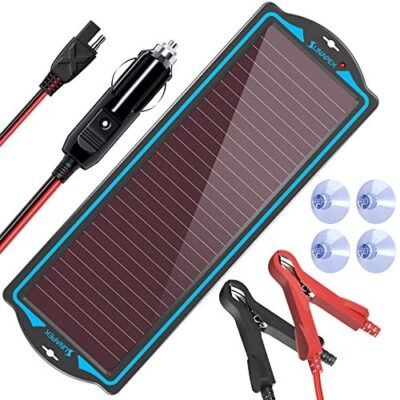
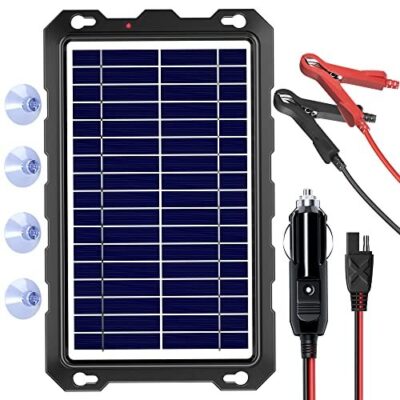
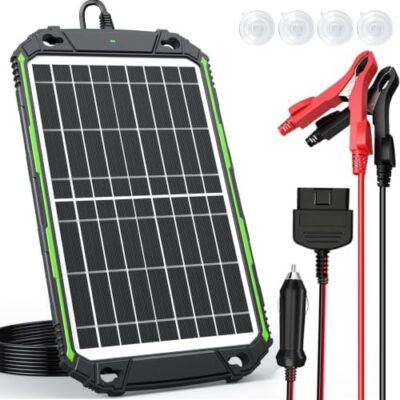
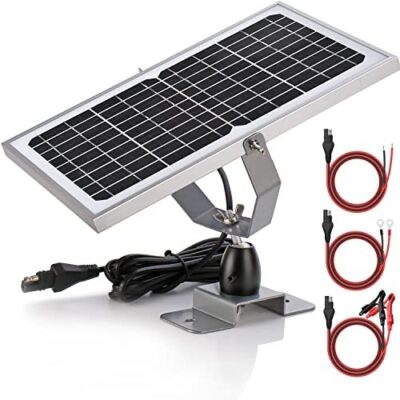
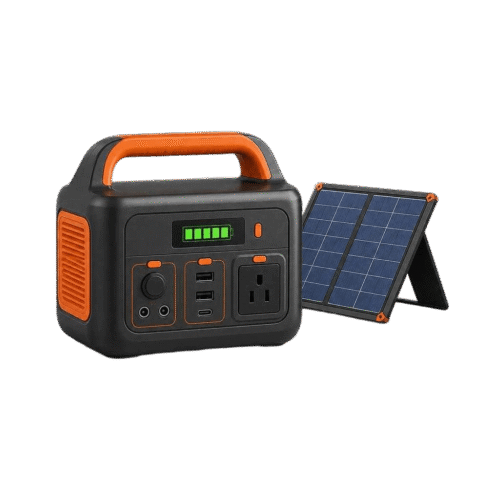
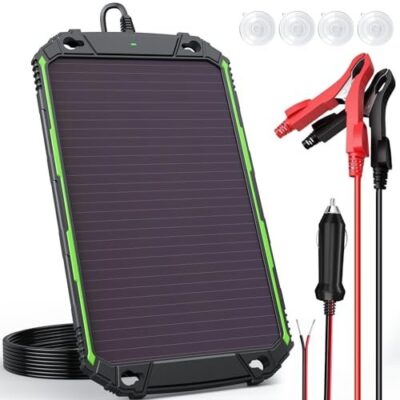
The 5W Sun Energise offer is a small-maintenance candidate for equipment stored away from mains power. Its recovered listing records include a tractor shed, a parked Prius and boat storage, but their variant labels identify only the color. These accounts help frame the ownership questions without establishing exact-5W performance.
Research-based analysis of the selected offer and customer accounts; not our hands-on test.
An unpowered shed is the clearest buying problem
A tractor owner wanted to stop running an extension cord across the lawn during storage. They describe a movable window-mounted solar arrangement and an indicator that simplified checks. That is a persuasive convenience case, but neither the text nor the retained color label confirms wattage. It cannot establish how much energy the current 5W offer supplies.
Do not diagnose this unit from a bare-lead voltage reading
Longer ownership changes the picture
| Account | What it adds to the decision |
|---|---|
| Prius stored for several weeks | A workable parking routine, followed by an uncertain-cause casing crack; not proof of approved hot-dashboard use. |
| Four-wheeler | An initial charging complaint followed by a reported successful replacement; support outcome is specific to that order. |
| Generator battery | A customer reports stopping after about thirteen months; no confirmed failure mechanism or population rate. |
Keep the energy claim small
A boat owner supplies a short-term voltage observation, while another describes boat-lift use. Neither establishes a daily watt-hour budget or recovery after operating a motor. For the current 5W offer, buy only after matching the battery requirements and a modest maintenance demand. A maintainer is not a substitute for a recovery charger.
Pros & Cons Analysis
Based on documented specifications and owner feedback
Pros
- An understandable away-from-mains use. The shed account explains the convenience of avoiding a recurring extension-cord setup, with limited wattage attribution.
Cons
- Exact-5W outcomes remain uncertain. The recovered color labels do not justify assigning a precise energy result to this offer.
- Longer ownership is mixed. The records include casing damage, a replacement and a generator-use failure; they do not establish typical life.
Buy the convenience only after confirming the small maintenance job
This offer belongs on a conditional shortlist for lightly used equipment where avoiding a mains lead is useful. Its available owner records are less precise about wattage than the explicit 10W accounts. If the choice depends on demonstrated 5W winter output or a documented charging profile, obtain that evidence before purchasing rather than borrowing another model’s results.
Frequently Asked Questions
Are the recovered customer records confirmed 5W tests?
No. They are associated with this listing, but their color labels and text do not securely establish wattage. Their role is ownership context, not an exact-5W benchmark.
Can a bare-lead voltage reading diagnose the unit?
Use the delivered diagnostic procedure. One owner reports that their unit needed a connected load, but this review does not verify a universal activation threshold.