POWOXI 15W MPPT Pro review: plan for access after permanent mounting
At a Glance
KEY FEATURES
- 15W MPPT Pro offer
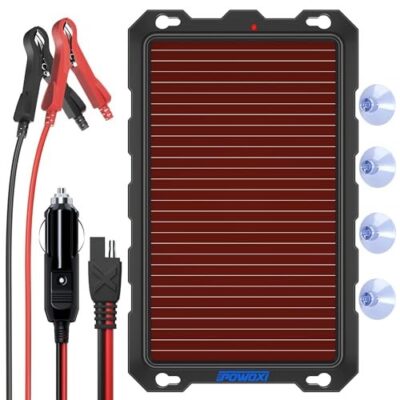
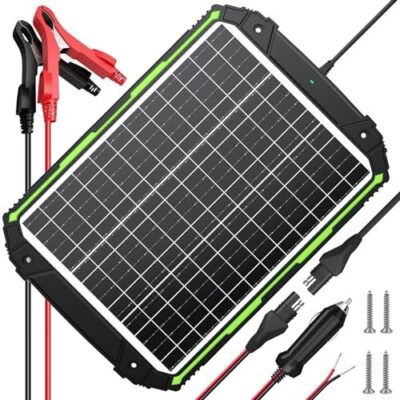
- Integrated indicator window
- Permanent mounting can complicate replacement
- Keep distinct from the 12W MPPT Pro
PROS
- Long-storage RV account provides a relevant use case
- A customer reports receiving replacement support
CONS
- Permanent mounting adds replacement effort
- Indicator behavior and moisture concerns
- No measured MPPT performance evidence
Price and availability subject to change
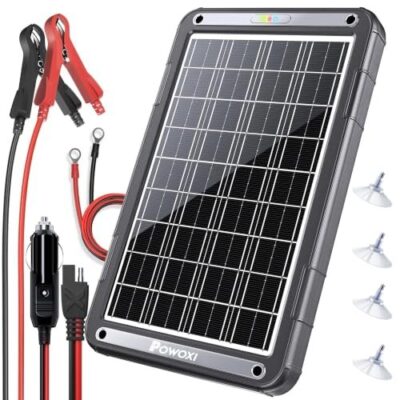
The POWOXI 15W MPPT Pro is most interesting for parked equipment without a nearby mains outlet. Its owner accounts make the mounting decision unusually important: a panel that is convenient to install must also remain easy to inspect, remove and replace.
Research-based analysis of the selected offer and customer accounts; not our hands-on test.
A trailer installation can outlast the charger
One owner mounted the panel on a trailer toolbox and later reported a dead battery and a nonfunctioning charger. They were particularly frustrated because installation had required drilling holes. The account does not establish a defect rate, but it identifies a real ownership cost: permanent mounting can make a failed accessory harder to replace.
Choose access, not just a sunny surface
Leave the status lights readable without dismantling the mount.
Consider how the panel can be removed using the manufacturer’s permitted mounting method.
Keep the intended connection inspectable; do not copy improvised tape mounts or extensions from reviews.
Long storage has both an encouraging and a cautionary account
An RV owner reports nearly two years of useful maintenance during remote storage. Other customers report charging failures after shorter periods. These experiences are not comparable tests: battery condition, parked loads and exposure differ. For seasonal storage, an initial successful start should not replace later battery checks.
The lights need a matching explanation
| Owner observation | What it does—and does not—tell a buyer |
|---|---|
| Several lights blinking together | An owner could not obtain an explanation. It is not a verified fault-code diagnosis. |
| Moisture visible around an indicator | A customer raised a concern about the viewing window. The report does not establish the current revision’s environmental rating. |
| Replacement after a failure | One customer reports receiving a replacement outside warranty. That is an individual remedy, not a promised policy. |
The MPPT label is not the evidence of useful maintenance
The selected offer is marketed as MPPT, but the supplied accounts do not measure tracking efficiency. A review labeled 15W that explicitly describes a 7W product is excluded from this assessment. Confirm the delivered charging instructions against the battery requirements rather than treating either the controller label or a sibling’s success as compatibility proof.
Pros & Cons Analysis
Based on documented specifications and owner feedback
Pros
- A practical inspection lesson. The trailer account makes access and removal part of ownership rather than treating installation as the final step.
Cons
- Drilled mounting can outlast the unit. A failed charger left the owner with a more awkward replacement job.
- Moisture observations need attention. An indicator-window complaint warrants inspection without establishing a universal sealing failure.
A storage accessory to mount for service, not forget
Consider this 15W offer when the battery is a documented match and the panel can stay accessible throughout storage. If the installation would be difficult to inspect or replace, resolve that before buying. The favorable RV account supports investigating the use case; it does not cancel the failure and support concerns.
Frequently Asked Questions
Why emphasize removal access?
An owner permanently mounted the panel and later reported a failure. A serviceable mount can matter as much as the initial position.
Can 12W photos establish 15W identity?
No. Similar housings are not proof of the same wattage or revision.