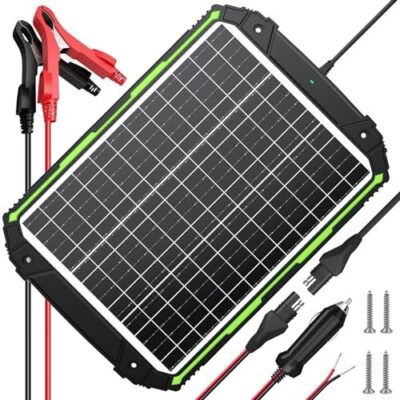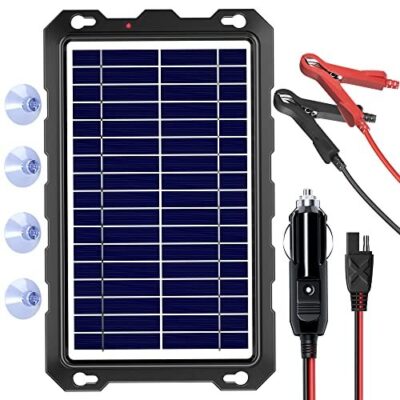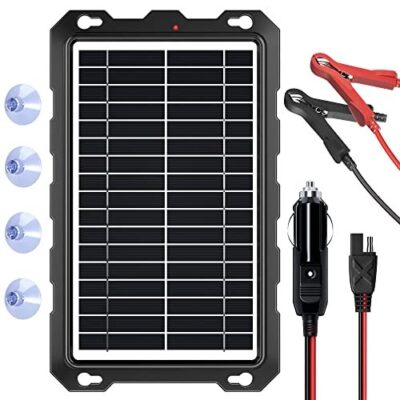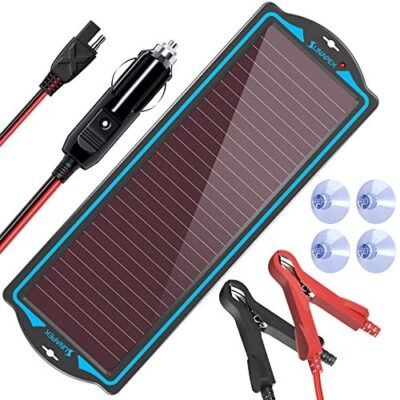
ECO-WORTHY 2.5W review: the battery label is the first filter
At a Glance
KEY FEATURES
- 2.5W low-output class
- Owner reports a battery-type restriction on the label
- Existing harness may not match the supplied clips
PROS
- Owner describes a low-use car application
CONS
- Reported battery-type restriction needs current confirmation
- One car installation remained insufficient
- Existing harness mismatch reported
Price and availability subject to change
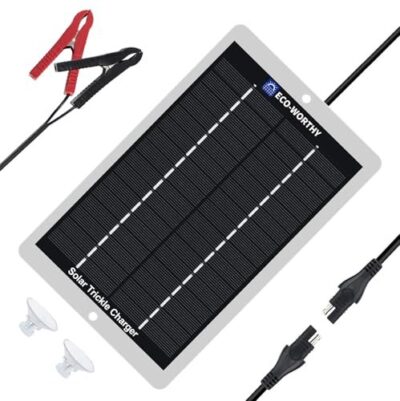
The low-output ECO-WORTHY 2.5W can be considered only for a modest maintenance job. A supplied owner reports a sealed-lead-acid restriction on the back of their unit, making the delivered label more important than broad vehicle examples in marketing.
Research-based analysis of the selected offer and customer accounts; not our hands-on test.
Read the restriction, not the workaround
That owner used the panel on a different lead-acid type and thought the result acceptable. Their choice does not expand the manufacturer’s permitted battery range. Confirm the current label and exact instructions before assuming the device suits a battery merely because it belongs to a car or mower.
One success does not erase a failed match
An owner reports the car starting reliably after adding the panel to a low-use routine.
Another could not maintain the battery despite prior mains charging and an otherwise useful connection kit.
Existing SAE leads need separate attention
A third owner reports that the supplied clip arrangement worked but an existing harness did not match. Do not adopt their proposed modification. Physical plug compatibility alone is not sufficient evidence of a supported electrical connection.
The small-panel decision
A known, modest maintenance requirement with a supported battery type.
Hoping the lowest wattage will overcome an unexplained recurring drain.
Pros & Cons Analysis
Based on documented specifications and owner feedback
Pros
- A modest low-use car scenario. A favorable owner account supports investigating a known small maintenance requirement.
Cons
- Battery permission comes first. A customer’s use outside a reported restriction does not expand the permitted chemistry range.
- Some demand remains too high. A contrasting car account remained unsuccessful despite prior charging.
- Harness reuse is not automatic. A working clip arrangement did not establish compatibility with an existing lead.
Low demand and correct chemistry come before convenience
Choose this class only when both the battery label and the maintenance requirement fit. If either is unknown, the inexpensive small format is not a useful shortcut. A documented match matters more than another owner's successful car start.
Frequently Asked Questions
Does an owner’s success override the rear label?
No. Verify the current label and instructions; a customer workaround does not change permitted battery types.