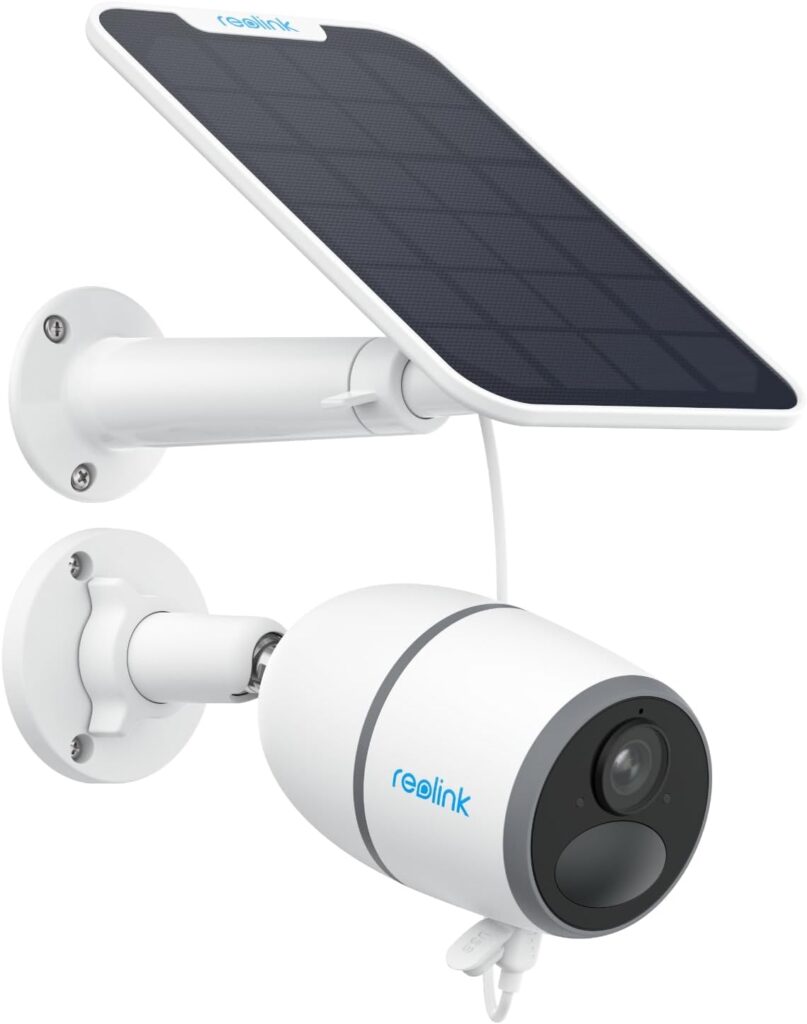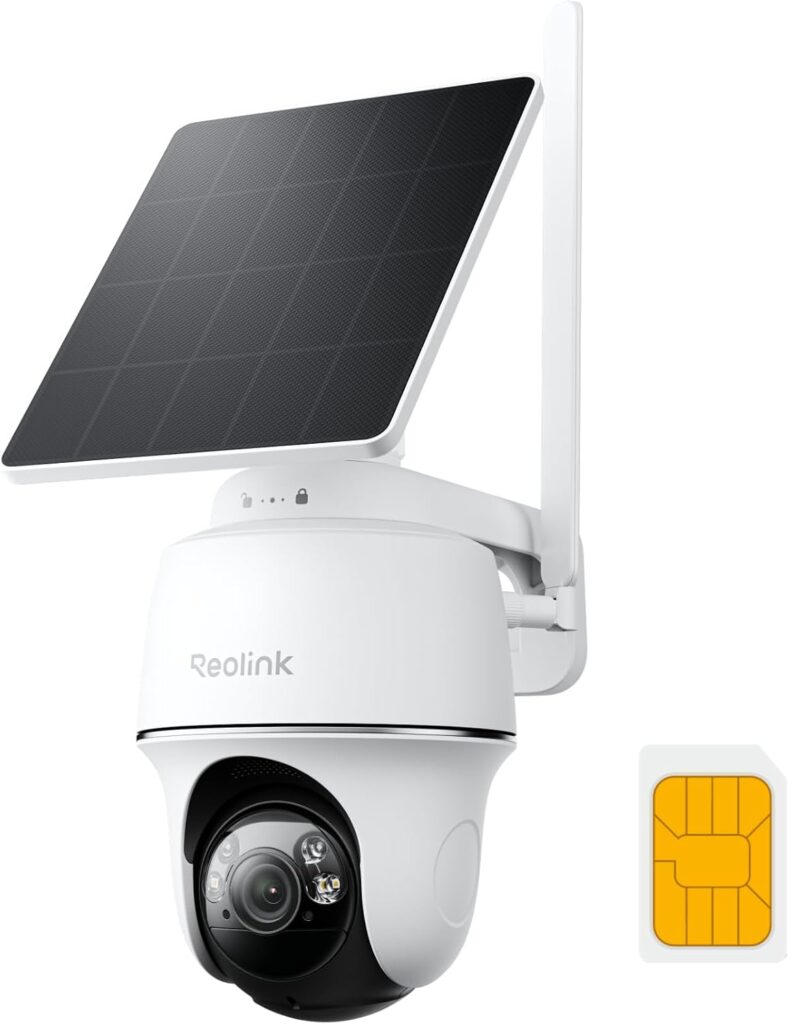
Choose between these cameras by deciding whether remote movement is part of the job. Go Plus maintains one fixed view. Go PT Plus lets a viewer redirect the camera. Both are cellular choices, so buying the movable version does not solve an unsuitable mobile connection or turn the installation into a Wi-Fi system.
The selected offers are B07TKKPTL3 for Go Plus and B09QC78HPC for Go PT Plus. Listing histories include older hardware. This comparison uses the selected offers and model documentation without treating unrelated customer accounts as a controlled performance test.
Two entrances expose the difference
Consider a property with a predictable gate and a storage area off to one side. If the gate is the only monitoring responsibility, a fixed camera aimed deliberately may be sufficient. The ability to inspect the storage area occasionally is a reason to consider the PT model, but it changes what the same camera is looking at.
| Required job | More relevant design consideration |
|---|---|
| Keep one entrance consistently framed | Go Plus does not depend on a viewer leaving a motor in the correct direction |
| Inspect another visible area on demand | Go PT Plus can redirect its view through supported controls |
| Observe two approaches simultaneously | Neither single-camera design substitutes for separate viewpoints |
| Save every minute without event gaps | Establish a different expressly supported recording arrangement |
The choice is not simply that movement is more advanced. It is whether movement solves a requirement without displacing another one. A person looking elsewhere in the yard can temporarily remove the gate from a movable camera's view. A fixed camera avoids that particular interaction but cannot answer questions outside its frame.
Keep the network decision identical on both sides
- Match region and service. Both need compatible cellular access and do not support Wi-Fi. A working phone is a clue, not proof that the camera and selected SIM will activate at the mount.
- Budget the necessary camera count. If two viewpoints must be recorded simultaneously, price their service and maintenance rather than substituting one moving view.
- Separate storage from data. A local card does not make remote operation free. Optional cloud retention is another layer; historical tariffs are not current prices.
Tracking is a hardware check, not the meaning of PT
The PT name establishes movement, not every generation’s automatic tracking capability.
- Identify hardware
Match the delivered unit to Reolink’s supported tracking guidance if tracking is a buying requirement.
- Check the saved approach
Following a detected subject does not prove the first part of the arrival was recorded.
- Keep the comparison honest
Different sites, settings and generations cannot establish a controlled alert-speed or miss-rate ranking.
Separate the mounting choice from the solar promise
Use the selected separate-panel arrangement to frame the required scene, then find a viable panel position and supported connection route. Neither design removes shade or seasonal limits.
Plan equipment access, service ownership and clip retrieval. A difficult mount may cost more in avoidable journeys than a small initial hardware saving.
Choose the control you will actually use
Go Plus is the clearer fit for one persistent entrance view where cellular access is necessary and event recording is enough. Its fixed composition is a functional choice, not just the absence of an extra feature.
Go PT Plus is more relevant when occasional redirection has a specific purpose and the operator understands which scene should remain the priority. Verify any required tracking capability and assess the saved events after movement. If simultaneous coverage is essential, plan the viewpoints first instead of asking one turning camera to behave like several cameras.