Solar Power Picks logo with sun, solar panel, and green energy icon

  • Home
  • Reviews
  • Best
    • Best portable power stations
  • Guides
    • Portable Power Stations Guides
  • Comparisons
    • Portable Power Stations Comparisons
  • Calculator

Best Portable Power Stations Overall

OUR PICKS

Anker SOLIX C1000 Gen 2 Review: Fast-Charging Backup Power That Actually Feels Useful

Best Overall

Anker SOLIX C1000 Gen 2 Review: Fast-Charging Backup Power That Actually Feels Useful

Check price at Amazon Jump to details
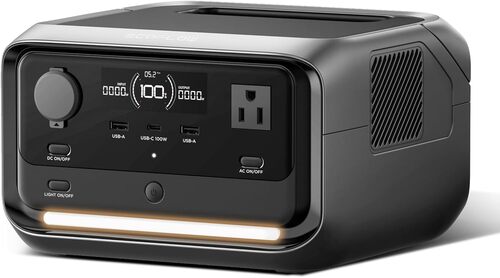
EcoFlow River 3 Plus review: Quiet UPS-style power for routers, CPAP, camping, and short outages

Best Compact UPS

EcoFlow River 3 Plus review: Quiet UPS-style power for routers, CPAP, camping, and short outages

Check price at Amazon Jump to details
Jackery Explorer 1000 v2 Review: Fast-Charging Backup Power That Travels Well

Best for Camping

Jackery Explorer 1000 v2 Review: Fast-Charging Backup Power That Travels Well

Check price at Amazon Jump to details
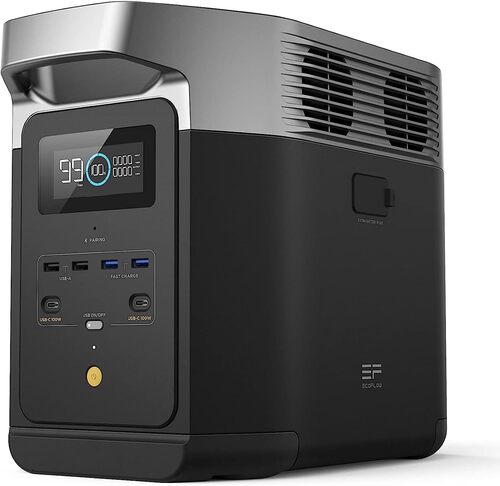
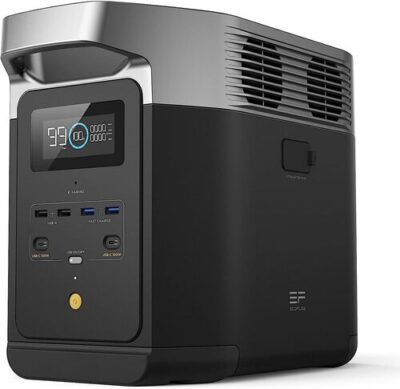
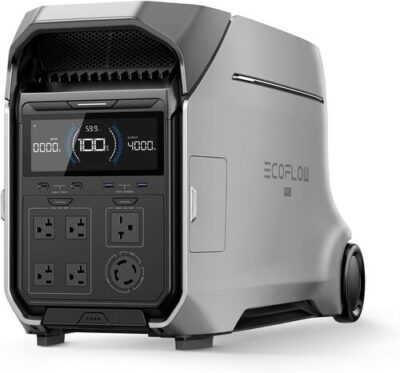
EcoFlow Delta 2 Max Review: Fast-Charging Backup for Blackouts, RVs, and Camping

Best Home Backup

EcoFlow Delta 2 Max Review: Fast-Charging Backup for Blackouts, RVs, and Camping

Check price at Amazon Jump to details
Pecron F3000LFP Review: Big 3kWh Backup Power Without the Premium Price

Best Value Large-Capacity

Pecron F3000LFP Review: Big 3kWh Backup Power Without the Premium Price

Check price at Amazon Jump to details
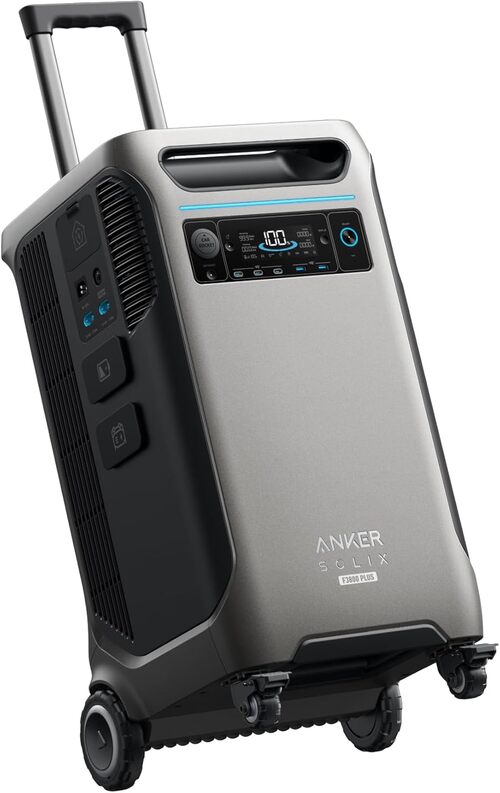
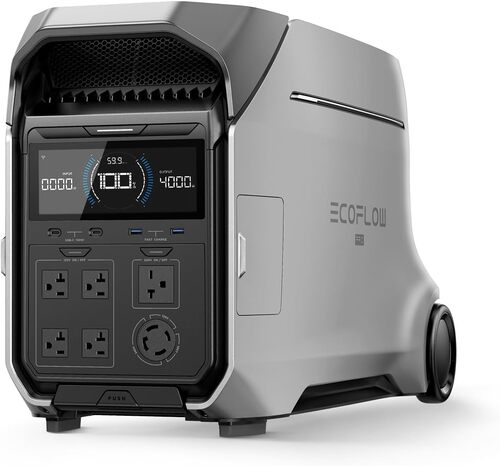
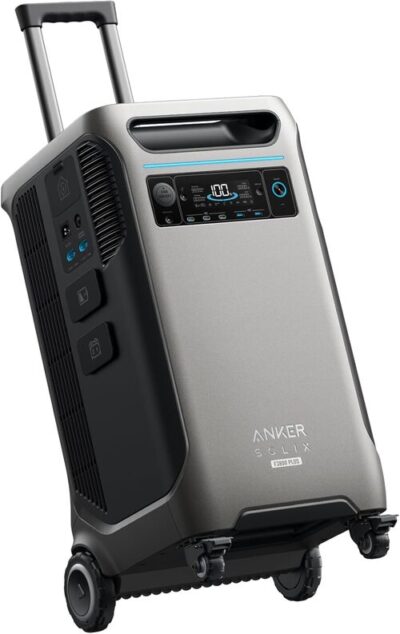
Anker SOLIX F3800 Review: Big 240V Backup Power Without the Generator Noise

Best 240V Backup

Anker SOLIX F3800 Review: Big 240V Backup Power Without the Generator Noise

Check price at Amazon Jump to details

Choosing the best portable power stations sounds simple — until you start comparing spec sheets and realize the marketing watts don’t always match real-world runtime. If you’re mainly buying for tent trips and car camping, start with our camping-focused power station picks. In practice, the right pick depends on what you need to run, how long it needs to run, and whether you’ll actually move the battery around.

Most buyers want one clear answer: “How big should I get?” You also need to know whether it’ll run a fridge through the night, whether solar charging is worth it, and what happens when continuous output meets a startup surge. Our portable power station sizing walkthrough breaks that down step by step.

These picks aren’t just about the biggest battery on the shelf. They’re about the best portable power stations for real use — weekend camping, short outages, RV side trips, CPAP backup, router backup, fridge support, and larger home backup setups.

Worth Knowing: Continuous AC output is the real ceiling. Surge ratings only last briefly, so a 1,500W appliance still needs a station that can handle that load continuously.

Not Sure What Size You Need?

Use our portable power station size calculator to estimate the right Wh class based on your devices, trip length, battery reserve, and whether you plan to recharge with solar.

How We Chose the Best Portable Power Stations

We focused on portable power stations that make sense for real use, not just impressive spec sheets. For this guide, we compared capacity, continuous AC output, battery chemistry, solar input, charging speed, weight, port selection, warranty coverage, brand reputation, and practical use cases like camping, CPAP backup, refrigerator backup, RV trips, router backup, and short power outages.

CriterionWhy It Matters for General UseWeight
Battery chemistryLiFePO4 usually lasts longer for repeat useHigh
Continuous AC outputRuns real appliances without trippingHigh
Weight and form factorDecides whether you’ll actually move itMedium
Solar input ceilingControls off-grid recharge speedMedium
UPS / backup behaviorMatters for routers, CPAP, and outage gearMedium

Selection criteria:

  • Capacity — enough Wh for the intended use case
  • Continuous output — enough watts for the devices you’ll actually plug in
  • Battery chemistry — LiFePO4 favored for cycle life and thermal stability
  • Portability — weight, handles, wheels, and shape
  • Charging speed — AC fast-charge time and solar recharge performance
  • Solar support — max solar input and panel compatibility
  • Ports — AC, USB-C PD, USB-A, 12V car outlet, and RV-style outputs when relevant
  • Safety and warranty — BMS protections, warranty length, and support reputation
  • Value — price compared with capacity, output, and practical features

How to Choose a Portable Power Station

Capacity: How Many Watt-Hours Do You Need?

Watt-hours tell you how much energy the battery stores. A 1,000Wh unit can deliver 100W for about 10 hours, or 500W for about 2 hours — minus inverter losses and battery reserve.

In practice, 1kWh is the sweet spot for most buyers. The Anker SOLIX C1000 Gen 2 and Jackery Explorer 1000 v2 both fit that class, while the DELTA 2 Max steps up for fridge backup and longer outage comfort. For a deeper look at this size class, see our 1kWh power station buyer’s guide.

Real-world math: At roughly 85% AC efficiency, a 1024Wh power station gives you about 870Wh through AC outlets before reserve. That’s why printed capacity and usable runtime are never exactly the same.

Output: What Can It Actually Run?

Watts tell you how much power the inverter can deliver at once. A coffee maker, microwave, or power tool cares about watts, while your trip length cares about watt-hours.

That said, surge ratings can be misleading. A 3000W surge rating may help start a fridge compressor, but it won’t run a 3000W load continuously. Brand philosophy matters too — read our Jackery versus EcoFlow brand comparison before committing. For most buyers, continuous output is the number to trust.

Battery Chemistry: Why LiFePO4 Usually Matters

Most picks here use LiFePO4, also called LFP. The reason is simple: it usually lasts much longer than older NCM lithium-ion chemistry and handles repeated cycling better.

The tradeoff is weight. To be fair, a LiFePO4 station can feel heavier than an older battery at the same capacity, but long-term buyers should usually accept that penalty.

Solar Input: When Solar Charging Is Worth It

Solar matters most when you’re away from wall power for more than a weekend. The PECRON F3000LFP and Anker SOLIX F3800 stand out here because their solar input ceilings are much higher than compact units.

Worth knowing, panel compatibility can be annoying. MC4 panels are flexible, while brand-specific solar setups may need adapters or lock you into one ecosystem.

Buying note: Check the solar connector before buying panels. A cheap panel deal gets less exciting when you need extra adapters, voltage matching, or brand-specific cables.

Weight and Portability

Portable doesn’t always mean easy to carry. A 10 lb EcoFlow RIVER 3 Plus is grab-and-go; a 50 lb DELTA 2 Max is moveable; a 132 lb Anker F3800 is rollable backup gear.

Here’s what matters: decide where the station will live. For a closet, RV bay, garage, or transfer-switch corner, weight is less painful. Our full Anker SOLIX C1000 Gen 2 review covers real-world runtime and charging speed. For car camping, stairs, or solo loading, every pound matters.

Ports and Outlets

Look for enough AC outlets, at least one strong USB-C PD port, USB-A for older gear, and a 12V car socket for coolers or DC accessories. RV users should also care about 30A or 240V-style outputs.

In real use, port layout matters too. Rear inputs can be awkward in cabinets, while front-facing AC outlets are easier during blackouts.

Charging Speed

Fast AC charging is useful during storm prep or generator-assisted outages. The Anker SOLIX C1000 Gen 2 is especially strong here because it can recharge very quickly from the wall.

On the flip side, fast charging can add fan noise and circuit stress. Slower charging is often better overnight, especially in bedrooms, apartments, or RVs.

UPS and Backup Features

UPS-style switchover can help with routers, modems, desktop gear, cameras, and some CPAP setups. EcoFlow RIVER 3 Plus is the compact pick here, while the Anker C1000 Gen 2 adds a stronger battery and inverter.

Still, test your exact setup. Firmware updates, app settings, outlet timeouts, and pass-through limits can change how a station behaves during a real outage.

Warranty and Brand Support

A long warranty matters because these are expensive batteries with inverters, fans, ports, apps, and firmware. Anker, EcoFlow, and Jackery generally have stronger brand ecosystems, while PECRON gives you more battery for the money with a less polished experience.

A practical move: test every port, charging mode, app setting, and solar input during the return window.

Common buyer mistakes:

  • Buying based on surge wattage instead of continuous wattage
  • Ignoring weight until the box arrives
  • Assuming 1024Wh means 1024Wh through AC outlets
  • Using a 100W solar panel on a large 2kWh battery and expecting fast recharge
  • Relying on UPS mode before testing your actual router, CPAP, or fridge
  • Choosing old battery chemistry just to save a small amount upfront

What Can a Portable Power Station Run?

Watts and watt-hours can feel abstract until you put real devices next to them. Here’s what owners typically run on portable power stations of various sizes — and the appliances where you’ll burn through capacity faster than expected.

DeviceTypical WattsNotes
Phone charger5-15WEasy for any power station
Laptop45-100WUSB-C output is useful
CPAP30-60WCheck humidifier draw separately
Wi-Fi router10-20WGood for outage backup
Mini fridge50-100WCycles on and off
Full-size refrigerator100-800WStartup surge matters
Coffee maker600-1200WHigh draw but short use
Microwave800-1500WNeeds a strong inverter
Electric kettle1000-1500WDrains battery quickly
Space heater1500WUsually not ideal — heat eats Wh fast

Heating and high-draw kitchen appliances drain power stations quickly. A 1500W space heater can empty a 1000Wh power station in well under an hour after losses. For heat, a portable power station is usually not the most efficient solution.

Portable Power Station Size Guide

Capacity TierBest ForTypical Fit
Under 300WhPhones, tablets, lights, small fans, camera gearDay trips and tiny UPS loads
300Wh-700WhLaptops, CPAP, weekend device chargingLight camping and apartment backup
700Wh-1500WhMini fridges, routers, lights, short outagesMost buyers’ starting point
1500Wh-3000WhFridges, RV use, longer camping, essentials backupHome backup without going huge
3000Wh+240V loads, large RV setups, expandable systemsSemi-stationary backup

Is Solar Charging Worth It?

Solar panels are useful if you camp for more than a weekend, travel in an RV, or want backup power during longer outages. They’re less important if you mostly use the power station at home and recharge it from a wall outlet between uses.

A 200W panel is a practical starting point for a 500Wh-1500Wh unit. Larger power stations and longer trips need 400W, 800W, or more if daily recharging matters. The connector matters too: MC4 panels are flexible, while some brands need proprietary cables or adapter checks.

Solar Panel SizeBest For
100WSmall power stations, phones, light camping use
200WCamping, 500Wh-1500Wh units
400WLarger camping setups, RVs, fridge backup
800W+Home backup, large expandable systems

What Is the Best Value?

The best value isn’t always the cheapest power station. A cheap 300Wh unit can be a great deal for phones and lights, but it becomes poor value if you expect it to run a fridge, CPAP, or high-watt appliance.

Long-term ownership: LiFePO4 chemistry matters more than a small sticker-price difference. A station you can cycle for years is usually better value than a cheaper unit that ages quickly.

Good value factors:

  • Price per Wh
  • Battery chemistry
  • Warranty length
  • Continuous and surge output
  • Solar input ceiling
  • Charging speed
  • Included cables
  • Expansion support
  • App reliability
  • Brand support reputation
Best Overall

Anker SOLIX C1000 Gen 2 Review: Fast-Charging Backup Power That Actually Feels Useful

Anker SOLIX C1000 Gen 2 Review: Fast-Charging Backup Power That Actually Feels Useful

Get it now:

Check latest price

What to know

  • 1,024Wh LiFePO4 battery works well for essentials and short outages
  • 2,000W output handles fridges, coffee makers, tools, and RV loads
  • 49-minute AC recharge is excellent for storm prep
  • UPS-style switchover under 10ms helps routers, CPAP, and office gear
  • 24.9 lb body is compact for a 2,000W power station

Best if

  • You want one strong 1kWh-class power station for most everyday backup jobs
  • You value fast AC recharge for storms, RV trips, or generator top-offs
  • You’re powering CPAP, Starlink, routers, laptops, lights, or a fridge

Skip if

  • You need multi-day outage runtime from one base unit
  • Fast-charge fan noise would bother you in a bedroom or quiet office
  • You want expansion batteries for a larger home-backup setup

This power station hits the sweet spot of capacity, output, and fast recharge for a general Best Overall pick. The Anker SOLIX C1000 Gen 2 is built for buyers who want one portable power station for short outages, camping, CPAP backup, Starlink, routers, laptops, and fridge support without jumping into a huge home system.

What makes it work: 1,024Wh of LiFePO4 capacity, 2,000W AC output, 3,000W surge, and a very fast 49-minute AC recharge. In practice, the Anker unit feels strong enough for real appliances but still manageable at 24.9 lb.

The catch: it isn’t expandable, so longer outages may push you toward a 2kWh or larger system.

Capacity 1,024Wh
AC Output 2,000W continuous, 3,000W surge
Solar Input 600W max via solar input / XT60-style adapter
Weight 24.9 lb (11.3 kg)
Battery LiFePO4, 4,000 cycles to 80% capacity
Best Compact UPS

EcoFlow River 3 Plus review: Quiet UPS-style power for routers, CPAP, camping, and short outages

EcoFlow River 3 Plus review: Quiet UPS-style power for routers, CPAP, camping, and short outages

Get it now:

Check latest price

What to know

  • 286Wh LiFePO4 battery suits routers, laptops, CPAP, and light camping
  • 600W output covers electronics, fans, small fridges, and chargers
  • Under-10ms UPS switchover helps protect home-office gear
  • Recharges from AC in about one hour
  • Expands up to 858Wh with EcoFlow add-on batteries

Best if

  • You’re backing up a router, modem, NAS, camera system, or desk setup
  • You like a compact battery that can sit under a desk or beside a bed
  • You value app-controlled charge limits for daily UPS-style use

Skip if

  • You need long full-size refrigerator runtime during outages
  • You’re trying to run kettles, coffee makers, heaters, or microwaves
  • You prefer a completely app-free setup with no firmware concerns

You don’t need a giant battery to keep routers, laptops, cameras, and a CPAP alive — the EcoFlow RIVER 3 Plus proves that. It’s the Best Compact UPS pick because it combines a small 286Wh LiFePO4 battery with 600W AC output and under-10ms switchover for flickers and short outages.

In practice, EcoFlow built this for desks, apartments, router shelves, small camp setups, and light backup loads. The app controls, fast one-hour recharge, and optional expansion battery support make it more useful than its size suggests.


One thing: the battery is still small, so don’t buy the RIVER 3 Plus expecting long fridge runtime or heavy appliance backup.

Capacity 286Wh, expandable up to 858Wh
AC Output 600W continuous, 1,200W X-Boost
Solar Input 220W max via EcoFlow solar input; connector not specified in supplied data
Weight 10.4 lb (4.7 kg)
Battery LiFePO4, 3,000 cycles to 80% capacity
Best for Camping

Jackery Explorer 1000 v2 Review: Fast-Charging Backup Power That Travels Well

Jackery Explorer 1000 v2 Review: Fast-Charging Backup Power That Travels Well

Get it now:

Check latest price

What to know

  • 1,070Wh LiFePO4 battery is a strong camping sweet spot
  • 1,500W pure-sine output runs fridges, fans, coffee gear, and small tools
  • Recharges in about 1 to 1.7 hours from AC
  • 23.8 lb weight is light for a 1kWh LiFePO4 station
  • Built-in light and simple display help during outages and camp nights

Best if

  • You’re car camping with a fridge, CPAP, lights, phones, and a laptop
  • You value lower weight more than maximum inverter output
  • You prefer a simple camping battery with fast AC recharge

Skip if

  • You want a power station for whole-home backup
  • You need to run appliances over 1,500W continuously
  • You already own third-party solar panels and want easy MC4 flexibility

For car camping and weekend trips, the Jackery Explorer 1000 v2 is the easy-handling 1kWh pick. Jackery keeps the formula simple: 1,070Wh of LiFePO4 capacity, 1,500W pure-sine output, fast wall charging, and a 23.8 lb body that’s lighter than many similar power stations.

What makes it work: campers get enough battery for lights, phones, laptops, CPAP, Starlink, fans, and portable fridges without hauling a 50 lb box. In real use, the Jackery unit feels especially good for road trips and base-camp setups.


Just know the Explorer 1000 v2 doesn’t have true expansion battery support, and third-party solar compatibility may take extra checking.

Capacity 1,070Wh
AC Output 1,500W continuous, 3,000W surge (pure sine)
Solar Input 400W max via Jackery-compatible solar input
Weight 23.8 lb (10.8 kg)
Battery LiFePO4, 4,000 cycles to 70% capacity
Best Home Backup

EcoFlow Delta 2 Max Review: Fast-Charging Backup for Blackouts, RVs, and Camping

EcoFlow Delta 2 Max Review: Fast-Charging Backup for Blackouts, RVs, and Camping

Get it now:

Check latest price

What to know

  • 2,048Wh capacity gives better fridge runtime than 1kWh units
  • 2,400W AC output handles many appliances and power tools
  • Fast AC charging can refill it in about 1 to 1.5 hours
  • 1,000W solar input supports stronger RV and blackout setups
  • Expandable to 6,144Wh with two extra batteries

Best if

  • You’re powering a fridge, router, CPAP, lights, fans, and devices
  • You want fast wall charging plus serious solar input
  • You like expandable capacity for longer outages later

Skip if

  • You expect whole-house backup from one portable box
  • You don’t want to manage app settings, firmware, or charge limits
  • You need something easy to carry across a campsite every day

When the grid drops, the EcoFlow DELTA 2 Max gives you a practical 2kWh home-backup step-up without moving into huge whole-home battery territory. It’s built for refrigerators, routers, CPAP machines, fans, lights, laptops, RV basics, and generator-assisted outage plans.

The Delta 2 Max works because it pairs 2,048Wh of LiFePO4 storage with 2,400W output, fast AC charging, dual solar inputs, and expandable capacity up to 6,144Wh. In practice, that gives households more breathing room than a 1kWh unit.


The catch: at about 50.7 lb, it’s not casual to move, and critical unattended loads should be tested before you rely on them.

Capacity 2,048Wh, expandable to 6,144Wh
AC Output 2,400W continuous, 4,800W surge / 3,400W X-Boost
Solar Input 1,000W max via dual solar inputs with XT60i / MC4 adapter setup
Weight 50.7 lb (23 kg)
Battery LiFePO4, 3,000 cycles to 80% capacity
Best Value Large-Capacity

Pecron F3000LFP Review: Big 3kWh Backup Power Without the Premium Price

Pecron F3000LFP Review: Big 3kWh Backup Power Without the Premium Price

Get it now:

Check latest price

What to know

  • 3,072Wh capacity gives real backup runtime for fridges and RV loads
  • 3,600W pure-sine output handles larger appliances and tools
  • 1,600W solar input is strong for RV roofs and off-grid charging
  • AC recharge takes about two hours from a wall outlet
  • 63.3 lb weight makes a cart or hand truck useful

Best if

  • You want lots of battery capacity without premium-brand pricing
  • You’re building RV, cabin, sump-pump, or fridge-backup power
  • You value high solar input for multi-day off-grid use

Skip if

  • You need a light unit for frequent hand-carrying
  • You want the smoothest app and easiest Wi-Fi pairing
  • You need a clearly listed surge rating above 3,600W

3,072Wh means the PECRON F3000LFP moves beyond light camping and into real backup power — that’s why it earns the Best Value Large-Capacity badge. It’s built for RV owners, boondockers, sump-pump backup, fridge backup, Starlink, tools, and small off-grid setups where a 1kWh station feels too limited.

What makes it work: a large LiFePO4 battery, 3,600W pure-sine output, fast 1,800W AC charging, and up to 1,600W of solar input. Worth knowing, PECRON gives you a lot of battery and inverter for the money.


Not ideal if you want a polished app experience or lightweight portability — at 63.3 lb, this one wants a cart.

Capacity 3,072Wh, expandable with EP3000-48V battery
AC Output 3,600W continuous, 3,600W starting wattage listed (pure sine)
Solar Input 1,600W max via XT60-to-MC4 solar cable
Weight 63.3 lb (28.7 kg)
Battery LiFePO4, cycle life not specified in supplied data
Best 240V Backup

Anker SOLIX F3800 Review: Big 240V Backup Power Without the Generator Noise

Anker SOLIX F3800 Review: Big 240V Backup Power Without the Generator Noise

Get it now:

Check latest price

What to know

  • 3,840Wh base capacity supports larger home and RV backup plans
  • 6,000W 120V/240V output handles loads smaller stations can’t run
  • 10,200W starting wattage helps with pumps, compressors, and surge loads
  • 2,400W solar input gives strong recharge potential with the right panels
  • 132 lb body needs wheels, planning, and often two-person lifting

Best if

  • You need 120V/240V output for RVs, pumps, or transfer-switch backup
  • You want a scalable home-backup system with expansion batteries
  • You can store it in a garage, RV bay, cabin, or utility area

Skip if

  • You only need phones, laptops, and a small camping fridge
  • You’re trying to keep the total setup cheap and simple
  • You need something one person can lift into a vehicle easily

6,000W output with 120V/240V support is what makes the Anker SOLIX F3800 the Best 240V Backup pick. This isn’t a casual camping unit; it’s built for homeowners, RV owners, cabins, well pumps, sump pumps, transfer-switch setups, and larger loads that smaller portable power stations can’t touch.

In practice, the Anker F3800 stands out because it combines 3,840Wh of LiFePO4 storage, major inverter headroom, 2,400W solar input, wheels, app control, and expansion potential far beyond normal portable units.


The catch: 132 lb is serious weight, and the full Anker ecosystem gets expensive once you add batteries, panels, cords, and transfer hardware.

Capacity 3,840Wh, expandable up to 26.9kWh
AC Output 6,000W continuous, 10,200W surge / starting wattage
Solar Input 2,400W max via Anker solar input; connector not clearly specified in supplied data
Weight 132.28 lb (60 kg) — wheels + telescoping handle
Battery LiFePO4, marketed for a 10-year lifespan

Product Comparison

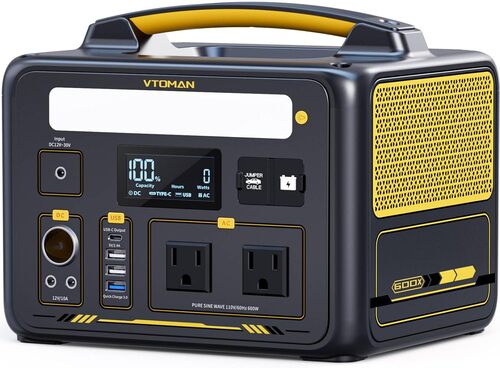
Feature Anker SOLIX C1000 Gen 2 Review: Fast-Charging Backup Power That Actually Feels Useful EcoFlow River 3 Plus review: Quiet UPS-style power for routers, CPAP, camping, and short outages Jackery Explorer 1000 v2 Review: Fast-Charging Backup Power That Travels Well EcoFlow Delta 2 Max Review: Fast-Charging Backup for Blackouts, RVs, and Camping Pecron F3000LFP Review: Big 3kWh Backup Power Without the Premium Price Anker SOLIX F3800 Review: Big 240V Backup Power Without the Generator Noise
Product Image
Anker SOLIX C1000 Gen 2 Review: Fast-Charging Backup Power That Actually Feels Useful
EcoFlow River 3 Plus review: Quiet UPS-style power for routers, CPAP, camping, and short outages
Jackery Explorer 1000 v2 Review: Fast-Charging Backup Power That Travels Well
EcoFlow Delta 2 Max Review: Fast-Charging Backup for Blackouts, RVs, and Camping
Pecron F3000LFP Review: Big 3kWh Backup Power Without the Premium Price
Anker SOLIX F3800 Review: Big 240V Backup Power Without the Generator Noise
Price $799 $449.99 $299.99 $279.99 $799.99 $428.99 $1399.99 $899 $799 $2599 $1799
Rating
4.7 / 5
4.6 / 5
4.7 / 5
4.3 / 5
4.7 / 5
4.1 / 5
Category Portable Power Stations Portable Power Stations Portable Power Stations Portable Power Stations Portable Power Stations Portable Power Stations
Brand Anker EF ECOFLOW Jackery EF ECOFLOW Pecron Anker
Model / SKU Anker SOLIX C1000 Gen 2 / A1763 (ASIN: B0FN7MSY4L) RIVER 3 Plus / EF-RV-H02-1 (ASIN: B0DCCB657J) JE-1000D (ASIN: B0D7PPG25F) DELTA2 Max / EFD350 (ASIN: B0C4DW17PD) F3000LFP (ASIN: B0F6YCRKTJ) Anker SOLIX F3800 / A1790 (ASIN: B0C5C9HMQ2)
Battery capacity 1,024 Wh 286 Wh 1070 Wh 2048 Wh 3072 Wh 3840 Wh
Battery chemistry LiFePO4 (LFP) LiFePO4 (LFP) LiFePO4 (LFP) LiFePO4 (LFP) LiFePO4 (LFP) LiFePO4 (LFP)
Cycle life 4,000 cycles to at least 80% capacity (claimed) 3,000 cycles to 80% capacity (claimed) 4,000 cycles to 70% capacity 3000 cycles to 80% capacity (claimed) Not specified in the provided listing Not specified (marketed for a 10-year lifespan)
Expandable battery No (customers note this model does not support expansion batteries) Yes — supports EB300 or EB600 extra batteries, up to 858Wh total (claimed) No (no dedicated expansion battery system specified) Yes — supports up to 2 expansion batteries (up to 6144 Wh total) Yes — supports EP3000-48V expansion battery (special cascade cable sold separately) Yes — supports up to 6 battery packs for 26.9 kWh; two F3800 units with 12 battery packs are marketed for larger backup setups
AC output 2,000 W continuous (sine-wave behavior reported by customer testing; pure sine not explicitly listed in provided specs) 600 W continuous (waveform not specified in supplied product data) 1500 W continuous (pure sine wave) 2400 W continuous (120V AC; pure sine wave not specified in supplied data) 3600 W continuous (pure sine wave) 6000 W continuous (120V/240V output; pure-sine quality mentioned by owners)
Surge output 3,000 W peak 1200 W with X-Boost (claimed) 3000 W peak 4800 W starting wattage (3400 W via X-Boost for some high-wattage appliances) Not specified above 3600 W (listing shows 3600 W starting wattage) 10200 W peak / starting wattage
AC outlets Not specified (10 total ports claimed) 3 × 110V AC outlets (UPS-supported) 3 × 120V AC outlets 6 × 120V AC outlets 6 × AC outlets 6 × 120V outlets plus NEMA 14-50 and L14-30 high-power outputs (from customer-reported use and product bullets)
USB-C ports 2 × USB-C (up to 140W reported by owners) 1 × USB-C (up to 100W reported by customers) 2 × USB-C (up to 100W PD specified) 2 × USB-C (100W PD mentioned in customer feedback) 2 × USB-C (up to 100W PD) Not specified (USB-C fast-charging ports mentioned by owners)
USB-A ports Not specified (USB-A support reported by owners) 2 × USB-A 1 × USB-A 4 × USB-A (2 standard + 2 fast-charge mentioned in customer feedback) 2 × USB-A (18W listed) Not specified
12V car socket 1 × 12V/10A car port (customer-reported) 1 × 12V car port 1 × 12V car port 1 × 12V car port 1 × car port Not specified
Max solar input 600 W (60V max, MPPT behavior implied by solar charging use) 220 W (MPPT input claimed; connector details not specified in supplied data) 400 W (MPPT, Jackery solar panel compatibility noted) 1000 W (dual 500 W inputs; XT60i / MC4 adapter setup may be needed) 1600 W (25-120V input, XT60 to MC4 cable included) 2400 W (MPPT; 11-60V input range and 25A limits reported by owners)
Max AC input 1,600 W (HyperFlash fast charging enabled in the Anker app) ~350 W (estimated from 1-hour recharge claim and owner-reported charging around the high-300W range) ~1200 W (emergency fast-charge mode) 1800 W (fast AC charging, adjustable in app) 1800 W (fast AC charging) 1800 W (customer-reported AC charging rate)
AC recharge time 49 minutes (fast mode) About 1 hour (0-100%, claimed) 1 hour (fast) / 1.7 hours (default) About 1-1.5 hours (fast mode; varies by input setting and starting charge) About 2 hours (0-100% claimed) About 2-3 hours at high AC charge rate when warm; slower when charge rate is limited or battery is cold
Solar recharge time About 1.8 hours with up to 600W solar (ideal conditions) As little as 1.5 hours with up to 220W solar input (ideal sun, claimed) ~3-4 hours with 400W panels in strong sun (estimated from capacity and input limit) About 2.5-3.5 hours with full 1000 W solar in ideal sun (real-world conditions vary) About 2-3 hours with maximum solar in ideal sun; about 4-5 hours with 800W in strong sun As fast as a few hours with a high-output solar setup in strong sun; much longer with 400W portable panels or poor panel matching
UPS / EPS support Yes — under 10 ms switchover (claimed) Yes — under 10 ms switchover (claimed; customer reports are mostly positive with some caveats) Not specified (some customers use it for router / internet backup) Yes — EPS-style pass-through support (customer feedback is mixed for critical unattended loads) Yes — 8-20ms switchover claimed Limited — some 120V UPS-style use reported, but 240V / high-power pass-through behavior has important limitations
App support Yes — Anker app with Wi-Fi and Bluetooth Yes — EcoFlow app via Bluetooth and Wi-Fi Yes — Jackery App (Wi-Fi + Bluetooth) Yes — EcoFlow app (Wi-Fi / Bluetooth control and monitoring) Yes — app control and monitoring (Bluetooth / 2.4GHz Wi-Fi setup can be tricky) Yes — Anker app with Wi-Fi + Bluetooth
Built-in light No Yes — built-in light Yes — LED light No (not specified in supplied product data or customer feedback) Not specified Yes — front light mentioned by owners
Weight 24.9 lb 10.4 lb (listed in product bullets; some customers report about 10.6 lb for the station) 23.8 lb (10.8 kg) 23 kg / about 50.7 lb 63.3 lb 132.28 lb
Best for CPAP backup, routers and Starlink, short blackouts, fridge backup, RV camping, van life, truck camping, remote work, and small-appliance use Router and modem UPS, security cameras, CPAP backup, phones, laptops, car fridges, camping, overlanding, home-office backup, and short outages Camping, RV nights, CPAP backup, fridge backup, short blackouts, Starlink, routers, laptops, phones, fans, lights, and mobile work Home outage backup, refrigerators, CPAP machines, Wi-Fi routers, RVs, camping, van life, sailboat work, hurricane prep, and generator-assisted emergency systems RV boondocking, camper backup, home outages, refrigerator backup, sump pump backup, Starlink, office backup, solar-supported off-grid use Home outage essentials, RV power, refrigerator backup, well pumps, sump pumps, off-grid shops, cabins, power tools, and short-term high-wattage backup
Buy Now View Deal View Deal View Deal View Deal View Deal View Deal

Bottom Line

For most buyers, the Anker SOLIX C1000 Gen 2 is the easiest overall recommendation because it balances 1kWh capacity, strong 2000W output, fast charging, and manageable weight. For smaller UPS-style loads, the EcoFlow RIVER 3 Plus makes more sense. For camping, the Jackery Explorer 1000 v2 is simple and easy to move. For home backup, the EcoFlow DELTA 2 Max gives you a more useful 2kWh class.

That said, don’t under-size. The most common regret isn’t buying too much battery — it’s buying a unit that looks good on paper but can’t cover the real load. Match the Wh to your worst-case use, check continuous wattage before surge wattage, and pay for LiFePO4 unless weight is the whole reason you’re shopping.

Frequently Asked Questions

What size portable power station do I need?

Most buyers should start around 700Wh-1500Wh. That size is practical for camping, routers, phones, laptops, CPAP use, lights, and short fridge backup. For a full-size fridge, RV use, or longer outages, 1500Wh-3000Wh is safer. For 240V loads, well pumps, or larger home backup, look at 3000Wh or more. Inverter losses trim usable energy, so round up rather than buying the smallest station that works on paper.

How long will a portable power station run a refrigerator?

It depends on the fridge and room temperature. A mini fridge may average 50-100W while cycling, so a 1000Wh station can often run it for many hours. A full-size fridge may average 100-200W with higher startup surge, so a 1000Wh unit may last roughly 5-10 hours after losses. For overnight fridge backup, a 1500Wh-2000Wh station is a more comfortable starting point.

Can a portable power station run a CPAP machine overnight?

Yes, most CPAP machines can run overnight from a portable power station. Many CPAP setups draw around 30-60W, but heated humidifiers and heated hoses can raise that a lot. A 300Wh unit may work for a light travel CPAP, while 500Wh-1000Wh gives more breathing room. For medical use, test your exact machine, pressure settings, humidifier mode, and switchover behavior before relying on it overnight.

Can you use a portable power station indoors?

Yes. Unlike gas generators, portable power stations don’t burn fuel and don’t produce exhaust, so they’re safe to use indoors when operated normally. They still need airflow, though. Keep the vents clear, avoid sealed cabinets, and don’t cover the unit while charging or running large loads. For bedrooms or offices, fan noise matters too, so slower charging may be better than max-speed AC charging.

Are solar panels worth it for a portable power station?

Solar panels are worth it for RV trips, multi-day camping, off-grid use, and longer outages. They matter less if you only use the station at home and recharge from the wall. A 200W panel is a good starting point for 500Wh-1500Wh stations, while 400W or more makes sense for larger units. Always check voltage range, connector type, and whether the brand requires proprietary cables.

What's the difference between watts and watt-hours?

Watts measure output. Watt-hours measure stored energy. A 2000W inverter can run a high-draw appliance, but the battery capacity decides how long it can run. For example, a 1024Wh power station with a 2000W inverter can power a 1200W coffee maker briefly, but it won’t run that load for hours. Think of watts as the size of the engine and Wh as the size of the fuel tank.

Is LiFePO4 better for portable power stations?

For most buyers, yes. LiFePO4 batteries usually offer much longer cycle life than older lithium-ion chemistry and are generally preferred for backup, RV, and frequent-use power stations. The tradeoff is weight. A LiFePO4 station may be heavier than an older NCM unit at the same capacity, but the longer lifespan usually makes the extra weight worth it unless ultra-light portability is the main priority.

Can a portable power station run a microwave or coffee maker?

Yes, but only if the inverter is strong enough. Many coffee makers draw 600-1200W, while microwaves often pull 800-1500W or more. A 1500W-2000W continuous inverter is a safer match than a small 600W station. The bigger issue is runtime: heat-making appliances drain batteries quickly, so use them for short bursts rather than long sessions.

Can I leave a portable power station plugged in all the time?

Sometimes, but check the model’s manual and settings. Some stations support pass-through or UPS-style backup, while others are better treated as portable batteries that you charge, unplug, and store. For long-term plugged-in use, set charge limits if the app allows it, keep the unit cool, and test whether AC outlets stay on after a power loss, full drain, firmware update, or recharge cycle.

What's the difference between continuous output and surge output?

Continuous output is the wattage a power station can deliver steadily. Surge output is a short burst for startup loads, usually from compressors, pumps, and motors. A fridge may need a surge boost to start, then much less power while running. Don’t shop by surge alone. A station rated for 3000W surge but only 1500W continuous still cannot run a 2000W appliance for normal use.

×

About Solar Power Picks

Portable Solar Power, Backup Power, and Off-Grid Gear Guides

Your trusted source for honest, in-depth product reviews and comparisons.

Quick Links

  • Best Picks
  • Reviews
  • Guides
  • Comparisons
  • Calculator
  • Privacy policy
  • Favorites

Categories

  • Portable Power Stations

© 2026 Solar Power Picks. All Rights Reserved.

We may earn a commission when you purchase through links on our site. Learn more