Solar Power Picks logo with sun, solar panel, and green energy icon

  • Home
  • Reviews
  • Best
    • Best portable power stations
    • Best Solar Panels
    • Best Solar Generators
    • Best Solar Charge Controllers
    • Best Solar Batteries
  • Guides
    • Portable Power Stations Guides
    • Solar Panels Guides
    • Solar Generators Guides
    • Solar Charge Controllers Guides
    • Solar Batteries Guides
  • Comparisons
    • Portable Power Stations Comparisons
    • Solar Panels Comparisons
    • Solar Generators Comparisons
    • Solar Charge Controllers Comparisons
    • Solar Batteries Comparisons
  • Calculator
Home / Portable Power Stations / Best / Best Portable Power Station for Camping: Quiet Power for Real Trips

Best Portable Power Station for Camping: Quiet Power for Real Trips

OUR PICKS

EcoFlow RIVER 3 Review: A Tiny LiFePO4 Backup for Routers, Laptops, CPAP, and Camping

Best for Light Camping

EcoFlow RIVER 3 Review: A Tiny LiFePO4 Backup for Routers, Laptops, CPAP, and Camping

Check price at Amazon Jump to details
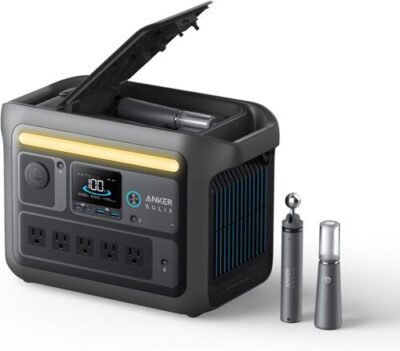
Anker SOLIX C800X review: a camping-ready power station with lights and solar in the box

Best Camping Bundle

Anker SOLIX C800X review: a camping-ready power station with lights and solar in the box

Check price at Amazon Jump to details
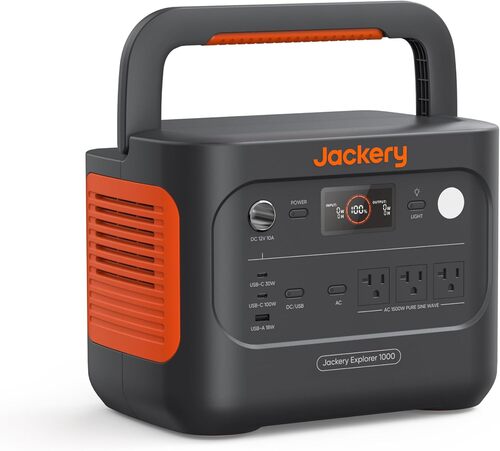
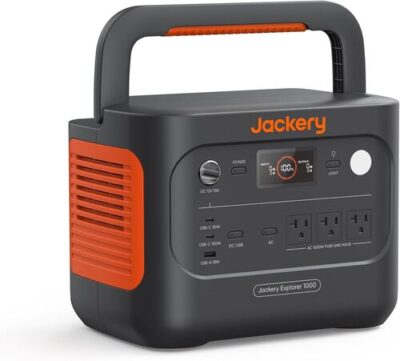
Jackery Explorer 1000 v2 Review: Fast-Charging Backup Power That Travels Well

Best Weekend All-Rounder

Jackery Explorer 1000 v2 Review: Fast-Charging Backup Power That Travels Well

Check price at Amazon Jump to details
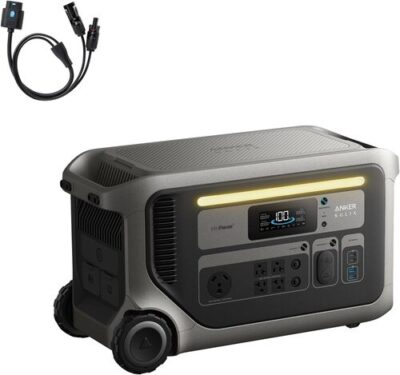
Anker SOLIX F3000 Review: Big Backup Power That Still Moves

Best for RV Base Camp

Anker SOLIX F3000 Review: Big Backup Power That Still Moves

Check price at Amazon Jump to details
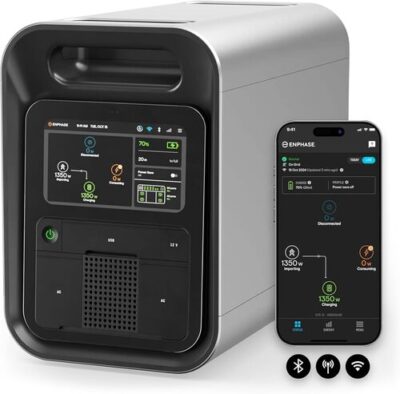
Enphase IQ PowerPack 1500 Review: Quiet Backup Power for Fridges, RVs, and Home Outages

Best Outdoor-Rated Base Camp

Enphase IQ PowerPack 1500 Review: Quiet Backup Power for Fridges, RVs, and Home Outages

Check price at Amazon Jump to details

The best portable power station for camping is the one that finishes the trip with reserve, not the model that looks most impressive in the driveway. Trip length, camp style, packed weight, quiet-hour loads, and the chance to recharge matter more than a single headline wattage.

A tent weekend can work with a few hundred watt-hours. A family camp with a fridge, camera batteries, fans, and a coffee routine moves toward 700–1,200Wh. An RV base camp can justify several kilowatt-hours, a high-current outlet, and a serious array.

Map the Trip Before Packing the Battery

Camp pattern Likely energy class What changes the answer
One-night tent trip 200–300Wh Heated bedding, CPAP humidifier, or a compressor cooler
Two- to three-night car camp 700–1,200Wh Fridge duty cycle, cooking appliances, and solar access
Family base camp 1,000–2,000Wh Several users, poor weather, and repeated high-draw tasks
RV or long stationary stay 3,000Wh+ TT-30 loads, air conditioning, and daily array yield

Make an energy itinerary instead of a device list. A camera battery charged once is different from a fridge cycling for 72 hours. Likewise, a 1,000W coffee maker used for six minutes is an output problem first and a modest energy problem second.

Packed Weight Is the Honest Portability Number

Station weight excludes the folding panel, extension cable, adapters, case, and sometimes the expansion battery. Add the entire kit, then count how many times it moves from storage to vehicle to campsite and back. A 24-pound station can be pleasant; a 24-pound station plus two awkward panels can become the hardest part of setup.

  • Keep the station dry and ventilated rather than inside a sealed tote.
  • Route cables where feet, pets, and tent zippers cannot damage them.
  • Secure heavy stations during vehicle travel.
  • Bring a separate light instead of treating the station display as campsite lighting.

Driving-day recharge: If the trip depends on vehicle charging, use the alternator charging bottleneck map to separate accessory-socket charging from a professionally installed DC-to-DC path.

Plan Solar Around Shade, Not Noon Sun

A campsite rarely delivers a laboratory solar day. Trees move shadows across panels, morning light arrives at a poor angle, and a cooler may consume energy while the array is still folded. Design around the number of useful sun-hours and the station’s electrical input window.

Array size Useful daily harvest planning range Best camp role
100W 250–450Wh Phones, lights, camera, small fan
200W 500–900Wh Compact fridge support and electronics
400W 1,000–1,800Wh 1kWh-class weekend recovery
1,000W+ Site-specific RV base camp with an engineered array

Those are planning bands, not promises. Cloud, heat, shading, cable loss, battery state, and the MPPT ceiling move the result. Confirm cold-corrected voltage and current before connecting third-party panels.

Quiet Hours Change the Load Order

Fast AC charging and heavy inverter use can wake cooling fans. Recharge during the day, finish high-draw cooking before quiet hours, and reserve DC or USB power for overnight electronics where possible. If the station will sit beside a sleeping area, test its fan and display behavior at the intended load before the trip.

Camp-kitchen rule: kettles, hot plates, and space heaters may fit the inverter yet drain a small battery quickly. Use stored electricity where it adds unique value; use another cooking method for continuous resistance heat.

A Departure Drill Beats a Longer Feature List

  1. Run the fridge or medical load long enough to observe a complete duty cycle.
  2. Charge every device while the main load is active.
  3. Connect the exact panel and verify stable input in partial shade.
  4. Pack every adapter, panel lead, and DC cable in one labeled pouch.
  5. Leave with a reserve rule and a fallback if the weather removes solar charging.

For a deeper runtime plan, use the multi-day runtime guide. The right camping station is not defined by a brand; it is the smallest complete system that passes this drill without relying on best-case sun.
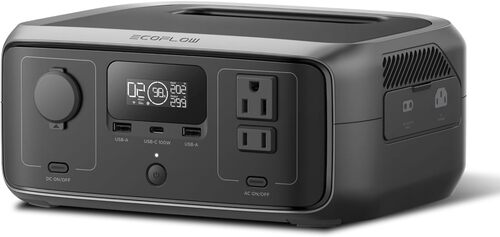
Best for Light Camping

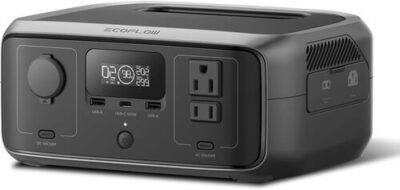
EcoFlow RIVER 3 Review: A Tiny LiFePO4 Backup for Routers, Laptops, CPAP, and Camping

EcoFlow RIVER 3 Review: A Tiny LiFePO4 Backup for Routers, Laptops, CPAP, and Camping

Get it now:

Check latest price

What to know

  • Energy: 245 Wh
  • AC boundary: 300 W continuous
  • Solar: 110 W (MPPT, EcoFlow solar input cable / adapter may be needed)
  • Handling: 7.8 lb

Best if

  • This article's priority is a 7.8-pound station for lights, cameras, phones, and other low-draw camp essentials.
  • 245Wh LFP battery in a very portable 7.8-pound form.
  • The exact load and recovery plan fit 245 Wh and 300 W continuous.

Skip if

  • UPS transfer and restoration must be tested with the exact device.
  • You need a different capacity, voltage, outlet, or movement class.
  • The purchase depends on an unverified adapter, surge claim, or best-case solar day.

The case for EF ECOFLOW EcoFlow RIVER 3 / EFR705 starts with fit rather than brand. It provides a 7.8-pound station for lights, cameras, phones, and other low-draw camp essentials.

Its documented snapshot pairs 245 Wh with 300 W continuous and 110 W (MPPT, EcoFlow solar input cable / adapter may be needed) maximum solar input. Treat those as design limits, not measured promises. Confirm connectors, input windows, recharge modes, and accessory requirements in the current manual, then test the intended load during the return window.

BrandEF ECOFLOW
Model / SKUEcoFlow RIVER 3 / EFR705 (ASIN: B0DB1S36YP)
Battery capacity245 Wh
Battery chemistryLiFePO4 (LFP)
Cycle-life rating3,000+ cycles
Expandable capacityNo
Continuous AC output300 W continuous
Surge / peak output600 W peak / X-Boost
AC voltage, frequency, and waveform120V AC, pure sine wave; frequency not published for this exact model
AC outlets2 × 120V AC outlets
High-current, RV, or 240V outputNo dedicated RV, 30A, 240V, or other high-current AC outlet published for this exact model
USB-C outputs1 × USB-C (100W PD output; no USB-C input)
USB-A outputs2 × USB-A
12V / DC outputs1 × 12V/10A car port
Maximum solar input110 W (MPPT, EcoFlow solar input cable / adapter may be needed)
Solar input range and connectorNot published for this exact model in the current source set; exact PV voltage/current window and connector are unavailable
Maximum AC inputNot published for this exact model in the current source set; the prior value was an editorial estimate, not an exact-model rating
AC recharge timeAbout 1 hour
Solar recharge estimatePlanning estimate: about 2.6 hours with 110W solar input (ideal sun)
UPS / EPS support and transfer timeYes — under 20ms switchover (EPS-style backup)
App / connectivityYes — EcoFlow app (Wi-Fi + Bluetooth)
Operating temperature / weather ratingIP54 battery protection; exact operating-temperature range is not published in the current source set
DimensionsNot published for this exact model in the current source set
Weight7.8 lb
WarrantyNot published for this exact model in the current source set
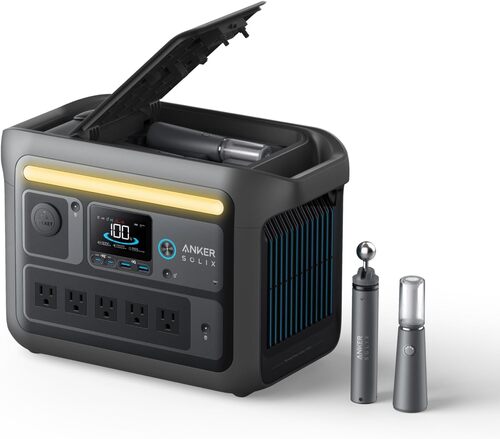
Best Camping Bundle

Anker SOLIX C800X review: a camping-ready power station with lights and solar in the box

Anker SOLIX C800X review: a camping-ready power station with lights and solar in the box

Get it now:

Check latest price

What to know

  • Energy: 768 Wh
  • AC boundary: 1200 W continuous
  • Solar: 300 W (connector type not specified; PS100X 100W panel included)
  • Handling: 24.03 lb (10.9 kg)

Best if

  • This article's priority is a 768Wh station paired with a 100W panel and enough 1,200W output for a broader family-camp load list.
  • Camping lights and solar bundle can replace several separate purchases.
  • The exact load and recovery plan fit 768 Wh and 1200 W continuous.

Skip if

  • 768Wh remains modest for repeated high-watt camp cooking.
  • You need a different capacity, voltage, outlet, or movement class.
  • The purchase depends on an unverified adapter, surge claim, or best-case solar day.

768 Wh and 1200 W continuous define the boundary for Anker SOLIX C800X Plus / A1755; the reason it appears here is a 768Wh station paired with a 100W panel and enough 1,200W output for a broader family-camp load list.

Its documented snapshot pairs 768 Wh with 1200 W continuous and 300 W (connector type not specified; PS100X 100W panel included) maximum solar input. Treat those as design limits, not measured promises. Confirm connectors, input windows, recharge modes, and accessory requirements in the current manual, then test the intended load during the return window.

BrandAnker
Model / SKUSOLIX C800X Plus / A1755 (ASIN: B0G6ZDP75P)
Battery capacity768 Wh
Battery chemistryLiFePO4 (LFP)
Cycle-life rating3,000 cycles
Expandable capacityNo
Continuous AC output1200 W continuous
Surge / peak output1600 W peak (SurgePad technology)
AC voltage, frequency, and waveform120V, 60Hz; waveform not published for this exact model
AC outlets5 × 120V AC outlets
High-current, RV, or 240V outputNo dedicated RV, 30A, 240V, or other high-current AC outlet published for this exact model
USB-C outputs2 × USB-C: 100W maximum and 30W maximum
USB-A outputs2 × USB-A, 12W maximum per port
12V / DC outputs1 × 12V/10A car socket
Maximum solar input300 W (connector type not specified; PS100X 100W panel included)
Solar input range and connector11–60V, 10A, 300W maximum; XT60 input
Maximum AC input1,100W UltraFast charging; 750W standard charging
AC recharge time58 minutes to 100% in UltraFast mode
Solar recharge estimate80% in 2.3 hours
UPS / EPS support and transfer timeYes
App / connectivityYes (smart app controls mentioned)
Operating temperature / weather ratingDischarge: -4–104°F (-20–40°C); charge: 32–104°F (0–40°C); ingress rating not published
Dimensions14.61 × 8.07 × 9.96 in (371 × 205 × 253 mm)
Weight24.03 lb (10.9 kg)
Warranty5-year manufacturer warranty
Best Weekend All-Rounder

Jackery Explorer 1000 v2 Review: Fast-Charging Backup Power That Travels Well

Jackery Explorer 1000 v2 Review: Fast-Charging Backup Power That Travels Well

Get it now:

Check latest price

What to know

  • Energy: 1070 Wh
  • AC boundary: 1500 W continuous (pure sine wave)
  • Solar: 400 W (MPPT, Jackery solar panel compatibility noted)
  • Handling: 23.8 lb (10.8 kg)

Best if

  • This article's priority is a 1,070Wh LFP station that stays under 24 pounds while covering most car-camping appliances.
  • Fast AC recovery and up to 400W solar input.
  • The exact load and recovery plan fit 1070 Wh and 1500 W continuous (pure sine wave).

Skip if

  • No capacity expansion path for longer backup.
  • You need a different capacity, voltage, outlet, or movement class.
  • The purchase depends on an unverified adapter, surge claim, or best-case solar day.

Choose Jackery JE-1000D when the priority is a 1,070Wh LFP station that stays under 24 pounds while covering most car-camping appliances.

Its documented snapshot pairs 1070 Wh with 1500 W continuous (pure sine wave) and 400 W (MPPT, Jackery solar panel compatibility noted) maximum solar input. Treat those as design limits, not measured promises. Confirm connectors, input windows, recharge modes, and accessory requirements in the current manual, then test the intended load during the return window.

BrandJackery
Model / SKUJE-1000D (ASIN: B0D7PPG25F)
Battery capacity1070 Wh
Battery chemistryLiFePO4 (LFP)
Cycle-life rating4,000 cycles to 70% capacity
Expandable capacityNo (no dedicated expansion battery system specified)
Continuous AC output1500 W continuous (pure sine wave)
Surge / peak output3000 W peak
AC voltage, frequency, and waveform120V AC, pure sine wave; frequency not published for this exact model
AC outlets3 × 120V AC outlets
High-current, RV, or 240V outputNo dedicated RV, 30A, 240V, or other high-current AC outlet published for this exact model
USB-C outputs2 × USB-C (up to 100W PD specified)
USB-A outputs1 × USB-A
12V / DC outputs1 × 12V car port
Maximum solar input400 W (MPPT, Jackery solar panel compatibility noted)
Solar input range and connectorNot published for this exact model in the current source set; exact PV voltage/current window and connector are unavailable
Maximum AC input~1200 W (emergency fast-charge mode)
AC recharge time1 hour (fast) / 1.7 hours (default)
Solar recharge estimatePlanning estimate: ~3-4 hours with 400W panels in strong sun (estimated from capacity and input limit)
UPS / EPS support and transfer timeNot published for this exact model in the current source set
App / connectivityYes — Jackery App (Wi-Fi + Bluetooth)
Operating temperature / weather ratingNot published for this exact model in the current source set
Dimensions12.87 × 8.82 × 9.72 in
Weight23.8 lb (10.8 kg)
WarrantyNot published for this exact model in the current source set
Best for RV Base Camp

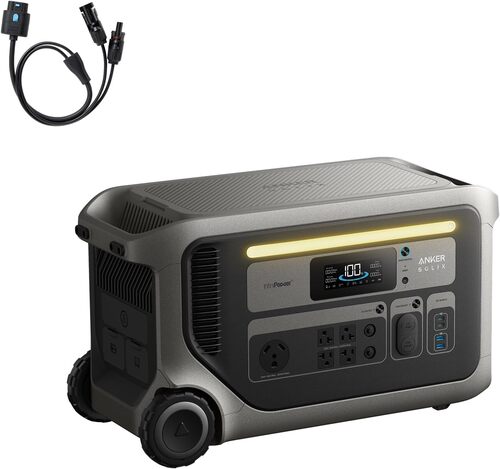
Anker SOLIX F3000 Review: Big Backup Power That Still Moves

Anker SOLIX F3000 Review: Big Backup Power That Still Moves

Get it now:

Check latest price

What to know

  • Energy: 3,072 Wh
  • AC boundary: 3,600 W continuous
  • Solar: 2,400 W
  • Handling: 91.49 lb

Best if

  • This article's priority is a 3,072Wh station with TT-30R output, 2,400W solar input, and expansion for long stays.
  • Expansion and paired-unit options create a growth path.
  • The exact load and recovery plan fit 3,072 Wh and 3,600 W continuous.

Skip if

  • Roughly 90 lb despite the portable format.
  • You need a different capacity, voltage, outlet, or movement class.
  • The purchase depends on an unverified adapter, surge claim, or best-case solar day.

Anker SOLIX F3000 / A1782 earns the Best for RV Base Camp position because it gives this shortlist a 3,072Wh station with TT-30R output, 2,400W solar input, and expansion for long stays.

Its documented snapshot pairs 3,072 Wh with 3,600 W continuous and 2,400 W maximum solar input. Treat those as design limits, not measured promises. Confirm connectors, input windows, recharge modes, and accessory requirements in the current manual, then test the intended load during the return window.

BrandAnker SOLIX
Model / SKUAnker SOLIX F3000 / A1782 (ASIN: B0F8BC2LFS)
Battery capacity3,072 Wh
Battery chemistryLiFePO4 (LFP)
Cycle-life rating4,000 cycles to 80% remaining capacity
Expandable capacityYes — expandable up to 24kWh (exact expansion-battery count not specified)
Continuous AC output3,600 W continuous
Surge / peak output4,860W SurgePad; 7,200W AC surge
AC voltage, frequency, and waveform120V AC; frequency and waveform not published in the current exact-model source set
AC outlets4 × NEMA 5-20R plus 1 × NEMA TT-30R
High-current, RV, or 240V output1 × NEMA TT-30R; 240V output requires two F3000 units in parallel
USB-C outputs2 × USB-C, 100W maximum each
USB-A outputs2 × USB-A, 12W maximum each
12V / DC outputs1 × 120W car socket plus 1 × 402W Anderson output
Maximum solar input2,400 W
Solar input range and connectorHigh-PV: 11–165V, 1,600W maximum; Low-PV: 11–60V, 800W maximum
Maximum AC input1,800W from a standard AC outlet; up to 3,600W through supported generator or EV charging
AC recharge timeNot published for this exact model in the current source set
Solar recharge estimateApproximately 1.5 hours at the full 2,400W solar input under suitable conditions
UPS / EPS support and transfer timeUPS support with 20ms transfer time
App / connectivityYes — Anker app
Operating temperature / weather ratingCharge: 32–104°F (0–40°C); exact discharge range and ingress rating not published in the current source set
Dimensions25.6 × 11.8 × 14.8 in (651 × 300 × 377 mm)
Weight91.49 lb
Warranty5-year manufacturer warranty
Best Outdoor-Rated Base Camp

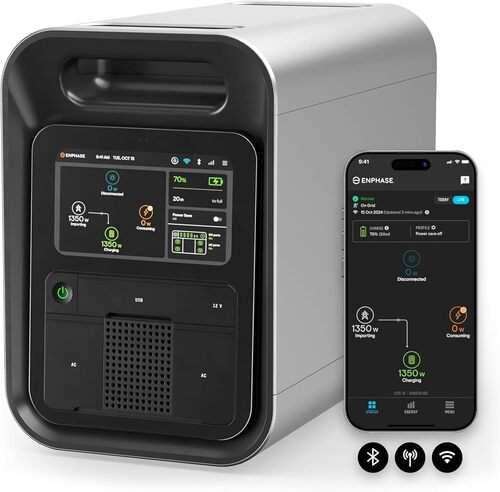
Enphase IQ PowerPack 1500 Review: Quiet Backup Power for Fridges, RVs, and Home Outages

Enphase IQ PowerPack 1500 Review: Quiet Backup Power for Fridges, RVs, and Home Outages

Get it now:

Check latest price

What to know

  • Energy: 1,500 Wh
  • AC boundary: 1,500 W continuous (clean AC output via built-in IQ8 microinverters)
  • Solar: Not published for this exact model in the current source set
  • Handling: 45.9 lb

Best if

  • This article's priority is a 1,500Wh power pack with an outdoor-use certification and fast backup transfer for a sheltered base camp.
  • 1,500Wh usable LFP capacity with clearly published electrical limits.
  • The exact load and recovery plan fit 1,500 Wh and 1,500 W continuous (clean AC output via built-in IQ8 microinverters).

Skip if

  • 440W solar input and 10A ceiling require disciplined array matching.
  • You need a different capacity, voltage, outlet, or movement class.
  • The purchase depends on an unverified adapter, surge claim, or best-case solar day.

For buyers using best portable power station for camping as the decision, Enphase Energy IQ PowerPack 1500 / PES-1515-BL-US fills a distinct role: a 1,500Wh power pack with an outdoor-use certification and fast backup transfer for a sheltered base camp.

Its documented snapshot pairs 1,500 Wh with 1,500 W continuous (clean AC output via built-in IQ8 microinverters) and Not published for this exact model in the current source set maximum solar input. Treat those as design limits, not measured promises. Confirm connectors, input windows, recharge modes, and accessory requirements in the current manual, then test the intended load during the return window.

BrandEnphase Energy
Model / SKUIQ PowerPack 1500 / PES-1515-BL-US (ASIN: B0DVZ8ML4J)
Battery capacity1,500 Wh
Battery chemistryLiFePO4 (LFP)
Cycle-life rating2,500 cycles
Expandable capacityNot published for this exact model in the current source set
Continuous AC output1,500 W continuous (clean AC output via built-in IQ8 microinverters)
Surge / peak output1,500 W listed starting wattage
AC voltage, frequency, and waveform120V AC, waveform not published; frequency not published for this exact model
AC outlets4 × 120V AC outlets
High-current, RV, or 240V outputNo dedicated RV, 30A, 240V, or other high-current AC outlet published for this exact model
USB-C outputs2 × USB-C (wattage not specified)
USB-A outputs4 × USB-A (wattage not specified)
12V / DC outputs1 × DC 12V output
Maximum solar inputNot published for this exact model in the current source set
Solar input range and connectorNot published for this exact model in the current source set; exact PV voltage/current window and connector are unavailable
Maximum AC inputNot published for this exact model in the current source set; the prior value was an editorial estimate, not an exact-model rating
AC recharge timeUnder 75 minutes
Solar recharge estimatePlanning estimate: roughly 4 hours
UPS / EPS support and transfer timeYes — under 10ms grid-to-backup switch
App / connectivityYes — Enphase app / Enlighten app via 4G cellular, Wi-Fi, and Bluetooth
Operating temperature / weather rating-4–122°F (-20–50°C); UL 2743 outdoor-use certification
Dimensions16.5 × 9.3 × 13.6 inches
Weight45.9 lb
Warranty5 years or 2,500 cycles, whichever occurs first

Product Comparison

Feature EcoFlow RIVER 3 Review: A Tiny LiFePO4 Backup for Routers, Laptops, CPAP, and Camping Anker SOLIX C800X review: a camping-ready power station with lights and solar in the box Jackery Explorer 1000 v2 Review: Fast-Charging Backup Power That Travels Well Anker SOLIX F3000 Review: Big Backup Power That Still Moves Enphase IQ PowerPack 1500 Review: Quiet Backup Power for Fridges, RVs, and Home Outages
Product Image
EcoFlow RIVER 3 Review: A Tiny LiFePO4 Backup for Routers, Laptops, CPAP, and Camping
Anker SOLIX C800X review: a camping-ready power station with lights and solar in the box
Jackery Explorer 1000 v2 Review: Fast-Charging Backup Power That Travels Well
Anker SOLIX F3000 Review: Big Backup Power That Still Moves
Enphase IQ PowerPack 1500 Review: Quiet Backup Power for Fridges, RVs, and Home Outages
Price $239 $196.32 $519.99 $449.99 $799.99 $428.99 $1699 $1399 $1549 $999
Rating
4.2 / 5
4.7 / 5
4.7 / 5
4.6 / 5
4.6 / 5
Category Portable Power Stations Portable Power Stations Portable Power Stations Portable Power Stations Portable Power Stations
Brand EF ECOFLOW Anker Jackery Anker SOLIX Enphase Energy
Model / SKU EcoFlow RIVER 3 / EFR705 (ASIN: B0DB1S36YP) SOLIX C800X Plus / A1755 (ASIN: B0G6ZDP75P) JE-1000D (ASIN: B0D7PPG25F) Anker SOLIX F3000 / A1782 (ASIN: B0F8BC2LFS) IQ PowerPack 1500 / PES-1515-BL-US (ASIN: B0DVZ8ML4J)
Battery capacity 245 Wh 768 Wh 1070 Wh 3,072 Wh 1,500 Wh
Battery chemistry LiFePO4 (LFP) LiFePO4 (LFP) LiFePO4 (LFP) LiFePO4 (LFP) LiFePO4 (LFP)
Cycle-life rating 3,000+ cycles 3,000 cycles 4,000 cycles to 70% capacity 4,000 cycles to 80% remaining capacity 2,500 cycles
Expandable capacity No No No (no dedicated expansion battery system specified) Yes — expandable up to 24kWh (exact expansion-battery count not specified) Not published for this exact model in the current source set
Continuous AC output 300 W continuous 1200 W continuous 1500 W continuous (pure sine wave) 3,600 W continuous 1,500 W continuous (clean AC output via built-in IQ8 microinverters)
Surge / peak output 600 W peak / X-Boost 1600 W peak (SurgePad technology) 3000 W peak 4,860W SurgePad; 7,200W AC surge 1,500 W listed starting wattage
AC voltage, frequency, and waveform 120V AC, pure sine wave; frequency not published for this exact model 120V, 60Hz; waveform not published for this exact model 120V AC, pure sine wave; frequency not published for this exact model 120V AC; frequency and waveform not published in the current exact-model source set 120V AC, waveform not published; frequency not published for this exact model
AC outlets 2 × 120V AC outlets 5 × 120V AC outlets 3 × 120V AC outlets 4 × NEMA 5-20R plus 1 × NEMA TT-30R 4 × 120V AC outlets
High-current, RV, or 240V output No dedicated RV, 30A, 240V, or other high-current AC outlet published for this exact model No dedicated RV, 30A, 240V, or other high-current AC outlet published for this exact model No dedicated RV, 30A, 240V, or other high-current AC outlet published for this exact model 1 × NEMA TT-30R; 240V output requires two F3000 units in parallel No dedicated RV, 30A, 240V, or other high-current AC outlet published for this exact model
USB-C outputs 1 × USB-C (100W PD output; no USB-C input) 2 × USB-C: 100W maximum and 30W maximum 2 × USB-C (up to 100W PD specified) 2 × USB-C, 100W maximum each 2 × USB-C (wattage not specified)
USB-A outputs 2 × USB-A 2 × USB-A, 12W maximum per port 1 × USB-A 2 × USB-A, 12W maximum each 4 × USB-A (wattage not specified)
12V / DC outputs 1 × 12V/10A car port 1 × 12V/10A car socket 1 × 12V car port 1 × 120W car socket plus 1 × 402W Anderson output 1 × DC 12V output
Maximum solar input 110 W (MPPT, EcoFlow solar input cable / adapter may be needed) 300 W (connector type not specified; PS100X 100W panel included) 400 W (MPPT, Jackery solar panel compatibility noted) 2,400 W Not published for this exact model in the current source set
Solar input range and connector Not published for this exact model in the current source set; exact PV voltage/current window and connector are unavailable 11–60V, 10A, 300W maximum; XT60 input Not published for this exact model in the current source set; exact PV voltage/current window and connector are unavailable High-PV: 11–165V, 1,600W maximum; Low-PV: 11–60V, 800W maximum Not published for this exact model in the current source set; exact PV voltage/current window and connector are unavailable
Maximum AC input Not published for this exact model in the current source set; the prior value was an editorial estimate, not an exact-model rating 1,100W UltraFast charging; 750W standard charging ~1200 W (emergency fast-charge mode) 1,800W from a standard AC outlet; up to 3,600W through supported generator or EV charging Not published for this exact model in the current source set; the prior value was an editorial estimate, not an exact-model rating
AC recharge time About 1 hour 58 minutes to 100% in UltraFast mode 1 hour (fast) / 1.7 hours (default) Not published for this exact model in the current source set Under 75 minutes
Solar recharge estimate Planning estimate: about 2.6 hours with 110W solar input (ideal sun) 80% in 2.3 hours Planning estimate: ~3-4 hours with 400W panels in strong sun (estimated from capacity and input limit) Approximately 1.5 hours at the full 2,400W solar input under suitable conditions Planning estimate: roughly 4 hours
UPS / EPS support and transfer time Yes — under 20ms switchover (EPS-style backup) Yes Not published for this exact model in the current source set UPS support with 20ms transfer time Yes — under 10ms grid-to-backup switch
App / connectivity Yes — EcoFlow app (Wi-Fi + Bluetooth) Yes (smart app controls mentioned) Yes — Jackery App (Wi-Fi + Bluetooth) Yes — Anker app Yes — Enphase app / Enlighten app via 4G cellular, Wi-Fi, and Bluetooth
Operating temperature / weather rating IP54 battery protection; exact operating-temperature range is not published in the current source set Discharge: -4–104°F (-20–40°C); charge: 32–104°F (0–40°C); ingress rating not published Not published for this exact model in the current source set Charge: 32–104°F (0–40°C); exact discharge range and ingress rating not published in the current source set -4–122°F (-20–50°C); UL 2743 outdoor-use certification
Dimensions Not published for this exact model in the current source set 14.61 × 8.07 × 9.96 in (371 × 205 × 253 mm) 12.87 × 8.82 × 9.72 in 25.6 × 11.8 × 14.8 in (651 × 300 × 377 mm) 16.5 × 9.3 × 13.6 inches
Weight 7.8 lb 24.03 lb (10.9 kg) 23.8 lb (10.8 kg) 91.49 lb 45.9 lb
Warranty Not published for this exact model in the current source set 5-year manufacturer warranty Not published for this exact model in the current source set 5-year manufacturer warranty 5 years or 2,500 cycles, whichever occurs first
Buy Now View Deal View Deal View Deal View Deal View Deal

Which Camping Setup Fits?

RIVER 3 fits light trips, C800X Plus covers a larger family camp, Jackery 1000 v2 is the portable weekend all-rounder, F3000 serves an RV base camp, and IQ PowerPack offers an outdoor-rated stationary option.

Pack the entire system, not just the station, and leave with a cloudy-day fallback.

Frequently Asked Questions

How many watt-hours do I need for camping?

Small electronics may need 200–300Wh; a fridge and several days often move the plan toward 700–1,200Wh or more.

Can I keep a power station inside a tent?

Keep it dry and ventilated, away from bedding, heat, water, and blocked cooling paths. Follow the exact manual.

Will a 100W panel recharge my station daily?

It may cover modest electronics in good sun, but shade, season, and losses can reduce daily harvest sharply.

Can a camping station run a coffee maker?

Only when continuous output fits the maker. High draw may be brief but still consumes stored energy quickly.

What should I test before leaving?

Run the real fridge or medical load, verify the panel and every cable, and observe fan behavior and reserve.

Is the lightest station best for camping?

Not if it cannot run the load or finish the trip. Compare packed-system weight against the full energy plan.

×

About Solar Power Picks

Portable Solar Power, Backup Power, and Off-Grid Gear Guides

Your trusted source for honest, in-depth product reviews and comparisons.

Quick Links

  • Best Picks
  • Reviews
  • Guides
  • Comparisons
  • Calculator
  • Privacy policy
  • Favorites

Categories

  • Portable Power Stations
  • Solar Batteries
  • Solar Charge Controllers
  • Solar Generators
  • Solar Panels

© 2026 Solar Power Picks. All Rights Reserved.

We may earn a commission when you purchase through links on our site. Learn more