Solar Power Picks logo with sun, solar panel, and green energy icon

  • Home
  • Reviews
  • Best
    • Best portable power stations
  • Guides
    • Portable Power Stations Guides
  • Comparisons
    • Portable Power Stations Comparisons
  • Calculator

Jackery vs EcoFlow Power Station: Best Brand for Camping, RVs, and Backup

COMPARED PRODUCTS

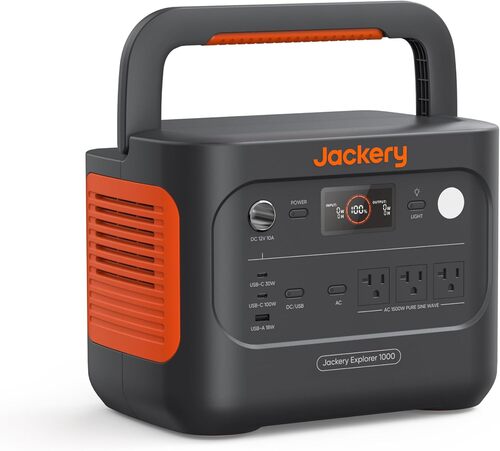
Jackery Explorer 1000 v2 Review: Fast-Charging Backup Power That Travels Well

Jackery Explorer 1000 v2 Review: Fast-Charging Backup Power That Travels Well

Check price at Amazon Jump to details
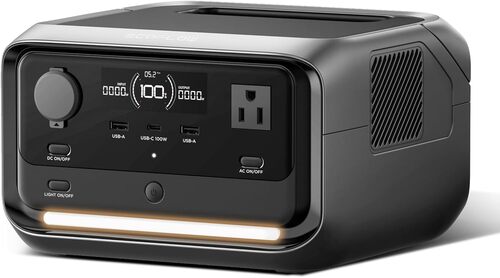
EcoFlow River 3 Plus review: Quiet UPS-style power for routers, CPAP, camping, and short outages

EcoFlow River 3 Plus review: Quiet UPS-style power for routers, CPAP, camping, and short outages

Check price at Amazon Jump to details
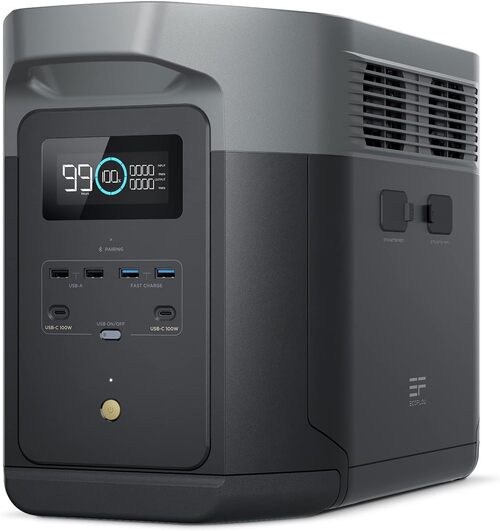
EcoFlow Delta 2 Max Review: Fast-Charging Backup for Blackouts, RVs, and Camping

EcoFlow Delta 2 Max Review: Fast-Charging Backup for Blackouts, RVs, and Camping

Check price at Amazon Jump to details

Choosing between Jackery vs EcoFlow usually comes down to philosophy as much as specs. Both brands appear in our top-rated portable power stations roundup. Jackery tends to feel simpler, more camping-friendly, and easier to understand for buyers who want a straightforward power station. EcoFlow usually leans harder into fast charging, app control, expandable systems, and higher solar input.

That doesn’t mean one brand wins for everyone. A lightweight Jackery Explorer 1000 V2 makes more sense for car camping than a heavy home-backup box. Read our Jackery Explorer 1000 v2 test notes for carry weight and charging speed. Meanwhile, the EcoFlow Delta 2 Max is much better suited to fridge backup, RV power, and longer outage prep than a tiny River model. See our EcoFlow Delta 2 Max outage review for load testing.

In this comparison, we’ll use four real models to ground the decision: Jackery Explorer 1000 V2, Jackery HomePower 3000, EcoFlow River 3 Plus, and EcoFlow Delta 2 Max. Campers should also browse quiet camping power station picks.

Jackery vs EcoFlow Quick Verdict

PickBest ForWhy
Choose JackeryCamping, simpler controls, RV convenienceJackery’s selected models are easy to understand, and the HomePower 3000 adds TT-30 RV support.
Choose EcoFlowFaster charging, solar flexibility, app-driven backupEcoFlow wins on solar input, expansion, small UPS-style use, and recharge speed.
Avoid both ifWhole-home multi-day backupThese models are better treated as backup power, not whole-home power.

Quick verdict: EcoFlow is the better fit if your main goal is fast charging, solar flexibility, and scalable backup power. Jackery is the easier pick if you want simpler camping power or a 3kWh RV-friendly station with a TT-30 port. Neither brand should be treated as a full replacement for a professionally installed whole-home battery system.

Best For Each Use Case

Use CaseWinnerWhy
CampingJackery Explorer 1000 V2It gives you 1070Wh without crossing 24 lb.
RV useJackery HomePower 3000The TT-30 RV port is the cleanest RV feature here.
Home backupEcoFlow Delta 2 MaxIt has strong capacity, expansion, fast charging, and six AC outlets.
CPAP / overnightJackery Explorer 1000 V2It has enough battery for overnight use without 50 lb weight.
Refrigerator backupJackery HomePower 3000The 3072Wh battery and 3600W output give it the most headroom.
Solar chargingEcoFlow Delta 2 MaxDual solar inputs and up to 1000W make it the clear solar winner.
Long-term ownershipTieAll four use LiFePO4 batteries with strong cycle-life claims.
Budget valueEcoFlow River 3 PlusIt’s the smallest option, but it fills the router / UPS role well.

Battery Capacity and Real-World Runtime

Battery capacity is where most shoppers start, but it’s easy to misunderstand. A 1,000Wh power station doesn’t mean you can always use the full 1,000Wh through AC outlets. Inverter losses and real-world efficiency reduce the usable amount, especially when running AC appliances.

The Jackery HomePower 3000 has the biggest battery in this matchup at 3072Wh. Unsure what capacity you need? Start with how to size a portable power station. The EcoFlow Delta 2 Max comes next at 2048Wh, while the Jackery Explorer 1000 V2 sits in the lighter 1kWh class. The EcoFlow River 3 Plus is a different tool entirely — better for routers, laptops, phones, and short backup jobs.

If you’re still learning runtime math, read our watts vs watt-hours guide before choosing a size.

DeviceTypical Power DrawJackery Explorer 1000 V2Jackery HomePower 3000EcoFlow River 3 PlusEcoFlow Delta 2 Max
Phone charging15–20Wh per charge~45–50 charges~130–140 charges~12–14 charges~85–95 charges
Laptop60–100Wh per charge~8–12 charges~25–35 charges~2–4 charges~18–25 charges
LED lights20W~40 hours~115 hours~11 hours~78 hours
CPAP, no humidifier40–60W~13–20 hours~38–57 hours~3–5 hours~26–39 hours
Wi-Fi router10–20W~40–80 hours~115–230 hours~11–22 hours~78–156 hours
Electric cooler40–80W average~10–20 hours~28–57 hours~3–5 hours~19–39 hours
Full-size refrigerator100–200W average + surge~4–8 hours~11–23 hoursNot ideal / short backup only~8–15 hours
Space heater1500WNot ideal / ~30 minutesNot ideal / ~90 minutesNoNot ideal / ~60 minutes

These are estimates based on listed capacity, typical inverter losses, and a small battery reserve — not measured runtimes. Refrigerator and cooler runtime can vary a lot because compressors cycle on and off.

Output Power: What Can They Actually Run?

Capacity tells you how long a power station can run something. Output tells you whether it can run that device at all. This is where continuous wattage matters more than the marketing-friendly surge numbers.

The EcoFlow River 3 Plus has a 600W inverter, so it’s best for routers, laptops, CPAP machines, small fans, lights, phones, and some small coolers. It can technically support higher short bursts with X-Boost, but buyers shouldn’t treat it like an appliance power station.

The Jackery Explorer 1000 V2 steps up to 1500W continuous and 3000W surge. That makes it much more useful for camping fridges, Starlink, coffee gear, microwaves in short bursts, and smaller tools. However, it’s still not the right pick for long heater use.

The EcoFlow Delta 2 Max gives you 2400W continuous output and six AC outlets. Meanwhile, the Jackery HomePower 3000 has the highest output here at 3600W continuous and 7200W surge.

Output winner: Jackery HomePower 3000 wins for raw appliance headroom. EcoFlow Delta 2 Max is the better middle-ground pick if you want strong output without moving a 60 lb box.

Charging Speed: AC, Solar, and Car

Charging speed matters more than many buyers expect. A larger battery is useful, but not if it takes all day to recharge before a trip or during an outage.

AC Charging

EcoFlow usually has the stronger fast-charging story. The Delta 2 Max can recharge in about 1–1.5 hours, while the River 3 Plus can recharge in about an hour. That’s excellent for storm prep, quick top-offs, or charging during a short generator window.

Jackery is still competitive. The Explorer 1000 V2 can hit about 1 hour in fast mode or 1.7 hours in default mode. The HomePower 3000 needs about 2.2 hours from AC, which is still quick for a 3kWh station.

Solar Charging

Solar is where EcoFlow pulls ahead. The Delta 2 Max supports up to 1000W solar input through dual inputs, though panel matching and XT60i / MC4 adapters still matter. The River 3 Plus supports up to 220W, which is strong for its small 286Wh battery.

Jackery’s selected models are more limited here. The Explorer 1000 V2 supports up to 400W solar input, and the HomePower 3000 is also listed around a 400W SolarSaga setup. That’s useful, but slower for large batteries.

Car Charging

Car charging works across this class, but it’s best treated as a top-off method. A 12V socket usually charges slowly compared with AC or solar.

Charging winner: EcoFlow wins overall because the Delta 2 Max has the best solar ceiling, expansion path, and fast AC behavior.

Portability and Weight

Both brands sell portable power stations, but “portable” means different things at different sizes. A 10 lb router backup unit and a 60 lb RV backup station should not be judged the same way.

  • Under 10 lb: easy grab-and-go power
  • 10–30 lb: realistic for car camping and room-to-room use
  • 30–50 lb: still movable, but not fun to carry far
  • 50+ lb: better treated as semi-portable backup power
  • 100+ lb: wheels matter more than handles

The EcoFlow River 3 Plus is the easiest to move at 10.4 lb. The Jackery Explorer 1000 V2 is the best camping-size balance at 23.8 lb, because it gives you a real 1kWh battery without becoming a two-person lift.

The EcoFlow Delta 2 Max sits at about 50.7 lb, so it’s movable but not fun to carry far. The Jackery HomePower 3000 is heavier at 59.52 lb and really benefits from a cart or fixed RV / garage spot.

Portability winner: Jackery Explorer 1000 V2 for camping; EcoFlow River 3 Plus for desk, router, and small UPS-style backup.

Battery Chemistry and Lifespan

Battery chemistry affects lifespan more than most shoppers realize. LiFePO4 batteries are usually heavier, but they offer much longer cycle life and better long-term durability. Older NMC-style lithium-ion batteries can be lighter, but they usually have shorter cycle ratings.

The good news is simple: all four selected models use LiFePO4 batteries. That makes this Jackery vs EcoFlow comparison much closer than older brand matchups where Jackery often used more NMC models.

Battery TypeBest ForTradeoff
LiFePO4 / LFPLong-term ownership, home backup, frequent useHeavier per Wh
NMC / lithium-ionLightweight camping units, occasional useShorter cycle life, less thermally stable

Jackery’s two selected units claim 4,000 cycles to 70% capacity. EcoFlow’s two selected units claim 3,000 cycles to 80% capacity. Those aren’t directly identical ratings, but both are strong for frequent use.

If you’ll cycle the battery often, LiFePO4 is usually the safer long-term bet.

Ports, Display, App, and Everyday Usability

Small usability details matter more during an outage than they do on a product page. A clear display, accurate runtime estimate, quiet fan, and enough outlets can make the difference between easy backup and a frustrating night.

Jackery’s biggest usability win is simplicity. The Explorer 1000 V2 has three AC outlets, two USB-C ports, a USB-A port, and a familiar car socket. The HomePower 3000 adds a TT-30 RV port, which matters more for RV owners than extra USB ports.

EcoFlow wins on app-driven control and port density. The Delta 2 Max gives you six AC outlets, dual USB-C, four USB-A ports, dual solar inputs, and expansion battery ports. The River 3 Plus adds under-10ms UPS-style switchover for routers, modems, cameras, and home-office gear.

For CPAP or bedroom use, fan noise still matters. Fast charging usually makes any brand louder, so slower overnight charging is the better habit.

Usability winner: EcoFlow for app, UPS-style behavior, and port flexibility; Jackery for simpler use and RV-specific convenience.

Price and Value

The cheaper power station isn’t always the better value. If one model costs more but includes LiFePO4 chemistry, faster charging, a longer warranty, better ports, or expansion support, it may be the better long-term buy.

Because power-station pricing changes constantly, use current checkout pricing before publishing exact $/Wh figures. The formula is simple: current price ÷ listed Wh capacity.

Value FactorJackeryEcoFlow
Lower upfront priceOften competitive on camping unitsOften strong on River and Delta sales
Better $/WhCalculate from current sale price ÷ WhCalculate from current sale price ÷ Wh
Better long-term battery lifeStrong LFP cycle ratings in these modelsStrong LFP ratings plus expansion on selected models
Better warrantyNot specified in supplied data for selected products5 years listed for River 3 Plus and Delta 2 Max
Better for future expansionNo expansion on these selected modelsRiver 3 Plus and Delta 2 Max both support expansion
Stronger sale / deal potentialGood when Jackery bundles panelsGood when EcoFlow discounts Delta bundles

$/Wh is useful, but it doesn’t capture chemistry, output, warranty, or ecosystem. Value winner: EcoFlow for expansion and solar flexibility; Jackery when you want simple camping or RV-ready backup without building a larger system.

Jackery Explorer 1000 v2 Review: Fast-Charging Backup Power That Travels Well

Jackery Explorer 1000 v2 Review: Fast-Charging Backup Power That Travels Well

Get it now:

Check latest price

What to know

  • 1,070Wh LiFePO4 battery with 1,500W pure-sine output for camp appliances
  • 3,000W surge helps with fridge compressors and short startup loads
  • Fast AC recharge: about 1.7 hours standard, 1 hour in fast mode
  • 23.8 lb body with folding handle — easy for car camping
  • 400W solar ceiling works, but Jackery panel compatibility matters

Best if

  • You’re building a car-camping setup around a fridge, CPAP, lights, and laptops
  • You value a lighter 1kWh LiFePO4 unit that one person can move
  • You’re okay using Jackery-compatible solar panels or adapters

Skip if

  • You need multi-day backup without adding a second power station
  • You’d rather have a wheeled 3kWh station for home-only use
  • You already own MC4 panels and want a more open solar setup


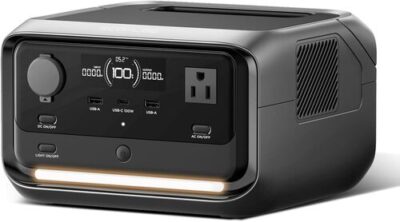
The Jackery Explorer 1000 V2 is the best Jackery pick here for camping, CPAP backup, Starlink, short outages, and car-based travel. It gives you 1070Wh, a 1500W pure-sine inverter, and a 23.8 lb body, which is a strong balance for a 1kWh-class LiFePO4 station. The main tradeoff is fixed capacity. Unlike EcoFlow’s expandable models, this Jackery doesn’t give you a simple add-on battery path.

Capacity1,070Wh (no dedicated expansion battery system)
AC Output1,500W continuous, 3,000W surge (pure sine)
Solar Input400W max via Jackery-compatible solar input
AC Charging~1.7h full / ~1h fast-charge mode, up to ~1,200W
Weight23.8 lb (10.8 kg)
Best EdgeLightest full-size camping unit in this matchup
Main TradeoffFixed 1kWh capacity — no expansion battery path

EcoFlow River 3 Plus review: Quiet UPS-style power for routers, CPAP, camping, and short outages

EcoFlow River 3 Plus review: Quiet UPS-style power for routers, CPAP, camping, and short outages

Get it now:

Check latest price

What to know

  • 286Wh LiFePO4 battery suits routers, CPAP, laptops, and lights
  • 600W AC output covers small electronics and some brief appliance loads
  • Under-10ms UPS-style switchover helps protect networking gear
  • Charges from AC in about 1 hour before storms or trips
  • 10.4 lb body is the easiest carry in this comparison

Best if

  • You’re backing up a router, modem, NAS, camera, or home-office setup
  • You like quiet bedside or desk-side power with UPS-style behavior
  • You want a compact unit that can expand later with EB batteries

Skip if

  • You need long full-size fridge runtime during overnight outages
  • You can’t tolerate app login, firmware, or pairing quirks
  • You’d rather buy one larger battery instead of adding modules


The EcoFlow River 3 Plus is not trying to compete with big backup stations. Instead, it’s the small EcoFlow pick for routers, modems, cameras, CPAP use, laptops, lights, and short outages. Its 286Wh battery is limited, but the under-10ms UPS-style switchover and fast one-hour AC recharge make it practical for home-office electronics. The main tradeoff is obvious: it’s not built for full-size fridge backup or high-draw appliances.

Capacity286Wh (expandable up to 858Wh with EB300 / EB600 batteries)
AC Output600W continuous, 1,200W X-Boost (waveform not specified)
Solar Input220W max via EcoFlow solar input (connector not specified in source data)
AC Charging~1h full, up to ~350W
Weight10.4 lb (4.7 kg)
Best EdgeOnly compact model here with sub-10ms UPS-style switchover
Main TradeoffSmallest battery — shortest runtime for fridges and fans

EcoFlow Delta 2 Max Review: Fast-Charging Backup for Blackouts, RVs, and Camping

EcoFlow Delta 2 Max Review: Fast-Charging Backup for Blackouts, RVs, and Camping

Get it now:

Check latest price

What to know

  • 2,048Wh LiFePO4 capacity works well for fridges, CPAP, and RV basics
  • 2,400W AC output handles many appliances and small power tools
  • 1,000W solar input via dual inputs supports stronger off-grid recovery
  • Expandable to 6,144Wh with two extra batteries
  • Fast AC charging reaches full in about 1–1.5 hours

Best if

  • You’re running fridge backup, CPAP, Wi-Fi, fans, and mixed household loads
  • You plan to use larger solar arrays for RV or blackout recovery
  • You value expandable capacity for longer outage planning

Skip if

  • You want the lightest possible unit for frequent solo carrying
  • You need a simple no-app backup setup with fewer firmware concerns
  • You’d rather avoid the cost and cable complexity of extra batteries


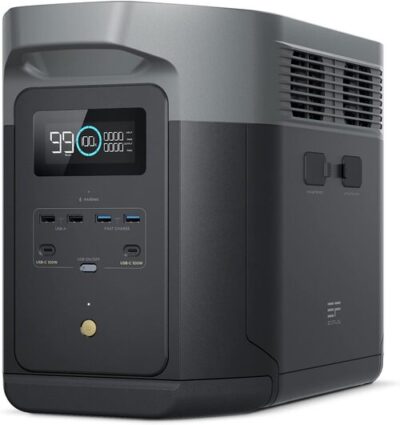
The EcoFlow Delta 2 Max is the strongest EcoFlow all-rounder in this matchup. Its 2048Wh LiFePO4 battery, 2400W AC output, six AC outlets, 1000W solar ceiling, and expansion support make it a better fit for home backup, RV trips, fridge duty, and solar-heavy use than the smaller River model. The tradeoff is weight and complexity. At 50.7 lb, it’s more of a setup-and-use station than a casual carry.

Capacity2,048Wh (expandable up to 6,144Wh)
AC Output2,400W continuous, 4,800W surge / 3,400W X-Boost (pure sine not specified)
Solar Input1,000W max via dual XT60i / MC4 adapter setup
AC Charging~1–1.5h full, up to 1,800W
Weight50.7 lb (23 kg)
Best EdgeLargest solar ceiling and only expandable high-capacity system here
Main TradeoffMore app-dependent than Jackery for backup-critical settings

Product Comparison

Feature Jackery Explorer 1000 v2 Review: Fast-Charging Backup Power That Travels Well EcoFlow River 3 Plus review: Quiet UPS-style power for routers, CPAP, camping, and short outages EcoFlow Delta 2 Max Review: Fast-Charging Backup for Blackouts, RVs, and Camping
Product Image
Jackery Explorer 1000 v2 Review: Fast-Charging Backup Power That Travels Well
EcoFlow River 3 Plus review: Quiet UPS-style power for routers, CPAP, camping, and short outages
EcoFlow Delta 2 Max Review: Fast-Charging Backup for Blackouts, RVs, and Camping
Price $799.99 $428.99 $299.99 $279.99 $1399.99 $899
Rating
4.7 / 5
4.6 / 5
4.3 / 5
Category Portable Power Stations Portable Power Stations Portable Power Stations
Brand Jackery EF ECOFLOW EF ECOFLOW
Model / SKU JE-1000D (ASIN: B0D7PPG25F) RIVER 3 Plus / EF-RV-H02-1 (ASIN: B0DCCB657J) DELTA2 Max / EFD350 (ASIN: B0C4DW17PD)
Battery capacity 1070 Wh 286 Wh 2048 Wh
Battery chemistry LiFePO4 (LFP) LiFePO4 (LFP) LiFePO4 (LFP)
Cycle life 4,000 cycles to 70% capacity 3,000 cycles to 80% capacity (claimed) 3000 cycles to 80% capacity (claimed)
Expandable battery No (no dedicated expansion battery system specified) Yes — supports EB300 or EB600 extra batteries, up to 858Wh total (claimed) Yes — supports up to 2 expansion batteries (up to 6144 Wh total)
AC output 1500 W continuous (pure sine wave) 600 W continuous (waveform not specified in supplied product data) 2400 W continuous (120V AC; pure sine wave not specified in supplied data)
Surge output 3000 W peak 1200 W with X-Boost (claimed) 4800 W starting wattage (3400 W via X-Boost for some high-wattage appliances)
AC outlets 3 × 120V AC outlets 3 × 110V AC outlets (UPS-supported) 6 × 120V AC outlets
USB-C ports 2 × USB-C (up to 100W PD specified) 1 × USB-C (up to 100W reported by customers) 2 × USB-C (100W PD mentioned in customer feedback)
USB-A ports 1 × USB-A 2 × USB-A 4 × USB-A (2 standard + 2 fast-charge mentioned in customer feedback)
12V car socket 1 × 12V car port 1 × 12V car port 1 × 12V car port
Max solar input 400 W (MPPT, Jackery solar panel compatibility noted) 220 W (MPPT input claimed; connector details not specified in supplied data) 1000 W (dual 500 W inputs; XT60i / MC4 adapter setup may be needed)
Max AC input ~1200 W (emergency fast-charge mode) ~350 W (estimated from 1-hour recharge claim and owner-reported charging around the high-300W range) 1800 W (fast AC charging, adjustable in app)
AC recharge time 1 hour (fast) / 1.7 hours (default) About 1 hour (0-100%, claimed) About 1-1.5 hours (fast mode; varies by input setting and starting charge)
Solar recharge time ~3-4 hours with 400W panels in strong sun (estimated from capacity and input limit) As little as 1.5 hours with up to 220W solar input (ideal sun, claimed) About 2.5-3.5 hours with full 1000 W solar in ideal sun (real-world conditions vary)
UPS / EPS support Not specified (some customers use it for router / internet backup) Yes — under 10 ms switchover (claimed; customer reports are mostly positive with some caveats) Yes — EPS-style pass-through support (customer feedback is mixed for critical unattended loads)
App support Yes — Jackery App (Wi-Fi + Bluetooth) Yes — EcoFlow app via Bluetooth and Wi-Fi Yes — EcoFlow app (Wi-Fi / Bluetooth control and monitoring)
Built-in light Yes — LED light Yes — built-in light No (not specified in supplied product data or customer feedback)
Weight 23.8 lb (10.8 kg) 10.4 lb (listed in product bullets; some customers report about 10.6 lb for the station) 23 kg / about 50.7 lb
Best for Camping, RV nights, CPAP backup, fridge backup, short blackouts, Starlink, routers, laptops, phones, fans, lights, and mobile work Router and modem UPS, security cameras, CPAP backup, phones, laptops, car fridges, camping, overlanding, home-office backup, and short outages Home outage backup, refrigerators, CPAP machines, Wi-Fi routers, RVs, camping, van life, sailboat work, hurricane prep, and generator-assisted emergency systems
Buy Now View Deal View Deal View Deal

Final Verdict

Choose Jackery if you want a simpler buying experience, a lighter 1kWh camping unit, or a larger RV-friendly station with a TT-30 port. The Explorer 1000 V2 is the best fit for camping and short outages, while the HomePower 3000 makes more sense for RV dry camping, fridge backup, and storm prep.

Choose EcoFlow if you want faster charging, stronger solar input, better expansion support, and more app-driven control. The River 3 Plus is great for small UPS-style electronics backup, while the Delta 2 Max is the better all-rounder for RVs, refrigerators, CPAP machines, home office backup, and solar-supported outages.

For most people comparing Jackery vs EcoFlow, I’d lean toward EcoFlow because the Delta 2 Max gives you stronger solar charging, expansion, six AC outlets, and better long-term flexibility. However, if your main goal is car camping or RV plug-in convenience, Jackery still has the cleaner fit with the Explorer 1000 V2 and HomePower 3000.


Frequently Asked Questions

Is Jackery better than EcoFlow?

It depends on your use case. Jackery is better if you want simpler controls, strong camping portability, or RV-friendly features like the HomePower 3000’s TT-30 port. EcoFlow is better if you care more about fast charging, app control, solar input, and expandable capacity. In this matchup, EcoFlow has the stronger long-term system story, while Jackery feels easier for buyers who want straightforward portable power.

Which brand is better for camping?

Jackery has the edge for simple car camping, mainly because the Explorer 1000 V2 gives you 1070Wh and 1500W output at just 23.8 lb. That is easier to move than the 50.7 lb EcoFlow Delta 2 Max. However, EcoFlow can be better for longer camping trips if you plan to recharge with solar, especially because the Delta 2 Max supports up to 1000W solar input.

Which brand is better for home backup?

EcoFlow is usually the better home-backup pick in this group because the Delta 2 Max has 2048Wh capacity, 2400W output, six AC outlets, expansion support up to 6144Wh, and fast AC charging. The Jackery HomePower 3000 has more capacity at 3072Wh and higher 3600W output, so it wins for big 120V loads. However, its fixed battery capacity makes EcoFlow more flexible long term.

Can Jackery or EcoFlow run a refrigerator?

Yes, the larger models can run a refrigerator. The Jackery Explorer 1000 V2 can support shorter fridge backup, while the EcoFlow Delta 2 Max and Jackery HomePower 3000 are better choices for longer outages. The EcoFlow River 3 Plus is not ideal for a full-size fridge because its 286Wh battery is too small. Fridge runtime depends heavily on compressor cycling, room temperature, and starting surge.

Which brand charges faster?

EcoFlow generally has the charging advantage. The EcoFlow River 3 Plus recharges in about 1 hour, and the Delta 2 Max can recharge in about 1–1.5 hours from AC. Jackery is still fast, with the Explorer 1000 V2 offering a 1-hour fast mode and the HomePower 3000 charging in about 2.2 hours. Fast modes can increase fan noise on both brands.

Which brand is better for solar charging?

EcoFlow wins solar charging in this comparison. The Delta 2 Max supports up to 1000W of solar input through dual inputs, while the Jackery Explorer 1000 V2 and HomePower 3000 are listed around 400W. Jackery’s SolarSaga ecosystem is simple, but it can feel more brand-locked. EcoFlow may require adapter checks, but it gives you more solar headroom.

Are Jackery and EcoFlow better than a gas generator?

For indoor use, apartments, camping quiet hours, CPAP backup, and short outages, yes. Jackery and EcoFlow power stations are quiet, battery-powered, and safe to use indoors because they do not produce exhaust. A gas generator still wins for raw runtime during multi-day outages because you can refuel it. For longer emergency planning, read our portable power station vs gas generator guide before relying on batteries alone.

Which brand has better battery life?

In this selected lineup, both brands use LiFePO4 batteries, so both are strong for long-term ownership. Jackery lists 4,000 cycles to 70% capacity for the Explorer 1000 V2 and HomePower 3000. EcoFlow lists 3,000 cycles to 80% capacity for the River 3 Plus and Delta 2 Max. Those ratings are not identical, but both are far better than older NMC-style portable power stations.

×

About Solar Power Picks

Portable Solar Power, Backup Power, and Off-Grid Gear Guides

Your trusted source for honest, in-depth product reviews and comparisons.

Quick Links

  • Best Picks
  • Reviews
  • Guides
  • Comparisons
  • Calculator
  • Privacy policy
  • Favorites

Categories

  • Portable Power Stations

© 2026 Solar Power Picks. All Rights Reserved.

We may earn a commission when you purchase through links on our site. Learn more