Solar Power Picks logo with sun, solar panel, and green energy icon

  • Home
  • Reviews
  • Best
    • Best portable power stations
  • Guides
    • Portable Power Stations Guides
  • Comparisons
    • Portable Power Stations Comparisons
  • Calculator

Best 1000Wh Power Station: The Sweet-Spot Size for Camping, Backup, and RV Use

OUR PICKS

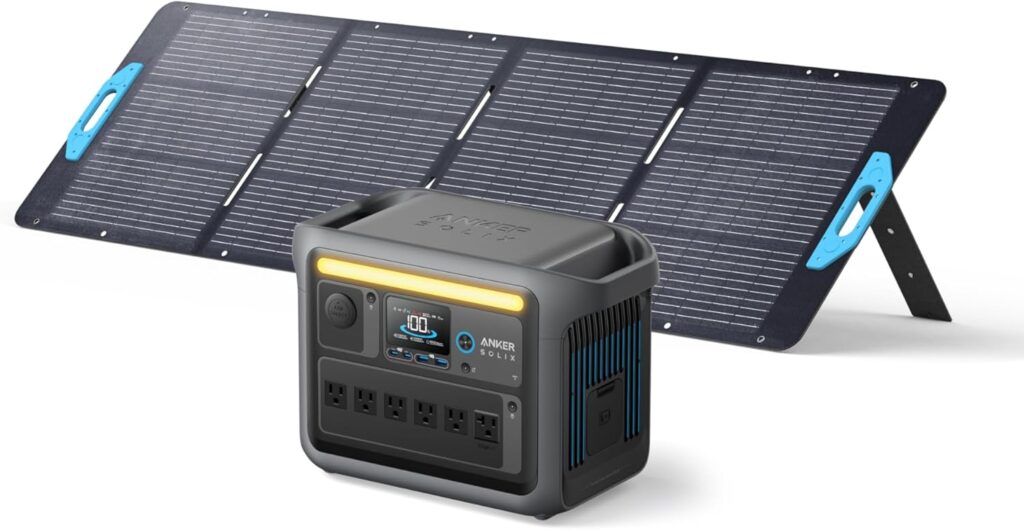
Anker SOLIX C1000 Gen 2 Review: Fast-Charging Backup Power That Actually Feels Useful

Best Overall 1000Wh Power Station

Anker SOLIX C1000 Gen 2 Review: Fast-Charging Backup Power That Actually Feels Useful

Check price at Amazon Jump to details
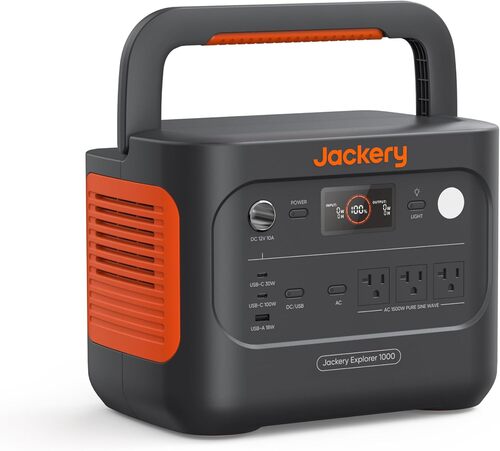
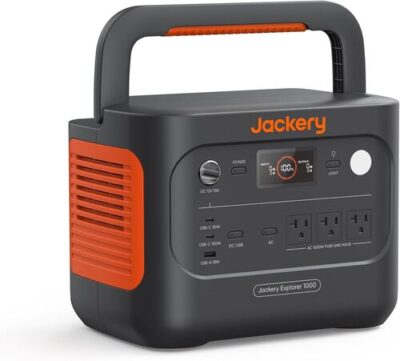
Jackery Explorer 1000 v2 Review: Fast-Charging Backup Power That Travels Well

Best 1000Wh Pick for Camping

Jackery Explorer 1000 v2 Review: Fast-Charging Backup Power That Travels Well

Check price at Amazon Jump to details
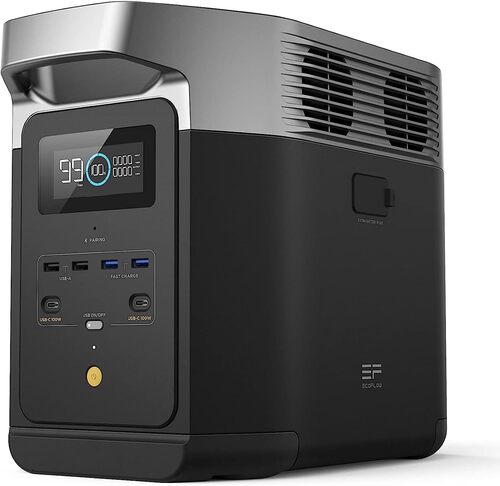
DJI Power 1000 V2 Review: Fast, Quiet Backup Power for Campers, Drone Pilots, and Short Outages

Best Quiet 1kWh Pick

DJI Power 1000 V2 Review: Fast, Quiet Backup Power for Campers, Drone Pilots, and Short Outages

Check price at Amazon Jump to details
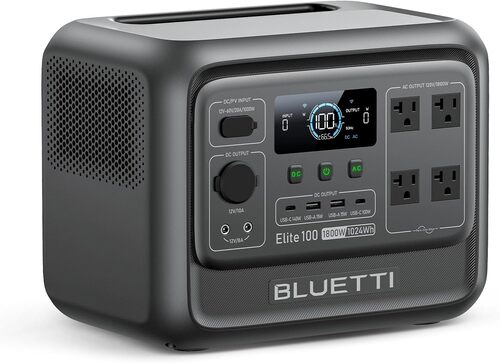
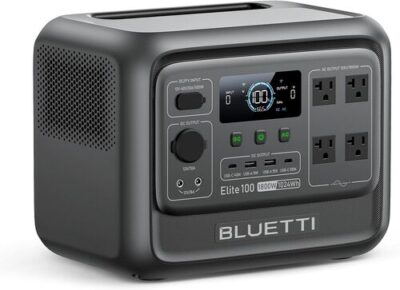
BLUETTI Elite 100 V2 Review: Fast 1kWh Backup Power That Travels Well

Best Fast-Charging Travel Pick

BLUETTI Elite 100 V2 Review: Fast 1kWh Backup Power That Travels Well

Check price at Amazon Jump to details
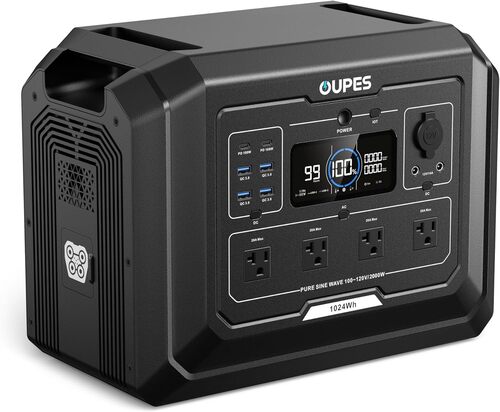
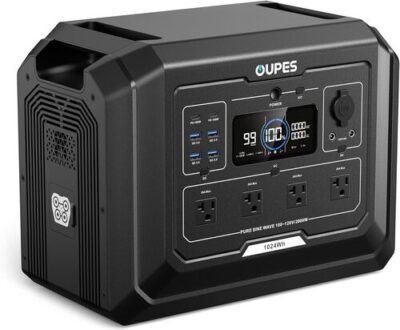
OUPES Mega 1 Review: Fast 1kWh Backup Power With Real Trade-Offs

Best Value 1kWh Pick

OUPES Mega 1 Review: Fast 1kWh Backup Power With Real Trade-Offs

Check price at Amazon Jump to details

The best 1000Wh power station is the one that gives you enough usable runtime, enough inverter output, and a weight you’ll actually tolerate — not just the biggest watt number on the box.

This is the awkward middle category. Smaller stations are easier to carry but run out fast. Bigger 2kWh units last longer but start feeling like garage gear. A 1,000Wh power station sits in the useful middle: strong enough for camping, CPAP, routers, Starlink, laptops, portable coolers, and short fridge backup, but still small enough to move without wheels. Compare across all sizes in our complete portable power station rankings.

That said, the right 1kWh pick depends on the tradeoff you care about most. Anker gives you the cleanest all-around balance. Jackery is the easy camping pick. DJI is the quiet creator-friendly option. BLUETTI pushes solar input harder. OUPES gives you the value and expansion angle.

1kWh reality check: Most 1,024Wh stations deliver roughly 750–850Wh of practical AC energy after inverter losses and reserve. Choosing between Anker generations? See Anker C1000 Gen 1 versus Gen 2 comparison. That’s useful power — but it’s not “run everything all day” power.

Before You Pick: Check Your Load

Use the portable power station size calculator if you’re unsure whether 1,000Wh is enough for your devices, trip length, and backup reserve.

1000Wh Power Station Comparison

ProductBest FitCapacityAC OutputSolar InputWeightMain Tradeoff
Anker SOLIX C1000 Gen 2Best all-around 1kWh pick1,024Wh2,000W / 3,000W surgeUp to 600W24.9 lbNot expandable
Jackery Explorer 1000 V2Camping and simple setup1,070Wh1,500W / 3,000W surgeUp to 400W23.8 lbLower AC ceiling
DJI Power 1000 V2Quiet use, drones, creators1,024Wh2,600W continuousAdapter-based solar31.2 lbHeavier and accessory-heavy
BLUETTI Elite 100 V2Fast solar recovery1,024Wh1,800W / 3,600W surgeUp to 1,000W25 lbApp/settings quirks
OUPES Mega 1Value and expansion1,024Wh2,000W / 4,500W surge claimedUp to 800W27.8 lbLess polished ecosystem

The Real Question: Which 1kWh Tradeoff Do You Want?

If You Care Most About…Start WithWhy
The safest default pickAnker SOLIX C1000 Gen 2Strong output, fast recharge, compact weight, good backup features
Easy camping useJackery Explorer 1000 V2Lightest here, simple controls, built-in light, pure sine output
Quiet operationDJI Power 1000 V2Great for workstations, RV nights, and DJI drone users
Solar refill speedBLUETTI Elite 100 V2High listed solar input for a 1kWh class station
Best specs per dollarOUPES Mega 1Strong output, expansion support, useful included cables

Buying note: Don’t buy a 1kWh station only because it has a huge surge rating. For daily use, continuous output, usable AC runtime, and recharge options matter more.

The 1kWh Buyer Test

1. Can It Run Your Highest-Watt Device?

Start with the biggest thing you’ll plug in. If that’s a coffee maker, microwave, kettle, power tool, or fridge compressor, continuous AC output matters more than capacity.

In this group, DJI has the highest listed continuous output at 2,600W, while Anker and OUPES sit at 2,000W. Confused by W versus Wh? Our watts versus watt-hours primer clears it up. Jackery is still capable, but its 1,500W ceiling makes it less flexible for high-draw appliances.

Quick test: if your appliance needs more watts than the station’s continuous output, don’t rely on surge to save you. CPAP users should also read CPAP backup power sizing tips.

2. Will 1kWh Last Long Enough?

A 1kWh unit is best for medium loads and short high-draw bursts. It makes sense for a router, laptop, CPAP, cooler, camera gear, phones, Starlink, lights, and short fridge support.

However, heat is where this category falls apart. A 1,500W space heater or kettle can drain a 1kWh battery shockingly fast, even if the inverter can technically run it.

DeviceTypical Draw1kWh Fit
Router + modem15–30WExcellent
Laptop45–100WExcellent
CPAP30–60WGood, but check humidifier
Portable cooler40–80W cyclingGood
Starlink40–100WGood, but noticeable drain
Full-size fridge100–800W cyclingShort-outage use
Coffee maker600–1,200WShort bursts only
Microwave800–1,500WWorks on stronger inverters
Space heater1,500WPoor fit

3. Can You Refill It Fast Enough?

Fast wall charging is one of the best reasons to buy a modern 1kWh station. It means you can top off before a trip, recharge from a generator during an outage, or refill between uses without waiting all day.

Solar is different. A 200W panel is a realistic starting point, but it won’t magically refill a 1kWh station in bad sun. For campsite-focused picks at this size, see best camping power stations. For meaningful solar recovery, look closer to 400W or more.

Solar SetupWhat to Expect on a 1kWh Station
100W panelSlow maintenance charging
200W panelUseful camping top-off
400W panelPractical day recovery in good sun
800W+ inputStrong recovery, if the station supports it

Solar note: BLUETTI and OUPES look strongest for solar on paper. DJI and Jackery can still work well, but adapter and ecosystem checks matter more.

4. Is It Still Easy to Move?

This is where the best 1000Wh power station category gets interesting. The difference between 23.8 lb and 31.2 lb does not look huge in a table, but you’ll feel it when loading a car or moving it around a campsite.

Jackery is the easiest carry here. Anker and BLUETTI stay close enough to feel practical. OUPES is still manageable. DJI is powerful and quiet, but it’s the heaviest option in this group. Read our Jackery Explorer 1000 v2 field test for carry-weight details.

Quick test: if you’ll move it daily, stay closer to 25 lb. If it will live in an RV, office, closet, or truck bed, output and charging may matter more than weight.

When a 1000Wh Power Station Makes Sense

1kWh Is a Good Fit If…Step Up to 2kWh+ If…
You want weekend camping powerYou need multi-day fridge backup
You need CPAP, router, laptop, and lightsYou want long electric cooking sessions
You want a battery one person can carryYou need RV shore-power replacement
You need short outage backupYou want whole-home essentials backup
You use solar to top off, not fully recover dailyYou need serious daily solar cycling

Common 1kWh Buying Mistakes

  • Buying for surge watts instead of continuous watts
  • Assuming 1,024Wh means 1,024Wh usable through AC
  • Choosing a 1kWh unit for space heating
  • Ignoring weight because “portable” is in the name
  • Buying solar panels without checking connectors and voltage
  • Forgetting that CPAP humidifiers can change runtime a lot
  • Choosing the cheapest unit before checking warranty and battery chemistry
Best Overall 1000Wh Power Station

Anker SOLIX C1000 Gen 2 Review: Fast-Charging Backup Power That Actually Feels Useful

Anker SOLIX C1000 Gen 2 Review: Fast-Charging Backup Power That Actually Feels Useful

Get it now:

Check latest price

What to know

  • 1,024Wh LiFePO4 with 2,000W output for fridges, CPAP, routers, and small appliances
  • 49-minute fast AC recharge helps with storms and generator top-offs
  • 600W max solar input gives it strong off-grid recovery potential
  • UPS-style switchover under 10ms works for many routers and CPAP setups
  • 24.9 lb body is compact for this much inverter power

Best if

  • You want one 1kWh power station for camping, outages, CPAP, and RV use
  • You value very fast AC charging before storms or road trips
  • You’re powering fridges, routers, Starlink, laptops, and short appliance bursts

Skip if

  • You need expandable capacity for multi-day home backup
  • You can’t tolerate fan noise during high-speed charging indoors
  • You expect long runtime from heaters, kettles, ovens, or other high-draw loads

If you want one 1kWh unit that feels ready for almost everything, the Anker SOLIX C1000 Gen 2 earns the Best Overall badge. It’s built for outage prep, RV weekends, CPAP backup, and quick generator top-offs, and Anker’s biggest win is how much output it squeezes into a 24.9 lb box.


In practice, the Anker SOLIX C1000 Gen 2 works because 1,024Wh, 2,000W output, 600W solar input, app control, and sub-10ms UPS-style switching all land in one compact LiFePO4 power station. That said, it isn’t expandable, so longer blackouts may need solar, a generator, or a second unit.

Capacity1,024Wh
AC Output2,000W continuous, 3,000W surge (sine-wave behavior reported)
Solar Input600W max via XT60-style input / adapter
Weight24.9 lb (11.3 kg)
BatteryLiFePO4 (4,000 cycles to 80%)
Best 1000Wh Pick for Camping

Jackery Explorer 1000 v2 Review: Fast-Charging Backup Power That Travels Well

Jackery Explorer 1000 v2 Review: Fast-Charging Backup Power That Travels Well

Get it now:

Check latest price

What to know

  • 1,070Wh LiFePO4 battery gives slightly more capacity than most 1kWh rivals
  • 1,500W pure-sine output handles fridges, coffee gear, fans, and smaller tools
  • Fast AC recharge takes about 1 hour in emergency mode
  • Built-in LED light is useful during outages and camp setup
  • 23.8 lb with folding handle — light for a 1kWh LFP station

Best if

  • You want a lighter 1kWh station for car camping and RV weekends
  • You like a simple screen, folding handle, and built-in emergency light
  • You already use Jackery solar panels or don’t mind its connector setup

Skip if

  • You need more than 1,500W continuous output for heavy appliances
  • You prefer a higher-port-count station with more USB flexibility
  • You want open third-party solar compatibility without adapter questions

The Jackery Explorer 1000 V2 fits the camping badge because it keeps the 1kWh formula simple, light, and easy to load. It’s made for car campers, RV travelers, CPAP users, and weekend setups where a fridge, Starlink, lights, and laptops matter more than maximum wattage.


Here’s why that matters: the Jackery Explorer 1000 V2 gives you 1,070Wh, 1,500W pure-sine output, fast wall charging, a built-in light, and a 23.8 lb body with a folding handle. Just know the Jackery unit leans on its own solar ecosystem, and it doesn’t offer expansion for longer off-grid stays.

Capacity1,070Wh
AC Output1,500W continuous, 3,000W surge (pure sine)
Solar Input400W max via Jackery / DC8020-style input
Weight23.8 lb (10.8 kg)
BatteryLiFePO4 (4,000 cycles to 70%)
Best Quiet 1kWh Pick

DJI Power 1000 V2 Review: Fast, Quiet Backup Power for Campers, Drone Pilots, and Short Outages

DJI Power 1000 V2 Review: Fast, Quiet Backup Power for Campers, Drone Pilots, and Short Outages

Get it now:

Check latest price

What to know

  • 1,024Wh LiFePO4 battery fits camping, drones, CPAP, Starlink, and short outages
  • 2,600W continuous output is unusually high for a 1kWh power station
  • 0–80% AC recharge in 37 minutes helps with last-minute trips
  • Dual 140W USB-C ports are excellent for laptops, cameras, and creator gear
  • 31.2 lb weight makes it portable, but not light

Best if

  • You want quiet 1kWh power for RVs, bedrooms, campsites, or workstations
  • You’re charging DJI drone batteries, laptops, cameras, and USB-C gear
  • You value high inverter output for short appliance bursts

Skip if

  • You need the lightest 1kWh station for frequent carrying
  • You rely heavily on built-in 12V car-socket output
  • You already own third-party solar panels and hate buying adapters

The DJI Power 1000 V2 gets the quiet 1kWh pick because it pairs serious output with a calmer sound profile than many high-watt stations. It’s built for drone pilots, creators, RV users, and campers who want fast AC recharge, strong USB-C laptop charging, and enough inverter headroom for short appliance bursts.


The spec-to-benefit story is simple: 1,024Wh handles the essentials, while 2,600W output gives the DJI Power 1000 V2 more appliance flexibility than most 1kWh units. The catch: solar, car charging, and 12V-style use can require DJI accessories, so non-DJI setups may feel adapter-heavy.

Capacity1,024Wh
AC Output2,600W continuous, 2,600W listed starting wattage (pure sine reported)
Solar InputUp to 800W via DJI solar adapter hardware
Weight31.2 lb (14.1 kg)
BatteryLiFePO4 (10-year lifespan marketed; cycle count not specified)
Best Fast-Charging Travel Pick

BLUETTI Elite 100 V2 Review: Fast 1kWh Backup Power That Travels Well

BLUETTI Elite 100 V2 Review: Fast 1kWh Backup Power That Travels Well

Get it now:

Check latest price

What to know

  • 1,024Wh LiFePO4 battery supports CPAP, fridges, routers, laptops, and coolers
  • 1,800W output covers many appliances without jumping to a larger unit
  • Full AC recharge takes about 70 minutes in TurboBoost mode
  • 1,000W solar input is excellent for fast daytime recovery
  • 25 lb compact body travels well in cars, trucks, and RVs

Best if

  • You want fast wall charging and strong solar input in a compact 1kWh unit
  • You’re packing a power station for road trips, coolers, radios, or CPAP backup
  • You’re willing to check firmware, Eco mode, and solar settings early

Skip if

  • You want a completely app-free setup for advanced settings
  • You need a built-in light or true expansion battery support
  • You need mission-critical compressor backup without testing your exact load

The BLUETTI Elite 100 V2 earns the fast-charging travel pick by mixing compact size with strong recharge options. It’s designed for road trips, weekend camping, fridge backup, CPAP use, and home-office outages where you want a 1kWh LiFePO4 power station that fills quickly and packs cleanly.


Worth knowing: the BLUETTI Elite 100 V2 pairs a 1,024Wh battery with 1,800W output, 1,200W AC charging, and up to 1,000W solar input. That solar ceiling is excellent for this class. One thing: app settings, Eco mode, and firmware updates matter, especially for compressor loads or critical backup use.

Capacity1,024Wh
AC Output1,800W continuous, 3,600W surge (pure sine not specified)
Solar Input1,000W max via BLUETTI solar cable (connector not specified)
Weight25 lb (11.3 kg)
BatteryLiFePO4 (4,000+ cycles claimed)
Best Value 1kWh Pick

OUPES Mega 1 Review: Fast 1kWh Backup Power With Real Trade-Offs

OUPES Mega 1 Review: Fast 1kWh Backup Power With Real Trade-Offs

Get it now:

Check latest price

What to know

  • 1,024Wh LiFePO4 battery works for camping, routers, fridges, and short outages
  • 2,000W pure-sine output handles tools, appliances, pumps, and backup loads
  • 0–80% AC recharge in 36 minutes is fast for this value tier
  • 800W solar input via MC4-to-Anderson cable supports third-party panels
  • Expandable to 5,120Wh with two B2 batteries, according to OUPES

Best if

  • You want strong 1kWh output without paying premium-brand pricing
  • You already own MC4 solar panels and want included adapter cables
  • You like the option to add expansion batteries later

Skip if

  • You need proven high-surge behavior for every demanding startup load
  • You can’t tolerate fan noise while charging in quiet rooms
  • You want the smallest or lightest 1kWh station in this group

The OUPES Mega 1 is the value 1kWh pick because it gives you big output, fast charging, and expansion potential without feeling like a stripped-down budget box. It’s aimed at campers, truck owners, outage-prep buyers, and mobile workers who want a practical LiFePO4 power station for fridges, routers, sump pumps, and tools.


Here’s what owners notice first: the OUPES Mega 1 feels easy to read and quick to refill, with 1,024Wh capacity, 2,000W pure-sine output, and included Anderson-style charging cables. To be fair, fan noise and the optimistic 4,500W surge claim deserve realistic expectations.

Capacity1,024Wh (expandable to 5,120Wh)
AC Output2,000W continuous, 4,500W surge claimed (pure sine)
Solar Input800W max via MC4-to-Anderson cable
Weight27.8 lb (12.6 kg)
BatteryLiFePO4 (3,500+ cycles claimed)

Product Comparison

Feature Anker SOLIX C1000 Gen 2 Review: Fast-Charging Backup Power That Actually Feels Useful Jackery Explorer 1000 v2 Review: Fast-Charging Backup Power That Travels Well DJI Power 1000 V2 Review: Fast, Quiet Backup Power for Campers, Drone Pilots, and Short Outages BLUETTI Elite 100 V2 Review: Fast 1kWh Backup Power That Travels Well OUPES Mega 1 Review: Fast 1kWh Backup Power With Real Trade-Offs
Product Image
Anker SOLIX C1000 Gen 2 Review: Fast-Charging Backup Power That Actually Feels Useful
Jackery Explorer 1000 v2 Review: Fast-Charging Backup Power That Travels Well
DJI Power 1000 V2 Review: Fast, Quiet Backup Power for Campers, Drone Pilots, and Short Outages
BLUETTI Elite 100 V2 Review: Fast 1kWh Backup Power That Travels Well
OUPES Mega 1 Review: Fast 1kWh Backup Power With Real Trade-Offs
Price $799 $449.99 $799.99 $428.99 $429 $569 $449 $549 $449
Rating
4.7 / 5
4.7 / 5
4.4 / 5
4.5 / 5
4.6 / 5
Category Portable Power Stations Portable Power Stations Portable Power Stations Portable Power Stations Portable Power Stations
Brand Anker Jackery DJI BLUETTI OUPES
Model / SKU Anker SOLIX C1000 Gen 2 / A1763 (ASIN: B0FN7MSY4L) JE-1000D (ASIN: B0D7PPG25F) DYM1000V2L (ASIN: B0FD9Z5F3S) Elite 100 V2 (ASIN: B0F42CSQWG) Mega 1 / S1 (ASIN: B0DG8JQNS4)
Battery capacity 1,024 Wh 1070 Wh 1024 Wh 1024 Wh 1024 Wh
Battery chemistry LiFePO4 (LFP) LiFePO4 (LFP) LiFePO4 (LFP) LiFePO4 (LFP) LiFePO4 (LFP)
Cycle life 4,000 cycles to at least 80% capacity (claimed) 4,000 cycles to 70% capacity Not specified in supplied specs (marketed with a 10-year lifespan) 4000+ cycles (claimed) 3500+ cycles (claimed)
Expandable battery No (customers note this model does not support expansion batteries) No (no dedicated expansion battery system specified) Yes (DJI expansion battery ecosystem mentioned by owners; exact max configuration not specified in supplied listing) No (no true expansion battery port listed) Yes — supports up to 2 B2 expansion batteries, up to 5120Wh total (claimed)
AC output 2,000 W continuous (sine-wave behavior reported by customer testing; pure sine not explicitly listed in provided specs) 1500 W continuous (pure sine wave) 2600 W continuous (pure sine wave reported by owners) 1800 W continuous (inverter output; pure sine wave not specified in provided data) 2000 W continuous (pure sine wave)
Surge output 3,000 W peak 3000 W peak 2600 W listed starting wattage (separate peak surge not specified) 3600 W peak (2700W lifting power also listed) 4500 W peak (claimed; customer surge results vary)
AC outlets Not specified (10 total ports claimed) 3 × 120V AC outlets 4 × 110V AC outlets 4 × 120V AC outlets 4 × 120V AC outlets
USB-C ports 2 × USB-C (up to 140W reported by owners) 2 × USB-C (up to 100W PD specified) 2 × USB-C (140W each, 280W total) Not specified (customer feedback mentions USB-C and 140W Type-C output) Count not specified (customer mentions 140W USB-C)
USB-A ports Not specified (USB-A support reported by owners) 1 × USB-A Not specified Not specified (customer feedback mentions USB outputs) Not specified
12V car socket 1 × 12V/10A car port (customer-reported) 1 × 12V car port Not included (adapter required for 12V-style output) Yes (customer feedback mentions a car cigarette-style output) Yes (12V car charging cable included; output details not fully specified)
Max solar input 600 W (60V max, MPPT behavior implied by solar charging use) 400 W (MPPT, Jackery solar panel compatibility noted) Up to 800 W reported by owners (requires optional DJI solar adapter hardware; not included out of box) 1000 W (MPPT / solar charging cable included; connector details not specified) 800 W (reported by owner; MC4-to-Anderson cable included)
Max AC input 1,600 W (HyperFlash fast charging enabled in the Anker app) ~1200 W (emergency fast-charge mode) ~1600 W (owner-reported fast AC draw on compatible circuits) 1200 W (TurboBoost AC charging) 1400 W (reported by owner; fast AC charging supported)
AC recharge time 49 minutes (fast mode) 1 hour (fast) / 1.7 hours (default) 0-80% in 37 minutes (full charge commonly reported around 1-1.2 hours in fast mode) About 70 minutes full charge (45 minutes to 80% also listed) 0-80% in 36 minutes (claimed); roughly 45-90 minutes reported depending on mode
Solar recharge time About 1.8 hours with up to 600W solar (ideal conditions) ~3-4 hours with 400W panels in strong sun (estimated from capacity and input limit) Not specified (depends on optional adapters, panel wattage, sun, and heat) About 70 minutes at maximum 1000W solar input under ideal conditions ~1.5-2 hours with 800W ideal input; ~5-7 hours with 200W panels in good sun (real sun varies)
UPS / EPS support Yes — under 10 ms switchover (claimed) Not specified (some customers use it for router / internet backup) Yes (claimed 10ms switchover; customer feedback is mixed) Yes — ≤10ms UPS backup (check Eco mode before critical use) Yes — less than 20ms switchover (claimed)
App support Yes — Anker app with Wi-Fi and Bluetooth Yes — Jackery App (Wi-Fi + Bluetooth) Yes (DJI app / firmware support; some owners report update friction) Yes — Wi-Fi and Bluetooth app control Yes — Bluetooth app control (Wi-Fi / Bluetooth feedback is mixed)
Built-in light No Yes — LED light Not specified No (not listed; owners mention missing it) Not specified
Weight 24.9 lb 23.8 lb (10.8 kg) 31.2 lb (14.14 kg) 25 lb 27.8 lb
Best for CPAP backup, routers and Starlink, short blackouts, fridge backup, RV camping, van life, truck camping, remote work, and small-appliance use Camping, RV nights, CPAP backup, fridge backup, short blackouts, Starlink, routers, laptops, phones, fans, lights, and mobile work Drone field work, weekend camping, RV travel, CPAP backup, Starlink / router backup, refrigerator support during short outages, tailgating, and mobile work Weekend camping, road trips, fridge backup, CPAP backup, home office UPS, routers, laptops, portable coolers, radios, and short outages Camping, truck camping, short blackouts, refrigerator backup, sump pump support, Starlink, routers, laptops, mobile work, and emergency prep
Buy Now View Deal View Deal View Deal View Deal View Deal

Bottom Line

If you want the simplest recommendation, buy the Anker SOLIX C1000 Gen 2. It has the best mix of output, weight, charging speed, LiFePO4 battery life, and backup usefulness in this 1kWh class. If camping portability matters more, choose the Jackery Explorer 1000 V2. If quiet power and DJI drone charging matter, choose DJI. If solar recovery matters most, look at BLUETTI. If value and expansion matter, OUPES deserves a closer look.

The final rule is simple: buy a 1000Wh power station because you want a portable essentials battery, not because you expect it to act like a 2kWh or 3kWh backup system. Match it to medium loads, short appliance bursts, and realistic solar recovery, and this size class makes a lot of sense.


Frequently Asked Questions

What is the best 1000Wh power station?

The Anker SOLIX C1000 Gen 2 is the best 1000Wh power station for most buyers because it gives you 1,024Wh capacity, 2,000W continuous output, fast charging, LiFePO4 chemistry, and a manageable 24.9 lb weight. It is not expandable, so longer outages may need a larger setup. For camping, the Jackery Explorer 1000 V2 is easier to carry. For quiet creator use, the DJI Power 1000 V2 is the more specialized pick.

Is 1000Wh enough for camping?

Yes, 1000Wh is enough for most weekend camping trips if you are running phones, laptops, lights, camera batteries, a CPAP, Starlink, or a portable cooler. It is not ideal for long electric cooking or heat. If you want to run a kettle, microwave, or coffee maker, use those in short bursts. For longer off-grid trips, pair the station with a 200W to 400W solar setup.

Can a 1000Wh power station run a refrigerator?

Yes, but it depends on the fridge. A mini fridge or 12V cooler is a much better fit than a large household refrigerator. A full-size fridge can work during a short outage, but startup surge and cycling draw matter. For fridge backup, choose a strong inverter like the Anker SOLIX C1000 Gen 2, DJI Power 1000 V2, or OUPES Mega 1, and test your exact fridge before relying on it.

Can a 1000Wh power station run a CPAP overnight?

Yes, most 1000Wh power stations can run a CPAP overnight. Many CPAP machines draw around 30-60W, but heated humidifiers and heated hoses can increase that draw a lot. For better runtime, use a DC cable if your CPAP supports one, reduce humidifier use, and test the setup at home first. A 1kWh LiFePO4 station is usually a comfortable size for CPAP backup.

How much solar do I need for a 1000Wh power station?

A 200W panel is a practical minimum for a 1000Wh power station, but 400W is much better if you want useful daily recovery. A 100W panel is usually too slow except for small top-offs. BLUETTI Elite 100 V2 and OUPES Mega 1 have stronger solar input potential, while Jackery and DJI setups may require closer attention to adapters, supported voltage, and brand-specific accessories.

Is a 1000Wh power station enough for home backup?

It is enough for essentials, not whole-home backup. A 1000Wh station can help with routers, phones, laptops, lights, CPAP machines, Starlink, and short fridge support. It is not the right size for central AC, long refrigerator runtime, electric heat, or multiple high-watt appliances. For serious storm prep, 2kWh or expandable systems are usually a better fit.

×

About Solar Power Picks

Portable Solar Power, Backup Power, and Off-Grid Gear Guides

Your trusted source for honest, in-depth product reviews and comparisons.

Quick Links

  • Best Picks
  • Reviews
  • Guides
  • Comparisons
  • Calculator
  • Privacy policy
  • Favorites

Categories

  • Portable Power Stations

© 2026 Solar Power Picks. All Rights Reserved.

We may earn a commission when you purchase through links on our site. Learn more