Sun Energise 10W PRO review: a dedicated panel for an idle vehicle
At a Glance
KEY FEATURES
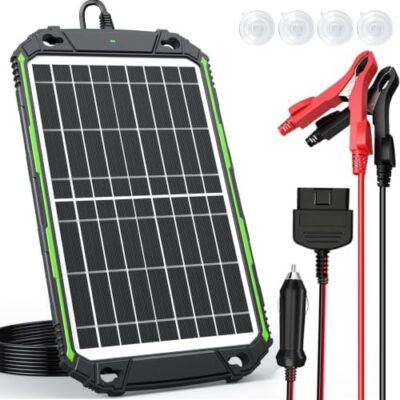
- 10W PRO / 12V format: SE-US-10W PRO, separate from the owner’s older 18W model.
- Integrated charging control: marketed as MPPT with bulk, absorption and float stages; exact setpoints remain unverified.
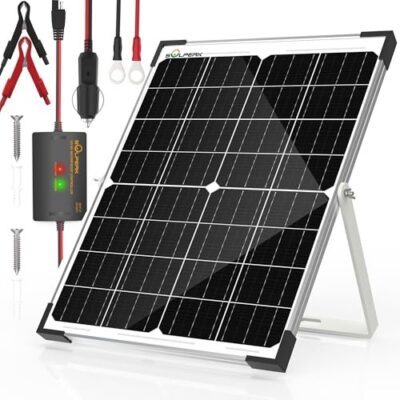
- Green ABS frame and glass face: a rigid panel, not a flexible sheet.
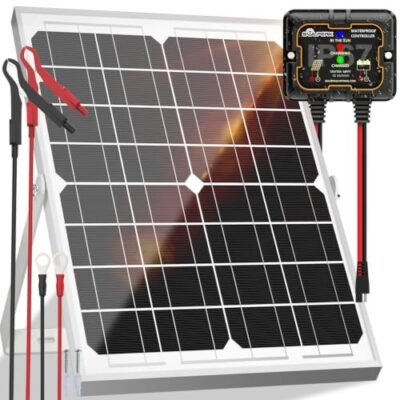
- Status indicator: useful for observation, not a battery-capacity measurement.
PROS
- Explicit 10W lawn-tractor account describes a dedicated maintenance routine
- Named-model van account reports a successful six-week absence
CONS
- Owners report mounting-pad retention problems
- Housing heat and water complaints need revision-specific context
- Repeated work loads can exceed the maintenance role
Price and availability subject to change
The Sun Energise 10W PRO has a clearer purpose than recovering a depleted battery: leaving a dedicated maintenance source with equipment that sits. Recovered owner accounts explicitly identify the 10W model, including a lawn tractor and a van parked for six weeks. Those are useful applications, not a guarantee for every parking load.
Research-based analysis of the selected offer and customer accounts; not our hands-on test.
Stop moving the charger between machines
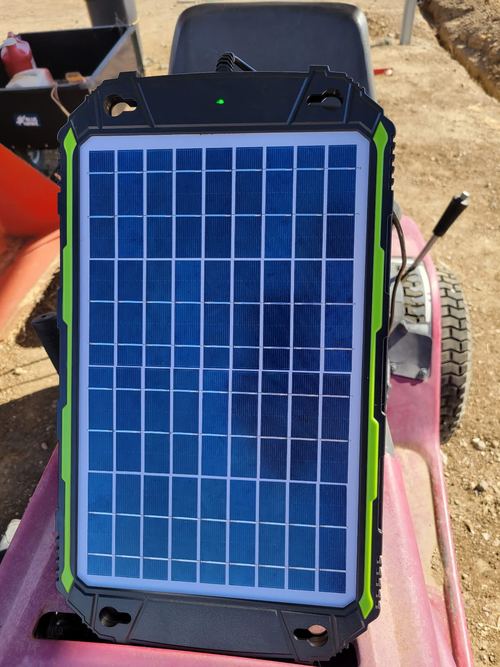
One owner bought the 10W for a lawn tractor after using an 18W model on another tractor. The benefit was a dedicated arrangement instead of swapping one charger weekly. Their account distinguishes the green 10W panel from the blue 18W unit; the larger panel’s experience must not be assigned to this one. Their added accessory wiring is not an installation instruction.
What the named 10W accounts actually establish
| Owner application | Useful finding | Limit |
|---|---|---|
| Lawn tractor used infrequently | A separate maintainer removed the need to swap equipment. | The battery profile and permitted mounting still need matching instructions. |
| Van parked for six weeks | The owner returned to a van that started. | One successful absence does not establish year-round charging sufficiency. |
| Vehicles and trailers | Another owner explicitly identifies repeated purchases of 10W panels. | Personal durability stories are not an impact rating or a measured battery-life gain. |
The holder and housing deserve separate attention
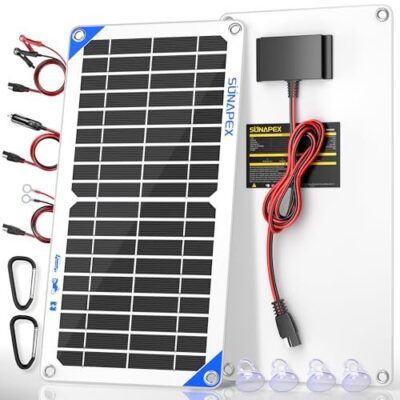
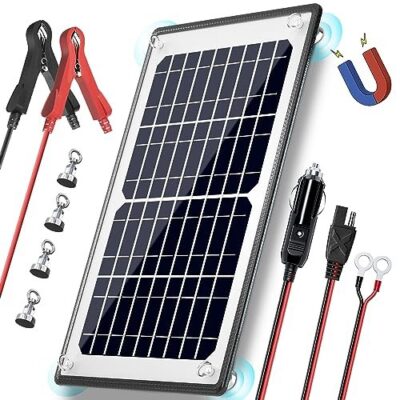
Owners describe cups or mounting pads releasing. A location needs secure, permitted retention, not simply useful sunlight.
One customer reports a warped housing inside a windshield. Their replacement was a 13W product, so its later outcome cannot establish durability of the 10W.
Another reports water entering a unit. The cause and revision are unresolved; verify environmental limits instead of treating an individual report as a universal rating.
Maintenance is not repeated work-cycle recovery
A dump-trailer owner reports that the panel maintained the battery but recovered slowly after repeated powered dumps. That distinction matters: a small panel left with idle equipment is a different proposition from supplying frequent work. Use the maintenance sizing guide to separate standing losses from active loads.
Pros & Cons Analysis
Based on documented specifications and owner feedback
Pros
- One panel can stay with one machine. The lawn-tractor owner chose a dedicated 10W panel to avoid moving a larger charger between machines each week.
- A named-model absence account. A van owner explicitly identifies the 10W PRO and reports a successful start after six weeks. This is relevant experience, not a universal storage guarantee.
Cons
- Retention affects daily usability. Reports of mounting pads releasing matter when the panel must remain correctly positioned throughout storage.
- Exposure claims need matching instructions. Individual warped-housing and water-entry reports do not establish defect rates, but broad weatherproof marketing is insufficient to approve a particular placement.
- Work-cycle recovery is a different task. A dump-trailer owner found recovery slow after repeated operation. The maintenance role should not be expanded into an unsupported active-load recommendation.
A practical dedicated maintainer, with a physical-installation condition
Shortlist the 10W PRO when leaving a panel with one idle vehicle or machine removes a recurring charging chore. The named-model accounts support investigating that use. They do not settle hot-window durability, environmental limits or recovery after repeated powered work; those constraints can outweigh the convenience.
Frequently Asked Questions
Does the 10W PRO have genuine exact-model customer evidence?
Yes. A lawn-tractor owner distinguishes the green 10W from their blue 18W panel, and a van owner explicitly names the 10W PRO. Their experiences remain individual accounts rather than controlled performance tests.
Can it replace a charger after repeated trailer operation?
Do not assume that. A dump-trailer owner reports slow recovery after repeated powered work. Establish the energy demand and available solar input instead of relying on the maintenance label.
Does the photo prove a fully charged battery?
No. It shows the owner-identified 10W panel with its indicator lit. It does not measure battery capacity or validate the mounting arrangement.
Is the dashboard automatically a suitable location?
No. An owner reports housing deformation in a windshield location. Confirm the delivered revision’s environmental and mounting instructions before choosing a hot interior position.