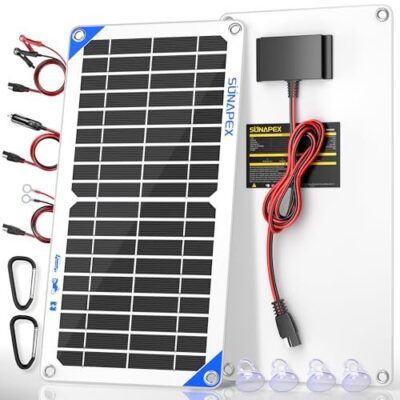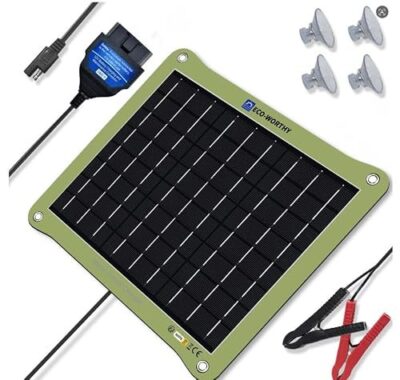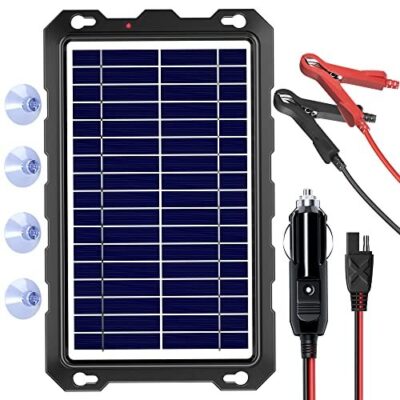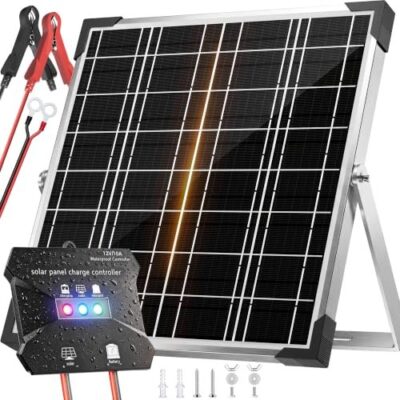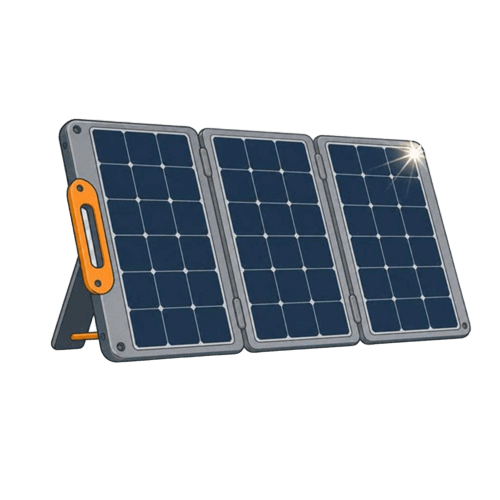
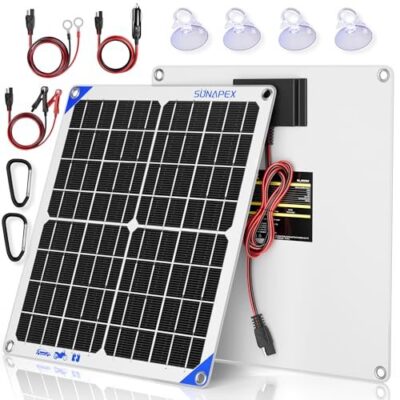
SUNAPEX 20W flexible review: white and black offers, one placement decision
At a Glance
KEY FEATURES
- Flexible 20W format
- White and black offers covered together
- Mounting-cup retention is an ownership concern
- Color is not a documented performance distinction
PROS
- Flexible format is a meaningful placement distinction
- Owner identifies a real parked-truck application
CONS
- Suction-cup retention complaint
- Indicator complaint requires an independent check
Price and availability subject to change
The white SUNAPEX 20W flexible offer is interesting for buyers who do not want a conventional rigid frame. The supplied owner material makes the physical setup central: where the panel rests, how it is held and whether the indicator is useful in that position.
Research-based analysis of the selected offer and customer accounts; not our hands-on test.
Flexible does not mean careless handling
A truck owner preferred the flexible construction after a previous small panel warped. They also describe the replacement becoming very hot on a dashboard. That is an observation about their placement, not a temperature rating or evidence that every flexible panel tolerates the same conditions.
The mount changes the daily routine
Account for the actual exposure, permitted mounting and removal before driving.
One owner reports suction cups releasing. Their improvised wiper restraint is not an approved mounting method.
Another owner reports a nonworking full-charge indicator. Check the battery result rather than treating a lamp as proof.
Color does not establish a charging advantage
The original white and black files were duplicates, so they were not two independent bodies of evidence. A later recovery supplied separately attributed black-offer reports, including chassis-battery maintenance, suction-cup complaints and surface deterioration. These remain observations about those owners’ units; they do not establish a performance advantage for either color. Check the selected package and revision rather than paying for an assumed color-related upgrade.
What the black-offer accounts add
An owner reports useful maintenance of a Travato starting battery. That is not evidence of supplying occupied-RV house loads.
An owner reports suction cups releasing in wind. Their wiper workaround is not a mounting recommendation.
A customer describes clouding and brittleness after roughly a year. This is a reason to inspect the surface, not a measured service-life prediction.
Avoid borrowing the remote-sensor setup
Pros & Cons Analysis
Based on documented specifications and owner feedback
Pros
- A different physical format. The flexible sheet offers a meaningful alternative to a rigid framed panel when a permitted position suits it.
- Starting-battery applications. Truck and black-offer RV chassis accounts provide relevant use contexts, without establishing occupied-RV supply.
Cons
- Retention needs attention. Wind-related suction-cup release is reported; an improvised wiper restraint is not an approved solution.
- Surface condition can change. A black-offer owner describes clouding and brittleness. That warrants inspection, not a predicted failure date.
Buy for the physical fit, not a color-specific performance claim
The flexible white 20W is worth investigating when its form makes a permitted mounting position easier to use. Ask for the exact battery and environmental limits before an unattended installation. The matching black version should be a variant choice, not another purportedly independent recommendation.
Frequently Asked Questions
Is black better than white at charging?
No comparative evidence establishes that. Verify the selected package and revision rather than paying for an assumed color advantage.
Does flexible mean safe on a hot dashboard?
No. A reported hot placement is not a certified operating-temperature limit.
Can the RV account justify powering the house bank?
It describes chassis-battery maintenance, not a measured occupied-RV energy budget.