Solar Power Picks logo with sun, solar panel, and green energy icon

  • Home
  • Reviews
  • Best
    • Best portable power stations
  • Guides
    • Portable Power Stations Guides
  • Comparisons
    • Portable Power Stations Comparisons
  • Calculator

Best Budget Portable Power Station: Affordable Power That Actually Works

OUR PICKS

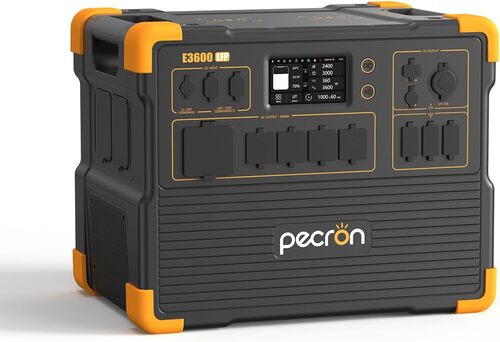
OUPES Mega 1 Review: Fast 1kWh Backup Power With Real Trade-Offs

Best Overall Budget Pick

OUPES Mega 1 Review: Fast 1kWh Backup Power With Real Trade-Offs

Check price at Amazon Jump to details
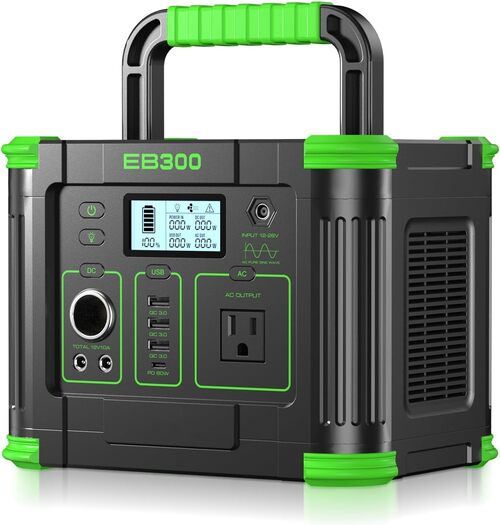
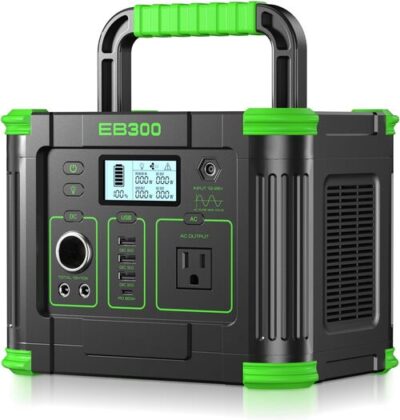
GRECELL EB300 Review: Compact Backup Power for Camping, CPAP, and Small Outages

Best Compact Budget Pick

GRECELL EB300 Review: Compact Backup Power for Camping, CPAP, and Small Outages

Check price at Amazon Jump to details
EcoFlow River 3 Plus review: Quiet UPS-style power for routers, CPAP, camping, and short outages

Best Budget Brand Pick

EcoFlow River 3 Plus review: Quiet UPS-style power for routers, CPAP, camping, and short outages

Check price at Amazon Jump to details
VTOMAN Jump 600X Review: A Compact Camping Backup With a Jump-Start Trick

Best Emergency Budget Pick

VTOMAN Jump 600X Review: A Compact Camping Backup With a Jump-Start Trick

Check price at Amazon Jump to details
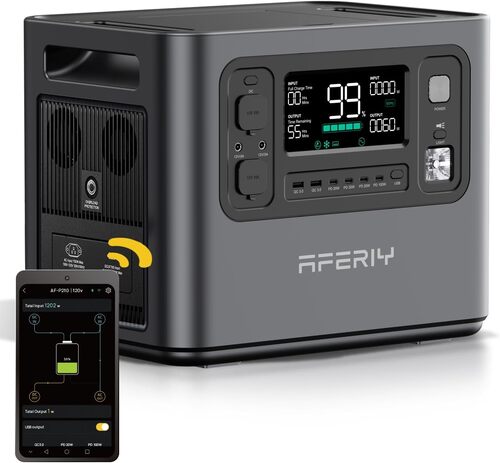
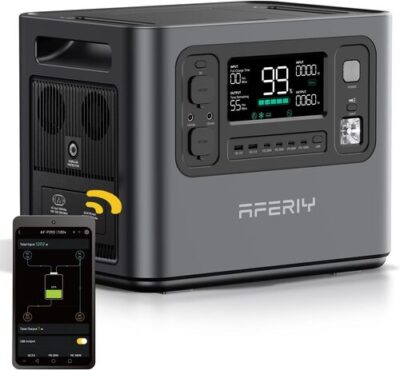
AFERIY P210 Review: A Quiet 2048Wh Backup Station for RVs, Outages, and Off-Grid Weekends

Best Big-Capacity Budget Pick

AFERIY P210 Review: A Quiet 2048Wh Backup Station for RVs, Outages, and Off-Grid Weekends

Check price at Amazon Jump to details

The best budget portable power station isn’t always the cheapest one — it’s the one that gives you the most useful power without forcing you to pay for features you’ll never use. For sub-$300 options, also see cheap power stations worth buying.

That’s the real trick with budget models. A tiny 288Wh unit can be a great buy if you only need phones, laptops, lights, and a router. At the same time, it becomes a bad deal fast if you expect it to run a fridge, coffee maker, CPAP, or RV setup.

So this guide is not about finding the biggest battery on sale. It’s about choosing a budget power station that fits the job: compact backup, short outages, car camping, emergency use, or big-capacity value. Start with choosing the right power station size.

Budget Rule: Don’t shop by price alone. Shop by the cheapest unit that still has enough capacity, continuous output, battery chemistry, and ports for your actual use.

Best Budget Picks at a Glance

PickProductWhy It Fits the Budget Angle
Best Overall Budget PickOUPES Mega 1Strong 1kWh value with 2000W output and LiFePO4 chemistry
Best Compact Budget PickGRECELL EB300Low-cost 288Wh option for phones, laptops, routers, and lights
Best Budget Brand PickEcoFlow River 3 PlusSmall EcoFlow unit with app control, UPS-style use, and fast charging
Best Emergency Budget PickVTOMAN Jump 600XCompact LiFePO4 backup with useful 12V ports and optional jump-start role
Best Big-Capacity Budget PickAFERIY P210Large 2048Wh battery for buyers who want max capacity per dollar

Quick Answer: Which Budget Power Station Should You Buy?

Choose the OUPES Mega 1 if you want the best budget portable power station for most mixed uses. It has enough battery for short outages, enough inverter power for many appliances, and LiFePO4 chemistry for longer-term ownership.

Choose the GRECELL EB300 if your budget is tight and your loads are small. It’s better for charging devices than running appliances.

Choose the EcoFlow River 3 Plus if you want a compact brand-name option for router backup, CPAP testing, laptops, phones, and short outages. Our EcoFlow River 3 Plus budget review covers real runtime.

Choose the VTOMAN Jump 600X if you want a road-trip-friendly emergency box with LiFePO4 chemistry and stronger output than most 300Wh-class units. See our VTOMAN Jump 600X road-trip review.

Choose the AFERIY P210 if you want big battery value and don’t mind the weight.

Budget Comparison Table

ProductCapacityAC OutputBatteryWeightBest Budget Use
OUPES Mega 11024Wh2000W / 4500W surgeLiFePO4, 3500+ cycles claimed27.8 lbBest all-around value
GRECELL EB300288Wh330W / 600W surgeLithium, chemistry not specified7.3 lbCheapest useful compact pick
EcoFlow River 3 Plus286Wh600W / 1200W X-BoostLiFePO4, 3,000 cycles claimed10.4 lbBest small brand-name option
VTOMAN Jump 600X299Wh600W / 1200W surgeLiFePO4, 3,000 cycles claimed14.6 lbBest emergency / road-trip pick
AFERIY P2102048Wh2400W / 4800W surgeLiFePO4, 3500+ cycles claimed54 lbBest large-capacity value

How to Choose the Best Budget Portable Power Station

Start With the Load, Not the Discount

A power station is only cheap if it actually runs what you bought it for. For phones, lights, and laptops, a 286Wh to 300Wh unit can make sense. For a router plus laptop during an outage, small stations work — but runtime won’t be huge.

For CPAP, fridge backup, or appliance use, you’ll want more room. That’s where the OUPES Mega 1 and AFERIY P210 become better value than the smaller units, even if the checkout price is higher.

Value Math: A cheap 300Wh station is great for 50W of small electronics. It’s not great value if your real load is a 600W appliance that drains it in minutes.

Pay for Continuous Output, Not Big Surge Claims

Budget listings love big surge numbers. However, continuous output is what matters when your device is actually running.

A 330W station like the GRECELL EB300 is fine for small electronics. A 600W station like the River 3 Plus or VTOMAN Jump 600X gives more headroom for fans, CPAP setups, and small appliances. For coffee makers, microwaves, tools, and fridge backup, the OUPES Mega 1 and AFERIY P210 are in a different class.

Don’t Ignore Battery Chemistry

LiFePO4 is usually the better long-term buy because it handles far more charge cycles than older lithium-ion designs. That matters if you’ll use the station for camping, outages, weekly charging, or RV trips.

OUPES, EcoFlow, VTOMAN, and AFERIY all list LiFePO4 in the supplied specs. GRECELL is still useful as a low-cost compact option, but its exact battery chemistry and cycle life are not clearly specified.

Decide How Portable “Portable” Needs to Be

Budget buyers often want the most Wh for the money, but weight is part of the cost. A 7.3 lb GRECELL EB300 is easy to grab. A 27.8 lb OUPES Mega 1 is still manageable. A 54 lb AFERIY P210 is more of a park-it-and-use-it station.

If you’ll carry it upstairs, into a tent, or between rooms, buy lighter. If it will live in a garage, RV bay, closet, or outage corner, capacity matters more.

Budget Buyer Mistakes to Avoid

  • Buying the cheapest unit before checking continuous output
  • Assuming a small 300Wh station can run large appliances
  • Ignoring battery chemistry just to save a little upfront
  • Forgetting weight until the box arrives
  • Buying solar panels without checking connector and voltage compatibility
  • Trusting UPS/pass-through mode before testing your actual device
  • Paying for a giant unit when your real loads are phones, lights, and laptops

What Can a Budget Portable Power Station Run?

DeviceTypical WattsBudget Reality
Phone charger5–15WAny pick here can handle it
Wi-Fi router10–20WGood match for compact stations
LED lights5–20WEasy, even for small units
Laptop45–100WUSB-C is more efficient when available
CPAP30–60WTest humidifier settings before relying on it
Portable fan20–60WGood budget use case
Mini fridge / cooler40–100WBetter with 500Wh+ if running long
Full-size fridge100–800WOUPES or AFERIY class is safer
Coffee maker600–1200WShort bursts only; needs stronger inverter
Microwave800–1500WNot for compact budget units
Space heater1500WUsually a bad use of battery power

Heating appliances are the fastest way to make a budget power station feel too small. A space heater, kettle, or microwave can drain a battery far faster than lights, routers, laptops, or CPAP gear.

Is Solar Worth It on a Budget Power Station?

Solar is worth it if you camp often, use the station in an RV, or expect outages longer than a day. It’s less important if you mostly recharge from the wall.

For compact 300Wh-class stations, a 100W panel is usually enough. For 1kWh stations, 200W to 400W is more realistic. For the AFERIY P210, solar can help, but panel matching matters because a large 2048Wh battery needs serious input to recharge quickly.

Panel SizeBest Budget Match
100W286Wh–300Wh compact stations
200WMid-size camping and CPAP setups
400W1kWh stations and longer trips
500W+Large batteries like AFERIY P210

Not Sure What Size You Need?

Use the portable power station calculator to estimate capacity based on your actual devices, runtime, reserve, and solar plans.

Best Overall Budget Pick

OUPES Mega 1 Review: Fast 1kWh Backup Power With Real Trade-Offs

OUPES Mega 1 Review: Fast 1kWh Backup Power With Real Trade-Offs

Get it now:

Check latest price

What to know

  • 1024Wh LiFePO4 battery covers routers, TVs, fans, fridges, and short outages
  • 2000W pure-sine output handles many appliances and tools under realistic loads
  • 0–80% AC recharge in 36 minutes claimed
  • Expandable to 5120Wh with up to two B2 batteries
  • 27.8 lb body is manageable for car camping and home backup

Best if

  • You want one budget-friendly 1kWh unit for camping, outages, and fridge backup
  • You value fast AC recharge between storms, trips, or generator windows
  • You like the option to expand capacity later

Skip if

  • You need multi-day backup without solar or expansion batteries
  • You can’t tolerate fan noise while charging indoors
  • You’d rather buy a tiny station for phones and lights only

This OUPES Mega 1 fits the Best Overall Budget Pick badge because it gives you a 1kWh LiFePO4 portable power station with unusually strong output for the money. It’s built for shoppers who want one affordable unit for short outages, car camping, fridge backup, and mobile work without jumping straight to premium-brand pricing.

Here’s why that matters: 1024Wh, 2000W continuous AC output, fast wall charging, and expandability make the Mega 1 feel more capable than many budget stations. OUPES Mega 1 also keeps the controls beginner-friendly.


The catch: the fan can be noticeable while charging, and the 4500W surge claim deserves cautious expectations.

Capacity1024Wh (expandable to 5120Wh with up to 2 B2 batteries)
AC Output2000W continuous, 4500W surge (pure sine)
Solar Input800W max via Anderson input (MC4-to-Anderson cable included)
Weight27.8 lb (12.6 kg)
BatteryLiFePO4 (3,500+ cycles claimed)
Best Compact Budget Pick

GRECELL EB300 Review: Compact Backup Power for Camping, CPAP, and Small Outages

GRECELL EB300 Review: Compact Backup Power for Camping, CPAP, and Small Outages

Get it now:

Check latest price

What to know

  • 288Wh capacity works best for small electronics, not kitchen appliances
  • 330W pure-sine AC output is useful for laptops, routers, and CPAP testing
  • 7.3 lb carry weight fits camping bins, closets, and vendor tables
  • USB-C PD, DC5521, car socket, wireless charging, and LED light included
  • Solar charging supported through MPPT and MC4-to-7909 cable

Best if

  • You want a compact budget station for phones, laptops, lights, and routers
  • You prefer simple controls with no app, Wi-Fi, or firmware updates
  • You’re carrying it between the house, car, campsite, or booth

Skip if

  • You need long fridge backup or high-watt appliance power
  • You want smart charge limits, UPS settings, or remote monitoring
  • You need more than one built-in AC outlet for plug-in gear

You don’t need a large battery cart to cover small essentials — the GRECELL EB300 earns the Best Compact Budget Pick badge by staying light, simple, and useful. It’s designed for buyers who want an affordable portable power station for phones, laptops, routers, fans, lights, CPAP testing, and weekend camping.

Worth knowing, GRECELL includes a pure-sine 330W AC outlet, USB-C PD, DC outputs, wireless charging, and an LED light in a 7.3 lb body. The EB300 is especially handy when you care more about grab-and-go backup than appliance power.


Just know the battery chemistry and cycle life aren’t clearly specified, and one AC outlet limits plug-in flexibility.

Capacity288Wh
AC Output330W continuous, 600W surge (pure sine)
Solar InputMax wattage not specified via 7909 input (MC4-to-7909 cable included)
Weight7.3 lb (3.3 kg)
BatteryLithium battery (chemistry and cycle life not specified)
Best Budget Brand Pick

EcoFlow River 3 Plus review: Quiet UPS-style power for routers, CPAP, camping, and short outages

EcoFlow River 3 Plus review: Quiet UPS-style power for routers, CPAP, camping, and short outages

Get it now:

Check latest price

What to know

  • 286Wh LiFePO4 battery fits router backup, laptops, CPAP, and camp lights
  • 600W AC output covers small electronics and light appliance bursts
  • Full AC recharge takes about 1 hour
  • 220W solar input is strong for this compact capacity class
  • Expandable to 858Wh with EB300 or EB600 add-on batteries

Best if

  • You want a known-brand compact station with app control and charge limits
  • You’re backing up a router, modem, NAS, cameras, or home-office gear
  • You like a small base unit with optional expansion later

Skip if

  • You’d rather avoid account setup, firmware updates, or app pairing
  • You need reliable support for kettles, microwaves, heaters, or large fridges
  • You want the lowest possible price without paying for smart features

The EcoFlow River 3 Plus makes sense as the Best Budget Brand Pick because it brings EcoFlow’s app, UPS-style backup, and fast charging into a compact 286Wh unit. It’s popular with people backing up routers, modems, security cameras, laptops, CPAP setups, and light camping gear.

The real benefit shows up when small electronics matter more than big appliances: the River 3 Plus charges in about an hour, stays quiet under light loads, and can expand with EB300 or EB600 batteries. EcoFlow also gives you useful charge-limit controls.


One thing: app login, firmware behavior, and pass-through overload quirks mean you should test your exact setup early.

Capacity286Wh (expandable to 858Wh with EB300 or EB600 batteries)
AC Output600W continuous, 1200W X-Boost (waveform not specified)
Solar Input220W max via EcoFlow solar input (connector not specified in supplied data)
Weight10.4 lb (4.7 kg)
BatteryLiFePO4 (3,000 cycles to 80%)
Best Emergency Budget Pick

VTOMAN Jump 600X Review: A Compact Camping Backup With a Jump-Start Trick

VTOMAN Jump 600X Review: A Compact Camping Backup With a Jump-Start Trick

Get it now:

Check latest price

What to know

  • 299Wh LiFePO4 battery suits camping, CPAP, phones, lights, and short outages
  • 600W AC output gives more headroom than many small budget stations
  • Regulated 12V ports help with CPAP machines, coolers, and DC gear
  • Expandable to 939Wh with the matching extra battery
  • Jump-start port is built in, but cables cost extra

Best if

  • You want one compact station for camping power and roadside emergencies
  • You’re powering 12V gear, CPAP, fans, phones, and a mini fridge
  • You value simple buttons and no app dependency

Skip if

  • You expect jump-start cables to be included in the base package
  • You need long full-size refrigerator runtime during multi-day outages
  • You need fast wall charging or USB-C input charging

It’s built for roadside-ready budget buyers, and the VTOMAN Jump 600X earns the Best Emergency Budget Pick badge by mixing small-station backup with optional jump-start capability. You’re getting a camping-friendly portable power station for phones, laptops, lights, CPAP gear, mini fridges, and vehicle-side emergencies.

Here’s the thing: the Jump 600X pairs a 299Wh LiFePO4 battery with 600W AC output, regulated 12V ports, and expansion support up to 939Wh. VTOMAN also keeps the controls simple, which helps during blackouts.


To be fair, charging speed is only average, and the jump-start cables are sold separately.

Capacity299Wh (expandable to 939Wh with VTOMAN extra battery)
AC Output600W continuous, 1200W surge (waveform not specified)
Solar InputMax wattage not specified (connector not specified; owners report using 100W panels)
Weight14.6 lb (6.6 kg)
BatteryLiFePO4 (3,000 cycles to 80%)
Best Big-Capacity Budget Pick

AFERIY P210 Review: A Quiet 2048Wh Backup Station for RVs, Outages, and Off-Grid Weekends

AFERIY P210 Review: A Quiet 2048Wh Backup Station for RVs, Outages, and Off-Grid Weekends

Get it now:

Check latest price

What to know

  • 2048Wh LiFePO4 capacity gives useful runtime for outages, RVs, and cabins
  • 2400W pure-sine output handles appliances, tools, fridges, and mixed backup loads
  • Fast AC charging reaches full in roughly 2 hours at high input
  • 12V/25A XT60 output helps high-draw DC camping and overland gear
  • 54 lb weight makes it portable by vehicle, not by backpack

Best if

  • You want budget 2kWh-class backup for RVs, fridges, CPAP, and Starlink
  • You’re running mixed home or campsite loads under a strong inverter
  • You value app control, adjustable charging, and a large port mix

Skip if

  • You need a lightweight station you’ll carry long distances
  • You want polished UPS behavior for critical appliances without testing
  • You prefer a small brand-name unit with simpler warranty handling

2048Wh means real backup time — and that’s why the AFERIY P210 fits the Best Big-Capacity Budget Pick badge. It’s aimed at RV owners, outage-prep buyers, off-grid weekend users, and campers who want far more runtime than a typical budget portable power station.

The spec-to-benefit story is simple: AFERIY gives you a 2400W pure-sine inverter, 4800W surge rating, strong port selection, app control, and fast AC charging at a lower-cost tier than many big-name 2kWh units. The P210 can cover fridges, routers, CPAP, Starlink, TVs, and tools.


At the same time, 54 lb is heavy, and UPS/pass-through behavior needs testing before critical use.

Capacity2048Wh
AC Output2400W continuous, 4800W surge (pure sine)
Solar InputAbout 500W max via XT90-style input / MC4 adapter
Weight54 lb (24.5 kg)
BatteryLiFePO4 (3,500+ cycles claimed)

Product Comparison

Feature OUPES Mega 1 Review: Fast 1kWh Backup Power With Real Trade-Offs GRECELL EB300 Review: Compact Backup Power for Camping, CPAP, and Small Outages EcoFlow River 3 Plus review: Quiet UPS-style power for routers, CPAP, camping, and short outages VTOMAN Jump 600X Review: A Compact Camping Backup With a Jump-Start Trick AFERIY P210 Review: A Quiet 2048Wh Backup Station for RVs, Outages, and Off-Grid Weekends
Product Image
OUPES Mega 1 Review: Fast 1kWh Backup Power With Real Trade-Offs
GRECELL EB300 Review: Compact Backup Power for Camping, CPAP, and Small Outages
EcoFlow River 3 Plus review: Quiet UPS-style power for routers, CPAP, camping, and short outages
VTOMAN Jump 600X Review: A Compact Camping Backup With a Jump-Start Trick
AFERIY P210 Review: A Quiet 2048Wh Backup Station for RVs, Outages, and Off-Grid Weekends
Price $549 $449 $169.99 $149.99 $299.99 $279.99 $299.99 $239.99 $669
Rating
4.6 / 5
4.4 / 5
4.6 / 5
4.5 / 5
4.5 / 5
Category Portable Power Stations Portable Power Stations Portable Power Stations Portable Power Stations Portable Power Stations
Brand OUPES GRECELL EF ECOFLOW VTOMAN AFERIY
Model / SKU Mega 1 / S1 (ASIN: B0DG8JQNS4) EB300 / T300 (ASIN: B0B286D2V7) RIVER 3 Plus / EF-RV-H02-1 (ASIN: B0DCCB657J) Jump 600X / PB-20 (ASIN: B0BBDQ5NNN) P210 (ASIN: B0DRYQSXWV)
Battery capacity 1024 Wh 288 Wh 286 Wh 299 Wh 2048 Wh
Battery chemistry LiFePO4 (LFP) Lithium battery (exact chemistry not specified) LiFePO4 (LFP) LiFePO4 (LFP) LiFePO4 (LFP)
Cycle life 3500+ cycles (claimed) Not specified 3,000 cycles to 80% capacity (claimed) 3,000 cycles to 80% capacity (claimed) 3500+ cycles (claimed)
Expandable battery Yes — supports up to 2 B2 expansion batteries, up to 5120Wh total (claimed) No Yes — supports EB300 or EB600 extra batteries, up to 858Wh total (claimed) Yes — expandable to 939 Wh with VTOMAN Jump 600X extra battery (sold separately) No (some owners wish this version supported expansion)
AC output 2000 W continuous (pure sine wave) 330 W continuous (pure sine wave) 600 W continuous (waveform not specified in supplied product data) 600 W continuous (pure sine wave not specified in provided data) 2400 W continuous (pure sine wave)
Surge output 4500 W peak (claimed; customer surge results vary) 600 W peak 1200 W with X-Boost (claimed) 1200 W peak 4800 W peak
AC outlets 4 × 120V AC outlets 1 × 110V AC outlet 3 × 110V AC outlets (UPS-supported) 2 × 110V AC outlets 6 × 120V AC outlets
USB-C ports Count not specified (customer mentions 140W USB-C) 2 × USB-C (1 × 60W PD, 1 × 18W PD) 1 × USB-C (up to 100W reported by customers) 1 × USB-C PD 60W 4 × USB-C (includes 100W and 20W outputs)
USB-A ports Not specified 2 × USB-A (QC 3.0, 18W) 2 × USB-A 3 × USB-A (one listed as QC 3.0 / 18W max) 2 × USB-A
12V car socket Yes (12V car charging cable included; output details not fully specified) 1 × 12V car port 1 × 12V car port 1 × 12V/10A car port 1 × 12V car outlet
Max solar input 800 W (reported by owner; MC4-to-Anderson cable included) Not specified (built-in MPPT; listing includes MC4-to-7909 cable; manual feedback mentions 60W, 80W, 100W, or 120W panels) 220 W (MPPT input claimed; connector details not specified in supplied data) Not specified (owners report using 100W solar panels) About 500 W (owner-reported solar limit; panel matching may require an adapter)
Max AC input 1400 W (reported by owner; fast AC charging supported) Not specified (estimated around 50-60W from customer recharge times) ~350 W (estimated from 1-hour recharge claim and owner-reported charging around the high-300W range) ~90W to 100W estimated (based on customer charging reports and supplied adapter comments) 1100 W (adjustable charge rate reported by owners)
AC recharge time 0-80% in 36 minutes (claimed); roughly 45-90 minutes reported depending on mode Not specified (customers commonly describe multi-hour wall charging) About 1 hour (0-100%, claimed) About 3.5–8 hours reported (adapter version and starting charge vary) About 2 hours (high AC charge setting)
Solar recharge time ~1.5-2 hours with 800W ideal input; ~5-7 hours with 200W panels in good sun (real sun varies) Not specified (depends on panel size, sun, and cable setup) As little as 1.5 hours with up to 220W solar input (ideal sun, claimed) About 5–8 hours with a 100W panel in strong sun (customer-reported range) About 4-6 hours with maximum solar in strong sun (real time depends on panels, voltage, and weather)
UPS / EPS support Yes — less than 20ms switchover (claimed) Not specified (do not treat as a computer-grade UPS unless confirmed by seller) Yes — under 10 ms switchover (claimed; customer reports are mostly positive with some caveats) No dedicated UPS / EPS specified (pass-through charging only) Yes — less than 10ms claimed switchover (UPS load limit and reliability complaints reported by some owners)
App support Yes — Bluetooth app control (Wi-Fi / Bluetooth feedback is mixed) No app Yes — EcoFlow app via Bluetooth and Wi-Fi No app specified Yes (BrightEMS app mentioned by owners)
Built-in light Not specified Yes — LED light with SOS mode Yes — built-in light Yes — LED light with multiple modes Yes (brightness not a major strength)
Dimensions 15.1 x 9.1 x 11.6 inches 9.61" × 6.72" × 6.97" N/A 10.2" × 8.7" × 8.6" 15.43" × 10.98" × 12.72"
Weight 27.8 lb 7.3 lb 10.4 lb (listed in product bullets; some customers report about 10.6 lb for the station) 14.6 lb 54 lb (listed; many owners describe it as roughly 50 lb class)
Best for Camping, truck camping, short blackouts, refrigerator backup, sump pump support, Starlink, routers, laptops, mobile work, and emergency prep Camping, CPAP with efficient settings, phones, tablets, laptops, Wi-Fi router backup, small fans, LED lights, air mattresses, drone batteries, vendor booths, and short power outages Router and modem UPS, security cameras, CPAP backup, phones, laptops, car fridges, camping, overlanding, home-office backup, and short outages Camping, CPAP backup, road trips, short outages, RV lights, mini fridges, phones, laptops, garage projects, and emergency jump-start use with optional cables RV backup, camping, CPAP backup, refrigerators, routers, TVs, Starlink, ham radio, off-grid cabins, sump pumps, and short-to-medium blackouts
Buy Now View Deal View Deal View Deal View Deal View Deal

Bottom Line

The OUPES Mega 1 is the best overall budget choice here because it gives you the most balanced mix of capacity, output, LiFePO4 chemistry, and real-world usefulness. The GRECELL EB300 is the better cheap compact pick, the EcoFlow River 3 Plus is the small brand-name option, the VTOMAN Jump 600X is the emergency road-trip pick, and the AFERIY P210 is the big-capacity value play.

The smart move is simple: buy the cheapest power station that still fits your real load. Don’t pay for capacity you’ll never move, but don’t save money on a unit that can’t run the thing you actually bought it for.

Frequently Asked Questions

What size budget portable power station do I need?

It depends on what you want to run. For phones, lights, routers, and laptops, a 286Wh to 300Wh unit can work well. For CPAP backup, short camping trips, or a small fridge, 500Wh to 1,000Wh is usually safer. For full-size fridge backup, RV use, or longer outages, look closer to 1,500Wh to 2,000Wh. The biggest mistake is buying the cheapest small unit and expecting it to act like a larger backup station.

Is a budget portable power station worth it?

Yes, if you match it to the right job. A compact budget unit is worth it for phones, laptops, routers, lights, fans, and short CPAP use. A larger budget station can be worth it for fridge backup, RV trips, and outage prep if the price per Wh is strong. It is not worth it if the battery chemistry is unclear, the inverter is too weak, or the brand has poor support.

Can a budget portable power station run a refrigerator?

Sometimes. A compact 286Wh or 299Wh unit is usually too small for serious refrigerator backup. A 1,024Wh station like the OUPES Mega 1 is a better starting point for short fridge backup, while a 2,048Wh station like the AFERIY P210 gives more useful runtime. Startup surge matters, so check continuous AC output and surge rating before plugging in a full-size fridge.

Can a budget portable power station run a CPAP overnight?

Yes, many can, but settings matter. A CPAP may draw 30–60W without heated humidification, which a 286Wh to 299Wh unit may handle for a short night if you use efficient settings. Heated humidifiers and heated hoses can raise draw a lot. For safer overnight CPAP backup, aim for 500Wh or more, use DC output if available, and test your exact machine before relying on it.

Is LiFePO4 important in a budget power station?

For most buyers, yes. LiFePO4 batteries usually offer much longer cycle life than older lithium-ion designs and are better suited for repeat use. OUPES Mega 1, EcoFlow River 3 Plus, VTOMAN Jump 600X, and AFERIY P210 all list LiFePO4 chemistry in the supplied specs. GRECELL EB300 can still make sense as a compact low-cost pick, but its exact battery chemistry is not clearly specified.

Can a budget portable power station run a microwave or coffee maker?

Only stronger models can. Coffee makers often draw 600–1,200W, and microwaves usually draw 800–1,500W. Small units like the GRECELL EB300 are not the right match. The OUPES Mega 1 and AFERIY P210 have the continuous output needed for many short kitchen loads, but capacity still drains quickly. Use those appliances in short bursts, not as an all-day cooking plan.

Are solar panels worth it for a budget power station?

Yes, if you camp, travel, or want backup during longer outages. Solar matters less if you only use the station at home and wall-charge between uses. For small 300Wh-class stations, a 100W panel can be useful. For 1,000Wh-class units, 200W to 400W is more realistic. Always check connector type, voltage range, and max input before buying third-party panels.

What is the best budget portable power station overall?

For this list, the OUPES Mega 1 is the best overall value pick because it gives you a 1024Wh LiFePO4 battery, strong 2000W continuous AC output, fast AC charging, expansion support, and useful solar capability. It is not the lightest option, but it covers more real-world jobs than compact 300Wh units. If you only need small-device power, GRECELL EB300 or EcoFlow River 3 Plus may make more sense.

×

About Solar Power Picks

Portable Solar Power, Backup Power, and Off-Grid Gear Guides

Your trusted source for honest, in-depth product reviews and comparisons.

Quick Links

  • Best Picks
  • Reviews
  • Guides
  • Comparisons
  • Calculator
  • Privacy policy
  • Favorites

Categories

  • Portable Power Stations

© 2026 Solar Power Picks. All Rights Reserved.

We may earn a commission when you purchase through links on our site. Learn more