OUPES Mega 1 Review: Fast 1kWh Backup Power With Real Trade-Offs
At a Glance
KEY FEATURES
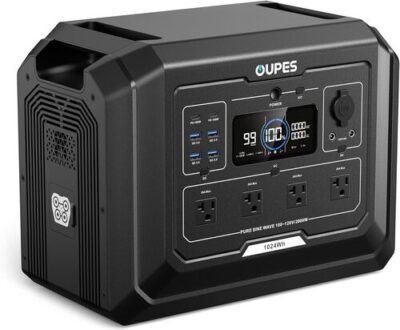
- Battery: 1024Wh LiFePO4 battery, rated for 3500+ cycles.
- AC output: 2000W continuous, 4500W surge, pure sine wave.
- Ports: 4 AC outlets, USB-C mentioned by customers up to 140W, USB-A count not specified, 12V car output supported, DC output details not fully specified.
- Recharge: AC 0-80% in 36 minutes claimed, solar input up to 800W reported by owners, car charging supported through included car-to-Anderson cable.
- Smart features: app control, Bluetooth monitoring, UPS / EPS-style backup with less than 20ms transfer time claimed, supports bypass charging.
- Best for: camping, truck camping, short blackouts, sump pump backup, fridge backup, Starlink, routers, laptops, mobile work, and emergency prep.
PROS
- 1,024Wh LFP with 2,000W continuous AC output.
- Strong ports, solar, and expansion feature set for the price class.
- Plausible camping, RV, appliance, and outage use in owner evidence.
- App and local controls support monitoring.
CONS
- Support and remedy outcomes vary in owner reports.
- Arrival condition and every charging/output path need prompt testing.
- 2,000W output can disguise short runtime at high draw.
- Expansion and accessories change total-system value.
Editor's Choice
Based on exact documentation and qualitative exact-ASIN owner evidence; no hands-on test or population-rate claim
⚡ Can the OUPES Mega 1 Run It?
Choose a common device and see the estimated runtime, whether the inverter can handle it, and how long the power station may take to recharge.
Picture this: the power cuts out, the fridge is warming up, your router is dead, and you’re trying to decide whether a quiet battery box can do enough before you drag out a gas generator. That’s the kind of problem the Mega 1 is built for. It’s not trying to run your whole house, but it can keep a useful mix of appliances and electronics alive.
In practice, this is a compact backup station for camping, road trips, daily blackout prep, mobile work, and short appliance backup. From what owners report, it’s less about unlimited off-grid power and more about having a fast-charging, easy-to-move battery that can handle real loads when the grid or campsite outlet disappears.
Value buyer with a test plan
Can exercise every function immediately, preserve records, and accept a smaller support ecosystem in exchange for specifications per dollar.
Continuity-first buyer
Needs established local service, proven integration, or cannot tolerate troubleshooting during the return and warranty process.
The OUPES Mega 1’s appeal is straightforward: 1,024Wh of LFP storage, 2,000W AC output, useful solar input, expansion support, and a broad port selection at pricing that often challenges larger brands. The responsible review question is whether the buyer can convert that value into a verified working system while remedy options are strongest.
The owner corpus contains substantial runtime, solar, mobility, small-load, support, UPS, port, and high-load experience. Many accounts describe successful appliance, camping, RV, and outage use. Critical accounts identify shipping damage, charging or output faults, app behavior, and difficult or successful remedies. This qualitative balance cannot produce a failure rate; it supports a more rigorous arrival protocol.
| Value claim | What makes it real | What can erase it |
|---|---|---|
| 2,000W output | Priority appliances pass startup and sustained-load tests | Unverified surge, simultaneous load, or rapid battery depletion |
| 1,024Wh storage | Measured daily energy fits usable capacity and reserve | Heating or cooking dominates the energy budget |
| Solar capability | Exact array stays inside voltage/current limits | Wrong connector, cold Voc, shade, or cable loss |
| Lower price | Unit and support process perform during acceptance | Return shipping, downtime, or missing accessories |
Two thousand watts is an inverter boundary, not a duration estimate. A coffee maker or microwave can be a reasonable short event, while sustained space heating is usually a poor 1kWh mission. For compressors and pumps, verify startup. Build a load order so an optional comfort load cannot consume energy reserved for a refrigerator, communications, medical plan, or lights.
Solar is valuable only after the current manual’s input limits are matched to the array. Calculate cold-corrected Voc, current, connector and polarity, then measure daily harvested watt-hours. Owner photos and high input numbers show plausible installations, not universal compatibility.
Evidence-led verdict: the Mega 1 can be a strong value for a technically engaged buyer who completes a documented acceptance week. A buyer who prioritizes immediate, low-friction service over specifications per dollar should price that support difference explicitly.
Mega 1: Value Depends on a Disciplined Acceptance Week
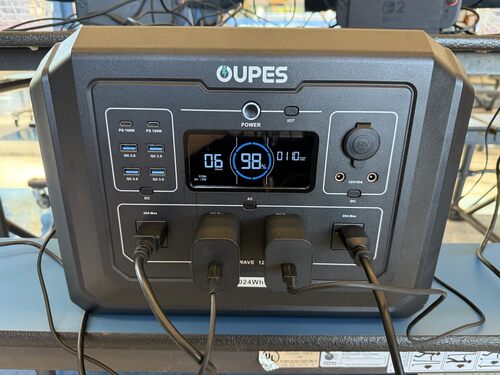
If you want a fast-charging 1kWh power station for home outages, camping, and mobile gear, the Mega 1 works well. It has the kind of 2000W output that lets owners run refrigerators, sump pumps, Starlink, routers, printers, lights, and even some power tools without feeling underpowered. Our refrigerator backup wattage guide models compressor cycling on 1kWh.
A 1kWh Station That Trades Brand Scale for Price
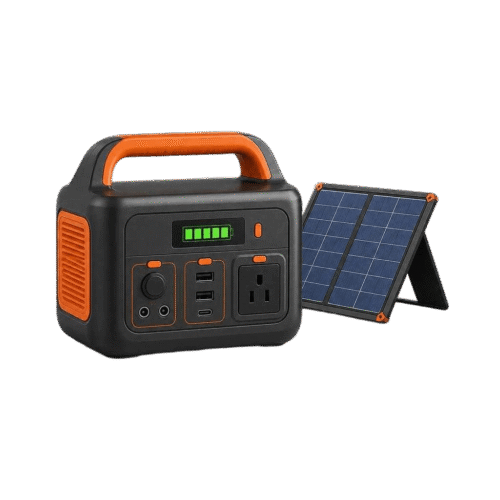
The OUPES Mega 1 portable power station has a practical, squared-off shape with built-in handles and a front-panel layout that keeps most controls easy to reach. At 27.8 lb, it has a solid heft, but most owners still describe it as manageable for car camping, moving around the house, or strapping into a vehicle.
In real use, that weight lands in a nice middle ground. It’s much easier to move than a 2kWh or 3kWh station, but it still feels like a serious battery, not a little weekend phone charger. You’ll probably carry it with two hands, set it down, and leave it there.
The plastic shell gets mixed comments. Some buyers say it feels solid and well-built, while one owner felt the plastic was not top-tier and probably would not enjoy hard knocks or wet conditions. Worth knowing, this is not a rugged waterproof jobsite box, so don’t leave it in rain or toss it around a truck bed.
Buyer Heads-Up — Treat the Mega 1 as portable, not weatherproof. It’s fine for a garage, RV, tent vestibule, or truck setup, but it should stay dry and protected from direct abuse.
Turn 1,024Wh Into a Written Runtime Ledger
The Mega 1 has a 1024Wh battery, which means it can do a lot with small and medium loads. In practice, it’s strongest when you’re running things like routers, laptops, camera gear, LED lights, fans, a 12V cooler, Starlink, or a cycling refrigerator.
Here’s the thing: 1024Wh does not mean you get 1024Wh through the wall outlets. AC inverter losses, fan use, standby draw, and a sensible battery reserve all reduce usable power. Using a realistic 0.85 AC efficiency and a 10% reserve, you’re looking at roughly 783Wh of practical AC energy.
| Device | Typical Power Draw | Estimated Runtime | Realistic with Margin |
|---|---|---|---|
| Smartphone charging | 10-15Wh per charge | 60-85 charges | About 50-70 charges |
| Laptop | 50-80Wh per charge | 11-18 charges | About 9-14 charges |
| Wi-Fi router | 10-20W | 39-78 hours | About 30-65 hours |
| CPAP, no humidifier | 30-60W | 13-26 hours | About 10-22 hours |
| Mini fridge | 40-80W cycling | 10-20 hours | About 8-17 hours |
| Full-size refrigerator | 100-200W cycling plus surge | 4-8 hours | About 3-7 hours |
| Electric blanket | 50-80W | 10-16 hours | About 8-13 hours |
| Starlink system | 50-100W | 8-16 hours | About 6-13 hours |
| Drone batteries | 60-100Wh per battery | 8-13 charges | About 6-10 charges |
| 1500W kettle or hotplate | 1500W | About 30 minutes | Brief use only |
Real-World Math — At 0.85 AC efficiency, the listed 1024Wh delivers roughly 870Wh through the AC outlets. Subtract a 10% reserve, and you’re working with about 783Wh of practical AC runtime.
Customers report some impressive real-world results, including a TV running for many hours, a fridge lasting through short outages, and a 12V cooler running through long workdays. On the flip side, continuous high-draw appliances drain any 1kWh station fast. A 120W fridge load, a desktop setup, or an electric cooking appliance can make the percentage drop much quicker than a phone-and-lights camping setup.
A 2,000W Inverter Needs Surge and Duration Honesty
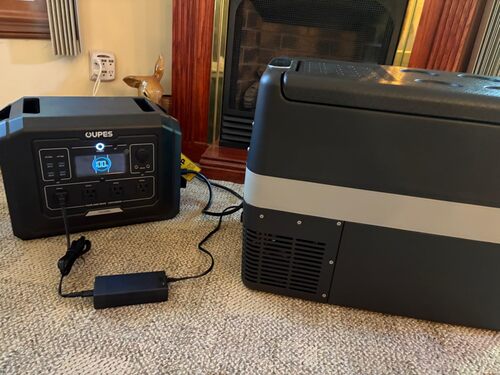
The Mega 1 has a 2000W pure-sine inverter and a claimed 4500W surge rating. On paper, that gives it more headroom than many 1kWh competitors, and owners do report running demanding gear like a sump pump, hammer drill, space heater, pressure cooker, espresso maker, printer, DJ setup, refrigerator, and small camper loads.
The catch is surge behavior. One buyer says their unit repeatedly tripped around 2050-2200W, which makes the 4500W claim feel too generous. To be fair, many others had no issue with refrigerators, pumps, tools, and camping loads, but you should still treat 2000W continuous as the real planning number.
| Device | Typical Draw | This Unit? |
|---|---|---|
| Phone / tablet | 10-25W | Easy |
| Laptop | 50-100W | Easy |
| LED lights | 5-15W each | Easy |
| Wi-Fi router | 10-20W | Easy |
| CPAP, no humidifier | 30-60W | Easy |
| Mini fridge | 40-80W cycling | Easy |
| Full-size fridge | 100-200W cycling, startup surge | Easy with caveats |
| Starlink | 50-100W | Easy |
| Drone charger | 60-100W | Easy |
| Desktop computer and monitor | 150-500W | Solid fit |
| Microwave, 700W class | Around 1100W draw | Briefly only |
| Electric kettle | Around 1500W | Briefly only |
| Space heater | 750-1500W | Briefly only |
| Hair dryer | 1500-1875W | Borderline |
| Sump pump | Varies, high startup surge | Solid fit with testing |
| Corded power tool | 600-1500W running, higher startup | Solid fit with caveats |
Worth Knowing — Continuous output is the real ceiling. The 4500W surge rating only lasts briefly, and real appliances can still trip the inverter if their startup spike is sharp enough.
In practice, this is a better backup for fridges, routers, tools, lights, fans, cameras, and work gear than for long cooking sessions or electric heat. A space heater may run, but it will eat the battery quickly. A coffee maker may work, but it’s not the load you want during a multi-hour outage.
Solar and AC Recovery Must Both Be Proven
Charging speed is one of the Mega 1’s biggest strengths. OUPES claims 0-80% in 36 minutes from AC power, and customers repeatedly describe the wall recharge as very fast. Anker loyalists at this tier often read our Anker versus EcoFlow value comparison. Several owners mention topping up from low battery to full or nearly full in roughly an hour, while slower battery-friendly charging can take closer to 90 minutes.
That said, fast charging brings fan noise. Owners mention that the fan runs while charging, even on lower input settings. It’s not always loud, but in a quiet room or bedroom, the constant whoosh can get annoying.
| Charging Mode | Time, 0% to 100% | Noise Level |
|---|---|---|
| Low AC input, around 600W | About 1.5-2 hours | Noticeable but lower |
| High AC input, around 1200-1400W | About 45-60 minutes | Louder fan |
| Claimed 0-80% AC fast charge | 36 minutes | Fan likely active |
| Car charging, around 80-100W | About 10-13 hours | Silent from the unit |
| 100W solar panel | About 11-13 hours strong sun | Silent |
| 200W solar panels | About 5-7 hours strong sun | Silent |
| 800W solar input | About 1.5-2 hours ideal sun | Silent |
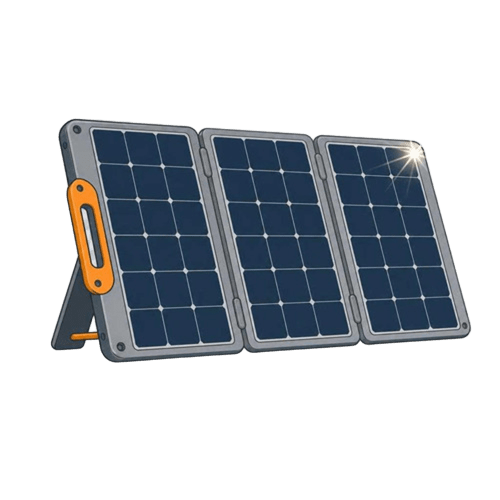
Solar support is also a strong point, especially if you already own MC4-compatible panels. The included MC4-to-Anderson cable helps here, and owners mention using third-party panels from brands like Renogy and generic 200W panels. In real sun, one user reported a 200W solar panel bringing the unit from very low charge to full by noon, while another saw roughly six hours with 200W panels during field use.
Adapter Check — The included MC4-to-Anderson cable is useful if you already own common solar panels. Still, check voltage and wattage limits before plugging in third-party panels, because matching the connector is only part of the job.
A high solar input matters most if you plan to use the power station off-grid for more than a single day. For short outages, AC charging is the star. For camping, solar is what keeps the Mega 1 from becoming a one-and-done battery box.
Connection Breadth Is Useful After Every Port Passes
The product listing confirms 4 AC outlets, and customers mention USB, AC, DC, 12V, and USB-C use. One owner specifically calls out 140W USB-C, which is laptop-tier and useful if you want to skip AC inverter losses for compatible laptops.
In practice, the layout gets positive comments. Buyers like having the screen and most connections on the same side, and several describe the front panel as easy to understand. Worth knowing, the full USB-A and USB-C count is not clearly specified in the supplied product data, so double-check the current product images before buying if port count matters for your setup.
For car and solar charging, the included cable set is helpful: AC charging cable, car-to-Anderson cable, and MC4-to-Anderson cable. That gives you the basics for wall charging, road-trip top-ups, and solar use without immediately buying extra adapters.
Fan Behavior Belongs in the Arrival Test
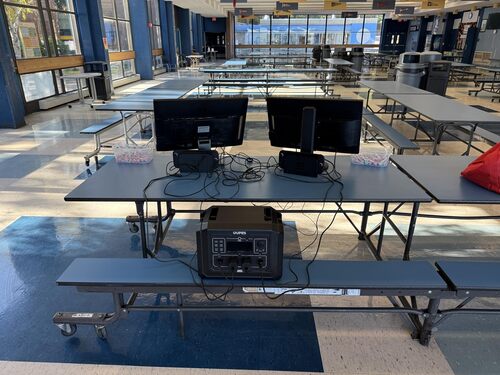
Under light loads, the Mega 1 is generally described as quiet and easy to live with indoors. Owners use it around TVs, routers, work equipment, camping setups, and security systems without treating noise as a deal-breaker.
The fan is the main complaint. In real use, it tends to show up during charging, fast recharge, heavier AC loads, and UPS-style setups where a fridge cycles on and off. One owner using UPS mode with a fridge felt the fans kicked on far too often, which could be frustrating if the unit sits in a bedroom, office, or quiet kitchen.
That said, fan noise is not unusual for a 2000W power station. Heat has to go somewhere. The better question is whether your setup needs silence, because this unit is more “quiet backup box” than “silent bedside battery.”
App Features Do Not Replace Local Reliability
The display is one of the more useful parts of the Mega 1. Customers like seeing battery percentage, live input watts, live output watts, and remaining time estimates. In practice, that makes a big difference because you can plug in a fridge, router, or TV and immediately see how much runtime you probably have left.
The app is more mixed. Some owners say it connects easily and gives useful control. Others describe the app as basic, clunky, unreliable over Wi-Fi, or frustrating because it disconnects quickly.
For beginners, the Mega 1 still feels easy to use without the app. The buttons are simple, the display tells you the basics, and the power station can operate offline. Honestly, that matters because a backup battery should not depend on a fussy phone connection when the power is already out.
Warranty Value Is a Procedure, Not a Headline
The Mega 1 uses a LiFePO4 battery, which is the right chemistry for frequent backup use. LiFePO4 is usually heavier than older NCM lithium-ion, but it tends to offer better cycle life, better thermal stability, and less stress when used often.
OUPES claims 3500+ cycles, and that is a strong number for people who expect regular use. In plain English, weekly camping, occasional outage backup, and periodic top-ups should not wear this battery out quickly. Daily cycling for a camper, blackout-prone home, or work vehicle is where LiFePO4 really starts to make sense.
Long-Term Ownership — 3500+ cycles means years of regular use before major capacity loss, assuming you avoid heat, moisture, hard impacts, and long storage at 0% or 100%.
Warranty support gets a lot of positive feedback. Several buyers mention helpful service, refunds, replacement handling, troubleshooting, and responsive communication. On the flip side, there are real failure reports too, including a unit that would not charge after discharge, display issues, a fan problem, and a few units that stopped working before support stepped in.
Best Practice — For storage, leave the unit around 50-80% charge and top it off every 3-6 months. LiFePO4 is forgiving, but long storage at empty or full charge still is not ideal.
Safety-wise, the BMS claims are important: cell balancing, overcharge protection, over-discharge protection, and temperature management. Still, one owner reported melted-looking damage and a fan problem after limited use, so don’t ignore odd smells, fan failure, error codes, or heat. Stop using the unit and contact support if anything feels off.
Mega 1 Value-and-Support Matrix
| Use Case | Fit | Why |
|---|---|---|
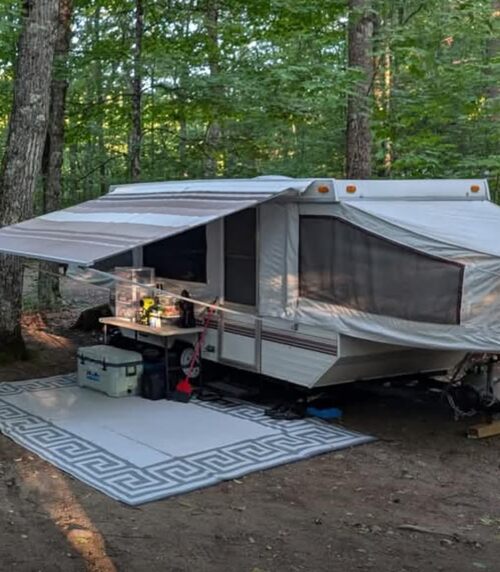
| Weekend car camping | Strong fit | Good capacity, manageable weight, strong ports, fast recharge |
| Truck camping / overlanding | Strong fit | Works well with fridges, Starlink, cameras, laptops, and solar |
| Home blackouts under 8 hours | Strong fit | Useful for routers, lights, fridge backup, TV, sump pump, and phones |
| Multi-day off-grid cabin | With caveats | Needs solar and likely expansion batteries |
| CPAP overnight backup | Strong fit | Enough capacity for most CPAP setups, especially without humidifier |
| Refrigerator backup | Solid fit | Handles many fridges, but test startup surge before relying on it |
| Jobsite power tools | Solid fit | 2000W inverter helps, but surge behavior can vary |
| Quiet bedroom UPS | Borderline | Backup works, but fan cycling may annoy light sleepers |
| Hurricane / long outage prep | Solid fit | Good base unit, stronger with solar and B2 batteries |
| Tailgating / outdoor events | Strong fit | Runs lights, speakers, screens, small appliances, and chargers |
| Backpacking | Skip | 27.8 lb is far too heavy |
| Apartment without solar access | Solid fit | Fast AC charging makes it useful even without panels |
You’ll probably be happy if you want a 1024Wh portable power station for camping, short blackouts, fridge backup, and mobile work. It also makes sense if you value fast wall charging, LiFePO4 longevity, and the option to add expansion batteries later.
You might want to skip it if you need whole-home backup, silent UPS use in a bedroom, guaranteed 4500W surge behavior, or enough battery for multiple days of cooking and heating. Different tool for a different job. The Mega 1 is strongest as a compact backup hub, not as a full gas-generator replacement.
Pros & Cons Analysis
Based on documented specifications and owner feedback
Pros
- Specifications per dollar can be strong — The base unit combines 1kWh LFP storage, high AC output, solar, and expansion without premium-brand pricing.
- Output covers diverse essentials — Refrigerators, electronics, tools, and short kitchen events are plausible after startup and duration checks.
- Solar extends the mission — A valid array can replace meaningful daily energy for camping, RV, or outage use.
- Expansion preserves the inverter platform — Supported extra storage can extend runtime after the base load model is measured.
- Owner use is broad — The evidence includes sustained camping, home, appliance, solar, network, and mobile scenarios.
Cons
- Value depends on acceptance — A lower price is not a saving if shipping, missing accessories, or a faulty function is discovered after easy remedy windows close.
- Support records point both ways — Preserve seller, serial, photos, logs, and communications for any return or warranty request.
- High output consumes modest capacity quickly — The 2,000W inverter can accept devices that exhaust usable 1,024Wh in a short period.
- Solar compatibility is exact — Panel wattage alone cannot establish safe voltage, current, polarity, connector, or cold-weather operation.
- Software should not be assumed — App pairing, firmware, timeout, UPS, and restoration behavior require an offline fallback and test record.
Our Verdict
This OUPES Mega 1 review comes down to value, speed, and realistic expectations. The Mega 1 gives you a lot for a 1kWh class power station: 2000W output, LiFePO4 chemistry, very fast AC recharge, solar support, UPS-style backup, and expansion battery support. At the same time, the fan noise, mixed app feedback, and questionable surge ceiling keep it from being a flawless pick.
If you mostly need to run small electronics, routers, Starlink, a fridge for short outages, camping gear, mobile work equipment, or occasional tools, the OUPES Mega 1 battery makes a lot of sense. If you're trying to run heat, cooking appliances, or multi-day off-grid loads, budget for solar and expansion batteries — or step up to a larger station from the start.
Frequently Asked Questions
Can the OUPES Mega 1 run a refrigerator?
Yes, many owners use it for refrigerator backup, but runtime depends heavily on the fridge. A cycling fridge drawing around 100-200W may run for several hours, while some users report longer results with efficient models. Startup surge matters, so older fridges may be less predictable.
How long does the OUPES Mega 1 battery last in real use?
For light loads like phones, routers, fans, lights, and laptops, customers generally report useful all-day or overnight performance. For high-draw cooking appliances, heaters, and desktop computers, the 1024Wh battery drops much faster.
Can it run a CPAP machine overnight?
Yes, it should be a strong fit for most CPAP setups, especially without heated humidification. A 30-60W CPAP can usually run overnight with margin, but humidifiers and heated hoses increase power draw.
How fast does the OUPES Mega 1 recharge from the wall?
OUPES claims 0-80% in 36 minutes by AC. Owners commonly describe wall charging as very fast, with real-world reports ranging from under an hour to about 90 minutes depending on mode and state of charge.
Is the 4500W surge rating reliable?
Treat the 4500W surge rating carefully. Many owners run fridges, pumps, and tools successfully, but at least one buyer reported trips around 2050-2200W. Continuous 2000W output is the safer number to plan around.
Does the OUPES Mega 1 work as a UPS?
It supports UPS / EPS-style backup with a claimed less than 20ms transfer time. Owners use it for sump pumps, security systems, computers, routers, and fridge backup, though some mention fan noise during UPS-style fridge cycling.
Can it charge from solar panels?
Yes. The included MC4-to-Anderson cable supports solar charging, and owners report using third-party panels. One review mentions 800W solar input, while users with 200W panels report practical top-ups in good sun.
Is the app useful?
The app is useful for basic monitoring and control, but feedback is mixed. Some owners connect easily, while others report basic data, Wi-Fi issues, Bluetooth dropouts, or pairing frustration.
Is it quiet enough for indoor use?
Under light loads, customers generally describe it as quiet. The fan becomes more noticeable during charging, fast recharge, heavier AC loads, or UPS-style use with cycling appliances.
Is the OUPES Mega 1 good for off-grid living?
The base 1024Wh unit is better for short backup, camping, and daily appliance support than full off-grid living. For multi-day use, you will likely want solar input and one or two B2 expansion batteries.
What are the main complaints?
The most common drawbacks are fan noise while charging, mixed app reliability, limited base capacity for high-draw appliances, possible surge-rating disappointment, and a few reported reliability or charging issues.
Technical Specifications
| Brand | OUPES |
|---|---|
| Model / SKU | Mega 1 / S1 (ASIN: B0DG8JQNS4) |
| Battery capacity | 1024 Wh |
| Battery chemistry | LiFePO4 (LFP) |
| Cycle-life rating | 3500+ cycles |
| Expandable capacity | Yes — supports up to 2 B2 expansion batteries, up to 5120Wh total |
| Continuous AC output | 2000 W continuous (pure sine wave) |
| Surge / peak output | 4500 W peak |
| AC voltage, frequency, and waveform | 120V AC, pure sine wave; frequency not published for this exact model |
| AC outlets | 4 × 120V AC outlets |
| High-current, RV, or 240V output | No dedicated RV, 30A, 240V, or other high-current AC outlet published for this exact model |
| USB-C outputs | Count not specified |
| USB-A outputs | Not published for this exact model in the current source set |
| 12V / DC outputs | Yes (12V car charging cable included; output details not fully specified) |
| Maximum solar input | 800 W |
| Solar input range and connector | MC4-to-Anderson cable included; exact PV voltage/current window not published for this exact model |
| Maximum AC input | 1400 W |
| AC recharge time | 0-80% in 36 minutes; roughly 45-90 minutes reported depending on mode |
| Solar recharge estimate | Planning estimate: ~1.5-2 hours with 800W ideal input; ~5-7 hours with 200W panels in good sun (real sun varies) |
| UPS / EPS support and transfer time | Yes — less than 20ms switchover |
| App / connectivity | Yes — Bluetooth app control (Wi-Fi / Bluetooth feedback is mixed) |
| Operating temperature / weather rating | Not published for this exact model in the current source set |
| Dimensions | 15.1 x 9.1 x 11.6 inches |
| Weight | 27.8 lb |
| Warranty | Not published for this exact model in the current source set |