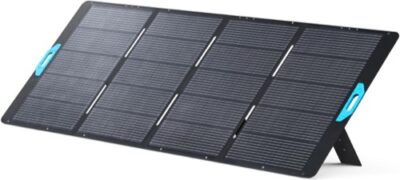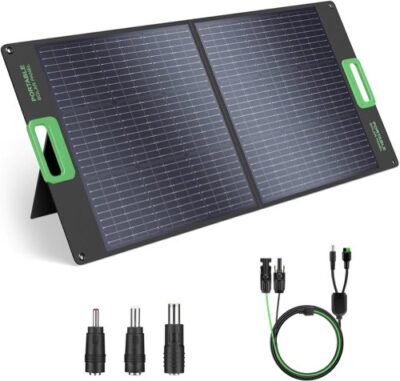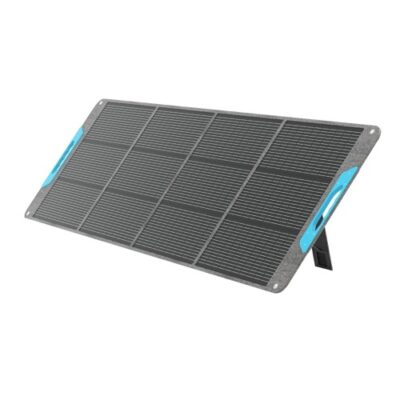
Anker SOLIX PS30 Review: Useful USB Solar, Modest Real Output
At a Glance
KEY FEATURES
- 30W folding panel intended for direct USB device charging.
- USB-C output is limited to 5V/3A, or 15W maximum.
- USB-A output is limited to 5V/2.4A, or 12W maximum.
- 2.4-pound package folds to roughly 10.7 × 8.8 inches.
- Best for power banks, phones, radios, and other modest 5V loads.
PROS
- Compact folded footprint
- Direct USB-C and USB-A charging
- IP65 panel protection
- Two carabiners included
- USB-C cannot deliver the full 30W rating
- Owner reports commonly sit near 10–14W
- No solar-generator connector output
- Shade affects a small panel quickly
CONS
- USB-C cannot deliver the full 30W rating
- Owner reports commonly sit near 10–14W
- No solar-generator connector output
- Shade affects a small panel quickly
Small-Device Travel Pick
Based on exact documentation, retained exact-ASIN evidence, and the expanded qualitative Amazon owner-text review; no hands-on test claimed
This Anker SOLIX PS30 review is for one specific buyer: someone going on a camping trip who wants to keep their phone, maybe a tablet, and a GPS device charged — without researching solar controllers, cable compatibility, or power station input voltages. Just: unfold, point at sun, plug in phone. Done.
The PS30 is the smallest panel in this comparison at 30W and 2.2 lbs. It has USB-C and USB-A ports. It has no DC output, no MC4 connector, no charge controller. You can’t charge a power station with it. You can’t maintain a car battery. What you can do is keep USB devices charged during a weekend camping trip, a motorcycle journey, or any outdoor situation where your phone battery is the primary concern.
That simplicity is genuinely the point. The frustration in a significant portion of the PS30’s reviews comes from buyers who didn’t understand that boundary going in — who expected to charge their Jackery or EcoFlow station and couldn’t. For the defined use case, there’s a real product here. For the wrong use case, there’s real disappointment. This review is clear on both.
What the PS30 does well
It gives phones, cameras, GPS units, lights, and power banks a direct USB-A or USB-C charging path without a separate controller.
What it is not
It is not an MC4 array module or a normal DC-input panel for portable power stations and 12V batteries.
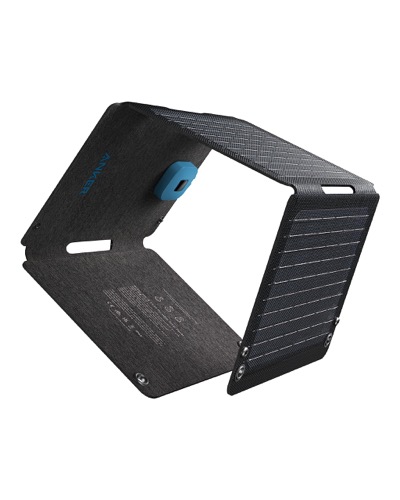
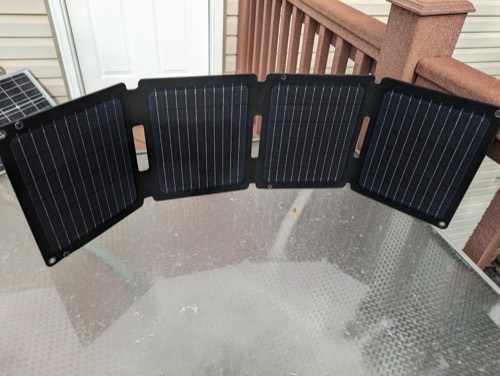
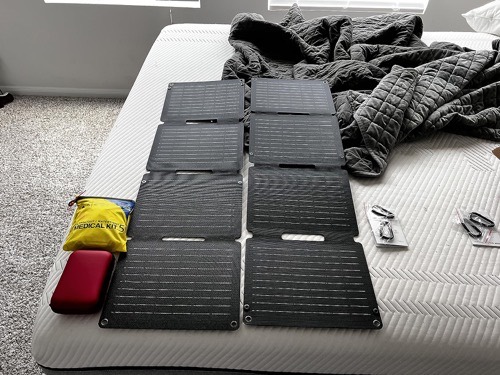
The larger evidence set makes this boundary clearer. Positive reports concentrate on compact carry, simple USB charging, hanging the four-section panel with carabiners, and using a power bank as an energy buffer. Critical reports include devices that charge intermittently, ports that stop delivering power, unexpectedly slow charging, and buyers who expected a DC power-station connection. Some owners received refunds or replacements; those individual outcomes do not establish how often a unit fails.
A sensible direct load, although clouds or device heat can interrupt charging.
The more resilient field strategy because the stored energy remains available after the sun moves.
Possible only within the port’s documented output and the device’s charging requirements; expect limited speed.
Choose a panel with the station’s supported DC/solar input instead.
Owner watt readings remain observations rather than a controlled performance curve. Cable, device negotiation, battery state, cell temperature, sun angle, partial shade, and measurement method all change what appears at the load. The useful question is whether the PS30 can maintain the small devices you actually carry—not whether one isolated number can be generalized to every campsite.
USB-Only Output: The One Design Choice That Defines It
Every feature of the Anker SOLIX PS30 flows from one decision: USB-only output.
That choice eliminates the complexity that makes most solar panels intimidating to a casual buyer. No voltage compatibility research. No charge controller to select or configure. No MC4 to XT60 adapter to source. Plug in a phone like you’d plug it into a wall charger. The panel figures out the rest.
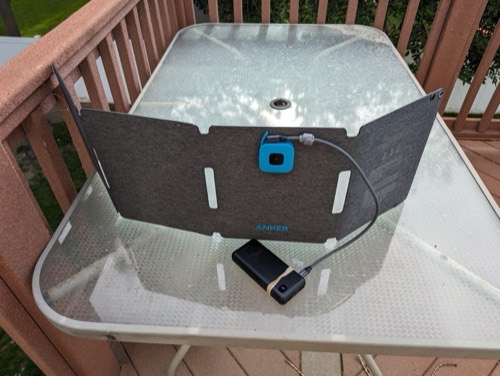
The trade-off is absolute: this panel cannot charge a portable power station. Most power stations require DC input at 12-25V through a proprietary or MC4 connector. USB is 5V — incompatible at the voltage level, not just at the connector level. If you own an EcoFlow River, Jackery Explorer, Bluetti, or any portable power station: the PS30 does not charge it. Full stop.
What it does charge, via USB-C (15W max) or USB-A (12W max):
- Smartphones (any brand with USB-C or USB-A)
- Tablets (at 15W max — slower than wall charging)
- Power banks / small battery packs
- GPS units and action cameras
- Bluetooth speakers and earphones
- Small LED lanterns with USB charging
For a camping trip where your biggest concern is keeping your iPhone from dying during a three-day weekend, that list covers everything you actually use.
Devices You Can Charge
| Device type | USB-C | USB-A | Notes |
|---|---|---|---|
| iPhone (any USB-C model) | Yes | Adapter needed | 15W max — slower than wall fast charge |
| Android phone (USB-C) | Yes | Yes | 15W USB-C or 12W USB-A |
| iPad / tablet | Yes | Yes | 15W max — full charge takes several hours |
| Power bank (up to 20,000mAh) | Yes | Yes | Full charge = most of a day |
| GPS unit | Yes | Yes | Works well — GPS draws little power |
| Action camera (GoPro etc.) | Yes | Yes | Easy to keep topped up |
| Bluetooth earbuds / speaker | Yes | Yes | Fast for small devices |
| Portable power station | No | No | USB voltage (5V) incompatible |
| 12V battery | No | No | No DC output at all |
The two USB ports can operate simultaneously, though total output is shared across both connections. Charging a phone and a power bank at the same time splits the available 10-14W between them.
Real-World Sun Output
The owner observations below show how strongly conditions and connected equipment affect the displayed input:
| Condition | Reported output (USB-C) |
|---|---|
| Full sun, optimal angle, warm day | 12-14W |
| Full sun, typical placement | 8-12W |
| Partly cloudy / mixed light | 3-7W |
| Morning / late afternoon sun | 2-5W |
| Overcast | 1-3W or zero |
The 30W nameplate is a standard-condition rating, not a promise for every outdoor setup. In the real world, these numbers reflect what buyers actually measure. One owner described a side-by-side comparison in which the PS30 at 12.2W vs. the competitor at 34.1W in identical full-sun conditions.
For phone charging: at 10W input to a 5,000mAh phone (standard modern smartphone), you’re looking at 2-3 hours to full in good sun. A 20,000mAh power bank at 10W takes 10-12 hours — realistically, a full day of sun to charge one large power bank.
For device maintenance during a camping trip: the PS30 can keep a typical smartphone reasonably topped up through a day of intermittent use and sun exposure — which is exactly what it’s designed for.
Pro Tip — The PS30 works best when you charge devices in short bursts rather than expecting it to fast-fill depleted batteries. Connecting a 10-20% phone in the morning and disconnecting at 80% when you move into shade is more efficient use of the available output than leaving a depleted device connected all day.
Physical Design Analysis
The PS30 folds to 10.7×8.8×1.7 inches — roughly the size of a spiral notebook. The aluminum construction feels more substantial than the plastic-and-fabric build you find on budget panels. Tempered glass covers the solar cells, which provides scratch resistance and a cleaner look than ETFE film alternatives.
Two snap closures keep it shut when folded. Opening it takes one hand and a few seconds. There’s no dedicated stand or kickstand, which means you either prop it against something or hang it from the included carabiners.
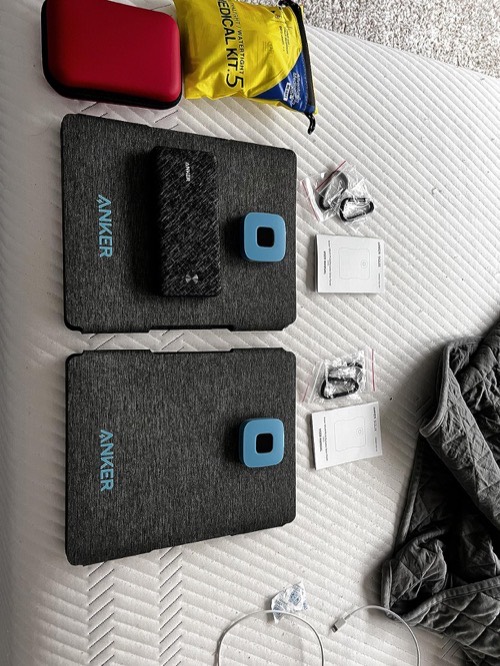
The carabiners are the mount system, and they work better than they sound. Two metal carabiners attach to corner loops on the panel. Clip one to a backpack strap and route your USB cable to your phone in the pack — now you’re charging while hiking, which is the PS30’s most distinctive use pattern. Several customers specifically mention using it this way on extended hikes and overland motorcycle routes.
At 2.2 lbs, it’s genuinely lightweight. Though worth noting: some customers who compared it to other 30W panels found it heavier and physically larger than alternatives at similar wattage. The tempered glass construction adds weight versus ETFE panels at the same power level.
The LED indicator lights (Anker includes a status light) tell you the panel is generating — a small but appreciated feature for knowing the panel is working before you walk away.
What It Won't Do — And Why That's Fine
Let’s be direct about the limitations, because understanding them is the difference between a satisfied purchase and a frustrated return:
The PS30 won’t:
- Charge a portable power station (no DC output)
- Maintain a 12V car, RV, or boat battery (no DC output)
- Fast-charge a modern USB-C phone (capped at 15W)
- Connect in series with other panels
- Compete on price-per-watt with comparable portable panels
For buyers who discover these limitations after purchase: the PS30 review pattern shows a consistent group of buyers who expected more (specifically, power station charging) and were disappointed. That frustration is legitimate — but it’s a mismatch between the buyer’s expectations and the product’s design intent, not a product failure.
If your needs fall within the USB device charging use case, these “limitations” are irrelevant — you weren’t going to use those features anyway. A casual camper who just wants to keep their phone alive doesn’t need MC4 connectors or a charge controller.
Outdoor Durability
IP65 means the PS30 is dust-tight and handles water jets from any direction without damage. Rain, camping condensation, wet tent deployment, brief contact with water — all handled. The rating stops short of submersion (IP67/IP68), but for outdoor camping and hiking use, IP65 is the practical outdoor standard.
Tempered glass is more scratch-resistant than ETFE film. If the panel gets tossed in a gear bag with keys and other hard items, the glass surface holds up better than alternatives. The aluminum frame resists corrosion and bending.
Cold weather is a documented limitation. Multiple customers report the panel becomes stiff and difficult to unfold below freezing, and output drops more than expected in cold temperatures. This isn’t unusual for solar panels — monocrystalline cells actually perform slightly better in cold temperatures (ironically), but the physical stiffening of the folding mechanism is a real usability concern in winter conditions.
One customer reported the panel failed after 7 months of light use. This is an outlier against a generally positive build quality pattern, but worth noting for anyone purchasing with long-term outdoor deployment in mind. The 18-month warranty covers this period.
PS30 Safety and Warranty
No exact third-party safety certifications retained for this review (CE, ETL, UL) are listed on the product page. The IP65 weather resistance rating is the primary certified specification.
Anker offers an 18-month warranty on the PS30 — better than the 1-year coverage on most competing panels in this comparison. Anker’s warranty support has a consistently positive reputation across its broader product line, and multiple PS30 reviews mention successful warranty resolutions (including a full replacement in one case after the panel stopped charging).
Who the PS30 Is Right For
| Buyer type | Fit |
|---|---|
| Weekend camper keeping 1-2 phones charged | Good fit — designed for exactly this |
| Hiker wanting panel-on-backpack charging | Good fit — carabiner system works well |
| Motorcycle / overlander trip USB top-up | Good fit — compact, mounts easily |
| Buyer wanting to charge a power station | Wrong product — no DC output |
| Off-grid setup needing 12V battery charging | Wrong product — no DC output |
| Buyer comparing price-per-watt | Better alternatives exist |
| Emergency glove-box backup panel | Good fit — compact size and weight |
Anker SOLIX PS30 Review Summary
The PS30 delivers on Anker’s reputation for build quality and delivers meaningful USB device charging in a lightweight, compact package. The IP65 rating handles rain and outdoor exposure. The carabiner mounting makes it easy to use on the move.
The honest problems are harder to ignore: owner-reported input commonly falls around 7-14W rather than the 30W rated, and the price doesn’t reflect that gap favorably compared to competing panels that deliver more real watts at similar price points. The USB-C port is 15W — not fast charging. And you absolutely cannot charge a portable power station with this.
For weekend campers keeping a phone and a headlamp charged: yes. For any other use case: look elsewhere.
The Real Story
The Anker SOLIX PS30 has a clear, honest use case: it’s the USB solar charger for casual campers and hikers who need to keep small devices charged without any solar knowledge. For that job, the build quality is real, the IP65 rating handles outdoor conditions, and the carabiner mounting system is genuinely useful.
The problems are also real: output of 7-14W from a 30W rated panel is a significant gap. The price is high for the wattage delivered. USB-only limits it to devices — not power stations or batteries. And competing panels at this price point consistently deliver more real-world watts.
Anker’s brand reputation earns the PS30 a pass from many buyers who value reliability over raw output numbers. If you trust Anker’s build quality and want the simplest possible solar charger for device charging on trips, the PS30 delivers on that promise.
If your goal is anything beyond keeping USB devices charged, look at the 100W+ panels in this comparison — specifically the DOKIO 100W kit for 12V battery charging or the Jackery SolarSaga 200W for power station use with Jackery equipment. The PS30 is the right tool for a narrow, specific job — and for that job, it does its work reliably.
Pros & Cons Analysis
Based on documented specifications and owner feedback
Pros
- Anker brand quality and reliability reputation — buyers who own other Anker products (cables, power banks, chargers) report the PS30 matches the build quality standard they expect. The "Anker quality" reassurance is a real factor in purchase decisions for this audience.
- Extremely portable at 2.2 lb — the lightest panel in this comparison, folding to 10.7×8.8×1.7 inches. Fits in large pockets, backpack pouches, and small bags without consuming meaningful space.
- No setup complexity — just USB-A and USB-C — no controller, no compatibility research, no cable adapters. Plug a phone or power bank into a USB port and it charges. This simplicity is genuinely valued by customers who don't want to understand solar technology.
- IP65 weather resistance — rated for rain and water spray. Customers who used it camping in light rain or wet grass report no damage. Adequate for outdoor use without babysitting the panel.
- Two carabiners included for mounting — easy attachment to backpacks, tents, or fences. Customers use these for charging while hiking, motorcycle trips, and at outdoor events where keeping the panel sun-tracking matters.
- Compact fold — stores nearly anywhere — customers report keeping the PS30 in motorcycle bags, tent pockets, and car door pockets. At folded size comparable to a spiral notebook, it's genuinely go-anywhere portable.
- 18-month warranty with accessible support — Anker's warranty process is described positively across customer feedback. The 18-month term is better than many comparable panels, and Anker's customer service reputation supports it.
- Works well for its defined use case — customers who bought it specifically to keep phones, small power banks, and GPS devices charged on camping trips, motorcycle journeys, or outdoor events report it works as expected for those scenarios.
Cons
- Real-world output consistently below 30W — the most common complaint across a large review set: actual measured output runs 7-12W in typical conditions, with careful testers achieving 12-14W in near-ideal sun. Multiple buyers who expected 30W phone charging were significantly disappointed.
- USB-only output — cannot charge power stations or 12V batteries — no DC output, no MC4, no SAE connector. This is a deliberate design choice, but buyers who discovered this after purchase (expecting to charge a power station) are consistently frustrated.
- USB-C capped at 15W (5V/3A) — not fast charging — multiple buyers expected USB-C fast charging and instead got a 15W output. At 15W, a 5000mAh phone takes 2-3 hours to charge in ideal sun. A larger power bank can take 12+ hours.
- Overpriced for actual performance — a recurring theme: customers find panels from other brands delivering comparable or better wattage for significantly less money. Side-by-side comparisons (including one published review showing a SunJack 40W reaching 34W vs. PS30's 12W) highlight the value gap.
- Some units arrive without included cables — a subset of reviews mention receiving the panel without the cable mentioned in the instructions. This appears to be a packaging inconsistency.
- Heavier and bulkier than competitors of the same wattage — buyers who compared the PS30 to other 30W panels noted it's physically larger and heavier, which seems counterintuitive for a product positioned on portability.
- Cold weather reduces output significantly — customers in colder climates note the panels are reluctant to "unfold" or flex normally at low temperatures, and output drops more than expected in cold conditions.
- Significant performance gap versus competing brands — documented side-by-side testing shows comparable wattage panels from other brands consistently outperform the PS30. At the PS30's price point, other brands deliver more real-world power.
Bottom Line: Buy It for 5V Devices, Not the 30W Headline
The Anker PS30 is compact, simple, and useful when the job is charging a phone, radio, or power bank over USB. Its port limits and owner wattage observations make it a poor fit for buyers expecting 30W laptop charging or meaningful power-station input.
Frequently Asked Questions
Can the Anker PS30 output 30W through USB-C?
No. The panel is rated at 30W, but its USB-C port is specified at 5V/3A, or 15W maximum. The USB-A port is limited to 12W.
Can it charge a laptop?
Only if the laptop accepts 5V USB-C charging at up to 15W, which many modern laptops do not. Treat laptop charging as device-specific and slow rather than a primary use.
What output did owners see?
Individual owner reports in the reviewed sample include roughly 10W, 10.5W, and 14W in different conditions. Those observations are useful context, not a controlled average or guaranteed range.
Is the Anker PS30 waterproof?
Anker gives the panel an IP65 rating, which covers dust and water jets. It does not mean the USB ports should be left wet, submerged, or connected in rain.
What is the best use for this panel?
It makes the most sense for replenishing a power bank or keeping small 5V devices alive during travel. It is not a substitute for a higher-voltage panel feeding a portable power station.
Technical Specifications
| Brand | Anker |
|---|---|
| Model / SKU | A2426 / SOLIX PS30 (ASIN B0BX9FCSQQ) |
| Panel format | Four-section folding USB panel |
| Rated output (Pmax) | 30W |
| Cell technology | Monocrystalline |
| Module efficiency | — |
| Voltage at maximum power (Vmp) | — |
| Current at maximum power (Imp) | — |
| Open-circuit voltage (Voc) | — |
| Short-circuit current (Isc) | — |
| Power tolerance | — |
| Maximum system voltage | — |
| Maximum series fuse | — |
| Output connector | USB-C and USB-A |
| Output cable | USB-C 5V/3A (15W); USB-A 5V/2.4A (12W) |
| Deployed dimensions | 35.6 × 10.7 × 0.7 in |
| Folded dimensions | 10.7 × 8.8 × 1.7 in |
| Weight | 2.4 lb |
| Surface and frame | Fabric-backed folding laminate |
| Positioning / mounting | Two carabiners / hanging loops |
| Environmental protection | IP65 |
| Wind / snow load | — |
| Operating temperature | — |
| Included accessories | Panel, two carabiners, safety guide |
| Product warranty | 18 months |