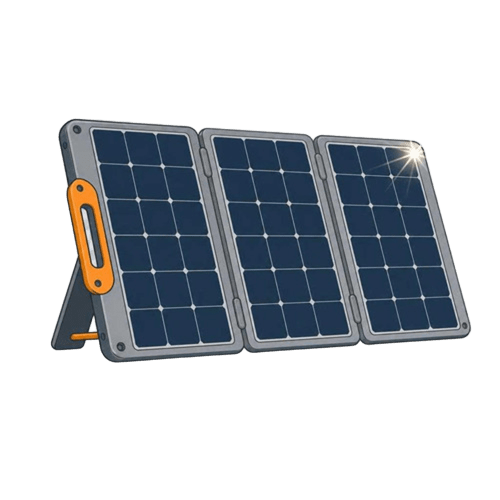
EcoFlow 45W Portable Solar Panel Review: Small-Device Specialist
At a Glance
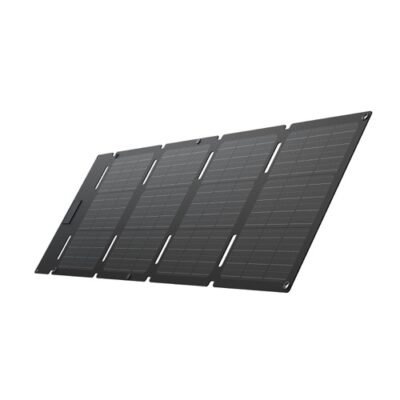
KEY FEATURES
- 45W TOPCon folding panel with separate 45W DC and 15W USB-C paths.
- 3.1-pound body folds to roughly 8.7 × 12.2 inches.
- 25.6V Voc and about 22V Vmp for controller compatibility checks.
- Four eyelets and included hooks support hanging or angled deployment.
- Best for phones, power banks, and slow recovery of small EcoFlow stations.
PROS
- Very compact for 45W
- Direct USB-C device charging
- IP68 panel construction
- Exact electrical values are published
- USB-C output is capped at 15W
- Slow for large power stations
- Short lead appears in owner complaints
- Light panel needs wind control
CONS
- USB-C output is capped at 15W
- Slow for large power stations
- Short lead appears in owner complaints
- Light panel needs wind control
Best for Small Devices
Based on exact documentation, retained exact-ASIN evidence, and the expanded qualitative Amazon owner-text review; no hands-on test claimed
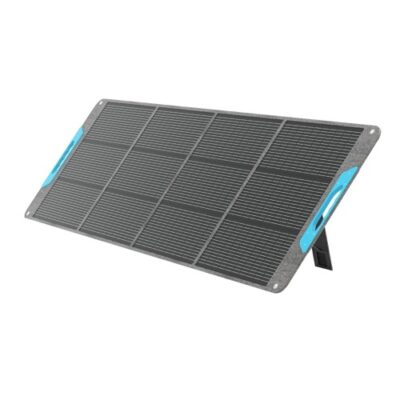
This EcoFlow 45W solar panel review starts with the honest framing this product needs: 45W is small. It’s intentionally small. EcoFlow built this panel for travelers who want real solar power in a genuinely backpack-sized package — not a panel that lives in a car trunk, but one that fits in carry-on luggage, hangs off a backpack, or sits on a beach chair without taking over the space.
The traveler’s solar dilemma is real. You want to charge your EcoFlow River or Delta power station while camping or on the road, but a large folding panel doesn’t survive a suitcase ride, won’t fit in a day pack, and feels out of place unless you’re serious car camping. The EcoFlow 45W occupies a specific niche: the smallest solar panel in EcoFlow’s lineup that delivers real panel output (not just a USB trickle) in a form factor that actually travels well.
That positioning comes with honest trade-offs. Forty-five watts is genuinely slow for charging a power station — expect 7-9 hours to bring an EcoFlow River 3 (245Wh) from flat in good sun. And owner-reported input commonly falls around 20-35W rather than the rated 45W, which is a bigger gap than you’d expect from N-Type TOPCon cell technology. This review covers both the genuine strengths and the honest limitations.
USB-C provides a direct small-device path when sun and device temperature cooperate.
The included DC5521-to-XT60i route can add energy slowly within the exact input limits.
Small daily loads fit the panel’s energy budget better than a large depleted battery.
Technically chargeable in some pairings, but 45W is maintenance-scale rather than a fast refill.
The available owner evidence includes contextual observations around 30W to low-40W input in favorable conditions, alongside much lower or interrupted charging under poor light. Those figures are not interchangeable: reviewers used different receivers, seasons, angles, and skies. The useful signal is that a small panel can perform close to its nameplate in an unusually good setup while still producing too little energy for a large daily load.
Planning equation: daily watt-hours ≈ 45W × peak-sun hours × an assumed system factor.
At four peak-sun hours and a cautious 0.70 factor, the illustration is 126Wh. Change both assumptions for the site, and treat the result as planning—not a production promise.
Owners repeatedly value low weight, compact folding, and quick deployment. Friction includes modest speed, cable or connector expectations, difficulty aiming without a conventional kickstand, and a few no-output or quality concerns. Because the evidence is qualitative and lacks rating metadata, it supports use-case boundaries rather than consumer-rate claims.
The dual output design is the differentiator. DC5521 with the included XT60i cable serves compatible EcoFlow inputs, while USB-C handles devices directly. Buyers should still check the exact product revision and current box contents because connector families change faster than a panel’s basic 45W role.
Device Compatibility Breakdown
| Connection type | Works with | Output |
|---|---|---|
| DC5521 to XT60i cable | EcoFlow River 2 / River 3 / Delta 2 and most EcoFlow stations | Up to 45W (panel limited) |
| USB-C port | Phones, tablets, small power banks | Up to 15W (5V/3A) |
| DC5521 direct | Devices with DC5521 input | Voltage varies with sun |
The XT60i cable is EcoFlow’s proprietary connector for their River and Delta series. This is plug-and-play for existing EcoFlow owners — no adapter research, no compatibility concern. For non-EcoFlow power stations, you’ll need either a DC5521 to XT60 adapter or a different panel.
The USB-C port at 15W max (5V/3A) is slower than many buyers expect. For reference: a typical phone fast charger runs at 25-65W. The EcoFlow 45W can charge a phone via USB-C, but it will take longer than a wall charger. In direct sun, the USB-C output is stable and doesn’t require a battery buffer — useful for field charging when you don’t have the power station handy.
The USB-C and DC5521 outputs can be used simultaneously for charging two devices, though total output stays within the panel’s generation capacity.
Cannot be connected in series with other panels. This limits maximum input to 45W per panel. For EcoFlow station owners wanting more solar input, parallel connection or connecting panels individually to the station’s separate ports is the workaround.
How Well Does It Charge?
Here’s the charging reality for the EcoFlow 45W:
| Condition | Reported output |
|---|---|
| Full sun, optimal angle | 35-41W |
| Full sun, typical placement | 25-35W |
| Partly cloudy / variable | 10-22W |
| Morning / late afternoon (low sun angle) | 5-15W |
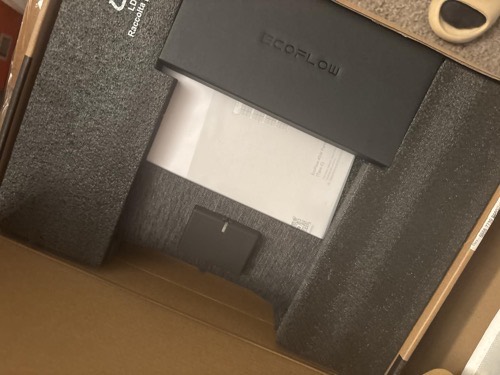
The 45W rating is STC — laboratory conditions at 25°C with 1000 W/m² irradiance. Real-world conditions reduce this: elevated panel temperature, angle imperfection, atmospheric effects. The gap for this panel is larger than you’d expect from 25% TOPCon cells. Multiple careful testers — one with a USB meter in direct South Florida sun, one in Seattle in January — measured peak outputs in the 25-41W range.
One customer with a careful test achieved 41W peak in near-optimal afternoon conditions, which is about 91% of rated and excellent. But most real-world casual deployments see 25-30W — roughly 55-67% of rated.
The practical charging math:
| EcoFlow station | Capacity | Time from flat (25W avg) |
|---|---|---|
| River 3 | 245 Wh | ~9-10 hours |
| River 2 | 256 Wh | ~10 hours |
| Delta 2 | 1024 Wh | ~40 hours |
For the River series, the 45W panel is a viable weekend camping companion that maintains charge between evening uses. For the Delta series, it’s genuinely too small — most Delta owners who review this panel suggest pairing at least two, or upgrading to EcoFlow’s 160W or 220W panels.
Worth Knowing — Some customers received this panel “free” as a bundle bonus with larger EcoFlow products. Those reviews are notably more charitable about the 45W limitations, because their expectations were calibrated differently. Buyers paying full retail price for the panel should set their expectations against the capacity math above.
Mounting Options and Practical Setup
Four mounting approaches work well with the EcoFlow 45W:
- Hanging — snap hooks through grommets onto car door frames, backpack straps, fence rails, awning hooks. Most versatile for position adjustment as the sun moves.
- Leaning — prop against a backpack, car wheel, or rock. Simple and effective in calm conditions.
- Flat ground — works on any surface but requires angling toward the sun. Windy conditions need anchoring.
- Backpack attachment — hooks through grommets onto backpack webbing for charging while hiking (output varies significantly depending on sun angle and shading from your body).
There’s no built-in stand or kickstand. Some buyers add a small adjustable phone stand under one edge to angle the panel toward the sun — works for stationary setups and costs a few dollars.
Setup time is genuinely fast for an EcoFlow owner: unfold, attach hook to something convenient, plug in cable, connect to station. Thirty to sixty seconds from bag to charging.
Pro Tip — For maximum output, angle the panel face-on to the sun rather than laying it flat. At midday in summer, flat is close to optimal. But in morning, evening, and winter conditions, propping the panel at a steeper angle toward the sun’s position can add 20-40% to output compared to flat placement.
TOPCon Cells: What the Upgrade Actually Means
N-Type TOPCon (Tunnel Oxide Passivated Contact) is genuinely the best cell architecture available in this size class. Here’s what that means in practical terms.
Standard PERC monocrystalline cells — used in most panels in this comparison — are P-Type silicon with a passivated rear emitter. They top out around 20-23% efficiency. TOPCon adds a thin tunnel oxide layer between the silicon and rear contacts, which dramatically reduces electron recombination losses. The result: 25% efficiency in a comparable footprint.
The advantages beyond raw efficiency:
| Characteristic | Standard PERC | N-Type TOPCon |
|---|---|---|
| Cell efficiency | 20-23% | 25% |
| High-temp performance | Degrades ~0.45%/°C above 25°C | Degrades ~0.30%/°C above 25°C |
| Low-light performance | Moderate | Better diffuse light response |
| Long-term degradation rate | ~0.45%/year | ~0.25%/year |
For a portable panel that gets left in the sun on summer days, the lower temperature coefficient matters. A panel reaching 50°C surface temperature in direct sun (common) loses less output with TOPCon than with PERC.
The low-light performance advantage is meaningful for camping in cloudy climates. Morning and evening output, when sun angle is low, tends to be better with TOPCon. For a Pacific Northwest or UK buyer, this is a practical difference.
The frustrating aspect: even with TOPCon’s theoretical advantages, the 45W real-world output gap (reporting ~55-67% of rated rather than the 80-85% you’d expect) suggests either measurement conditions that favor the rating, or a current delivery limitation worth monitoring. EcoFlow’s claim to be “first in portable solar with N-Type TOPCon” is technically accurate — this is genuinely advanced cell technology in a small panel.
Design, Materials, and Durability
At 3.1 lbs and folding to 12.2×8.8×1.6 inches, this is a remarkably compact solar panel. For reference: it folds to approximately the size of a large hardcover novel. It fits in backpack side pockets, carry-on bags, and glove boxes. That size is the panel’s core design achievement.
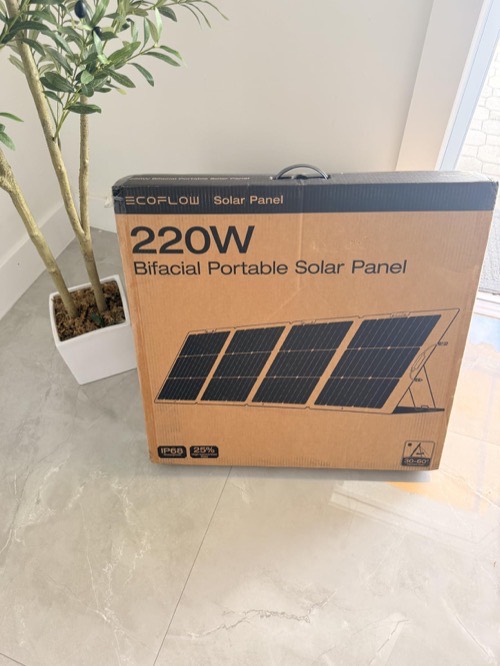
The four-panel fold — rather than the two-panel design common to larger portables — is what makes the compact fold possible. When open, you have four smaller panel sections rather than two large ones. This affects rigidity slightly (more fold points, more potential hinge wear over time) but delivers the size reduction that the form factor demands.
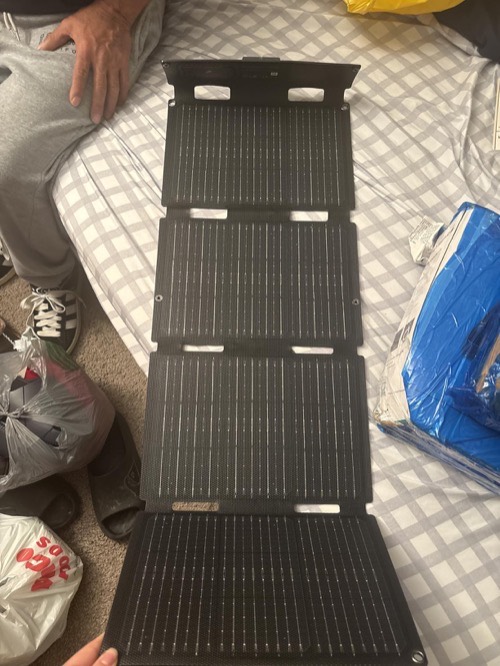
ETFE film replaces glass on the front surface. ETFE is lighter and more flexible than glass, which enables the compact fold. It’s also highly UV-resistant and scratch-resistant. The trade-off versus glass is slightly lower light transmission in ideal conditions, though the TOPCon cells partially compensate.
IP68 waterproofing is the durability headline. The panel body can handle rain, splashes, and brief submersion. Customers who’ve used it in rainy conditions or on boat trips confirm no weather-related damage. The four grommets and included snap hooks make hanging on car doors, fence lines, and awning rails a ten-second setup. This isn’t a panel that needs to be sheltered when a cloud rolls in.
One durability note from customer feedback: the lightweight design doesn’t hold position well in wind. In any breeze, the panel moves or tips over without additional anchoring. A carabiner through a grommet to something fixed handles this, but it’s not automatic.
IP68 and Real Outdoor Durability
IP68 is the strongest waterproof certification available on a portable consumer product — equivalent to the rating on premium smartphones and professional outdoor electronics. The panel body can handle full rain exposure, water splashes, and brief submersion without moisture ingress.
For beach use, boat-deck placement, and camping in rainy climates, this rating gives genuine peace of mind. Customers who’ve tested it in actual rain confirm the waterproofing holds up.
The ETFE film surface is UV-stable and scratch-resistant — appropriate for a panel that gets tossed in gear bags and deployed on rough surfaces. It’s more resilient to surface abrasion than glass panels, which can crack under point impacts.
Wind resistance is the one honest weakness. At 3.1 lbs with a large surface area, the panel acts as a sail in any wind above light breeze. The grommets allow you to tether it, and the snap hooks give you connection points for securing it — but unsupported on flat ground, it moves in moderate wind. Plan for anchoring.
Certifications, Safety, and Support
No exact third-party safety certifications retained for this review (CE, ETL, UL) are listed on the product page. The IP68 waterproof rating is the primary certified specification.
EcoFlow as a brand has an established warranty and support infrastructure. Their River and Delta product lines are well-reviewed for customer service responsiveness. For the 45W panel specifically, a subset of reviews report defective units (no output from day one) that EcoFlow replaced without friction — a positive signal for the brand’s support processes.
Warranty terms aren’t explicitly stated on this product listing. EcoFlow typically offers 24-month coverage on accessories and panels.
Who Should Buy This?
| Buyer type | Fit |
|---|---|
| EcoFlow River 2 / River 3 owner — weekend camping | Strong fit — size, weight, and connector are right |
| Traveler who wants solar in carry-on luggage | Strong fit — 3.1lb, compact fold, handles security screening |
| Hiker wanting panel-on-backpack charging | Good fit — grommet hanging works; output limited but useful |
| EcoFlow Delta owner wanting primary solar input | Poor fit — 45W is too small; need 160W+ for practical Delta charging |
| Non-EcoFlow power station owner | Adapter needed; not the natural first choice |
| Buyer comparing price-per-watt | Poor fit — larger panels deliver better watt/dollar |
| Car camping with large power station | Not the right tool — the size advantage disappears if you’re driving |
EcoFlow 45W Solar Panel: The Short Take
For an EcoFlow River or Delta owner who primarily needs to maintain charge during day trips and camping weekends, the 45W panel works. It’s genuinely portable in a way larger panels aren’t, and the IP68 rating and snap-hook hanging system make it versatile for outdoor use. The native XT60i connector means plug-and-play compatibility with EcoFlow stations.
The people for whom this doesn’t work well: anyone expecting to charge a large power station in a reasonable timeframe, anyone comparing price-per-watt against larger panels, or anyone hoping the 45W rated output matches real-world performance. Those buyers need a bigger panel.
Final Take
The EcoFlow 45W delivers on exactly one thing brilliantly: solar power in the smallest, lightest package in EcoFlow’s lineup. At 3.1 lbs and the size of a hardcover book, it’s the panel for people who need solar where a larger panel literally won’t fit — carry-on bags, day packs, and scenarios where 14+ lbs just doesn’t make sense.
TOPCon cell technology is genuinely advanced, and IP68 is genuinely waterproof. Both are real specifications, not marketing claims. The native EcoFlow connector makes setup for EcoFlow owners instant.
The honest limitations are the charging speed (45W — or more realistically 25-35W real-world — is slow for power stations over 300Wh), the price-per-watt against larger alternatives, and the slightly larger-than-expected real-world output gap. These aren’t defects — they’re design trade-offs of a product built for portability above all else.
If you own an EcoFlow River and want a panel that travels with you rather than waiting in the car, this earns a clear recommendation. If you need faster charging or better watt-per-dollar value, step up to EcoFlow’s 160W or 220W models.
Pros & Cons Analysis
Based on documented specifications and owner feedback
Pros
- Ultra-lightweight at 3.1 lb — the lightest panel in this comparison by a significant margin. Customers traveling by air, hiking, and packing panels in luggage specifically mention the weight as a key reason for choosing it.
- N-Type TOPCon cells at 25% efficiency — industry-leading cell technology for a portable panel at this size. TOPCon outperforms standard PERC cells in diffuse light and maintains higher output in elevated temperatures.
- IP68 waterproof rating — the panel body is fully submersion-rated. Customers who used it camping in the rain or for boat-trip charging reported no weather-related issues.
- Four-panel folding design folds to 12.2×8.8×1.6 in — fits in most backpack side pockets and carry-on luggage. Customers describe using it on international trips and packing it with no difficulty.
- DC5521 to XT60i cable included — native EcoFlow connection — connects directly to EcoFlow River and Delta series power stations without adapters. Customers report genuinely plug-and-play experience with EcoFlow stations.
- Four pre-cut grommets for hanging — buyers use the included snap hooks to hang the panel on car exteriors, backpacks, fences, and awnings, which keeps it oriented toward the sun during travel.
- EcoFlow ecosystem reliability — customers who use multiple EcoFlow products consistently report reliable performance when pairing this panel with EcoFlow River 2, River 3, and Delta series stations.
- Compact storage when not in use — at 12.2×8.8×1.6 inches folded, it stores in drawers, glove boxes, and small compartments. Customers use it as a permanent emergency backup in cars.
Cons
- Real-world output is well below 45W — multiple owners report 20-30W actual output rather than 45W, even in full sun. While some of this gap is expected STC vs. real-world, the reported gap is wider than typical for N-Type cells. A recurring source of disappointment.
- 45W is genuinely low for charging power stations — buyers who purchased this expecting to meaningfully charge a large EcoFlow Delta found that 45W (and less in practice) takes a very long time. Several reviews explicitly say "buy a bigger panel." For the EcoFlow River 3 (245Wh), charging from flat takes 8+ hours in good sun.
- USB-C port is capped at 15W — buyers who purchased this expecting fast phone charging via USB-C found the 5V/3A (15W) output slower than anticipated. Some returned it after discovering the USB-C limit.
- Short cord limits placement flexibility — the cable between panel and device/station has been described as short by some users, particularly those who want to shade the power station while the panel is in direct sun.
- Panel difficult to keep upright in wind — several customers noted the lightweight panel blows over or shifts in light wind without additional anchoring. The design doesn't include a robust weighted stand.
- Some defective units reported — a subset of reviews report panels that produced no output or very low output from day one. EcoFlow's replacement process generally resolved these, but the defect rate shows up consistently enough in the review pattern to mention.
- Not suitable for series connection — product title explicitly states "unable to connect in series." Buyers who want to stack multiple panels for higher total wattage cannot do so with this panel.
- Poor value at current pricing for its wattage — several reviewers note that a $100-price-point 45W panel is expensive when a standard 100W panel with better real-world output costs only marginally more.
Bottom Line: Buy It for Direct, Lightweight Charging
The EcoFlow 45W earns its place when packed size and direct device charging matter more than fast battery recovery. Its published electrical data is unusually complete for a mini panel. Use the 45W DC path for a compatible small station, the 15W USB-C path for devices, and move up in wattage when daily energy—not packability—is the real objective.
Frequently Asked Questions
Can the EcoFlow 45W panel charge a phone directly?
Yes. The Type-C version provides a USB-C output rated up to 15W at 5V/3A. Actual device charging depends on sun, angle, cable, phone temperature, and the phone's charging negotiation.
Can it charge an EcoFlow River power station?
Yes, when the exact River model accepts the panel's voltage and the correct DC5521-to-XT60i path is used. At 45W nameplate, recovery is deliberately slow compared with a 100W or 200W panel.
How much energy can it make in a day?
A planning example is 45W × 4 peak-sun hours × 0.75, or about 135Wh before downstream charging losses. That is an estimate, not a promised yield.
Is the entire setup waterproof?
EcoFlow publishes IP68 for the panel construction. Keep connector mating points and the connected device within their own environmental limits; one component's rating does not waterproof the entire charging chain.
What did owners report about output?
One owner reported 39W in full sun, while others found the panel useful for phones but too slow for large batteries. The targeted 42-review sample reveals use cases and complaints but cannot establish typical output or a failure rate.
Technical Specifications
| Brand | EF ECOFLOW |
|---|---|
| Model / SKU | EFSOLAR45W (ASIN B0F43LRHV9) |
| Panel format | Four-section folding portable |
| Rated output (Pmax) | 45W |
| Cell technology | TOPCon monocrystalline |
| Module efficiency | — |
| Voltage at maximum power (Vmp) | 22V |
| Current at maximum power (Imp) | 1.98A |
| Open-circuit voltage (Voc) | 25.6V |
| Short-circuit current (Isc) | 2.06A |
| Power tolerance | ±5W (Type-C variant) |
| Maximum system voltage | — |
| Maximum series fuse | — |
| Output connector | DC5521 plus USB-C |
| Output cable | DC5521-to-XT60i cable included |
| Deployed dimensions | 38.58 × 12.17 × 0.98 in |
| Folded dimensions | 8.74 × 12.17 × 1.77 in |
| Weight | 3.09 lb |
| Surface and frame | ETFE-faced PCB fiberglass construction |
| Positioning / mounting | Four eyelets; hooks included |
| Environmental protection | Panel IP68 |
| Wind / snow load | — |
| Operating temperature | — |
| Included accessories | Panel, DC5521-to-XT60i cable, four hooks, manual |
| Product warranty | — |