Solar Power Picks logo with sun, solar panel, and green energy icon

  • Home
  • Reviews
  • Best
    • Best portable power stations
  • Guides
    • Portable Power Stations Guides
  • Comparisons
    • Portable Power Stations Comparisons
  • Calculator

Anker SOLIX C1000 Gen 1 vs Anker SOLIX C1000 Gen 2 Power Stations: Is the Upgrade Worth It?

COMPARED PRODUCTS

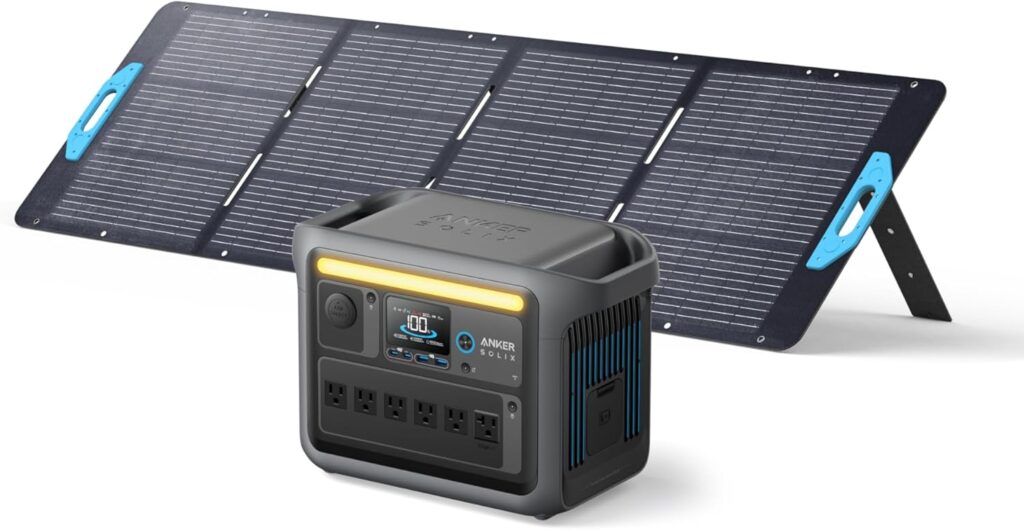
Anker SOLIX C1000 Review: Fast-Charging Backup Power That Actually Fits Real Life

Best Older-Model Deal

Anker SOLIX C1000 Review: Fast-Charging Backup Power That Actually Fits Real Life

Check price at Amazon Jump to details
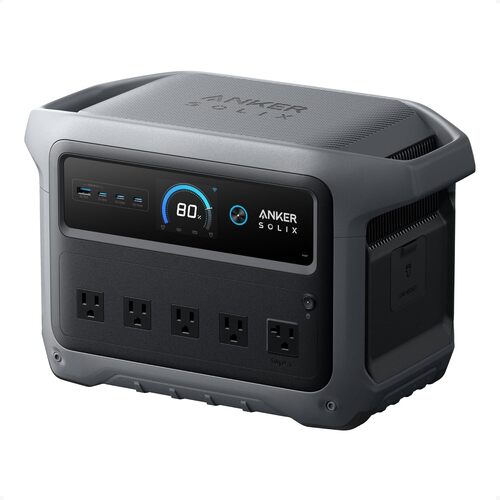
Anker SOLIX C1000 Gen 2 Review: Fast-Charging Backup Power That Actually Feels Useful

Best Newer-Gen Pick

Anker SOLIX C1000 Gen 2 Review: Fast-Charging Backup Power That Actually Feels Useful

Check price at Amazon Jump to details

The Anker SOLIX C1000 Gen 1 vs Gen 2 comparison is not a simple “newer always wins” situation. Our original Anker SOLIX C1000 review explains where Gen 1 still holds value. Gen 2 is clearly stronger on paper, but the original C1000 still has one advantage that some buyers will care about a lot: expandability.

That’s why this comparison works better as an upgrade decision. Cross-shopping brands? See Anker compared to Jackery for camping. The question isn’t just which Anker power station has better specs. It’s whether the Gen 2 upgrades — higher output, faster AC charging, lower weight, quicker backup switching, and longer listed cycle life — matter more than the original model’s expansion support, built-in light, and six known AC outlets.

Both are 1kWh-class LiFePO4 power stations. For more options at this size, see best 1000Wh power station roundup. Both can help with short blackouts, camping, RV weekends, fridge backup, router backup, laptops, Starlink, CPAP machines, and small appliances. However, neither should be treated as whole-home backup. If you’re still choosing the right size first, start with our portable power stations hub before choosing between these two Anker models.

The 30-Second Buying Rule

Buyer SituationBetter PickWhy
You want the stronger everyday unitAnker SOLIX C1000 Gen 2More output, higher surge, faster charging, and lower weight.
You find the older model much cheaperAnker SOLIX C1000 Gen 1Still a capable 1kWh LFP power station with good ports.
You want to add more battery laterAnker SOLIX C1000 Gen 1It supports expansion up to 2,112Wh total.
You want the easier carryAnker SOLIX C1000 Gen 2It drops to 24.9 lb versus 28.44 lb.
You need multi-day whole-home backupNeitherLook at larger 2kWh–4kWh systems instead.

Quick rule: if prices are close, buy the Anker SOLIX C1000 Gen 2. If the original C1000 is heavily discounted or you specifically need expansion support, the Gen 1 still deserves a look.

What Actually Changed From Gen 1 to Gen 2?

The Gen 2 upgrade is not mainly about capacity. In fact, the original C1000 has a slightly larger listed battery: 1,056Wh vs 1,024Wh. That looks odd at first, but the difference is tiny in real use.

The bigger changes are about performance and handling. Gen 2 increases AC output from 1,800W to 2,000W, raises surge from 2,400W to 3,000W, cuts fast AC recharge from about 58 minutes to 49 minutes, and adds more solar headroom. Read our Anker SOLIX C1000 Gen 2 performance review for charging benchmarks.

That gives Gen 2 a cleaner role: it’s the better grab-and-use power station for most buyers. Gen 1 is more of a value-and-expandability play.

Upgrade AreaGen 1Gen 2Why It Matters
Listed capacity1,056Wh1,024WhGen 1 has a tiny capacity edge, but not enough to change most runtimes.
Continuous AC output1,800W2,000WGen 2 handles more demanding appliances with more breathing room.
Surge output2,400W3,000WGen 2 is better for fridge compressors and startup spikes.
Fast AC rechargeAbout 58 minutesAbout 49 minutesGen 2 is better for quick storm-prep top-offs.
Weight28.44 lb24.9 lbGen 2 is easier to carry around the house, RV, or campsite.
ExpandabilityYesNoGen 1 is better if you may want more stored energy later.
Built-in lightYesNoGen 1 has a useful blackout/campsite convenience feature.

Pick by Scenario, Not by Model Name

If You Mostly Need…Better PickWhy
Router, modem, laptop, and phone backupGen 2Faster UPS-style switchover and lighter handling.
Camping with lights, cooler, devices, and coffee gearGen 2More surge and lower weight help in mixed use.
RV weekend power with future expansionGen 1Expansion support gives it a longer runway.
Short fridge backup during outagesGen 2The 3,000W surge rating is better for compressor starts.
Best older-model bargainGen 1It can be the smarter buy at a deep discount.
Daily or frequent cyclingGen 2The 4,000-cycle claim is stronger.
Blackout convenience lightingGen 1The built-in light is genuinely useful.
Strongest overall 1kWh Anker pickGen 2Better output, charging, weight, and cycle rating.

For broader use-case picks, compare these with our best portable power stations for camping and best power stations for home backup guides.

Runtime: Not the Main Reason to Upgrade

The original C1000 technically has more listed capacity. However, the difference is only 32Wh, which is not enough to change the buying decision for most people.

In real use, both models land in the same runtime class. They’re good for small electronics, routers, CPAP machines, lights, laptops, and short fridge backup. They are not built for long heater use, long induction cooking, or running a whole house overnight.

Here’s a practical estimate using typical AC losses and a small reserve.

LoadTypical DrawGen 1 EstimateGen 2 Estimate
Phone charging15–20Wh per charge~40–53 charges~39–52 charges
Laptop charging60–100Wh per charge~8–13 charges~8–13 charges
Wi-Fi router10–20W~40–81 hours~39–78 hours
LED lights20W~40 hours~39 hours
CPAP, no humidifier40–60W~13–20 hours~13–19 hours
Electric cooler40–80W average~10–20 hours~10–19 hours
Full-size fridge100–200W average~4–8 hours~4–8 hours
Space heater1,500W~32 minutes, not ideal~31 minutes, not ideal

These are planning estimates, not measured runtimes. Fridges and coolers are especially variable because compressors cycle on and off.

Output Is Where Gen 2 Feels More Modern

Output is the main performance reason to choose Gen 2. The original C1000 already has enough power for plenty of real-world loads, but the newer model gives you more room before you hit the ceiling.

The C1000 Gen 1 has 1,800W continuous output and 2,400W surge. That’s plenty for routers, laptops, CPAP machines, Starlink, lights, fans, small tools, many fridges, and short appliance bursts.

The C1000 Gen 2 raises that to 2,000W continuous output and 3,000W surge. That extra surge headroom is helpful for fridge compressors, small power tools, coffee makers, and appliances that briefly pull more power when starting.

Still, don’t overread the output number. A 1,500W heater may run, but it won’t run long. The battery size remains the limiting factor.

Output takeaway: Gen 2 is the better pick if you want the most appliance headroom in this size class.

Charging: Gen 2 Wins the Quick-Top-Off Test

Fast charging changes how you use a power station. During a storm, road trip, or generator-assisted outage, a 10-minute difference can matter more than it sounds.

The original C1000 Gen 1 supports up to 1,300W AC input and can recharge in about 58 minutes in fast mode. That’s already quick for a 1kWh-class unit.

The C1000 Gen 2 improves wall charging to 1,600W AC input and about 49 minutes in fast mode. That makes it the better option if you often top off quickly before leaving, between outages, or while running a generator briefly.

Both models list 600W solar input, so solar is not a clear separator. The older model’s supplied data is clearer about XT60 and 11–60V MPPT support. For Gen 2, confirm connector details before pairing third-party panels.

Car charging is useful on both, but it’s a top-off method. It’s not the main way to refill a 1kWh battery from empty.

Charging takeaway: Gen 2 wins for AC charging. Solar is close enough that connector compatibility matters more than the headline wattage.

Where Gen 1 Still Fights Back

The original C1000 is not just “the old one.” It has three practical advantages that can still matter.

First, it supports expansion. With the compatible expansion battery, the system can reach 2,112Wh total. That makes Gen 1 better if you want to start with a 1kWh station and add runtime later.

Second, the port layout is clearer from the supplied specs. You get six AC outlets, 2 USB-C ports, 2 USB-A ports, and a 12V car socket. If you want to plug in several AC devices during an outage, that known six-outlet setup is useful.

Third, the built-in light is small but handy. During a blackout, campsite setup, or late-night garage power check, you may appreciate it more than expected.

Gen 1 still makes sense if:

  • You find it at a strong discount.
  • You want expansion battery support.
  • You prefer six known AC outlets.
  • You want a built-in emergency light.
  • You don’t need the highest output in the C1000 lineup.

Where Gen 2 Justifies the Upgrade

Gen 2 is the cleaner choice if you’re buying at today’s prices and the gap is not huge. It takes the same basic 1kWh idea and makes it easier to live with.

The unit is lighter. It recharges faster. It has more output. It has a higher surge rating. It lists a stronger cycle-life claim. It also improves backup switching from 20ms on Gen 1 to under 10ms on Gen 2.

That combination matters if the power station will move between your house, vehicle, campsite, RV, garage, and office. A few pounds less and a little more output can make the unit feel more useful day to day.

Gen 2 is the better fit if:

  • You want the strongest C1000 version.
  • You care about appliance startup headroom.
  • You’ll move the unit often.
  • You want faster AC charging.
  • You plan to cycle the battery frequently.
  • You don’t care about expansion batteries.

Weight and Storage: A Small Difference You’ll Feel

Neither power station is ultralight. However, both are still in the practical car-camping and room-to-room range.

Weight TierWhat It Feels Like
Under 10 lbGrab-and-go battery
10–30 lbRealistic for car camping and home backup
30–50 lbMovable, but tiring over distance
50+ lbBetter as semi-portable backup
100+ lbWheels matter more than handles

The Gen 1 weighs 28.44 lb, which is still manageable but close to the upper edge of the comfortable carry category. You can move it, but you’ll notice the weight.

The Gen 2 weighs 24.9 lb, and that matters if you carry it often. It’s easier to move from the garage to the kitchen, from the RV to the picnic table, or from the car to a campsite.

Portability takeaway: Gen 2 wins. Not because Gen 1 is hard to move, but because Gen 2 makes the same job easier.

Battery Life: Same Chemistry, Different Cycle Claim

Both models use LiFePO4, which is exactly what you want in a power station that may be used often. Compared with older NMC lithium-ion packs, LFP usually gives you longer cycle life and better long-term durability.

Battery TypeBest ForMain Tradeoff
LiFePO4 / LFPFrequent use, home backup, RV use, long-term ownershipUsually heavier per Wh
NMC / lithium-ionOccasional lightweight travel powerShorter cycle life in many older models

The original C1000 Gen 1 lists 3,000 cycles to 80% capacity. The C1000 Gen 2 lists 4,000 cycles to at least 80% capacity.

That gives Gen 2 the better long-term spec. For occasional camping, both are strong. For frequent outage prep, RV use, desk backup, or regular cycling, Gen 2’s higher cycle claim is more attractive.

The Price Gap Rule

Price should probably decide this comparison if the gap is large. Specs should decide it if the gap is small.

If the Price Difference Is…Better Move
Gen 1 is much cheaperBuy Gen 1 if you’re okay with extra weight and lower output.
Gen 1 and Gen 2 are closeBuy Gen 2. The upgrades are worth it.
Gen 2 is only slightly moreBuy Gen 2 unless you need expansion support.
You need more than 1kWh laterBuy Gen 1 or move to a larger expandable system.
You want the best 1kWh Anker todayBuy Gen 2.

A simple $/Wh calculation can help, but don’t rely on it alone. Divide current price by battery capacity, then compare the result against output, charging speed, weight, cycle life, and expansion support.

The older C1000 can win the value fight. The Gen 2 wins the better-product fight.

For more brand-level alternatives, see our Anker vs EcoFlow and Anker vs Jackery comparisons.

Best Older-Model Deal

Anker SOLIX C1000 Review: Fast-Charging Backup Power That Actually Fits Real Life

Anker SOLIX C1000 Review: Fast-Charging Backup Power That Actually Fits Real Life

Get it now:

Check latest price

What to know

  • 1056Wh LiFePO4 battery gives slightly more capacity than the Gen 2
  • 1800W pure-sine output handles fridges, microwaves, CPAP, routers, and RV gear
  • Supports expansion up to 2112Wh with Anker’s add-on battery
  • 600W max solar input via XT60 for faster off-grid top-ups
  • Built-in LED light helps during outages, garages, and campsite setup

Best if

  • You want the older C1000 mainly for a better deal or bundle price
  • You value expansion support for longer fridge, CPAP, or RV runtime
  • You like 6 AC outlets and a built-in emergency light

Skip if

  • You’d rather have the lighter, stronger, faster-charging newer model
  • You don’t want to buy extra batteries to stretch capacity
  • You care more about 2000W output and faster UPS-style switching

The Anker SOLIX C1000 Gen 1 is the one to watch when pricing gets aggressive. It gives you 1,056Wh of LiFePO4 capacity, 1,800W pure-sine AC output, six AC outlets, fast AC charging, app control, a built-in light, and expansion support up to 2,112Wh total.


It makes the most sense for buyers who value flexibility over the newest spec sheet. If you want a discounted 1kWh-class power station with a known port layout and an upgrade path, Gen 1 still works well. Just remember that it’s heavier, slower to recharge, and not as strong on surge as Gen 2.

Capacity 1056Wh (expandable to 2112Wh with add-on battery)
AC Output 1800W continuous, 2400W surge (pure sine)
Solar Input 600W max via XT60
AC Charging ~58 min full / ~43 min to 80%, up to 1300W
Weight 28.44 lb (12.9 kg)
Best Edge Only expandable model here, with slightly more base capacity
Main Tradeoff Lower output and heavier body than the Gen 2
Best Newer-Gen Pick

Anker SOLIX C1000 Gen 2 Review: Fast-Charging Backup Power That Actually Feels Useful

Anker SOLIX C1000 Gen 2 Review: Fast-Charging Backup Power That Actually Feels Useful

Get it now:

Check latest price

What to know

  • 1024Wh LiFePO4 battery with 4000-cycle rating for frequent backup use
  • 2000W output and 3000W surge give it more appliance headroom
  • 49-minute full AC recharge is faster than the original C1000
  • Under-10ms UPS-style switchover suits routers, Starlink, desks, and CPAP setups
  • 24.9 lb body is lighter and easier to move than Gen 1

Best if

  • You want the stronger, lighter, faster-charging C1000 version
  • You’re powering appliances that benefit from 2000W continuous output
  • You care about quicker UPS-style backup for routers, modems, or desk gear

Skip if

  • You’re hunting for the cheapest older-model bundle deal
  • You need expandable capacity for multi-day RV or outage use
  • You’d miss the older model’s built-in light during blackouts

The Anker SOLIX C1000 Gen 2 is the better everyday pick for most buyers. It has slightly less listed capacity than Gen 1, but that small difference does not matter much in real use. The important upgrades are output, surge, recharge speed, weight, USB-C power, UPS-style switchover, and listed cycle life.


It’s the model I’d pick for short outages, fridge backup, camping, RV weekends, Starlink, CPAP backup, laptop charging, and fast storm-prep top-offs. The tradeoff is expandability. If you want to add more battery later, Gen 1 has the advantage.

Capacity 1024Wh (not expandable)
AC Output 2000W continuous, 3000W surge
Solar Input 600W max via XT60-style solar input
AC Charging ~49 min full, up to 1600W
Weight 24.9 lb (11.3 kg)
Best Edge Higher output, faster recharge, and lighter carry weight
Main Tradeoff No expansion battery support or built-in emergency light

Product Comparison

Feature Anker SOLIX C1000 Review: Fast-Charging Backup Power That Actually Fits Real Life Anker SOLIX C1000 Gen 2 Review: Fast-Charging Backup Power That Actually Feels Useful
Product Image
Anker SOLIX C1000 Review: Fast-Charging Backup Power That Actually Fits Real Life
Anker SOLIX C1000 Gen 2 Review: Fast-Charging Backup Power That Actually Feels Useful
Price $1299 $639.99 $799 $449.99
Rating
4.5 / 5
4.7 / 5
Category Portable Power Stations Portable Power Stations
Brand Anker Anker
Model / SKU Anker SOLIX C1000 / A1761 (ASIN: B0CDGKRX4X) Anker SOLIX C1000 Gen 2 / A1763 (ASIN: B0FN7MSY4L)
Battery capacity 1056 Wh 1,024 Wh
Battery chemistry LiFePO4 (LFP) LiFePO4 (LFP)
Cycle life 3,000 cycles to 80% capacity (claimed) 4,000 cycles to at least 80% capacity (claimed)
Expandable battery Yes — supports Anker expansion battery for up to 2112Wh total (expansion battery sold separately) No (customers note this model does not support expansion batteries)
AC output 1800 W continuous (pure sine wave) 2,000 W continuous (sine-wave behavior reported by customer testing; pure sine not explicitly listed in provided specs)
Surge output 2400 W peak (SurgePad) 3,000 W peak
AC outlets 6 × 120V AC outlets Not specified (10 total ports claimed)
USB-C ports 2 × USB-C (1 × 100W, 1 × 30W) 2 × USB-C (up to 140W reported by owners)
USB-A ports 2 × USB-A (12W each / 24W total) Not specified (USB-A support reported by owners)
12V car socket 1 × 12V/10A car port 1 × 12V/10A car port (customer-reported)
Max solar input 600 W (XT60, 11–60V MPPT) 600 W (60V max, MPPT behavior implied by solar charging use)
Max AC input 1300 W (UltraFast AC recharge mode) 1,600 W (HyperFlash fast charging enabled in the Anker app)
AC recharge time ~58 minutes fast charge (100% with UltraFast mode enabled through app) 49 minutes (fast mode)
Solar recharge time ~1.8 hours with 600W solar input (ideal sun); longer with the included 200W panel About 1.8 hours with up to 600W solar (ideal conditions)
UPS / EPS support Yes — 20ms switchover (UPS/EPS-style backup) Yes — under 10 ms switchover (claimed)
App support Yes — Anker app (charging speed, live status, remote monitoring) Yes — Anker app with Wi-Fi and Bluetooth
Built-in light Yes — front LED light / bar light No
Weight 28.44 lb / 12.9 kg (Amazon listing shows 27.59 lb) 24.9 lb
Best for Camping, RV boondocking, apartment backup, fridge backup, CPAP overnight power, routers, lights, coffee makers, short blackouts, and quiet indoor emergency power CPAP backup, routers and Starlink, short blackouts, fridge backup, RV camping, van life, truck camping, remote work, and small-appliance use
Buy Now View Deal View Deal

Final Verdict

Choose the Anker SOLIX C1000 Gen 1 if you’re shopping for the better deal or you know expansion support matters. It still gives you real 1kWh-class backup power, six known AC outlets, a built-in light, and the option to reach 2,112Wh with an expansion battery.

Choose the Anker SOLIX C1000 Gen 2 if you want the better power station out of the box. It’s lighter, stronger, faster to recharge, better on surge, and rated for more battery cycles. For most people, those upgrades are more useful than the small capacity difference.

My tie-breaker is simple: buy Gen 2 if the price is close; buy Gen 1 if it’s much cheaper or you need expansion. Neither replaces a whole-home backup system, but both are strong for essentials.

Estimate nightly runtime with real-world power station runtime numbers.

Frequently Asked Questions

Is the Anker SOLIX C1000 Gen 2 worth it over Gen 1?

Yes, if the price difference is small. The Anker SOLIX C1000 Gen 2 gives you 2,000W output, 3,000W surge, faster 49-minute AC charging, lower 24.9 lb weight, and a 4,000-cycle battery rating. The original C1000 still makes sense if it is much cheaper or if you want expansion battery support.

What is the biggest advantage of the Anker SOLIX C1000 Gen 1?

The biggest advantage is expansion support. The Anker SOLIX C1000 Gen 1 can pair with an expansion battery for up to 2,112Wh total capacity. It also has six known AC outlets and a built-in light. Those features make it more flexible than Gen 2 in some backup and RV setups, even though the Gen 2 has stronger output.

Which one is better for refrigerator backup?

The Anker SOLIX C1000 Gen 2 is the better fridge-backup pick because it has 2,000W continuous output and 3,000W surge. That gives it more compressor-start headroom than the Gen 1, which has 1,800W continuous output and 2,400W surge. Runtime will still depend on fridge size, room temperature, and how often the compressor cycles.

Which Anker C1000 is better for camping?

The Anker SOLIX C1000 Gen 2 is usually better for camping because it weighs 24.9 lb and has more output headroom. The original C1000 weighs 28.44 lb, but it can still be a good camping pick if you want six AC outlets, a built-in light, or expansion support. For shorter trips, Gen 2 is easier to recommend.

Does the Anker SOLIX C1000 Gen 2 have more battery capacity?

No. The Anker SOLIX C1000 Gen 2 has slightly less listed capacity at 1,024Wh, while the original C1000 lists 1,056Wh. In real use, that 32Wh difference is minor. Gen 2 wins because of output, recharge speed, weight, surge rating, and cycle life — not because it has more stored energy.

Can either Anker SOLIX C1000 run a CPAP overnight?

Yes, both can run many CPAP setups overnight, especially without heated humidification. Estimated runtime for a 40–60W CPAP load is roughly 13–20 hours depending on settings and inverter losses. For medical use, test your exact CPAP machine, humidifier setting, heated tube, and backup switchover behavior before relying on either unit overnight.

Which one charges faster?

The Anker SOLIX C1000 Gen 2 charges faster from AC power. It supports up to 1,600W input and lists about a 49-minute fast recharge. The original C1000 supports up to 1,300W AC input and lists about 58 minutes. Both are fast, but Gen 2 is better for quick storm-prep top-offs.

Should I buy the older Anker SOLIX C1000 on sale?

Yes, if the discount is meaningful and you do not need Gen 2’s higher output. The original C1000 still has 1,056Wh capacity, LiFePO4 battery chemistry, 1,800W pure-sine output, six AC outlets, a built-in light, and expansion support. If the price is close, Gen 2 is the better buy. If Gen 1 is much cheaper, it can be the smarter value.

×

About Solar Power Picks

Portable Solar Power, Backup Power, and Off-Grid Gear Guides

Your trusted source for honest, in-depth product reviews and comparisons.

Quick Links

  • Best Picks
  • Reviews
  • Guides
  • Comparisons
  • Calculator
  • Privacy policy
  • Favorites

Categories

  • Portable Power Stations

© 2026 Solar Power Picks. All Rights Reserved.

We may earn a commission when you purchase through links on our site. Learn more