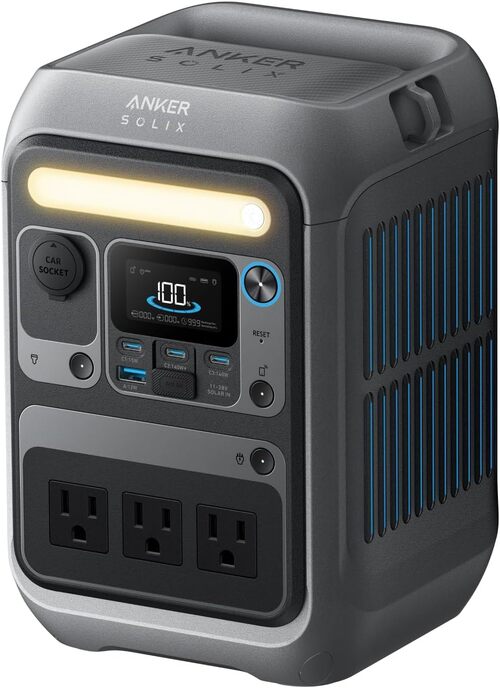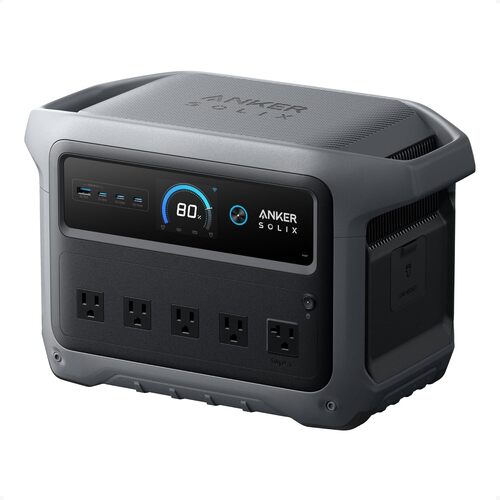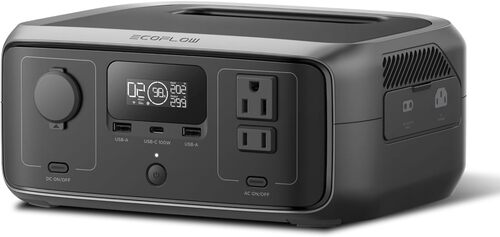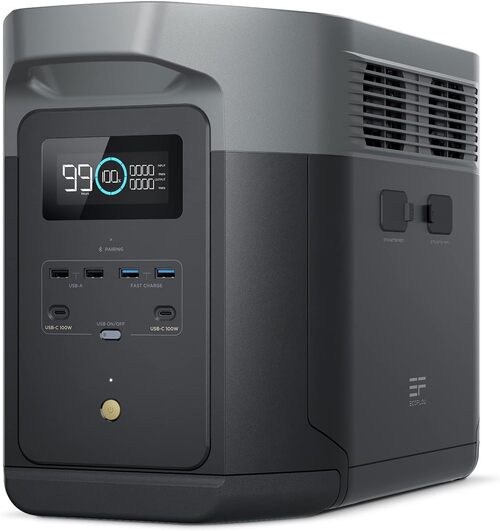
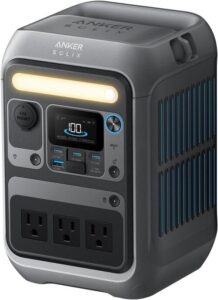
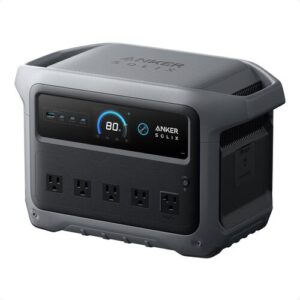
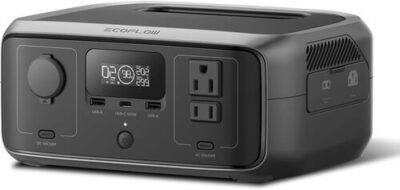
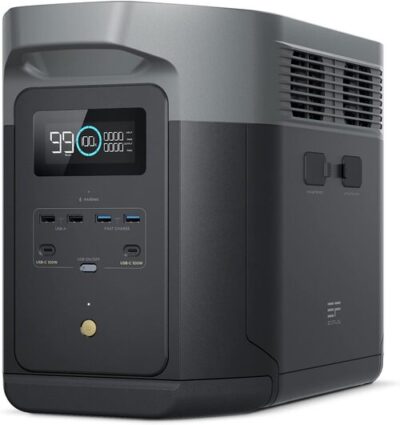
Anker vs EcoFlow power station is too broad to answer with one brand winner. This page compares Anker SOLIX C300 and C1000 Gen 2 with EcoFlow RIVER 3 and DELTA 2 Max. The small pair serves electronics continuity; the larger pair serves 1–2kWh camping and outage roles. Crossing those tiers produces a false comparison.
The product table at the end contains normalized specifications. The body asks which ecosystem creates less friction for the intended job: recovery sources, app dependence, expansion, ports, accessory compatibility, and acceptance testing. Brand tendencies are not guarantees for unselected products.
Anker vs EcoFlow Decision Tree: Start With the Job
Here’s the clean version: pick Anker if you want easier day-to-day portability; pick EcoFlow if you want more room to grow. The Anker C1000 Gen 2 is the most balanced single-unit choice here. The Delta 2 Max is the better choice when runtime and expansion matter more than carry weight.
Four Selected Products, Four Different Missions
| Mission | Selected product | Why it fits | Do not overlook |
|---|---|---|---|
| Small UPS/electronics | RIVER 3 | 7.8 lb, 245Wh, compact app-controlled continuity | 300W ceiling and AC overhead |
| More small-station ports | Anker C300 | 288Wh, 300W, 100W solar, broad DC/USB emphasis | No expansion; exact unattended restart behavior |
| Portable 1kWh output | C1000 Gen 2 | 2,000W at 24.9 lb with fast AC recovery | No expansion |
| Longer expandable backup | DELTA 2 Max | 2,048Wh, 2,400W, 1,000W solar, up to 6,144Wh | 50.7 lb and higher system cost |
If your main goal is camping, don’t automatically buy the biggest battery. If your main goal is outage backup, don’t expect a 288Wh compact station to behave like a fridge system.
Ecosystem Friction Appears After Checkout
Anker ecosystem question
Does lower weight, high output for size, and the exact Anker charging or app workflow reduce friction?
EcoFlow ecosystem question
Does expansion, solar input, or integration with existing EcoFlow batteries and accessories justify weight and cost?
Check accessory model numbers, regional voltage, connectors, and current compatibility charts. An old cable or battery having the same logo is not proof it works with a new station.
The small models are not “bad” because they have smaller batteries. They’re just meant for different jobs. A 288Wh station can be excellent for a laptop, router, phone, drone battery, or camp light, while still being a poor choice for refrigerator backup.
The bigger EcoFlow Delta 2 Max has the opposite problem. It can do far more, but the weight changes how you use it. Outage shoppers should also see home backup station recommendations. At 50.7 lb, it’s more of a garage, RV, or outage-corner unit than something you’ll move around casually.
That’s why this comparison isn’t about declaring one brand better across the board. It’s about matching the box to the job. For more sizing help, see our guide on what size portable power station you need.
Do Not Compare 288Wh With 2,048Wh by Brand
The spec sheet doesn’t tell the whole story with runtime. A power station loses some energy when converting battery power to AC outlet power. Also, many appliances don’t draw one steady number. Refrigerators and coolers cycle, while heaters and kettles pull hard almost constantly.
For planning, the compact stations are best under light loads. The C1000 Gen 2 is where the comparison becomes useful for fridge, CPAP, Starlink, router, and short appliance use. The Delta 2 Max is the only one here that feels comfortable for longer home-backup tasks.
Table class: runtime-comparison
These are planning estimates, not lab-measured runtimes. Compressor appliances can vary a lot because temperature, door opening, age, insulation, and startup surge all matter.
Output Must Be Matched Within a Capacity Tier
Battery size answers “how long?” Output answers “can it run at all?” That distinction matters more than many buyers expect.
The Anker SOLIX C300 is for small electronics first. Its 300W AC output is fine for laptops, phones, routers, lights, fans, and some compact coolers. It’s not the station for a microwave, kettle, heater, or big power tool.
The EcoFlow River 3 Plus gives you more AC headroom at 600W continuous, with X-Boost up to 1,200W. Still, its 286Wh battery means you shouldn’t treat it like a real appliance-backup unit. It can technically start some bigger loads, but not for long.
The real appliance comparison is Anker C1000 Gen 2 vs EcoFlow Delta 2 Max. Anker gives you 2,000W continuous output in a 24.9 lb body. EcoFlow gives you 2,400W output, more outlets, and a much bigger battery, but at about double the weight.
Output takeaway: Anker wins the power-to-weight feel. EcoFlow wins maximum capability with the Delta 2 Max.
Recovery Sources Decide the Better Ecosystem
DELTA 2 Max’s 1,000W dual solar input supports a larger daily energy system than either small station or C1000 Gen 2’s 600W ceiling. C1000’s faster, lighter 1kWh proposition can be better when solar expansion is not the mission.
Fast wall charging is useful when you forgot to top off before a trip or you’re using a generator during an outage. Solar input matters when the battery needs to recover away from the grid.
Wall Charging — Anker Vs Ecoflow
Anker’s fast charging is excellent. The C300 gets to 80% in about 50 minutes, and the C1000 Gen 2 can refill in about 49 minutes in fast mode. That makes both easy to prep quickly.
EcoFlow is also quick. The River 3 Plus charges in about an hour, and the Delta 2 Max usually lands around 1–1.5 hours depending on settings. However, fast modes usually increase fan noise, so quiet indoor charging may require slower input.
Solar Charging — Anker Vs Ecoflow
EcoFlow has the strongest solar story in this group. The River 3 Plus supports up to 220W, which is strong for a small battery. The Delta 2 Max supports up to 1,000W through dual inputs, making it much better for RVs, solar-supported outages, and longer off-grid use.
Anker is more mixed. The C300’s 100W solar cap is fine for its size, while the C1000 Gen 2’s 600W solar input is genuinely useful. Still, you’ll need to check connector type, voltage range, polarity, and adapters before pairing third-party panels.
Car Charging — Anker Vs Ecoflow
Car charging is useful, but slow. It’s fine for road-trip top-offs and emergency trickle charging. It’s not how you want to refill a large battery from empty.
Charging takeaway: Anker is excellent from the wall. EcoFlow is better if solar recovery is a major part of your plan.
Portability Has Three Distinct Classes Here
Portability is not one category. There’s “throw it in the car” portable, and there’s “move it from the garage to the fridge” portable.
- Under 10 lb: easy grab-and-go power
- 10–30 lb: realistic for car camping and room-to-room use
- 30–50 lb: movable, but not fun to carry far
- 50+ lb: better treated as semi-portable backup power
- 100+ lb: wheels matter more than handles
The Anker C300 sits right around the grab-and-go category at about 9 lb. It’s the easiest station here to move often. The EcoFlow River 3 Plus is close at 10.4 lb, though it feels more like a small backup appliance than a tiny travel battery.
The Anker C1000 Gen 2 is the best middle ground. At 24.9 lb, it’s still realistic for car camping, van life, truck use, and moving room to room. The EcoFlow Delta 2 Max crosses into semi-portable territory at 50.7 lb.
Portability takeaway: Anker wins for buyers who’ll move the station often. EcoFlow’s bigger unit wins when the station can mostly stay put.
Expansion Can Matter More Than Cycle Claims
All four models here use LiFePO4 battery chemistry, which is good news. That means this isn’t an older-style comparison where one side is clearly using shorter-life battery tech.
Table class: chemistry-compare
The Anker C1000 Gen 2 has the strongest listed cycle-life claim here: 4,000 cycles to at least 80% capacity. The C300, River 3 Plus, and Delta 2 Max all list 3,000-cycle LFP claims in the supplied specs.
In real use, cycle life matters most if you’ll keep the battery plugged in, use it as UPS-style backup, recharge it weekly, or pair it with solar. Casual campers may never wear out a modern LFP pack. Daily users should care a lot.
Battery takeaway: Anker C1000 Gen 2 has the strongest listed longevity claim, but all four are better long-term bets than older NMC-style units.
App Features Need an Offline Operating Plan
This is where daily ownership gets real. The best battery on paper can still annoy you if the ports are wrong, the app is flaky, or the fan kicks on beside your bed.
Anker’s small models are especially strong for USB-C users. The C300 has two 140W USB-C ports, which is great for modern laptops. The C1000 Gen 2 also has high-power USB-C reported, plus app control, Wi-Fi, Bluetooth, UPS-style backup, and fast charging controls.
EcoFlow gives you more system-style control. The River 3 Plus is attractive for routers, modems, cameras, and home-office gear because of its UPS-style switchover. The Delta 2 Max has the best port spread here: six AC outlets, two USB-C ports, four USB-A ports, 12V, DC5521 ports, dual solar inputs, and expansion ports.
However, EcoFlow also asks you to be more comfortable with app behavior, firmware updates, settings, and accessory matching. That’s fine for power users. For buyers who want fewer moving parts, Anker may feel easier.
Usability takeaway: Anker is cleaner for simple daily use. EcoFlow is better for people who want more control, more ports, and expansion.
The Anker–EcoFlow Cost Stack
Base station + enough capacity + compatible panels + cables + expansion + protected distribution + required subscriptions or connectivity + replacement of stranded accessories.
Compare only configurations that complete the same mission. A 245Wh RIVER is not “better value” than a 2,048Wh DELTA for refrigerator backup, and a 50-pound DELTA is not “more portable” because it stores more energy.
Don’t judge these only by list price. Power stations go on sale often, and bundle pricing can completely change the winner. The right question is not “which one is cheapest?” It’s “which one solves my use case without making me buy twice?”
Table class: value-compare
$/Wh is a useful sanity check, but it doesn’t capture output, expansion, warranty, solar ceiling, app control, or carry weight. A cheap compact station can still be a bad value if you needed fridge backup.
Value takeaway: Anker C1000 Gen 2 is the safer one-box value. EcoFlow Delta 2 Max is the better long-term value if you’ll actually use expansion and solar.
Brand decision checkpoint: if the preferred product changes after the capacity tier is corrected, the original decision was about size rather than brand. Re-run the comparison with products that store similar energy and serve the same electrical role.
Commissioning should produce a short operating sheet: priority loads, prohibited combinations, charge-source limits, app settings, reserve floor, restoration steps, and support evidence. That document is more durable than a broad brand reputation and remains useful when firmware, accessories, or household loads change.