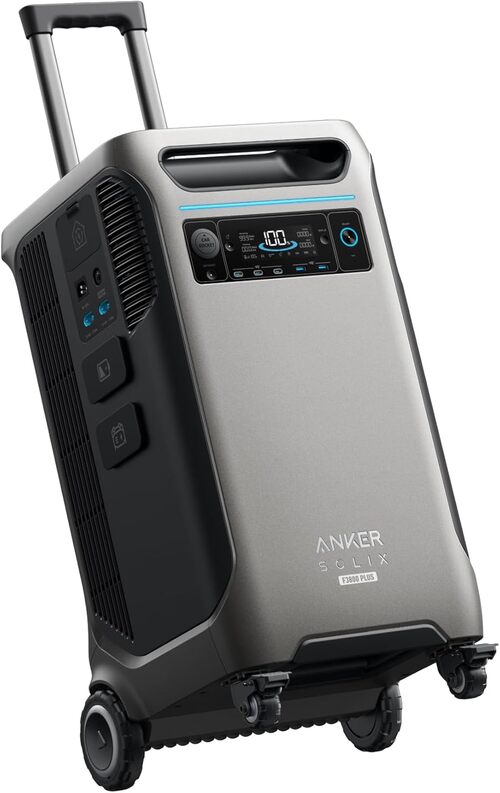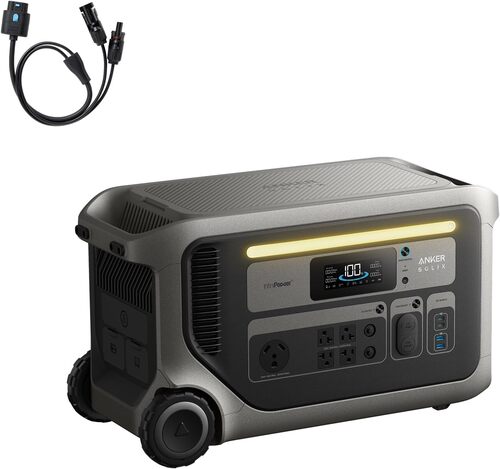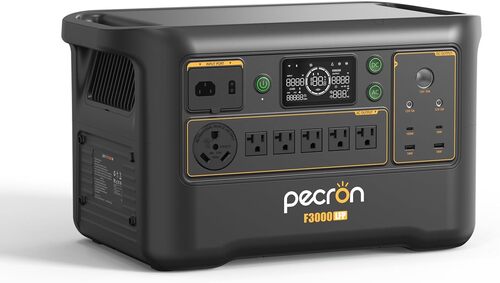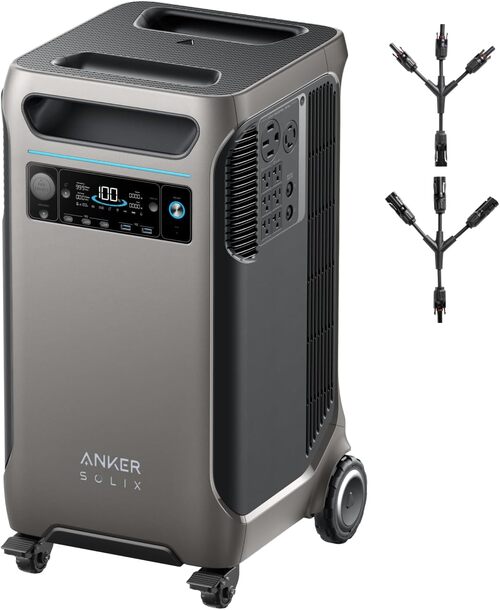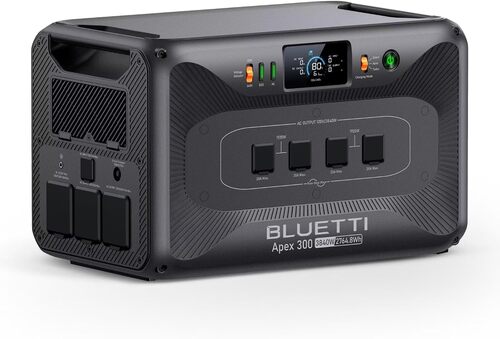
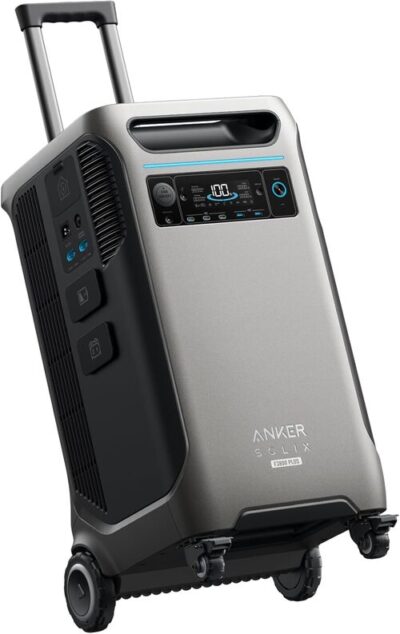
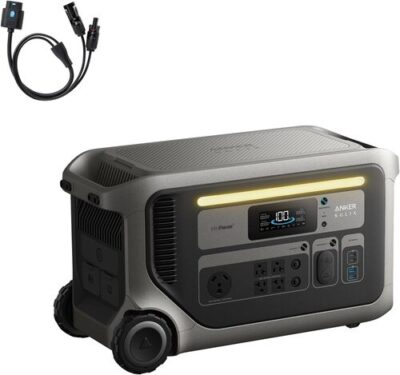
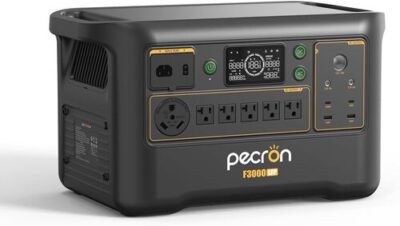
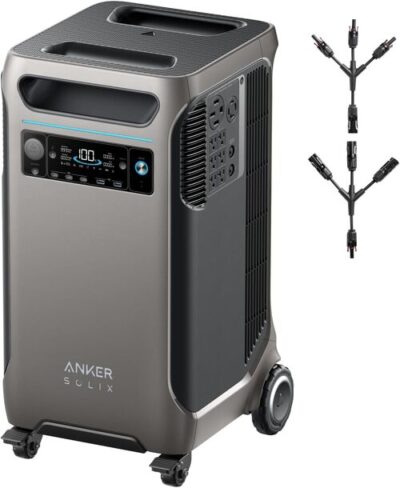
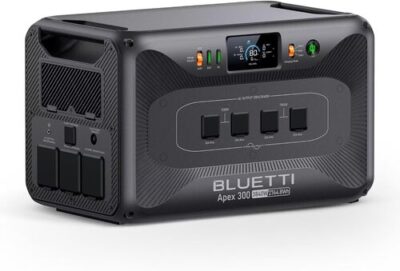
The best 3000W portable power station is a system-level purchase. Every pick here exceeds 3,000W continuous output, but they differ sharply in voltage, receptacles, expansion, solar input, weight, and the infrastructure needed to use that power safely.
At this scale, “portable” often means wheeled or movable between fixed locations. Plan topology and handling before comparing app features.
Start with voltage topology: Before comparing 3,000W-class output, use the match-the-circuit 120V/240V guide to confirm outlets, current, simultaneous modes, and the exact load path.
Draw the Electrical Topology First
| Requirement | Topology question | Common mismatch |
|---|---|---|
| RV service | Is TT-30 or another exact outlet present? | Assuming a household outlet substitutes safely |
| 240V load | Is dual voltage native or dependent on paired hardware? | Comparing total watts without voltage |
| Home circuits | What transfer equipment is approved? | Unsafe backfeeding |
| Large solar | How are PV inputs divided by voltage and current? | Oversized string or wrong connector |
High Output Does Not Equal Long Duration
A 3,072Wh battery can theoretically support 3,000W for roughly one hour before loss and reserve. A 3,840Wh battery adds time, but continuous heating and air conditioning can still exhaust it quickly. Model average load across the whole operating window.
Transport Becomes Part of Installation
Weights range from roughly 63 pounds to well above 130 pounds. Inspect wheels, handle clearance, stairs, vehicle tie-downs, threshold height, and storage ventilation. A lighter 3kWh unit may be more useful than a more capable system that cannot reach the load safely.
Recharge Infrastructure Separates the Platforms
| Input strategy | Benefit | Design obligation |
|---|---|---|
| Standard wall AC | Simple pre-event charge | May be slow for a large pack |
| High-rate AC/generator | Fast recovery | Source, cable, and compatibility check |
| 1,600–3,200W solar | Meaningful daily harvest | Large compatible array and site |
| Expansion battery | More outage duration | More cost, weight, and recovery energy |
Accessory Lock-In Has a Real Dollar Value
High-output ecosystems use proprietary batteries, hubs, cables, and transfer accessories. Quote the complete intended system, confirm regional compatibility, and save manuals for every component. An expansion claim is not a benefit until the matching hardware is available and costed.
Commission Before the Return Window Closes
- Test the hardest startup load repeatedly.
- Verify every 120V, 240V, or RV output required.
- Run each charging source independently.
- Simulate utility loss, depletion, and restoration.
- Record firmware, cables, settings, and successful load order.
Use qualified help for installed wiring. The winning high-output station is the one that fits the documented topology with the fewest workarounds.
Separate Essential and Discretionary High Loads
A large inverter invites simultaneous use. Protect capacity by designating essential high loads, such as a pump or selected RV circuit, and discretionary ones, such as cooking or workshop tools. Sequence them instead of allowing every outlet to become active at once.
For motor loads, capture multiple starts at different battery states. For 240V or high-current outputs, verify that the exact receptacle, voltage, and neutral/ground behavior fit the intended equipment and applicable installation requirements.
Review the System Each Season
| Seasonal check | Reason | Record |
|---|---|---|
| Battery state and firmware | Long storage and updates change readiness | Date, percentage, version |
| PV string calculation | Cold weather raises Voc | Lowest design temperature and corrected voltage |
| Generator or vehicle source | Fuel and adapters age or move | Successful input watts |
| Priority loads | Household and RV equipment changes | New running and startup measurements |
A high-output purchase remains safe and useful only while its documentation matches the real system.
Topology over headline: do not award a high-output product credit for an outlet, voltage, expansion battery, or charging route that your final configuration does not include. Compare complete commissioned systems, not bare stations or maximum ecosystem claims.