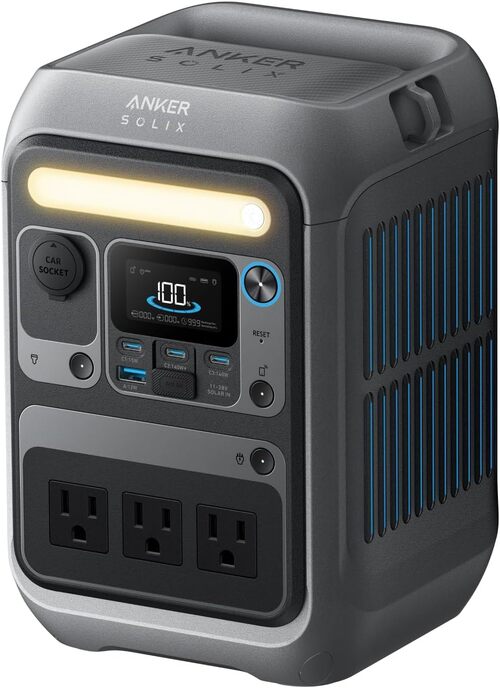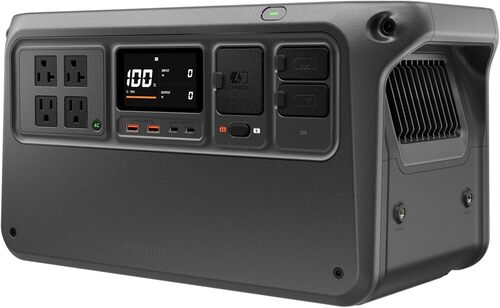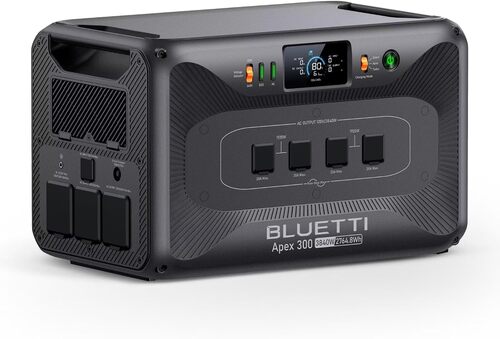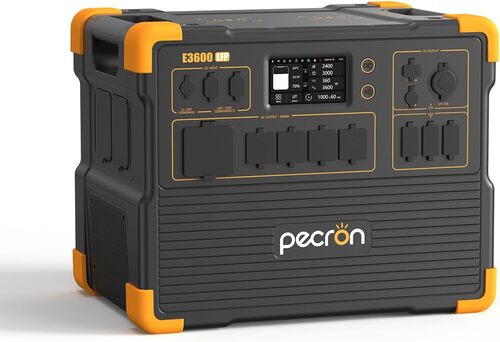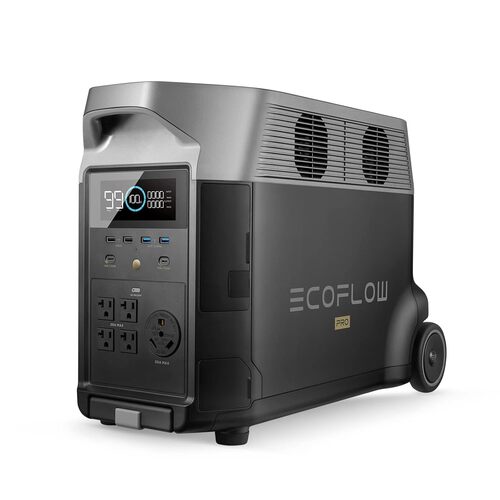
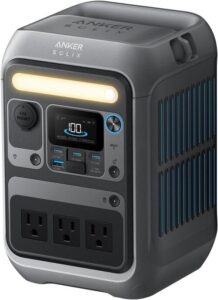
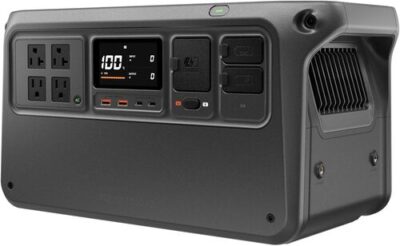
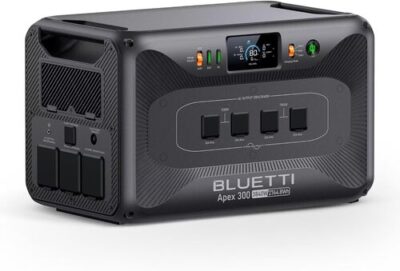
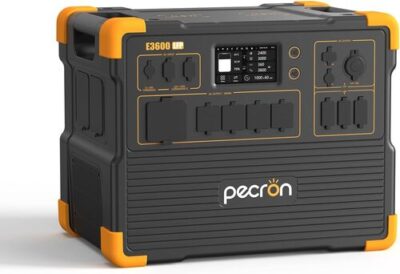
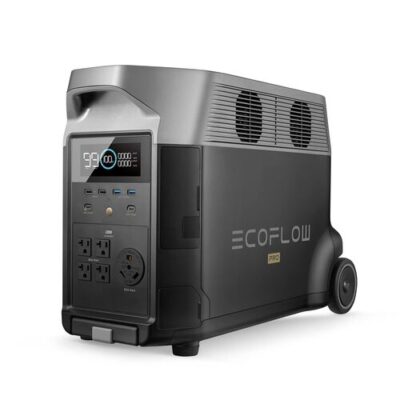
The best portable power station with solar panels is an electrically compatible system, not a station bundled with the largest panel number. PV voltage, current, connector, polarity, MPPT window, battery size, and the daily energy target must agree.
This guide deliberately spans compact to large systems. The right solar-ready pick is the one that restores the energy you used before the next critical period, under realistic seasonal conditions.
Pass the Array Compatibility Gate
- Find each panel’s Voc, Vmp, Isc, and Imp.
- Correct series-string Voc for the coldest expected temperature.
- Keep voltage and current inside every exact input limit.
- Confirm connector and polarity with a meter and manual.
- Only then compare panel wattage with the station’s input ceiling.
Adapter warning: a connector adapter changes shape, not voltage or current. Never use an adapter as evidence that a panel array is compatible.
Design for Daily Energy, Not Peak Display Watts
| Daily use | Example array class | Why it may still miss |
|---|---|---|
| 250Wh | 100W portable panel | Shade or short winter days |
| 750Wh | 200–300W | Panel heat, angle, and cable loss |
| 1,500Wh | 400–800W | Cloud cover and battery charge taper |
| 3,000Wh+ | 1,200W+ | Site, input windows, and physical array size |
Use harvest as a planning range rather than a promise. Four peak-sun-hours at 400W does not guarantee 1,600Wh into the battery. MPPT conversion, panel temperature, cable loss, moving shade, battery state, and output loads all reduce the net refill.
A Large Solar Ceiling Needs the Right Array
High-input stations may split PV across separate low- and high-voltage inputs. That can improve flexibility, but it also creates more boundaries to check. Do not combine strings until each input’s voltage, current, and connector rules are clear.
Shade Changes More Than the Wattage
A shadow across one module can reduce a string sharply. Parallel branches may handle partial shade differently but increase current. Test the exact site across the day, keep panels ventilated, and use appropriately sized cable. If a station shows zero input, check voltage window, polarity, connectors, shade, and battery state before assuming a defect.
Price the Panels, Cables, and Mounting Together
Brand bundles simplify compatibility but may cost more per watt. Third-party panels can improve value when the electrical design is verified. Include extension cable, branch connectors, fusing or other required protection, mounting, storage, and weather protection in the comparison.
- Save the exact station and panel manuals.
- Label every cable by input and polarity.
- Record cold-corrected array Voc.
- Measure input during a clear commissioning window.
- Create a cloudy-day fallback that does not depend on solar.
Balance Storage Against Recovery
A battery that is too small reaches full early and wastes available sun; one that is too large may never recover between nights. Model both a sunny day and a poor-sun day. The better solar station is not always the one with the highest input — it is the one whose storage, array, and load budget form a repeatable cycle.
Model One Clear Day and One Poor Day
A clear-day plan shows whether the array can restore normal use. A poor-day plan shows which loads are shed first and how long reserve lasts. Both matter because battery capacity bridges weather while solar replenishes it.
| Condition | Operating rule | Goal |
|---|---|---|
| Clear morning | Run flexible loads after PV input stabilizes | Use solar directly and refill reserve |
| Partial shade | Reposition portable panels and reduce discretionary load | Prevent avoidable battery draw |
| Cloudy day | Protect refrigeration, communications, or medical reserve | Reach the next charging opportunity |
| Array fault | Isolate strings and use fallback source | Diagnose without risking equipment |
Solar and alternator charging have different voltage, protection, thermal, and compatibility constraints. Use the vehicle-to-station charging path guide before combining both inputs in a travel system.
Commission Solar as a System
Record panel configuration, cold-corrected Voc, cable length, connectors, polarity, and stable input on a clear day. Repeat the observation at low and high battery state so normal charge taper is not mistaken for a panel problem. Photograph labels before weather and handling make them hard to read.
Finally, compare daily energy into the battery with daily energy out. Peak input is interesting; a repeatable energy balance is what makes a solar-ready station useful.