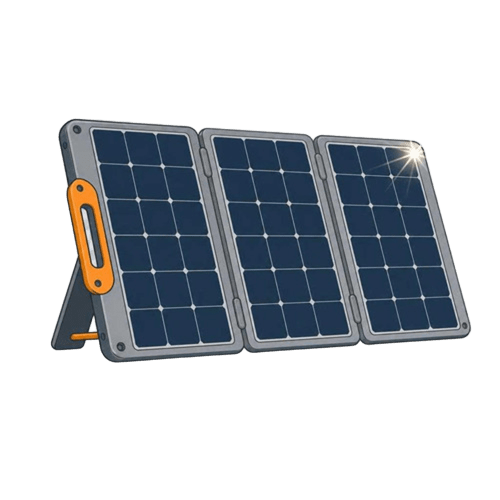
Topsolar 100W Solar Panel Kit Review: The 12V Battery Maintenance Kit for RV, Boat, and Cabin Owners
At a Glance
KEY FEATURES
- Power output: 100 W (claimed), monocrystalline silicon with tempered glass
- Output: 12 V DC system (panel Vmp 23.1 V), MC4 panel connectors and O-ring battery connectors
- Cell efficiency: 23% (manufacturer-stated — high tier for the price)
- Weatherproofing: IP67-rated junction box; anodized aluminum frame; tempered glass front
- Charge controller: PWM 12V/24V auto-detect controller — included (rated 20A per specs; "30A" in title)
- Best for: RV coach/house battery maintenance, boat and marine battery upkeep, off-grid cabin and shed 12V power, stored car and tractor batteries
PROS
- Keeps RV, boat, and stored 12V batteries reliably topped off
- Complete kit — panel, PWM controller, MC4 and O-ring cables, brackets
- Monocrystalline panel survives years of heat, cold, and even hail
- Generous 16 ft MC4 cabling with solid, expandable connectors
- Full PWM protection — overcharge, reverse-polarity, short circuit
CONS
- Real output runs about 4-6 A, well below the 100W nameplate
- PWM controller is the weak link — strips, fails, and has a dim display
- Thin packaging leads to dented frames and loose parts in transit
- Brackets don't match the instructions; no pre-drilled mounting holes
- Lead-acid only out of the box — not set up for LiFePO4 lithium
Editor's Choice
Based on exact documentation and qualitative exact-ASIN Amazon owner evidence; no hands-on test or population-rate claim
This Topsolar 100W solar panel kit review is for one specific buyer: someone with a 12V battery that needs to stay charged — an RV in the driveway, a boat in winter storage, a cabin running off a single deep-cycle battery — who wants a complete kit, not a research project. Panel, controller, cables, brackets, all in one box, for around $100. The promise is simple: mount it once and stop worrying about a dead battery.
Here’s the real problem this solves. An RV parked for three months drains its coach battery flat. A boat sitting through winter kills its cranking battery. A shed or cabin running lights off a 12V battery slowly bleeds down. A cheap 100W kit fixes all of these — but only if the controller is trustworthy and the panel actually delivers in real sun.
So let’s be clear about what this is. The Topsolar 100W kit is a 12V battery maintenance and charging product, not a fold-up camping panel for your phone. Topsolar aims it squarely at the RV, marine, and cabin crowd. This review judges it on that turf: controller quality, battery compatibility, and whether the build survives a permanent outdoor mount.
The expanded owner evidence makes the Topsolar kit a split decision. Many buyers use it successfully for camper maintenance, small cabins, gates, sheds, lighting, boats, and other modest 12V work. Yet repeated complaints focus on controller terminals, missing or mismatched mounting hardware, instructions, shipping condition, or support. A good panel does not rescue a poor battery profile or loose controller connection, so commission the components separately.
Battery chemistry is the first buying gate. Owner accounts explicitly describe confusion about lithium support, while the imported specification record does not establish a low-temperature lithium cutoff or a current exact-controller profile list. If the delivered manual does not provide the battery manufacturer’s required voltages and temperature behavior, replace the controller rather than improvising settings. A lithium battery also needs its own appropriate BMS and cold-charge strategy.
| Observed problem | Isolate this first | Useful next action |
|---|---|---|
| Controller dead or erratic | Battery voltage, polarity, fuse, and terminal clamp | Disconnect in manual order and bench-check safely |
| Panel voltage present but little charge | Battery charge stage, controller profile, shade, cable loss | Record PV/battery volts and current under stable sun |
| Bracket holes do not align | Delivered frame and hardware revision | Stop before drilling; document and contact the seller |
| Terminal screw strips | Controller hardware and conductor preparation | Replace the controller; do not tape a live conductor in place |
Several accounts describe quick installation, but that should not erase the safety sequence. Protect the battery conductor near the battery, add an accessible disconnect, prevent roof-edge abrasion, seal penetrations with substrate-compatible materials, and torque terminals as documented. Never leave a loose conductor held by tape, and never disconnect solar under load by pulling a connector that is not rated as a switch.
Output expectations should follow the load budget. A 100W module can be useful for maintenance and small daily loads, but fridge, lighting, fan, communications, and inverter standby add watt-hours quickly. Record daily energy under the site’s actual season, not one midday peak. If the job regularly exhausts the battery, improve the load budget, array, storage, or alternative charging rather than blaming the controller display alone.
Bottom line: the kit can be an economical entry point when the rigid panel and tilt rack fit the site and the delivered controller truly fits the battery. Budget for a controller upgrade if terminal quality, profiles, documentation, or monitoring fall short.
What's in the 12V Kit — and What Connects to What
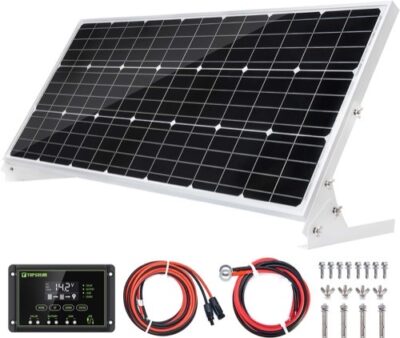
Open the box and you get the panel, a PWM charge controller, two 16 ft MC4 cables, two 5 ft O-ring battery cables, a V-shape tilt bracket, and a bag of mounting hardware. That’s a genuinely complete starter kit — several owners point out it costs less than buying a bare panel and a separate controller.
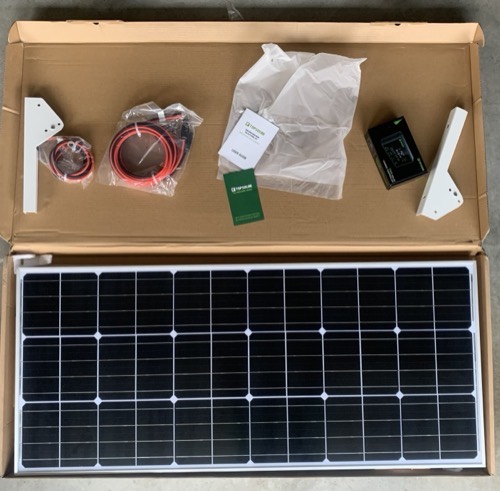
The wiring flow is straightforward once you know the order. The 16 ft MC4 cables run from the panel down to the controller. The 5 ft O-ring cables run from the controller to your battery terminals. Connect the battery first, then the solar panel — that order matters, and the manual buries the warning in the wrong spot.
Buyer Heads-Up — Hook the battery to the controller before you connect the solar panel. Several owners flag that the instructions list this under “Operation” instead of “Installation,” which is easy to miss. Get the order wrong and you risk the controller, though most buyers reported no damage when they slipped up.
One gap worth noting: the kit doesn’t include alligator-style clips for the battery side, so a couple of owners had to cut and pigtail their own connections or grab clips from a hardware store. Here’s the thing — the cabling itself gets praise for being properly terminated and thick enough to expand later, so the bones of the kit are solid.
Controller Features Worth Knowing
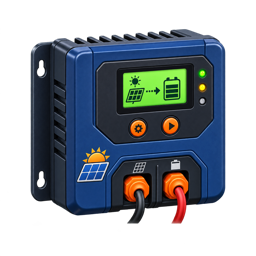
The kit includes a PWM controller, not MPPT — which uses a simpler on-off charging approach that harvests a bit less than MPPT in variable light. For maintaining a 12V battery, that’s a fair trade at this price, and the controller auto-detects whether you’re running a 12V or 24V system. The protection suite is the part that matters most: overcharge, over-discharge, reverse-polarity, and short-circuit protection are all built in.
In plain terms, this answers the two questions owners actually have. Will it cook my battery if I leave it connected all summer? No — it cuts off charging when the battery is full, which is exactly why boat and RV owners trust it for off-season storage. Does it handle a wiring mistake? Reverse-polarity protection covers the most common slip-up.
| Feature | Available? | Why It Matters |
|---|---|---|
| Controller type | PWM | Simpler than MPPT; slightly less efficient in variable light |
| Overcharge protection | Yes | Cuts off charging when the battery is full — prevents damage |
| Over-discharge protection | Yes | Disconnects load before the battery is drained too low |
| Reverse-polarity protection | Yes | Prevents damage if battery leads go on backwards |
| Short-circuit protection | Yes | Safeguards wiring against accidental shorts |
| Auto 12V/24V detection | Yes | Works on both common system voltages out of the box |
| LED / display indicator | Yes | Dim display, and the menu button reads “Mune” — a known quirk |
| LiFePO4 battery mode | No | Lead-acid profiles only; lithium needs a separate controller |
Honestly, the controller is the part of this kit owners trust least. Reports of set screws stripping, wires that won’t stay seated, a dim screen, and outright failure within a month to a year come up often. For most buyers charging a standard lead-acid or AGM battery, it does its job — but plenty of owners end up swapping in a better aftermarket controller for a more dependable long-term install.
Getting the Kit Running
Here’s the honest truth about setup: the install is where this kit frustrates people. The panel and wiring are fine, but the mounting is a known headache.
The single most common complaint is the brackets. The kit ships with V-shape tilt brackets, but the instructions often show Z-brackets — and the panel frame arrives with no pre-drilled mounting holes. That leaves you to figure out bracket placement, then mark, center-punch, and drill your own holes in the aluminum frame. Take care that the bolt heads clear the inside of the frame and that your drill bit doesn’t reach the back of the panel. Plenty of owners just drilled their own holes and moved on, but a few were annoyed enough to mount the panel a completely different way.
Cable length, at least, is generous. The two 16 ft MC4 runs give plenty of reach for most RV roofs, shed walls, and fence-line installs, with spare to expand to more panels later. Many owners got the whole thing running in under 30 minutes once they sorted out the bracket holes.
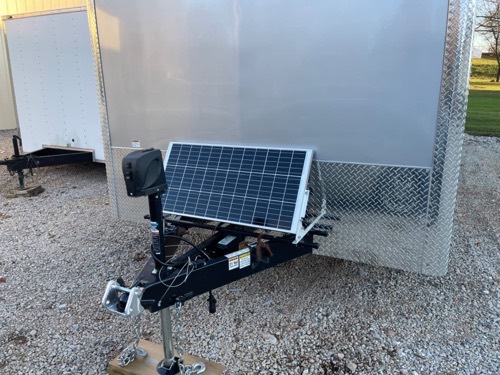
Practical Tip — If you’re mounting on an RV roof or a wall, drill your bracket holes before you climb up — mark them on the bench, check bolt-head clearance inside the frame, and you’ll save yourself an awkward overhead drilling job. Mounting the panel on a sunny wall or driveway frame is also a popular way to skip drilling holes in your roof entirely.
The connectors themselves get good marks for fit and quality, though a few owners mention the controller’s set screws stripping easily — go gentle when you tighten the wire terminals.
Real-World Wattage
The Topsolar 100W kit is rated at 100W — which, running through its PWM controller, translates to roughly 68W of usable output in good sun, or about 272 Wh on a typical four-hour peak-sun day. Owners checking current at the battery consistently land around 4 to 6 amps, so don’t let the controller’s “20A” label set false expectations.
What does that mean in practice? For a stored 12V battery, it’s plenty. Boat and RV owners describe it holding a cranking or coach battery at full charge through an entire off-season, with the controller shutting off when the battery tops up. For a partially drained battery, expect it to recover over a few sunny days rather than in an afternoon. One owner running a DIY generator saw the panel itself produce 90-108 watts in ideal sun before the controller’s losses.
Cloudy-day performance is better than you’d fear, and it’s the question owners ask most. Many report it still pushes useful voltage on overcast and even rainy days — full sun brings 13 to 14.5 V to the battery, while overcast days still hold above 12 V. It won’t fully recharge a dead bank on clouds alone, but it keeps batteries alive.
| Condition | Estimated Output | What That Means |
|---|---|---|
| Full sun, ideal angle | ~68 W (4-6 A) | Maintains a 12V battery easily; trickles up ~272 Wh/day |
| Partly cloudy sky | ~34 W | Still net-positive; slow but steady charging |
| Overcast / heavy clouds | ~15-20 W | Won’t fully recharge a dead bank, but prevents battery death |
| Panel angle 45° off optimal | ~45 W | Minor hit; most fixed mounts land in this range |
| Winter sun (northern US) | ~35-40 W avg | Still charges; fewer peak sun hours than summer |
| Panel in partial shade | ~7-20 W | Big drop — avoid mounting where shadows fall across cells |
Real-World Math — Using a 0.68 output factor, this 100W panel delivers roughly 68W in good sun. Over a four-hour peak-sun day, that’s about 272 Wh. A 12V/100Ah battery holds around 1,200 Wh, so even accounting for self-discharge and a small parasitic draw, the kit keeps a stored battery topped off with comfortable headroom.
These are estimates. Real output depends on panel angle, sky conditions, shading, temperature, and how long your cable run is.
What It Pairs With
The big compatibility question for this kit is battery chemistry, and the answer is clear: it’s built for 12V lead-acid batteries. Topsolar lists flooded (wet cell), sealed, gel, and AGM as supported, and owners run it on everything from car and tractor batteries to RV coach banks and marine cranking batteries. Wired in parallel, several buyers use multiple panels to feed larger banks.
Lithium is where it falls short out of the box. LiFePO4 owners report the controller output never climbs high enough — often stuck around 13 V — to properly charge lithium, which typically needs 13.4 V or more. Support reportedly couldn’t suggest a compatible controller either, so if you’re on lithium, plan to add your own MPPT unit with an LFP profile.
| Battery Type | Typical Use | Compatible? | Notes |
|---|---|---|---|
| Flooded lead-acid | Car, truck, tractor | Compatible | Standard 12V charging — the core use case |
| AGM (sealed) | RV, boat, UPS | Compatible | No gassing risk; good for sealed bays |
| Gel cell | Marine, mobility | Compatible | Works on lead-acid profile; standard charging |
| LiFePO4 (12V) | RV, van life, backup | Needs LFP controller | Stock controller won’t reach lithium charge voltage |
| 24V battery bank | Large RV, boat bank | Needs series wiring | Controller auto-detects 24V, but this is a 12V panel kit |
Worth Knowing — The included PWM controller’s battery profile is the limiting factor, not the panel. If you have a LiFePO4 battery, the panel itself is fine — you just need to swap the controller for an MPPT model with a proper lithium charge profile before connecting.
Beyond batteries, owners report success powering 12V water pumps, LED barn and shed lights, gate openers, chicken-coop doors, and ham radio field setups through an inverter. It’s a flexible little system as long as your load matches what a 100W panel can sustain.
Panel and Kit Build Quality
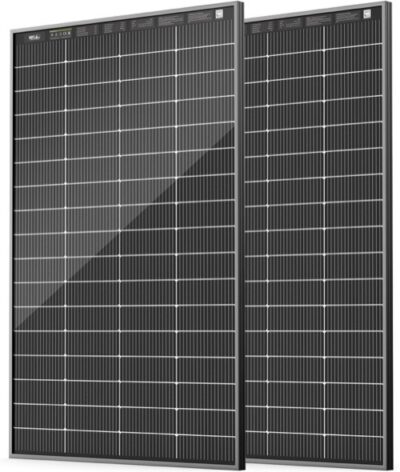
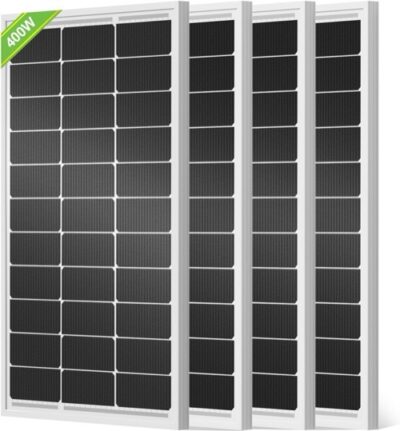
The panel feels more substantial than its price suggests. Anodized aluminum frame, tempered glass, and a monocrystalline cell layout that Topsolar rates at 23% efficiency. Owners describe it as light and easy to handle at around 15 lbs, but still sturdy enough to live outdoors year-round.
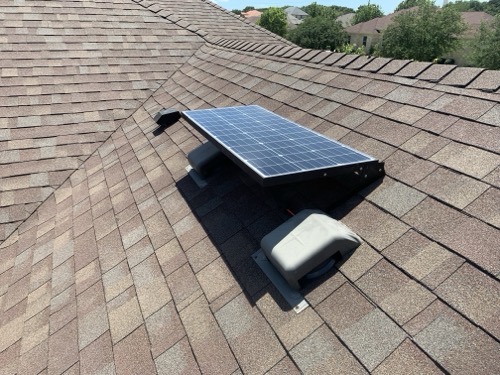
That durability isn’t just marketing. Buyers report panels still going strong after three and four years through Arizona heat and northern winters. One owner’s panel even survived a hail storm that trashed their truck and RV awning — no visible damage to the glass at all. The IP67-rated junction box and corrosion-resistant frame are doing real work here.
The weak spot is packaging, not the panel. A recurring gripe is the thin box with sparse padding — owners describe dented frames, bent corners, and screws, washers, and the controller rattling around loose inside. Some panels arrive perfect; others show up dinged. A few long-term owners also noted the wires on the back rusting or working loose after a few years, which is a minor repair but worth knowing for a permanent install.
Rain, Heat, and Cold: What Owners Report — Topsolar 100W 12V kit
The panel carries an IP67-rated junction box, which means it’s dust-tight and protected against brief immersion — solid for a permanent outdoor mount. Pair that with the anodized aluminum frame and tempered glass, and you’ve got a panel built to sit outside through rain, heat, and snow without babysitting.
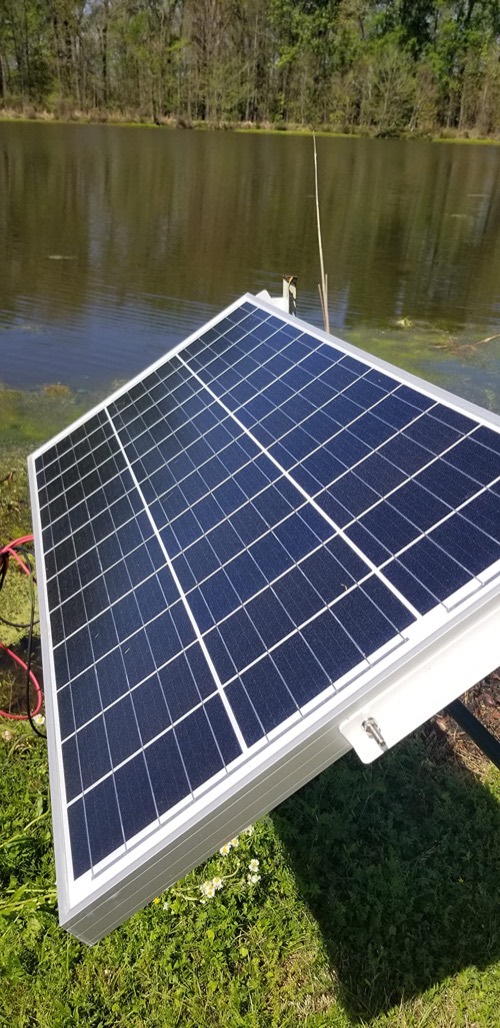
Real-world durability backs that up. Owners describe panels surviving multiple years in harsh climates, from desert heat to freezing northern winters, and that hail-storm survivor is the standout story. To be fair, the controller doesn’t share the panel’s toughness — one owner noted it “doesn’t winter well” in deep-freeze conditions, so in very cold climates you may want to mount the controller somewhere sheltered.
| Feature | This Panel | What It Means Outdoors |
|---|---|---|
| IP rating | IP67 junction box | Dust-tight and protected against brief immersion |
| Frame material | Anodized aluminum | Resists corrosion; won’t warp in heat |
| Panel surface | Tempered glass | Impact-resistant — survived hail in one owner’s case |
| Junction box seal | IP67-rated | Keeps moisture out of the panel wiring |
| Connector weatherproofing | MC4 (weather-rated) | Standard solar connectors; seat them fully |
| Operating temperature range | Not stated | Owners report multi-year use in heat and cold |
| Long-term owner reports | Working after 3-4 years | Panel holds up; back wiring can rust over years |
Long-Term Ownership — Monocrystalline panels degrade only about 0.5% a year, so the cells will outlast everything else. The weak points here are the controller and, over several years, the wiring connections on the back of the panel — not the glass or cells. A bit of dielectric grease on the connectors at install pays off.
Safety Features and Warranty Terms
The Topsolar 100W kit doesn’t list any third-party safety certifications like UL or ETL — the IP67 junction box rating is the main certified spec here. For a 12V lead-acid charging kit, that’s typical at this price, but it’s worth knowing if certified specs matter to you.
The PWM controller carries the real safety story, with its overcharge, over-discharge, reverse-polarity, and short-circuit protection. No owners reported overheating, smoke, or fire — the safety concerns that do come up are mundane: stripping screws, a dim display, and controllers failing early. The panel side runs trouble-free on that front.
Warranty is the soft spot. Topsolar doesn’t clearly state a warranty term, and owners describe frustrating support — emails to the listed Emperysolar contact going unanswered, and replacement requiring the whole kit be shipped back for one bad part. A few mention low-ball refund offers when a controller died. For a $100 kit charging a stored battery, the low stakes make that tolerable; for critical 12V maintenance on an expensive RV or boat, factor the spotty support into your decision.
Is the Topsolar Kit Worth Buying?
For the buyer it’s built for — someone keeping a 12V lead-acid battery charged on an RV, boat, or cabin — the Topsolar 100W solar panel kit is a solid value pick. The panel is genuinely durable, it keeps a stored battery topped off even through cloudy stretches, and getting a complete kit for around $100 is hard to beat. Just go in knowing the install takes some DIY drilling and the included PWM controller is the part you may eventually replace.
So here’s the if/then. If you want a budget 12V maintainer and you’re comfortable drilling a few holes, this Topsolar 100W kit will quietly do its job for years. If you run a LiFePO4 battery, need a bulletproof controller, or want a mount that drops on without modification, plan to either swap the controller or look at a Renogy or MPPT-based kit instead. For most RV, marine, and cabin owners maintaining a lead-acid battery, the Topsolar 100W solar panel does exactly what they need.
Topsolar 100W 12V kit: Decision Snapshot
| Spec | Value |
|---|---|
| Max Power Output | 100 W (monocrystalline) |
| Output Voltage | 12 V DC system (Vmp 23.1 V) |
| Connector | MC4 (panel) + O-ring (battery) |
| Cell Efficiency | 23% (manufacturer-stated) |
| Weatherproof Rating | IP67 junction box |
| Charge Controller | PWM 12V/24V (included) |
| Cable Length | 2× 16 ft MC4 + 2× 5 ft O-ring |
| Mount Type | V-shape tilt bracket (not pre-drilled) |
| Best For | RV, boat, and cabin 12V battery maintenance |
Topsolar 100W Kit: What You Need to Know
If you want a complete, budget kit to keep a 12V lead-acid battery charged on an RV, boat, or cabin, the Topsolar 100W solar panel kit does the job. In owner accounts, owners say it reliably maintains a stored battery, still charges on cloudy days, and the panel itself holds up for years outdoors. The catch is the install and the controller — the brackets don’t match the instructions, the frame isn’t pre-drilled, and the included PWM controller is the part most likely to give you trouble. Worth knowing going in: it’s lead-acid only out of the box, so lithium owners will need a different controller.
Who This Kit Is For — Use-Case Fit Matrix
| Use Case | Fit | Why |
|---|---|---|
| RV coach/house battery maintenance (full season storage) | Strong fit | 100W keeps a coach battery topped off; controller prevents overcharge |
| Boat / marine battery maintenance | Strong fit | IP67 build and overcharge cutoff suit off-season storage |
| 12V car / truck battery maintenance during storage | Strong fit | More than enough to offset self-discharge over winter |
| Off-grid cabin or shed 12V power (lights, pump) | Solid fit | Runs lights, pumps, and small loads; expand with more panels |
| Tractor / ATV / buggy battery upkeep | Solid fit | Owners run these reliably; parallel panels for multiple batteries |
| Ham radio / field power setup | Solid fit | Charges batteries and runs an inverter for field operations |
| Gate opener / chicken-coop door | Solid fit | Low-draw 12V loads are an easy match |
| LiFePO4 lithium battery charging | With caveats | Stock controller won’t reach lithium voltage; swap to an MPPT/LFP unit |
| High-draw loads (power tools, big inverter) | Skip | A 100W panel is a maintainer and slow charger, not a generator |
| Install in a full-shade location | Skip | Output drops 70-90% in shade — defeats the purpose |
| Buyer wanting a true plug-and-play, no-drilling mount | Borderline | Brackets don’t match instructions; expect to drill the frame |
You'll probably be happy if you want: — Topsolar 100W 12V kit
- A complete 12V kit you can mount once and forget, with no separate controller to buy
- Something that keeps a stored RV, boat, or car battery at full charge through an off-season
- A weatherproof monocrystalline panel that survives years of rain, heat, and freezes
- Generous cabling that lets you add more panels in parallel later
You might want to skip it if you need: — Topsolar 100W 12V kit
- A true plug-and-play mount with pre-drilled holes and instructions that match the parts
- A controller you can rely on long-term without considering an aftermarket swap
- Out-of-the-box LiFePO4 lithium charging
- High wattage to run power tools or a large inverter load
This is a different tool for a different job — a 12V maintainer and slow charger, not an off-grid generator.
Pros & Cons Analysis
Based on documented specifications and owner feedback
Pros
- Reliable 12V battery maintenance — the most consistent praise across owner feedback: it keeps RV coach batteries, boat cranking batteries, and stored car batteries topped off without intervention. Many buyers describe it as a true set-and-forget charger that ended the dead-battery loop.
- Complete kit at a budget price — panel, PWM controller, two 16 ft MC4 cables, two 5 ft O-ring battery cables, and brackets all in one box. Several owners note it's cheaper than buying a bare panel plus a controller separately, with around $100 being the figure that impressed buyers.
- Real monocrystalline durability — owners report panels still working after three and even four years in Arizona heat and northern cold. One buyer's panel shrugged off a hail storm that wrecked their truck and awning, with no visible damage to the glass.
- Charges in less-than-ideal light — buyers mention it still pushes useful voltage on cloudy and overcast days, and even generates some power when angled away from the sun or sitting in a window. Several RV owners say a cloudy, rainy day still brought a battery up.
- PWM controller has full protection — overcharge, over-discharge, reverse-polarity, and short-circuit protection are built in, and the controller auto-detects 12V/24V. Owners maintaining a stored boat or RV battery appreciate that it shuts off charging to prevent overcharge.
- Generous, professionally terminated cabling — the two 16 ft MC4 panel cables give plenty of reach, and owners note the connectors and wire gauge look properly made, with enough length to allow expansion to more panels later.
- Light enough for one-person installs — at around 15 lbs it's manageable on an RV roof, a shed wall, or a fence line. Owners mention getting it mounted and running in under 30 minutes once they sorted out the bracket holes.
- Versatile across off-grid jobs — buyers run it on RVs, boats, tractors, gate openers, livestock barns, chicken coops, ham radio field setups, and off-grid cabins. Wired in parallel, several owners use multiple panels to charge larger battery banks.
Cons
- Mounting brackets don't match the instructions — by far the most common complaint. The included V-shape brackets don't line up with the diagrams (which show Z-brackets), and the panel frame ships with no pre-drilled holes. Owners routinely have to mark, center-punch, and drill their own mounting holes.
- Controller quality is the weak link — reports of set screws stripping when barely tightened, wires that won't stay seated, a dim display, a "Mune" typo on the menu button, and outright controller failure within a month to a year. The panel often outlives the controller.
- Flimsy packaging causes shipping damage — a recurring theme is thin boxes with sparse padding. Owners describe dented frames, bent corners, and loose screws, washers, and the controller rattling around inside. Some panels arrive fine; some arrive damaged.
- Real output is well under 100W — owners measuring it report roughly 4 to 6 amps at the battery, not the full nameplate. The "20A controller" label fools nobody who checks: max system current lands around 5 to 6 amps in good sun.
- Not lithium-ready out of the box — the kit is built for flooded, sealed, gel, and AGM lead-acid batteries. LiFePO4 owners report the output never climbs high enough (stuck around 13V) to properly charge lithium, and support couldn't recommend a compatible controller.
- Confusing and incomplete instructions — the documentation is described as bleak, and the promised downloadable manual is hard to find on the listing. The critical "connect battery before solar" warning is buried under the wrong heading, which trips up first-timers.
- Missing or mismatched parts on arrival — some boxes show up short a bolt, nut, or washer, and a few buyers received a panel that didn't physically match the supplied brackets at all. Returns mention the panel having no model number printed on it.
- Spotty customer support and warranty — owners report support emails to the listed Emperysolar contact going unanswered, and warranty replacement requiring the whole kit be returned for one bad part. A few describe frustrating, low-ball refund offers.
Our Verdict
Charging performance (3.8/5) — The Topsolar 100W kit reliably keeps 12V batteries charged and maintained, with usable output even on cloudy days. Real output of roughly 4-6 A through the PWM controller is sensible for a 100W panel, but it's clearly short of the nameplate.
Value & compatibility (3.6/5) — A complete kit near $100 is strong value for lead-acid 12V charging and covers a wide range of off-grid jobs. The weak controller, no out-of-box LiFePO4 support, and spotty support keep it from scoring higher.
Build & weatherproofing (4.0/5) — The monocrystalline panel is genuinely durable — multi-year survival, hail resistance, IP67 junction box, and an anodized aluminum frame. Thin packaging causing transit damage and a few back-wiring complaints pull it down.
Install & usability (3.0/5) — The biggest pain point: brackets that don't match the instructions, no pre-drilled holes, confusing documentation, and a controller with stripping screws make this a workaround-heavy install.
Bottom line — Best for vehicle- and structure-based 12V maintenance — RV coach batteries, boat and marine upkeep, stored car batteries, and off-grid cabin and shed power. Skip it if you need plug-and-play mounting, a bulletproof controller, out-of-box LiFePO4 charging, or high wattage for power tools.
Frequently Asked Questions
Does the Topsolar 100W kit charge on cloudy or overcast days?
Yes, just slower. Owners consistently report it still pushes useful voltage on cloudy and rainy days, with several saying it brought an RV battery up over an overcast day. Expect output to fall to roughly 20-30% of a full-sun day. In good sun it puts out around 13-14.5 V to the battery; on overcast days owners still measure above 12 V. It maintains batteries through grey weather, but won't fully recharge a deeply drained bank on clouds alone.
What's the real-world output — does it actually make 100 watts?
No panel hits its nameplate in real conditions, and this one is no exception. Owners measuring current at the battery report roughly 4 to 6 amps in good sun, which is normal for a 100W panel feeding a PWM controller. One buyer testing a DIY generator saw the panel itself produce 90-108 watts in ideal sun, but at the battery, plan for about 5-6 amps as your working number.
Will the Topsolar 100W kit charge a LiFePO4 (lithium) battery?
Not out of the box. The kit is built for flooded, sealed, gel, and AGM lead-acid batteries. LiFePO4 owners report the controller output never climbs high enough — stuck around 13 V — to properly charge lithium, which usually needs 13.4 V or higher. If you run a lithium battery, plan to swap in a separate MPPT controller with a LiFePO4 charge profile.
Why don't the mounting brackets match the instructions?
This is the most common complaint. The kit ships with V-shape tilt brackets, but the printed instructions often show Z-brackets, and the panel frame arrives with no pre-drilled mounting holes. You'll need to figure out bracket placement yourself, then mark, center-punch, and drill holes in the aluminum frame — taking care that the bolt heads clear the inside of the frame and the drill bit doesn't hit the back of the panel.
Is the included charge controller any good?
It's the weak link. The panel itself is well regarded, but owners report set screws that strip when barely tightened, wires that won't stay seated, a dim display, a 'Mune' typo on the menu button, and some controllers failing within a month to a year. Many buyers recommend running the kit's panel with a better aftermarket controller — an MPPT unit if you can stretch the budget — for a more dependable long-term install.
How long is the cable, and is it enough for an RV or roof install?
The kit includes two 16 ft (12 AWG) MC4 panel cables plus two 5 ft O-ring battery cables. Owners describe the wire as well terminated and generous, with enough reach for most RV roof and shed installs, and enough spare to wire additional panels in parallel later. Some buyers note the kit doesn't include alligator-style clips for the controller's battery terminals, so a few had to add their own.
Does it stop charging when the battery is full, or will it overcharge?
The PWM controller has built-in overcharge and over-discharge protection, plus reverse-polarity and short-circuit protection, and it auto-detects 12V or 24V. Boat and RV owners maintaining a stored battery specifically mention the controller shutting off charge to prevent overcharge, so you can leave it connected through an off-season without bringing the battery home to top it up.
How does the panel hold up outdoors long-term?
The panel is the durable part of this kit. Owners report it still working after three and four years through Arizona heat and northern cold, and one buyer's panel survived a hail storm that damaged their truck and awning with no visible glass damage. The aluminum frame resists corrosion. A couple of owners did report the wires on the back rusting or coming apart over years, which is a minor repair.
Can I wire two or more panels together for more power?
Yes. Several owners wire multiple panels in parallel to charge larger battery banks — tractors, buggies, marine banks, and bigger RV setups. The generous 16 ft MC4 cabling makes expansion straightforward. Just keep in mind the included PWM controller's amp rating limits how many panels it can handle; for a larger array, step up to a higher-amp MPPT controller.
What's included in the box?
One 100W monocrystalline solar panel, a PWM 12V/24V charge controller, two 16 ft MC4 solar cables, two 5 ft O-ring battery cables, a V-shape tilt mounting bracket, and mounting hardware. Note that packaging can be thin — owners report dented frames and loose screws in transit, and occasionally a missing bolt or washer, so check the contents on arrival.
Technical Specifications
| Brand | Topsolar |
|---|---|
| Model / SKU | T05M100C20WBVZ-1 (ASIN B085XYMZ7S) |
| Panel format | Rigid panel with PWM controller kit |
| Rated output (Pmax) | 100W |
| Cell technology | Monocrystalline |
| Module efficiency | — |
| Voltage at maximum power (Vmp) | — |
| Current at maximum power (Imp) | — |
| Open-circuit voltage (Voc) | — |
| Short-circuit current (Isc) | — |
| Power tolerance | — |
| Maximum system voltage | — |
| Maximum series fuse | — |
| Output connector | MC4-compatible and ring-terminal leads |
| Output cable | Two 16 ft solar cables; two 5 ft battery cables |
| Deployed dimensions | 46.5 × 21.8 × 1.37 in |
| Folded dimensions | — |
| Weight | Approximately 15 lb |
| Surface and frame | Tempered glass with aluminum frame |
| Positioning / mounting | Included adjustable tilt rack |
| Environmental protection | IP67 junction box |
| Wind / snow load | — |
| Operating temperature | — |
| Included accessories | Panel, 20A PWM controller, cables, and tilt rack |
| Product warranty | — |