ECO-WORTHY 200W Solar Kit Review: Good Panels, Basic Controller
At a Glance
KEY FEATURES
- Two rigid 100W monocrystalline panels provide a 200W nameplate array.
- Current Amazon offer includes a 30A PWM charge controller.
- Z brackets, branch connectors, and panel-to-controller cable are bundled.
- Battery-side protection, battery cable, battery, and inverter are separate design items.
- Best for a small shed, camper, or maintained 12V battery system.
PROS
- Low-cost path to a complete panel pair
- Rigid panels have conventional mounting frames
- Useful branch and extension hardware
- Long-term successful owner installs exist
- PWM controller is the weak link
- Battery-side wiring is not complete
- One polarity-label incident is documented
- Hardware and instructions drew complaints
CONS
- PWM controller is the weak link
- Battery-side wiring is not complete
- One polarity-label incident is documented
- Hardware and instructions drew complaints
Capable Starter Kit
Based on exact documentation, retained exact-ASIN evidence, and the expanded qualitative Amazon owner-text review; no hands-on test claimed
If you’ve got the Renogy and ECO-WORTHY 200W kits open in two browser tabs, this ECO-WORTHY 200W kit review is here to settle the question fast: ECO-WORTHY’s 200W kit consistently undercuts Renogy by a noticeable margin, and you want to know whether that lower price hides a real catch.
Here’s the dilemma most buyers land in. Two complete 200W kits, two brand names, and a $40-80 gap between them. On paper the specs read almost identical — two 100W mono panels, a charge controller, cables, brackets. So the question isn’t really about wattage. It’s whether the cheaper kit is actually worse, or whether you’re just paying extra for a logo.
Let’s be direct about it. ECO-WORTHY makes functional solar kits that put out real power, and a lot of owners have built reliable RV, shed, and cabin systems on them. The differences from Renogy show up in the controller, the warranty terms, and the finish details — not in the panels themselves. This review tells you exactly what you’re trading away to save the money.
The expanded owner evidence shows why “kit” should be read as a bundle of major components, not a finished electrical design. Positive installations include RVs, sheds, cabins, pumps, and small battery banks. Owners often value the panel pair and the accessible entry price. Repeated friction concerns cable length, additional wire or protection hardware, controller setup, instructions, and learning which pieces are still required.
| Before connecting | Question that must have a documented answer |
|---|---|
| Panels to controller | Does array Voc—including cold correction—and current fit the controller? |
| Controller to battery | Does the charging profile match the exact chemistry and BMS? |
| Cables and protection | Are gauge, length, fuse/breaker ratings, disconnects, and terminals correct? |
| Mounting | Are structure, sealing, ventilation, and cable strain relief suitable for the vehicle or building? |
The pool also contains controller-overheating or defective-controller reports, replacement delays, incomplete or damaged shipments, and systems that needed rework. Other owners describe straightforward startup and satisfactory long-term use. These are legitimate qualitative signals, but the copied sample cannot say how frequently either outcome occurs.
The responsible buyer evaluates the panels and controller separately. A strong panel pair does not rescue an incompatible charge profile, and a controller display does not replace safe commissioning measurements. That distinction is the difference between an affordable learning platform and a costly troubleshooting project.
Kit Contents: What You Get vs. What You Need
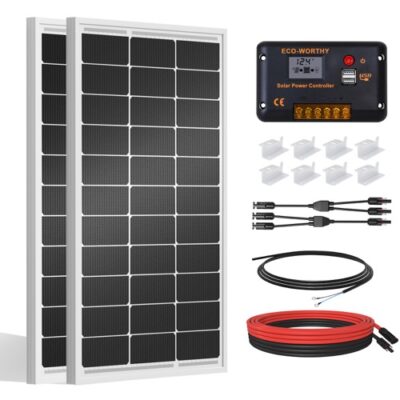
What shows up in the box is genuinely complete on the generation side. You get two 100W monocrystalline panels, two sets of Z-mounting brackets, the 30A PWM controller, a pair of 16.4 ft 10 AWG solar cables, a pair of 2-in-1 parallel connectors, and a pair of short tray cables. The panel backs come pre-drilled, and the MC4 connectors snap together without tools.
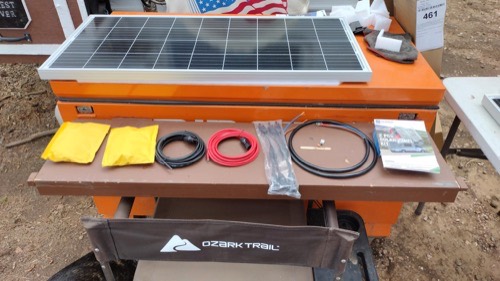
What’s missing is the stuff that actually stores and uses the power. There’s no battery and no inverter here — and more than one first-time buyer has opened the box on the living room floor only to realize the kit can’t do anything until they buy a 12V or 24V battery. Owners also report needing their own 6mm washers, better mounting screws for non-metal roofs, and fuses. Budget for those before your install day.
| You Get in the Box | You Still Need to Buy |
|---|---|
| 2× 100W mono panels | 12V or 24V deep-cycle battery (lead-acid, AGM, or LiFePO4) |
| 30A PWM charge controller | Inverter (if you want AC outlets) |
| 16.4 ft solar cables + tray cables | Cable extensions for long runs (40 ft common for yards) |
| 2× Z-bracket sets + 2-in-1 connectors | 6mm washers, roof-appropriate screws, inline fuse |
The Controller: MPPT or PWM?
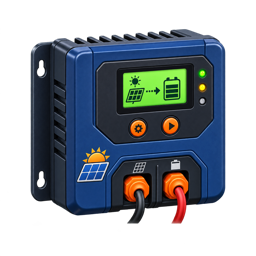
The kit ships with a 30A PWM controller — and the difference between PWM and MPPT is the single biggest spec story here. PWM uses a simpler on-off approach that’s cheaper to build but leaves harvest on the table, especially with panels like these that run near 20V into a 12V battery. An MPPT controller actively converts that extra voltage into usable charging current, which is why so many owners upgrade.
So why does this matter day to day? Buyers mostly want two answers: will it fry my battery, and will it drain it overnight? The controller carries the standard protections, and most owners run it without incident. The reliability record, though, is the real concern — controller failures show up more often than anything else in owner feedback.
| Feature | Available? | Why It Matters |
|---|---|---|
| Controller type | PWM | Cheaper but less efficient than MPPT, especially with ~20V panels on a 12V battery |
| Overcharge protection | Yes | Cuts charging when the battery is full — but see overcharging reports below |
| Over-voltage protection | Yes | Guards against panel voltage spikes |
| Short-circuit protection | Yes | Protects wiring from accidental shorts |
| Reverse-polarity protection | Yes | Prevents damage if leads are reversed |
| Anti-drain / reverse-current | Yes | Stops the battery from discharging through the panel at night |
| LED / USB ports | Yes | USB charging ports and a 12V load output built in |
| Battery type setting | Lead-acid, AGM, Gel, LiFePO4 | Critical for lithium — set the profile before connecting |
For most buyers charging a standard lead-acid or AGM battery, the controller works as a plug-and-go starter part. LiFePO4 owners should set the lithium profile first, and anyone adding panels later will need a higher-amp controller regardless.
Setup, Brackets, and Cable Length
Is it plug-and-play? Mostly yes — and that’s the kit’s quiet strength. Owners routinely describe getting two panels, batteries, and an inverter wired and running in a few hours, and first-time solar buyers consistently call the MC4 hookup beginner-friendly. The instructions are easy enough, and YouTube fills any gaps.
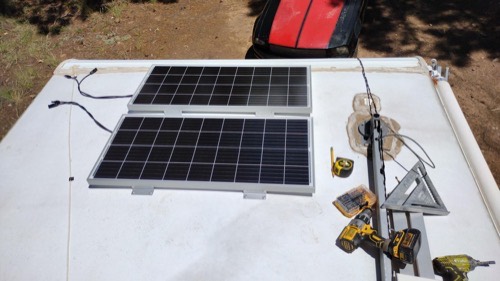
The brackets and hardware are where the friction shows up. The Z-brackets work, but the included screws are widely panned as junk and meant only for metal roofs — plenty of owners swap in proper metal roofing screws. The manual calls for 6mm flat and split washers that aren’t in the box, the bracket slots run a touch wide for the bolts, and there are no screws to mount the controller. Sharp edges on the metal round out the list.
Cable length is the other thing to measure twice. The 16.4 ft solar cable covers most RV-roof and rooftop installs, but yard and ground-array users repeatedly buy a 40 ft extension. A few owners also found the short tray cable too tight to reach the controller, so check your controller-to-battery distance before you commit to a mounting spot. And the controller terminals are cramped — they accept the thin solar cable fine but balk at thicker battery wire.
Practical Tip — Before install day, pick up a set of 6mm flat and split washers, roof-appropriate screws if you’re not on a metal roof, and a 40 ft MC4 extension if your panels sit anywhere but right above the battery. Keep MC4-to-MC4 on any extension to avoid voltage drop from cheap adapters.
Compatibility and Pairings
The most important compatibility question for a kit like this is which batteries it supports — and the answer is reassuringly broad. It runs 12V and 24V systems, and owners successfully charge flooded lead-acid, AGM, gel, and LiFePO4 batteries. Lithium users report the controller’s LiFePO4 setting works once it’s selected correctly.
On the load side, it pairs with inverters and power stations easily. Owners feed it into 1000W to 4000W pure-sine inverters, and several use the panels purely to recharge an EcoFlow or other power station via solar input. Worth knowing: a few lithium owners saw low charge amps until they confirmed the controller was actually set to the lithium profile.
| Battery Type | Typical Use | Compatible? | Notes |
|---|---|---|---|
| Flooded lead-acid | Car, RV, camper, tractor | Compatible | Standard 12V/24V charging; most common in reviews |
| AGM (sealed) | RV, boat, UPS | Compatible | No gassing risk; good for sealed bays |
| Gel cell | Marine, mobility | Compatible | Select gel/sealed profile on the controller |
| LiFePO4 (12V) | RV, van life, off-grid | Needs LFP mode on controller | Set lithium profile first; widely used by owners |
| 24V battery bank | Large RV, off-grid | Compatible | Wire the two panels in series for 24V output |
Worth Knowing — The controller’s battery type setting is the part people skip and then regret. Charging a LiFePO4 or gel battery on the wrong profile gives you weak charge amps or shortens battery life. Set it before you connect, and verify with a meter if your charge rate looks low.
Power Delivery in Practice — ECO-WORTHY 200W kit
The ECO-WORTHY 200W kit is rated at 200W — which in good sun translates to roughly 110W on the realistic end and 440 Wh or so on a typical day. That’s the honest number to plan around, not the sticker figure. Owners with meters report 110W in Florida midday, 120-145W on winter days, and one even pulled around 145W to a power station on a cloudy day with a tilt frame.
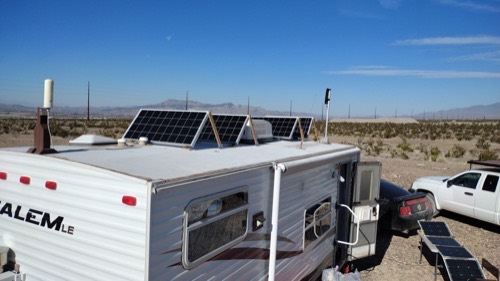
Here’s the thing about the gap: a couple of owners measured low-output panels in the 53W range, which is well under spec. Most land in the respectable 110-145W band, but the spread is wider than you’d see from a premium brand. The PWM controller plays a role too — these panels peak near 20V, and a PWM controller throws away that extra voltage instead of converting it like an MPPT would.
In practice, it keeps batteries topped up better than people expect. Boondockers report charging four deep-cycle batteries every day while running fans, a CPAP, a 12V fridge, and chargers. A shed owner runs lights and a furnace fan for years on it. The catch is cloudy weather — output still flows, just slower, dropping toward 20-30% of rated on heavily overcast days.
| Condition | Estimated Output | What That Means |
|---|---|---|
| Full sun, ideal angle | ~110-145 W | Charges a 100-300Ah bank steadily; runs a 12V fridge, lights, fans with daily top-up |
| Partly cloudy sky | ~70-90 W | Keeps pace with modest loads; net gain on the battery is slower but real |
| Overcast / heavy clouds | ~40-60 W | Slows battery drain and keeps it alive; won’t fully charge a big bank fast |
| Panel angle 45° off optimal | ~75-95 W | Noticeable hit; many fixed Z-bracket installs land here |
| Winter sun (northern US) | ~80-120 W avg | Still charges; expect 2-3 peak sun hours vs summer’s 4-5 |
| Panel in partial shade | ~15-40 W | Big drop; avoid shaded mounting if you can |
Real-World Math — Using the output factor of 0.55, this 200W kit delivers roughly 110W in good sun. Over a 4-hour peak sun day, that’s about 440 Wh — enough to replace a full day’s draw on a 12V fridge plus lights, with headroom on a sunny day. An MPPT swap would push that closer to 560 Wh.
These are estimates. Real output swings with panel angle, sky conditions, shading, temperature, and how far your cable run is.
Can It Handle the Elements?
The panels carry an IP65-rated junction box and a 2400Pa wind / 5400Pa snow load rating — which means they shrug off rain, spray, and a real winter without trouble. ECO-WORTHY claims decades of frame life, and owner experience backs the panels up: there are multi-year installs on barns, sheds, cabins, sailboats, and RV roofs running strong.
The frame is corrosion-resistant aluminum with tempered glass, the combo that holds up best outdoors. One owner’s marine install on a sailboat kept the house and starting batteries topped with no weather issues. The panels, in short, are built to live outside.
The controller is a different story. It’s the part to keep sheltered and dry, both because of its finish and because controller failures — not panel failures — are the recurring durability complaint.
| Feature | This Panel | What It Means Outdoors |
|---|---|---|
| IP rating | IP65 (junction box) | Protected against rain and spray from any direction; not for submersion |
| Frame material | Aluminum alloy | Resists corrosion; won’t warp in heat; multi-year owner installs hold up |
| Panel surface | Tempered glass | Impact-resistant; survives shipping well with the included corner guards |
| Junction box seal | IP65-rated | Keeps moisture out of the panel wiring |
| Connector weatherproofing | MC4 | Weather-rated when fully seated; one owner lost output from a loose connector until reseated |
| Operating temperature | Upper rating 85°F listed | Full range not stated; verify for extreme-heat roof mounts |
| Long-term owner reports | Still working after 2+ years | Panels durable; controller is the weak point |
Worth Knowing — An IP65 rating means protection from rain and spray, not submersion. For panels mounted flat on an RV roof or angled on a shed, IP65 is plenty. Mount the controller indoors or in a sealed bay, and seat every MC4 connector firmly — a loose one cost one owner most of his output until he reseated it.
Certifications and Warranty Details
No exact third-party safety certifications retained for this review (UL, ETL, CE) are listed on the product page, so the IP65 junction box rating is the main certified spec. For a budget kit, that’s not unusual — but it’s worth knowing if certified paperwork matters for your install.
The warranty runs one year with 24/7 tech support, and the support gets real praise. Owners who hit a dead controller or shipping damage describe replacements arriving within days, often without having to send anything back. One buyer on his third ECO-WORTHY order called the service “100% satisfied.”
There’s a serious safety note that belongs in any honest ECO-WORTHY 200W kit review, though. One owner’s lead-acid battery exploded and sprayed acid after months of use, with the cause pointing back to the controller, and a handful of other reviews raise overcharging concerns. It’s an outlier against a huge base of trouble-free installs, but take the obvious precautions: confirm the controller’s battery profile, add an inline fuse on the panel side, and don’t store batteries in an enclosed living space like an under-bunk.
Long-Term Ownership — Monocrystalline panels typically lose only about 0.5% efficiency a year, so these panels should still pull strong a decade out. The weak point isn’t the cells — it’s the bundled PWM controller and the connectors. Treating the controller as a replaceable starter part, and seating connectors firmly, does more for long-term reliability than any spec on the box.
Best Use Cases
This kit is a different tool for different jobs, and it fits some far better than others. The sweet spot is a 12V or 24V battery-charging setup you intend to grow — RV, camper, shed, cabin, or boat — where the price-per-watt and easy expansion pay off.
| Use Case | Fit | Why |
|---|---|---|
| RV / camper house battery charging | Strong fit | 200W keeps deep-cycle banks topped daily; owners boondock for days |
| Off-grid shed or cabin (lights, fan, fridge) | Strong fit | Handles modest loads with a battery and inverter; multi-year installs reported |
| Marine / boat house battery maintenance | Solid fit | IP65 panels survive the weather; keep the controller in a dry bay |
| First-time solar build you plan to expand | Strong fit | Cheap, MC4 plug-and-play, stacks easily to 400-600W later |
| LiFePO4 lithium battery system | Solid fit | Controller has an LFP mode; set the profile before connecting |
| 24V system | Solid fit | Wire the two panels in series for 24V |
| Power station recharging (EcoFlow, etc.) | Solid fit | Many owners use the panels alone to feed a power station via solar input |
| Permanent install needing top efficiency | Borderline | The PWM controller caps harvest; budget an MPPT upgrade |
| Large depleted battery bank, fast recharge | Borderline | Real output is 110-145W; add panels for serious capacity |
| High-draw loads (power tools, big inverter) | Skip | 200W is a charging kit, not a generator; size the battery and inverter for surges |
| Full-shade mounting location | Skip | Output drops 70-90% in shade and defeats the purpose |
| Buyer needing certified specs (UL/ETL) | With caveats | No safety certs listed beyond the IP65 junction box rating |
ECO-WORTHY 200W kit: Decision Snapshot
| Spec | Value |
|---|---|
| Max Power Output | 200 W (2× 100W monocrystalline) |
| Output Voltage | 12 V DC (parallel) or 24 V DC (series) |
| Connector | MC4 (2-in-1 parallel connectors included) |
| Cell Efficiency | Up to 21.5% (claimed) |
| Weatherproof Rating | IP65 junction box; 2400Pa wind / 5400Pa snow |
| Charge Controller | 30A PWM (included) |
| Cable Length | 16.4 ft solar cable + 4.92 ft tray cable |
| Mount Type | Z-mounting brackets (fixed angle) |
| Best For | RV, camper, shed, and cabin battery charging you plan to expand |
ECO-WORTHY 200W Kit: Should You Buy It? Our Take
If you want a complete, expandable solar starter kit for an RV, shed, or cabin without paying name-brand prices, this ECO-WORTHY 200W kit review lands on a clear yes — with one asterisk. The panels are well built, the MC4 hookup is genuinely easy, and the value per watt is hard to beat. Just know going in: the bundled 30A PWM controller is the weak link, and a fair number of owners end up swapping it for an MPPT unit. If you’re fine treating the controller as a starter part and budgeting for an upgrade later, this kit earns its place.
Look, Feel, and Build
First impressions skew positive. Owners describe the panels as hefty, larger than expected, and built with a quality that surprised them at the price — one buyer’s friend even said they beat panels he’d paid $60 more for. The corrosion-resistant aluminum frame feels solid, and the monocrystalline cells sit under tempered glass.
Packaging gets called out a lot, in a good way. Foam over the glass and hard plastic corner guards mean most kits arrive undamaged, which matters because some buyers came in worried after reading older reports of shipping damage. To be fair, it’s not perfect — a few owners got a scuffed or dirty panel, minor frame dents in transit, or panels that measured a couple inches off the listed size.
The rough edges are literal. Several owners mention sharp metal edges on the frame and brackets, plus the controller that feels a step down in finish from the panels. Honestly, that controller is where the “budget” part of the kit shows most — it’s functional but plasticky, and the menus read like a translation.
You'll probably be happy if you want: — ECO-WORTHY 200W kit
- A complete, cheap starter kit that gets a 12V or 24V battery system running fast
- Something that keeps RV, shed, or boat batteries topped up across the seasons
- A kit you can stack later into a 400-600W array without compatibility headaches
- Weatherproof panels you can mount once and leave outside for years
You might want to skip it if you need: — ECO-WORTHY 200W kit
- The most efficient harvest out of the box without swapping the controller
- Fast charging of a large, depleted battery bank from a single 200W kit
- A panel for a permanently shaded location
- Certified UL/ETL safety paperwork for your install
Recommendation
The ECO-WORTHY 200W kit review verdict is straightforward: this is a strong-value starter kit for anyone building or expanding a 12V/24V battery system on a budget. The monocrystalline panels are well made and weatherproof, the MC4 hookup is genuinely easy, and owners keep RVs, sheds, cabins, and boats powered on them for years. You’re trading away some controller quality and a bit of real-world output versus Renogy — not panel performance — to save the money.
So here’s the if-then. If you treat the bundled 30A PWM controller as a starter part and plan to upgrade to MPPT once you add panels, the ECO-WORTHY 200W solar panel kit is an easy recommendation and one of the best price-per-watt ways to get into solar. If you want maximum efficiency out of the box, certified safety paperwork, or a single kit to run high-draw loads, look higher up the ladder. For most first-time and expanding builders, though, this kit does exactly what it promises — and the responsive support is a real safety net if a controller quits on you.
Pros & Cons Analysis
Based on documented specifications and owner feedback
Pros
- Strong value versus name-brand kits — the single most repeated theme. Buyers comparing it to Renogy and Bluetti report the panels match or beat panels that cost noticeably more, and several call it the best deal they've made on a solar build.
- Genuinely easy, plug-and-play setup — the MC4 connectors and included cables make hookup quick. Customers describe getting two panels, four batteries, and an inverter running in a few hours, and first-time solar buyers consistently call it beginner-friendly.
- Solid panel build and packaging — the monocrystalline panels are described as hefty, well-made, and larger than expected, with foam and hard plastic corner protection that survives shipping. Frame is corrosion-resistant aluminum.
- Responsive customer service on warranty claims — owners who hit a dead controller or shipping damage describe email support that sent replacements within days, often without requiring a return. Several call the support "top notch."
- Easy to expand into a bigger system — the kit connects in series for 24V or parallel for 12V, and owners routinely add more panels and batteries later. Customers running 300-600W built from these kits report no compatibility issues stacking them.
- Charges a range of battery chemistries — owners successfully maintain flooded lead-acid, AGM, and LiFePO4 batteries. Lithium users report the controller has a LiFePO4 setting, and many run these panels into 100-300Ah lithium banks.
- Holds up well outdoors over the long haul — owners running the kit on barns, sheds, cabins, sailboats, and RV roofs report years of reliable service, including one two-year barn install and another running strong after a couple of years at a hunting lodge.
- One-year warranty with 24/7 tech support — ECO-WORTHY backs the kit for a year and answers questions about hookup and controller function within about a day, which matters for first-time solar buyers.
Cons
- The PWM controller is the weak link — far and away the most common complaint. Owners report controllers that failed after a few hours, two months, or six months, ran hot to the touch, or stopped charging entirely. Many buyers swap it for an MPPT unit early on.
- Real output falls short of 200W — owners measuring with a meter report figures like 110W in Florida midday, 120-145W on winter days, and as low as 53W on some panels. The 200W rating is a lab number; plan for meaningfully less in real sun.
- Mounting hardware is hit or miss — buyers report missing 6mm washers the manual calls for, junk mounting screws meant only for metal roofs, slots too wide for the bolts, sharp metal edges, and no screws to mount the controller. Many improvise or buy hardware separately.
- Overcharging reports — including one battery that exploded — one owner's lead-acid battery exploded and sprayed acid after months of use, with the cause pointing back to the controller. Other reviews mention overcharging concerns. A safety flag worth taking seriously.
- Confusing controller setup and no battery readout — the controller manual reads like a translation, the load output is poorly documented, and there's no battery state-of-charge display unless you buy a separate shunt or monitor.
- Included cables run short for some setups — the 16.4ft solar cable works for many roof mounts, but yard and ground-array users repeatedly buy 40ft extensions, and a few note the battery tray cable is too short to reach the controller.
- Wired controller terminals are cramped and fussy — multiple buyers complain the terminal holes only accept the thin solar cable, won't fit thicker battery cable, and force workarounds to wire the controller to the battery.
- Occasional cosmetic and listing mismatches — a few buyers got a dirty or scuffed panel, minor frame damage in transit, or panels that arrived a few inches off the listed dimensions, forcing one owner to remake a custom mount.
Bottom Line: Treat It as Panels Plus Starter Hardware
The ECO-WORTHY kit can be a sensible first 200W array when price and bundled hardware matter. Its two rigid panels are the stronger part of the package. Verify every conductor, add the missing battery-side protection and cable, and regard the PWM controller as a basic starting point rather than proof that the electrical design is finished.
Frequently Asked Questions
What is included with the ECO-WORTHY 200W kit?
The current exact Amazon offer centers on two 100W rigid panels, a 30A PWM controller, mounting brackets, branch connectors, and solar cabling. Verify current box contents before purchase because ECO-WORTHY has sold several similar 200W bundles.
Does the kit include a battery or inverter?
No. A battery, inverter, properly sized battery-side conductors, overcurrent protection, disconnects, and any required monitoring are separate system components.
Can a PWM controller use all 200W?
Not necessarily. PWM operation pulls panel voltage toward battery charging voltage, so usable power depends on battery voltage and conditions. The panels' nameplate watts and the controller's delivered battery watts are different numbers.
Should I trust wire colors and labels?
Identify polarity electrically before energizing the system. One exact-ASIN owner reported contradictory labels on supplied connectors; that is an anecdote, not proof every kit is affected, but verification is a low-cost safety step.
How much output did owners report?
Reports vary from roughly 110W for one aimed 200W setup to successful daily battery recovery in sheds and campers. Conditions and instrumentation differ, so the sample does not define typical output.
Technical Specifications
| Brand | ECO-WORTHY |
|---|---|
| Model / SKU | L02M100N-LCWMZ-2 (ASIN B09RZZHHHM) |
| Panel format | Two rigid framed panels |
| Rated output (Pmax) | 200W total (2 × 100W) |
| Cell technology | Monocrystalline |
| Module efficiency | — |
| Voltage at maximum power (Vmp) | 17.9V per panel |
| Current at maximum power (Imp) | 5.59A per panel |
| Open-circuit voltage (Voc) | 22.41V per panel |
| Short-circuit current (Isc) | 6.2A per panel |
| Power tolerance | ±3% |
| Maximum system voltage | — |
| Maximum series fuse | — |
| Output connector | Solar connectors with parallel branches |
| Output cable | 5m 12AWG extension pair documented for original model bundle |
| Deployed dimensions | Approximately 39.3 × 26.2 × 1.37 in per panel |
| Folded dimensions | — |
| Weight | 31.6 lb current offer shipping/item value |
| Surface and frame | Tempered glass and anodized aluminum frame |
| Positioning / mounting | Pre-drilled frame holes and Z brackets |
| Environmental protection | Junction box IP65 on original exact-model page |
| Wind / snow load | 2400Pa wind / 5400Pa snow on original exact-model page |
| Operating temperature | -40°C to 80°C |
| Included accessories | Two panels, PWM controller, brackets, parallel connectors, solar cable; current offer contents must be checked |
| Product warranty | Original model page: 5-year workmanship and 25-year declining output warranty |