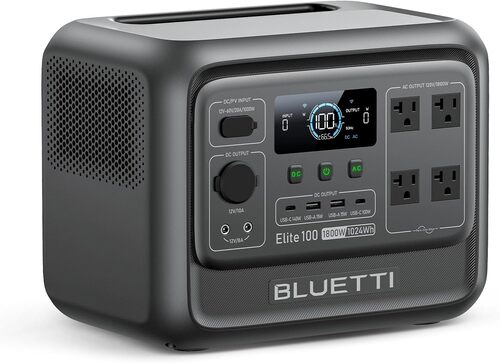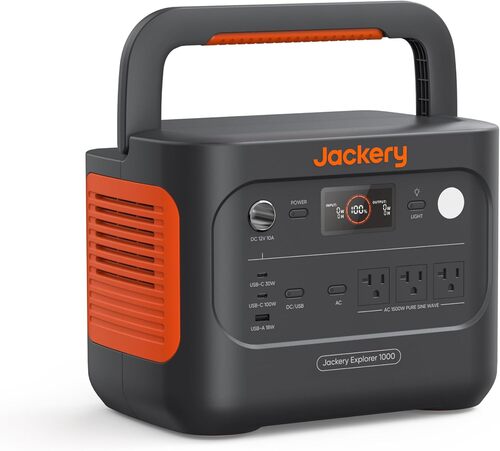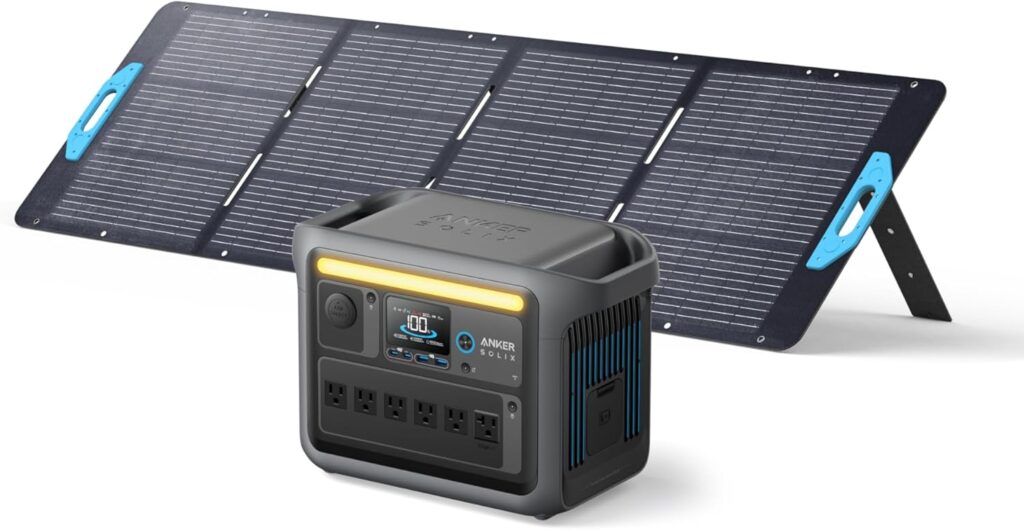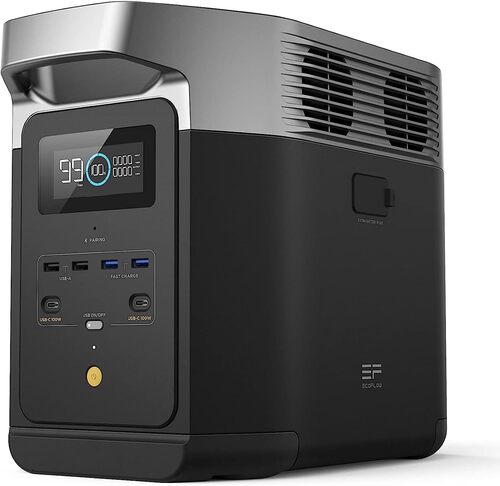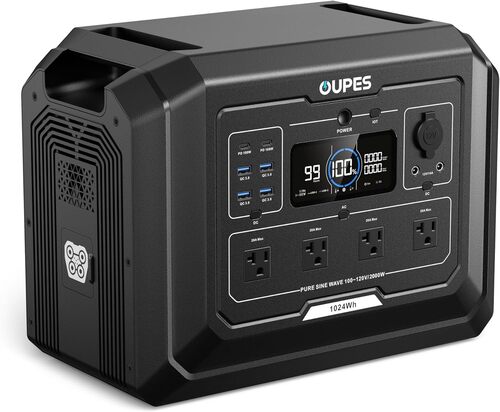
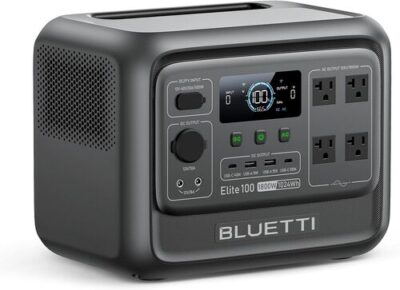
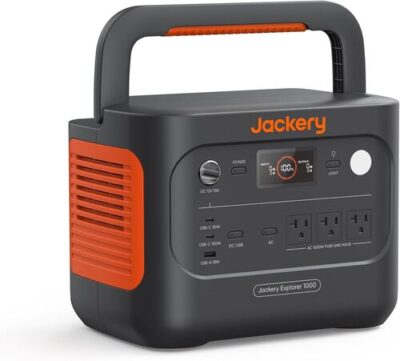
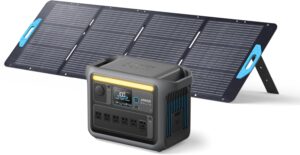
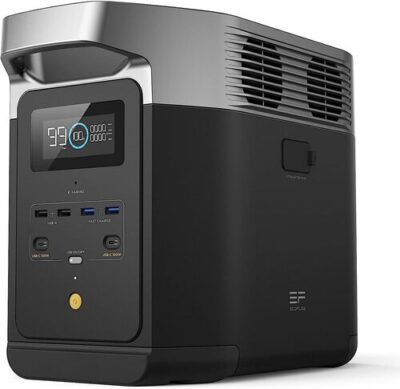
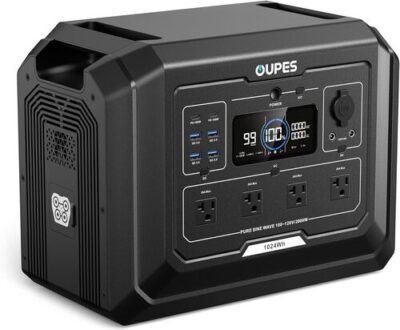
The best 1000Wh power station should be judged inside a narrow energy band. These five store 1,024–1,070Wh, so the useful differences are inverter output, recharge design, weight, expansion, solar input, and how the controls behave.
One kilowatt-hour is a practical middle class: large enough for a refrigerator, CPAP, communications, laptops, or short cooking tasks, yet often light enough for one person to move. It is not a guaranteed “one day” battery.
Turn 1kWh Into a Usable Energy Budget
| Average load | Ideal 1,024Wh arithmetic | Planning interpretation |
|---|---|---|
| 40W | 25.6 hours | Allow for conversion loss, reserve, and load variation |
| 100W | 10.2 hours | A useful overnight class for selected loads |
| 500W | 2.0 hours | Capacity becomes the limiting factor quickly |
| 1,500W | 41 minutes | Short tasks only, even when the inverter fits |
Use the runtime guide with a measured duty cycle. AC conversion, idle consumption, battery reserve, temperature, and aging reduce delivered runtime.
Inverter Ratings Separate Similar Batteries
The selected products range from 1,500W to 2,000W continuous output. That changes which coffee maker, microwave, tool, or compressor can start, but it does not create more watt-hours. Check simultaneous running load and the single hardest startup event.
Weight and Expansion Pull in Opposite Directions
A non-expandable 24-pound station can be the better travel tool. An expandable 28-pound product may be the better long-term system. Value expansion only if you have priced the exact battery and cable and can explain when the extra energy will be recharged.
Solar Recovery Is Not Equal Across 1kWh Models
| PV ceiling | Ideal energy-to-input ratio | Best planning role |
|---|---|---|
| 400W | About 2.7 battery-hours before loss | Portable-panel weekend use |
| 500–600W | About 1.7–2.1 hours | Balanced mobile recovery |
| 800–1,000W | About 1.0–1.3 hours | Fast recovery when a compatible array is practical |
Real solar time is longer. Verify PV voltage, current, connector, polarity, and whether optional adapter hardware is required. A high published ceiling has little value if the portable array is too large for the trip.
Step Down, Stay Here, or Step Up
- Step down when loads are electronics-only and every pound matters.
- Stay near 1kWh for weekend travel, CPAP plus electronics, or short essential-load backup.
- Step up when refrigeration, pumps, or multi-day runtime dominate.
- Add expansion only when the recharge plan scales with storage.
The 1kWh class is attractive because it forces a useful compromise. Select the output and recovery design that fits the job; nominal capacity is nearly a tie.
Compare Controls and Ports After the Core Math
Once energy and inverter fit are established, port layout can decide the winner. A high-watt USB-C port may remove a laptop charger. A dependable 12V socket can avoid inverter loss for DC equipment. Outlet spacing matters when bulky adapters block neighboring receptacles.
App control is useful for charge rates, reserve, monitoring, and firmware, but core operation should remain understandable locally. Test the station without Wi-Fi and document any setting needed for unattended backup.
Use a 24-Hour Commissioning Log
| Log item | Why it matters | Pass condition |
|---|---|---|
| Overnight percentage change | Reveals load plus idle use | Reserve remains above target |
| Hardest appliance start | Tests inverter behavior | Repeated starts without overload |
| Full wall recharge | Confirms charge mode and fan behavior | Fits the available time window |
| Solar or vehicle input | Tests mobile recovery | Stable input with the exact cables |
Because the batteries are nearly equal, this log exposes the operational differences marketing tables obscure.