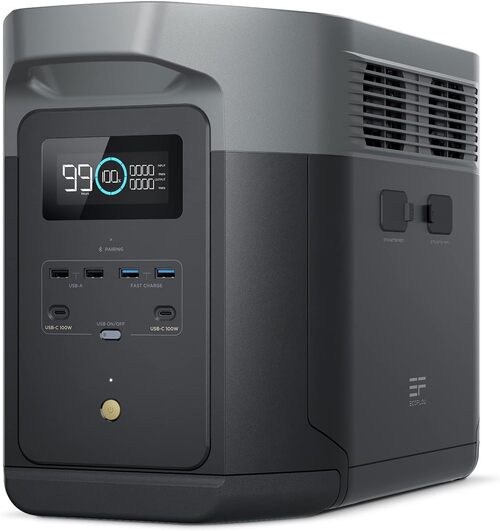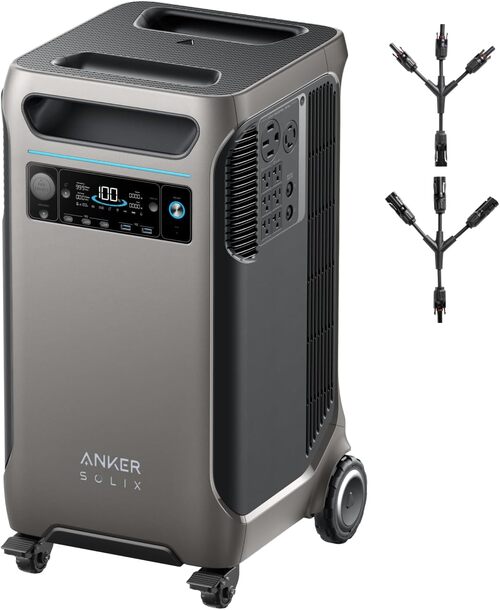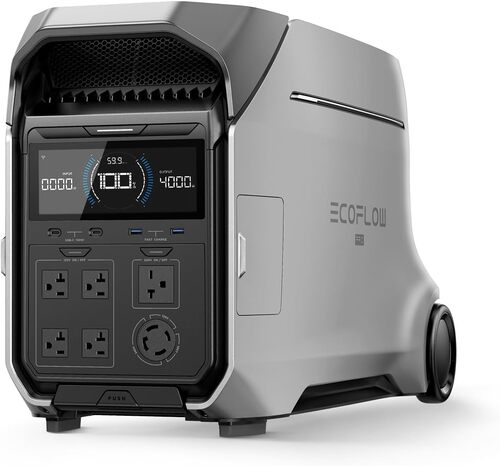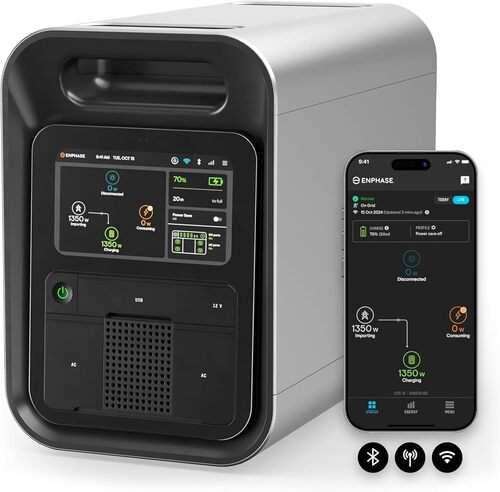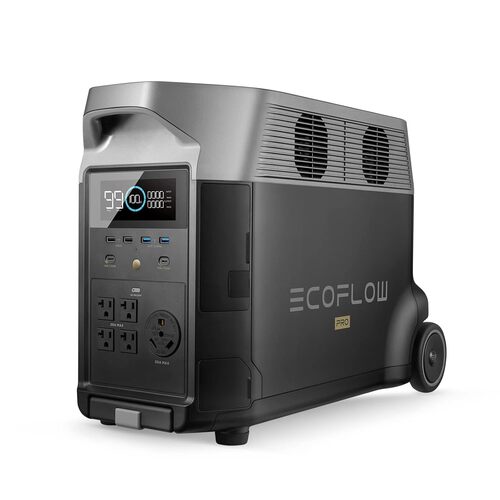
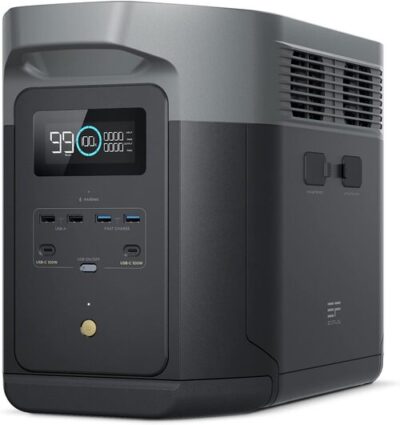
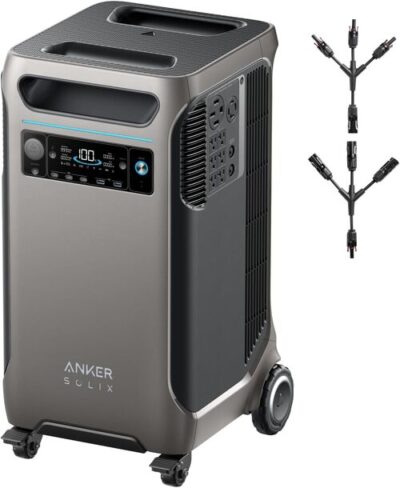
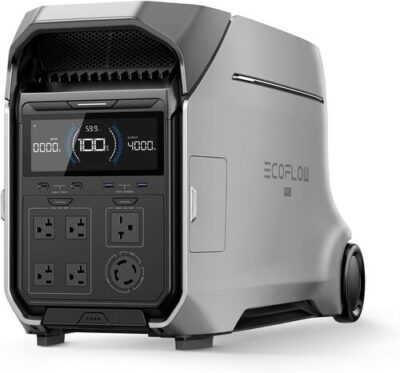
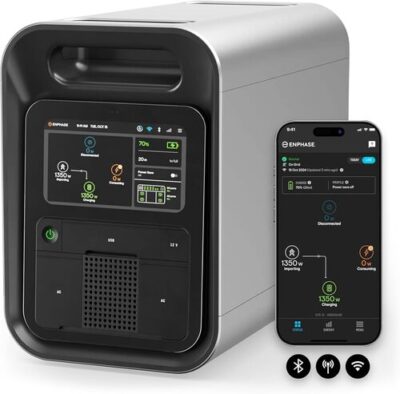
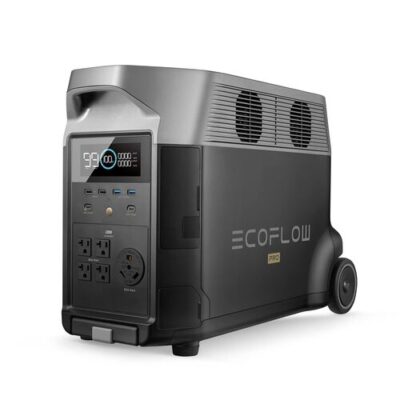
The best portable power station for home backup starts with a protected load list, not a promise to “run the house.” Refrigeration, communications, medical equipment, lighting, pumps, and selected cooking loads create very different demands.
Large stations can bridge a short outage or become part of an expandable system. Neither role is automatic. Transfer behavior, 120/240V topology, recharge sources, placement, and restoration after a depleted battery must all be designed and tested.
Build a Critical-Load Stack
| Priority | Example load | Planning issue |
|---|---|---|
| Life and safety | Medical device, alarm, communications | Transfer time, restart behavior, reserve |
| Food and water | Refrigerator, freezer, well or sump pump | Compressor or motor startup |
| Habitability | Lights, fans, selected HVAC controls | Average overnight energy |
| Convenience | Microwave, coffee maker, chargers | Load sequencing and high draw |
Measure each load over a realistic duty cycle. Refrigerator labels do not reveal cycling behavior, and pump running watts may hide a sharp startup event. The refrigerator backup guide shows how to separate inverter fit from runtime.
Transfer Time Is Only One UPS Question
A sub-10ms or 20ms rating does not guarantee every device stays online. Test the exact equipment, then allow the station to reach low-battery shutdown and restore utility power. Some systems require a manual output restart or app setting, which changes unattended backup value.
Match Receptacles and Voltage Before Watts
A 6,000W inverter is not a wiring plan. Confirm whether loads need 120V, 240V, split phase, TT-30, L14-30, NEMA 14-50, or a transfer interface. Never backfeed a home panel through a receptacle. Installed interconnection should be designed and commissioned by qualified professionals under applicable code.
Recovery Determines Multi-Day Value
| Recovery path | Strength | Planning limit |
|---|---|---|
| Wall AC | Fast and predictable before an outage | Unavailable during a sustained outage |
| Solar | Renewable daily harvest | Weather, array compatibility, seasonal yield |
| Generator | Works through poor solar weather | Fuel, ventilation, charging compatibility |
| Vehicle/EV source | Mobile fallback | Adapter, input rate, and vehicle energy budget |
Size storage and charging together. A 4kWh battery with a small portable panel can become a one-use reserve; a smaller battery with reliable daily recovery may serve a narrow load longer.
Expansion Is a Commitment, Not a Free Feature
Expansion can reduce replacement cost when needs grow, but it ties the system to model-specific batteries and cables. Price the intended final capacity today. Verify battery limits, warranty alignment, availability, and whether mixed ages or firmware versions create restrictions.
- Choose a dry, ventilated, protected location.
- Document cable routes and safe load order.
- Keep manuals, firmware versions, and serial numbers nearby.
- Run an outage drill twice a year.
- Retest after any firmware, battery, panel, or protected-load change.
A sump pump needs startup, cycle, outlet-wake, plumbing, and storm-horizon checks beyond a generic load list. Run the three-gate sump-pump backup check before adding it to the critical stack.
Commission the System Before Depending on It
Run the full priority stack, force a utility interruption, observe the hardest motor start, and verify every recharge source separately. Record battery percentage, input watts, output watts, fan behavior, and restoration. The correct home-backup pick is the one that passes that documented drill with reserve.
Create a One-Page Outage Operating Sheet
Household backup fails when several people make independent load decisions. Put the priority order, forbidden loads, minimum reserve, recharge trigger, and safe cable layout on one sheet near the station. Record which refrigerator, pump, medical device, or circuit was actually commissioned.
The sheet should also explain what happens at restoration. If AC output must be re-enabled after depletion, write that step clearly. If an app setting controls charge rate or backup reserve, preserve the setting and firmware version.
Distinguish Portable Backup From an Installed System
| Configuration | Strength | Boundary |
|---|---|---|
| Extension-cord essential loads | Simple and visible | Cable routing and limited outlets |
| Transfer equipment | Selected circuits operate normally | Professional design and code requirements |
| Expandable portable system | Storage can grow | Proprietary batteries and recovery burden |
| Fixed home battery | Integrated operation | Different product and installation class |
A portable station can be an excellent outage tool without pretending to be a permanent whole-home battery. Choose the configuration whose boundaries every household member can follow under stress.