Solar Power Picks logo with sun, solar panel, and green energy icon

  • Home
  • Reviews
  • Best
    • Best portable power stations
  • Guides
    • Portable Power Stations Guides
  • Comparisons
    • Portable Power Stations Comparisons
  • Calculator

Best Lightweight Portable Power Station: Small Enough to Carry, Useful Enough to Keep

OUR PICKS

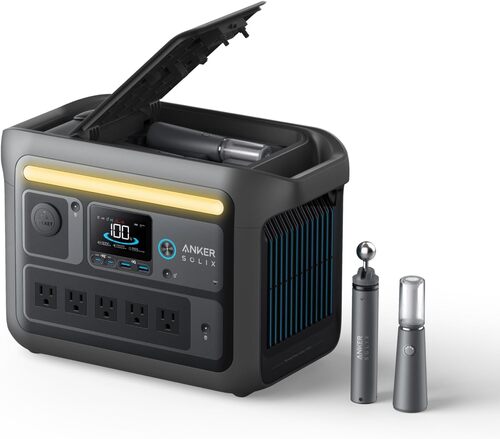
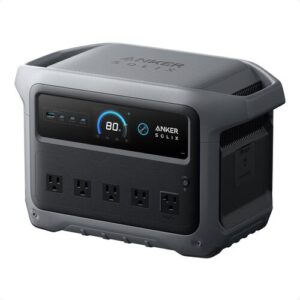
Anker SOLIX C300 Review: Compact LiFePO4 Power for Camping, Travel, and Short Outages

Best Overall Lightweight Pick

Anker SOLIX C300 Review: Compact LiFePO4 Power for Camping, Travel, and Short Outages

Check price at Amazon Jump to details
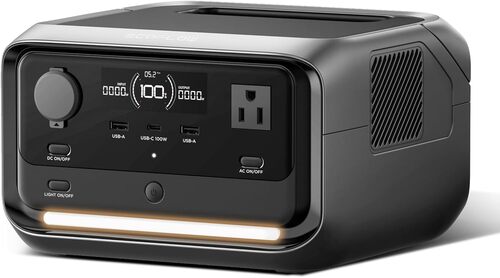
EcoFlow RIVER 3 Review: A Tiny LiFePO4 Backup for Routers, Laptops, CPAP, and Camping

Best Ultra-Light Pick

EcoFlow RIVER 3 Review: A Tiny LiFePO4 Backup for Routers, Laptops, CPAP, and Camping

Check price at Amazon Jump to details
GRECELL EB300 Review: Compact Backup Power for Camping, CPAP, and Small Outages

Best Budget Lightweight Pick

GRECELL EB300 Review: Compact Backup Power for Camping, CPAP, and Small Outages

Check price at Amazon Jump to details
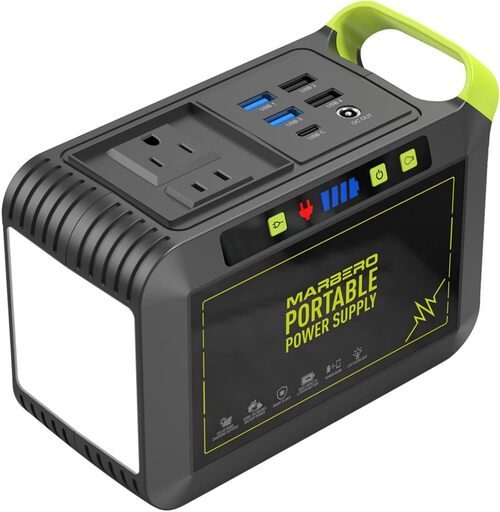
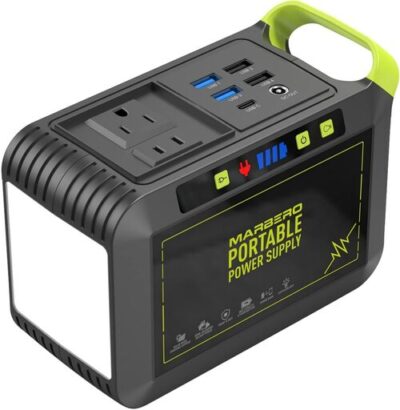
MARBERO M82 Review: A Tiny 88Wh Backup for Camping, Phones, and Short Outages

Best Tiny Backup Pick

MARBERO M82 Review: A Tiny 88Wh Backup for Camping, Phones, and Short Outages

Check price at Amazon Jump to details
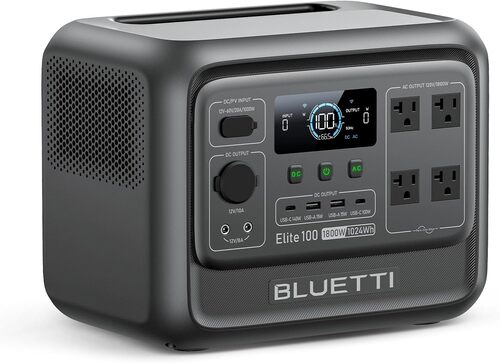
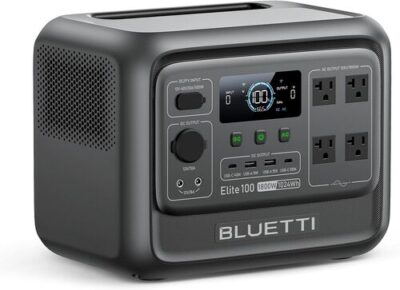
BLUETTI Elite 100 V2 Review: Fast 1kWh Backup Power That Travels Well

Best Lightweight 1kWh Upgrade

BLUETTI Elite 100 V2 Review: Fast 1kWh Backup Power That Travels Well

Check price at Amazon Jump to details

The best lightweight portable power station is the one you’ll actually carry — not the one with the biggest battery on paper. For full campsite picks beyond ultralight models, see portable power stations built for camping. For this category, the question isn’t just “how many watt-hours do I get?” It’s “will this still feel portable when I’m moving it from the house to the car, the car to camp, or the desk to a closet during an outage?”

A 7–10 lb power station is great for phones, laptops, routers, lights, fans, and short CPAP use. But once you add fridge backup, higher AC output, or a full 1kWh battery, the weight climbs fast. That’s the tradeoff buyers should understand before chasing capacity.

For this guide, the focus is simple: lightweight portable power stations that still feel useful in real life — not oversized home backup boxes pretending to be travel gear.

Worth Knowing: Lightweight does not mean backpacking-friendly. In this category, it usually means easy one-hand carry, easy car loading, and no awkward 40–60 lb battery box.

Lightweight Comparison

PickWhy It FitsCapacityAC OutputWeight
Anker SOLIX C300Best mix of portability, LiFePO4, USB-C, and useful AC output288Wh300W / 600W surgeabout 9 lb
EcoFlow River 3Lightest useful AC power station for laptops, routers, and small loads245Wh300W / 600W surge7.8 lb
GRECELL EB300Budget-friendly compact power for phones, laptops, and light backupverify listing: often 230–288Wharound 300–330W / 600W peakverify listing
MARBERO M82Tiny emergency backup for phones, lights, and low-watt gear88.8Wh80W / 120W peak3.2 lb
BLUETTI Elite 100 V2Best upgrade when lightweight still needs 1kWh capacity1,024Wh1,800W / 3,600W surge25 lb

Start With the Weight Class

Most buyers should choose by weight class first, then capacity.

Weight ClassBest ForGood Picks
Under 5 lbPhones, lights, emergency charging, tiny backup kitsMARBERO M82
7–10 lbLaptops, routers, lights, small fans, short CPAP use, car campingEcoFlow River 3, Anker SOLIX C300
Budget compactBasic backup when price matters more than battery chemistryGRECELL EB300
Around 25 lb1kWh backup, fridge support, solar-heavy camping, stronger inverter needsBLUETTI Elite 100 V2

Here’s the thing: the MARBERO M82 and BLUETTI Elite 100 V2 are both “portable,” but they solve completely different problems. One is a tiny backup box. The other is a compact 1kWh upgrade.

Don’t Confuse Tiny With Useful

The biggest mistake in this category is buying the smallest unit and expecting it to behave like a real backup station.

A tiny 88Wh station is good for:

  • Phones
  • LED lights
  • Small fans
  • Camera batteries
  • Emergency USB charging
  • Very low-watt AC devices

A 245–288Wh station is better for:

  • Laptops
  • Routers
  • Tablets
  • Small fans
  • Short CPAP use
  • Weekend device charging
  • Light car-camping backup

A 1kWh station is better for:

  • Fridge support
  • CPAP plus other devices
  • Longer outages
  • Stronger AC loads
  • Solar recharging setups
  • RV or car-camping comfort

Real-World Math: An 88Wh unit can charge phones and run lights, but a 60W CPAP load could drain that class very quickly. For overnight CPAP use, look closer to 300Wh minimum — and more if you use humidifier heat. See CPAP overnight backup sizing for watt-hour targets.

The Simple Buying Rule

If you only need emergency phone and light backup, choose the MARBERO M82.

If you want the lightest useful AC station, choose the EcoFlow River 3. Read our EcoFlow RIVER 3 mini backup review for weight and output details.

If you want the best balanced lightweight pick, choose the Anker SOLIX C300. Our Anker SOLIX C300 compact review explains the trade-offs.

If price matters most, look at the GRECELL EB300 — but verify the exact battery chemistry and capacity.

If you want real backup power without jumping into bulky home stations, choose the BLUETTI Elite 100 V2.

Common Lightweight Power Station Mistakes

  • Buying by weight only and ignoring Wh capacity
  • Assuming every “300W” station has the same battery size
  • Treating MARBERO M82 like a CPAP or fridge backup station
  • Calling budget models LiFePO4 when the listing doesn’t confirm it
  • Choosing a 25 lb station when all you need is phone charging
  • Choosing a tiny station when you actually need laptop or router backup
  • Ignoring USB-C PD output for laptop charging
  • Forgetting that AC inverter losses reduce usable runtime

What Is the Best Value?

The best value isn’t always the cheapest power station. A cheap 245Wh unit can be a smart buy for phones, lights, routers, and a laptop, but it becomes poor value if you expect it to run a fridge all night. For most buyers, value means getting enough capacity and output for the intended use without overpaying for a battery that’s too large, too heavy, or too awkward to carry.

Good value factors:

  • Price per Wh
  • Battery chemistry: LiFePO4 vs older lithium-ion
  • Warranty length
  • Output wattage: continuous plus surge
  • Solar input ceiling and connector ecosystem
  • Charging speed
  • Included cables
  • Expandability
  • Weight per usable Wh

Best Practice — Buy the lightest unit that still covers your actual load. A 7.8 lb station is great for laptops and routers, but a 23.8 lb 1kWh unit makes more sense if fridge backup is part of the plan.

Best Overall Lightweight Pick

Anker SOLIX C300 Review: Compact LiFePO4 Power for Camping, Travel, and Short Outages

Anker SOLIX C300 Review: Compact LiFePO4 Power for Camping, Travel, and Short Outages

Get it now:

Check latest price

What to know

  • 288Wh LiFePO4 battery handles phones, laptops, routers, lights, and short cooler use
  • 300W continuous AC output with 600W surge for small startup loads
  • Two 140W USB-C ports are excellent for modern laptops and fast charging
  • Recharges to 80% in about 50 minutes from AC power
  • About 9 lb with a fixed handle — easy for car camping and travel

Best if

  • You want one compact lightweight power station for camping, travel, and short outages
  • You value fast wall charging and strong USB-C laptop support
  • You like app control, LiFePO4 cycle life, and a polished small-unit feel

Skip if

  • You need multi-day appliance backup or full-size refrigerator runtime
  • You’re trying to run kettles, microwaves, heaters, or hair dryers
  • You want something light enough for backpacking miles from the car

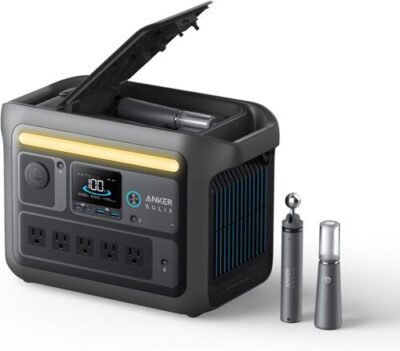
The Anker SOLIX C300 is the best overall lightweight pick because it balances real portable power, useful ports, and fast charging without jumping into bulky 1kWh territory. It’s built for campers, remote workers, router backup, short outages, and anyone who wants a small LiFePO4 portable power station that still feels polished.

Here’s why that matters: 288Wh, 300W AC output, two 140W USB-C ports, app control, and a 9 lb body make the Anker unit easy to carry but still useful for laptops, phones, lights, drone batteries, and small coolers.


Just know it’s not a kitchen-appliance battery. Keurigs, microwaves, heaters, and long fridge backup are the wrong job.

Capacity288Wh
AC Output300W continuous, 600W surge (pure sine reported by customers)
Solar Input100W max via XT60-style solar input
Weight9 lb (4.1 kg)
BatteryLiFePO4 (3,000 cycles claimed)
Best Ultra-Light Pick

EcoFlow RIVER 3 Review: A Tiny LiFePO4 Backup for Routers, Laptops, CPAP, and Camping

EcoFlow RIVER 3 Review: A Tiny LiFePO4 Backup for Routers, Laptops, CPAP, and Camping

Get it now:

Check latest price

What to know

  • 245Wh LiFePO4 battery is sized for light electronics and short backup jobs
  • 300W AC output, with X-Boost for select higher-startup devices
  • Sub-8 lb body makes it one of the easiest stations to carry
  • Fast AC recharge gets it ready again in about an hour
  • Better for routers, laptops, lights, and phones than full-size appliances

Best if

  • You want the lightest useful power station for everyday carry and car camping
  • You’re powering phones, laptops, lights, routers, or a small fan
  • You like fast recharge in a compact LiFePO4 unit

Skip if

  • You need a 1kWh-class battery for fridges, CPAP, or longer outages
  • You expect meaningful runtime from coffee makers, kettles, or heaters
  • You’d rather have more ports, more solar input, or expandable runtime

The EcoFlow River 3 earns the best ultra-light pick because it keeps the power-station idea small enough that you’ll actually grab it. It’s made for people who want a lightweight portable power station for phones, laptops, Wi-Fi gear, lights, small fans, and quick camping setups — not a heavy battery box.

The spec-to-benefit story is simple: a roughly 245Wh LiFePO4 battery, 300W AC output, fast AC recharge, and sub-8 lb carry weight make the EcoFlow River 3 feel closer to a practical travel battery than a storage-closet backup unit.


The catch: capacity is limited. It’s great for light essentials, but not for long fridge backup or high-watt appliances.

Not sure the base River 3 is enough? Compare EcoFlow River 3 and River 3 Plus side by side.

Capacity245Wh
AC Output300W continuous, 600W X-Boost
Solar InputUp to 110W via EcoFlow solar input / XT60-style adapter
Weight7.8 lb (3.55 kg)
BatteryLiFePO4 (3,000 cycles to 80% claimed)
Best Budget Lightweight Pick

GRECELL EB300 Review: Compact Backup Power for Camping, CPAP, and Small Outages

GRECELL EB300 Review: Compact Backup Power for Camping, CPAP, and Small Outages

Get it now:

Check latest price

What to know

  • 288Wh capacity covers phones, laptops, routers, lights, fans, and careful CPAP use
  • 330W pure-sine AC output is safer for sensitive electronics
  • 7.3 lb carry weight works well for camping, booths, and emergency kits
  • Includes USB-C PD, USB-A, DC5521, car output, wireless charging, and LED light
  • Solar charging works through MPPT with an MC4-to-7909 cable

Best if

  • You want an affordable lightweight station for small electronics and camping gear
  • You’re powering laptops, phones, routers, lights, fans, or CPAP with efficient settings
  • You prefer lots of ports without paying for app control

Skip if

  • You need confirmed LiFePO4 chemistry and published long-cycle durability
  • You plan to run a fridge for long outages or any 1000W-plus appliance
  • You want fast AC recharge, firmware updates, or UPS-style smart features

You don’t need a premium-brand power station to cover phones, lights, laptops, routers, and careful CPAP use — the GRECELL EB300 proves that. It fits the best budget lightweight pick because it gives buyers a 288Wh station, pure-sine AC output, USB-C PD, DC ports, wireless charging, and a built-in light at a very easy-to-carry size.

GRECELL succeeds because the port mix is unusually broad for a budget unit. Worth knowing, the MC4-to-7909 solar cable also makes third-party panel pairing feel less locked down than some cheaper stations.


One thing: battery chemistry and cycle life aren’t clearly stated, so daily heavy cycling is not its strongest argument.

Capacity288Wh
AC Output330W continuous, 600W surge (pure sine)
Solar InputNot specified; MPPT charging via MC4-to-7909 cable
Weight7.3 lb (3.3 kg)
BatteryLithium battery (exact chemistry and cycle life not specified)
Best Tiny Backup Pick

MARBERO M82 Review: A Tiny 88Wh Backup for Camping, Phones, and Short Outages

MARBERO M82 Review: A Tiny 88Wh Backup for Camping, Phones, and Short Outages

Get it now:

Check latest price

What to know

  • 88Wh battery is best for phones, lights, routers, and short laptop top-offs
  • 80W AC output handles light-duty electronics, not appliances
  • Very small body fits easily in a camp box, car, or work bag
  • Built-in LED light is useful for outages, tents, and roadside backup
  • Solar charging works best with compatible MARBERO 30W or 60W panels

Best if

  • You want a tiny emergency battery for phones, lamps, routers, and travel gear
  • You like having AC outlets in a very small backup unit
  • You prefer simple buttons and a built-in light over apps and settings

Skip if

  • You need enough capacity for a fridge, CPAP, or full workday laptop setup
  • You’re plugging in heaters, kettles, coffee makers, hair dryers, or vacuums
  • You want detailed watt readouts, strong USB-C PD, or rated UPS behavior

The MARBERO M82 is the best tiny backup pick because it solves a different problem than the bigger stations here: keeping small essentials alive without taking up real space. It’s built for glove boxes, nightstands, backpacks, camp tables, and emergency kits where phones, lights, routers, baby monitors, and small accessories matter more than appliance runtime.

Here’s what owners notice first: the MARBERO is easy to carry, simple to use, and handy when a normal USB power bank isn’t enough because you still need AC outlets or a built-in light.


Not ideal if you’re shopping for fridge backup, CPAP confidence, or high-watt output. The 88Wh battery is tiny.

Capacity88Wh
AC Output80W continuous, 120W peak
Solar InputUp to 60W with compatible MARBERO panel via barrel-style DC input
Weight2.3 lb (1.04 kg)
BatteryLithium-ion (cycle life not specified)
Best Lightweight 1kWh Upgrade

BLUETTI Elite 100 V2 Review: Fast 1kWh Backup Power That Travels Well

BLUETTI Elite 100 V2 Review: Fast 1kWh Backup Power That Travels Well

Get it now:

Check latest price

What to know

  • 1024Wh LiFePO4 battery gives much longer runtime than 250-300Wh units
  • 1800W AC output handles fridges, CPAP, laptops, routers, and many appliances
  • 1200W AC charging can refill the unit in about 70 minutes
  • 1000W solar input gives it serious off-grid recharge potential
  • 25 lb body is portable for 1kWh, but not truly lightweight

Best if

  • You want 1kWh-class runtime without buying a huge home-backup station
  • You’re powering a fridge, CPAP, router, laptop, cooler, or short outage setup
  • You value fast AC charging, high solar input, and UPS-style backup

Skip if

  • You need a sub-10 lb unit for quick errands, backpacks, or tiny camp kits
  • You want true expansion batteries for longer multi-day backup
  • You dislike app setup, firmware checks, or fan noise during fast charging

The BLUETTI Elite 100 V2 is the best lightweight 1kWh upgrade for buyers who like the idea of compact power but don’t want tiny-runtime compromises. It’s for car campers, road-trip users, home-office backup buyers, and CPAP or fridge users who need a real 1024Wh battery without moving into giant home-backup gear.

BLUETTI Elite 100 V2 stands out because 1800W AC output, fast 1200W AC charging, 1000W solar input, Wi-Fi, Bluetooth, and UPS support all land in a 25 lb body. That’s still movable by one person.


To be fair, this is lightweight only for a 1kWh-class station. It’s not a small carry-anywhere battery.

Capacity1024Wh
AC Output1800W continuous, 3600W surge
Solar Input1000W max via BLUETTI PV input / included solar charging cable
Weight25 lb (11.3 kg)
BatteryLiFePO4 (4,000+ cycles claimed)

Product Comparison

Feature Anker SOLIX C300 Review: Compact LiFePO4 Power for Camping, Travel, and Short Outages EcoFlow RIVER 3 Review: A Tiny LiFePO4 Backup for Routers, Laptops, CPAP, and Camping GRECELL EB300 Review: Compact Backup Power for Camping, CPAP, and Small Outages MARBERO M82 Review: A Tiny 88Wh Backup for Camping, Phones, and Short Outages BLUETTI Elite 100 V2 Review: Fast 1kWh Backup Power That Travels Well
Product Image
Anker SOLIX C300 Review: Compact LiFePO4 Power for Camping, Travel, and Short Outages
EcoFlow RIVER 3 Review: A Tiny LiFePO4 Backup for Routers, Laptops, CPAP, and Camping
GRECELL EB300 Review: Compact Backup Power for Camping, CPAP, and Small Outages
MARBERO M82 Review: A Tiny 88Wh Backup for Camping, Phones, and Short Outages
BLUETTI Elite 100 V2 Review: Fast 1kWh Backup Power That Travels Well
Price $299.99 $229.99 $239 $196.32 $169.99 $149.99 $109.99 $69.99 $569 $449
Rating
4.6 / 5
4.2 / 5
4.4 / 5
4.3 / 5
4.5 / 5
Category Portable Power Stations Portable Power Stations Portable Power Stations Portable Power Stations Portable Power Stations
Brand Anker EF ECOFLOW GRECELL MARBERO BLUETTI
Model / SKU Anker SOLIX C300 / A1722 (ASIN: B0D62GMQ3F) EcoFlow RIVER 3 / EFR705 (ASIN: B0DB1S36YP) EB300 / T300 (ASIN: B0B286D2V7) M82 (ASIN: B08G1KB88B) Elite 100 V2 (ASIN: B0F42CSQWG)
Battery capacity 288 Wh 245 Wh 288 Wh 88 Wh 1024 Wh
Battery chemistry LiFePO4 (LFP) LiFePO4 (LFP) Lithium battery (exact chemistry not specified) Lithium-ion (exact chemistry not specified; LiFePO4 not advertised) LiFePO4 (LFP)
Cycle life 3,000 cycles (claimed) 3,000+ cycles (claimed) Not specified Not specified 4000+ cycles (claimed)
Expandable battery No No No No No (no true expansion battery port listed)
AC output 300 W continuous (customer testing reports pure sine wave) 300 W continuous (pure sine wave based on owner feedback) 330 W continuous (pure sine wave) 80 W continuous (pure sine wave not specified) 1800 W continuous (inverter output; pure sine wave not specified in provided data)
Surge output 600 W peak 600 W peak / X-Boost 600 W peak 120 W peak 3600 W peak (2700W lifting power also listed)
AC outlets 3 × 120V AC outlets 2 × 120V AC outlets 1 × 110V AC outlet 2 × AC outlets 4 × 120V AC outlets
USB-C ports 3 × USB-C (2 × 140W two-way, 1 × 15W) 1 × USB-C (100W PD output; no USB-C input) 2 × USB-C (1 × 60W PD, 1 × 18W PD) 1 × USB-C (PD wattage not specified) Not specified (customer feedback mentions USB-C and 140W Type-C output)
USB-A ports 1 × USB-A (12W) 2 × USB-A 2 × USB-A (QC 3.0, 18W) Multiple USB-A ports (exact count and wattage not fully specified) Not specified (customer feedback mentions USB outputs)
12V car socket 1 × 12V car socket (120W listed) 1 × 12V/10A car port 1 × 12V car port Not included as a built-in socket; cigarette-lighter-style output cable included Yes (customer feedback mentions a car cigarette-style output)
Max solar input 100 W (11–28V, 8.2A; XT60-style solar input mentioned by users) 110 W (MPPT, EcoFlow solar input cable / adapter may be needed) Not specified (built-in MPPT; listing includes MC4-to-7909 cable; manual feedback mentions 60W, 80W, 100W, or 120W panels) Up to 60 W with MARBERO dedicated panel (station max not separately specified) 1000 W (MPPT / solar charging cable included; connector details not specified)
Max AC input 330 W (fast AC charging; customer reports around 320W+ input) Approx. 250 W (estimated from 245Wh / 1-hour fast recharge) Not specified (estimated around 50-60W from customer recharge times) ~50 W estimated (based on 0-80% in about 2 hours claim) 1200 W (TurboBoost AC charging)
AC recharge time 80% in about 50 minutes; roughly 1.1 hours full in fast AC mode About 1 hour Not specified (customers commonly describe multi-hour wall charging) 0-80% in about 2 hours claimed; full recharge often reported around 3-6 hours About 70 minutes full charge (45 minutes to 80% also listed)
Solar recharge time About 3.5–4.5 hours with a 100W panel in strong sun About 2.6 hours with 110W solar input (ideal sun) Not specified (depends on panel size, sun, and cable setup) Roughly one sunny afternoon with compatible panel, depending on sun and panel wattage About 70 minutes at maximum 1000W solar input under ideal conditions
UPS / EPS support Yes — UPS-style use reported (firmware/output-memory behavior matters for unattended restart) Yes — under 20ms switchover (EPS-style backup) Not specified (do not treat as a computer-grade UPS unless confirmed by seller) No rated UPS / EPS support specified (pass-through charging claimed) Yes — ≤10ms UPS backup (check Eco mode before critical use)
App support Yes — Anker app with Wi-Fi and Bluetooth Yes — EcoFlow app (Wi-Fi + Bluetooth) No app No app Yes — Wi-Fi and Bluetooth app control
Built-in light Yes — front LED light bar No Yes — LED light with SOS mode Yes — multi-level LED light with SOS mode No (not listed; owners mention missing it)
Weight 4.1 kg / about 9 lb 7.8 lb 7.3 lb 1.04 kg / 2.3 lb listed (bullet copy also claims 3.2 lb) 25 lb
Best for Weekend car camping, portable fridge use, drone/laptop charging, routers, CPAP backup, classroom power, short outages Wi-Fi router backup, laptops, CPAP without humidifier, car camping, road trips, mini fridges, small lights, mobile work, short outages Camping, CPAP with efficient settings, phones, tablets, laptops, Wi-Fi router backup, small fans, LED lights, air mattresses, drone batteries, vendor booths, and short power outages Camping lights, phones, tablets, small laptops, routers, air mattress pumps, travel, short outages, and emergency kits Weekend camping, road trips, fridge backup, CPAP backup, home office UPS, routers, laptops, portable coolers, radios, and short outages
Buy Now View Deal View Deal View Deal View Deal View Deal

Bottom Line

If you want the best lightweight portable power station for most small-device jobs, start with the Anker SOLIX C300. It has the best mix of capacity, LiFePO4 chemistry, USB-C power, AC output, and everyday portability.

If you want the lightest useful AC option, the EcoFlow River 3 is the cleaner pick. If you want the cheapest compact option, GRECELL EB300 can work as a budget choice, but verify the exact specs before publishing or buying. For tiny emergency backup, the MARBERO M82 is the smallest pick here. And if lightweight still needs to mean real 1kWh power, the BLUETTI Elite 100 V2 is the upgrade.

Frequently Asked Questions

What is the best lightweight portable power station?

The Anker SOLIX C300 is the best lightweight portable power station for most buyers in this lineup because it balances 288Wh capacity, 300W continuous AC output, LiFePO4 chemistry, fast charging, strong USB-C support, and a 9 lb carry weight. If you want the lightest useful option, the EcoFlow RIVER 3 is easier to carry at 7.8 lb. If you want lightweight 1kWh power, the Jackery Explorer 1000 v2 is the better fit.

How light should a lightweight portable power station be?

For small-device use, lightweight usually means under 10 lb. That class works well for phones, laptops, routers, lights, and short CPAP or fan use. For more serious backup, lightweight can mean under 25 lb, especially if you want around 1,000Wh of capacity. The Jackery Explorer 1000 v2 and BLUETTI Elite 100 V2 are not tiny, but they are still light for 1kWh-class LiFePO4 power stations.

Can a lightweight portable power station run a CPAP overnight?

Yes, but size matters. A CPAP without heated humidifier usually pulls around 30–60W, so a 245–299Wh station may cover one short night depending on settings and reserve. For more confidence, especially if you use a heated hose or humidifier, a 500Wh to 1,000Wh station is safer. Using a DC CPAP cable can stretch runtime because it avoids AC inverter losses.

Can a lightweight portable power station run a refrigerator?

Sometimes. Small 245–299Wh stations can run a mini fridge or portable cooler for a limited time, but they are not ideal for full-size refrigerator backup. For a real fridge, look at the Jackery Explorer 1000 v2 or BLUETTI Elite 100 V2 because they offer around 1kWh of capacity and much stronger AC output. Also check startup surge, since fridge compressors can spike above their normal running watts.

Is LiFePO4 worth it in a small power station?

Yes, for most buyers. LiFePO4 batteries usually last far longer than older lithium-ion packs, often around 3,000 cycles or more depending on the model. That matters if you use the station for weekly camping, router backup, CPAP support, or outage prep. The tradeoff is weight, but in this lineup even the smaller LiFePO4 options stay manageable at roughly 7.8 to 14.6 lb.

What can a 300Wh portable power station run?

A 300Wh-class portable power station is best for phones, laptops, tablets, routers, lights, camera batteries, small fans, drone batteries, and some short CPAP use. It can run a mini fridge or small cooler for a limited time, but runtime depends heavily on cycling and ambient temperature. It is not a good match for microwaves, kettles, space heaters, hair dryers, or long full-size fridge backup.

Are solar panels worth it for lightweight power stations?

Yes if you camp often or want off-grid top-ups. For small stations like the Anker SOLIX C300 or EcoFlow RIVER 3, a 100W panel can be enough for phones, lights, and light laptop use. For 1kWh stations, stronger solar input matters more. The BLUETTI Elite 100 V2 stands out because its listed 1,000W solar input is unusually strong for a compact 1kWh model.

Can a lightweight portable power station run a microwave or coffee maker?

Only the larger picks. Small 245–299Wh stations do not have enough continuous AC output for most microwaves or coffee makers. The Jackery Explorer 1000 v2 and BLUETTI Elite 100 V2 have stronger inverters, so they can handle some kitchen appliances for short bursts. Still, high-draw heat appliances drain batteries fast, so they are better for occasional use than regular cooking.

×

About Solar Power Picks

Portable Solar Power, Backup Power, and Off-Grid Gear Guides

Your trusted source for honest, in-depth product reviews and comparisons.

Quick Links

  • Best Picks
  • Reviews
  • Guides
  • Comparisons
  • Calculator
  • Privacy policy
  • Favorites

Categories

  • Portable Power Stations

© 2026 Solar Power Picks. All Rights Reserved.

We may earn a commission when you purchase through links on our site. Learn more