BLUETTI Apex 300 Review: 240V Backup Power for Homes, RVs, and Cabins
At a Glance
KEY FEATURES
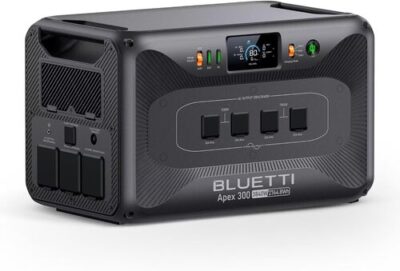
- Battery: 2764.8Wh, LiFePO4, 6,000+ cycles to 80% capacity claimed
- AC output: 3840W continuous, 7680W surge / power lifting; pure sine wave not specified in the provided listing
- Ports: 6 AC outputs, total 14 ports claimed; USB-C, USB-A, 12V, and DC port counts not specified in the provided listing
- Recharge: AC 80% in 45 minutes claimed, solar up to 2400W built-in and 6400W expanded, car charging included
- Smart features: smart app control, pass-through support, UPS backup with ≤10ms switchover claimed
- Best for: home backup, well pumps, RV transfer setups, cabins, outage prep, and off-grid power systems
PROS
- Native simultaneous 120V/240V output from one station.
- 2,764.8Wh LFP base with 3,840W total AC output.
- Two independent 1,200W-class solar inputs.
- RV and heavy-duty receptacles support varied system roles.
CONS
- 3,840W at 240V is about 16A, below many large-appliance circuits.
- Roughly 83.8 lb before expansion or integration gear.
- Adapters and home circuits require exact wiring and code checks.
- Small exact-model owner pool limits broad reliability conclusions.
Editor's Choice
Based on exact documentation and qualitative exact-ASIN owner evidence; no hands-on test or population-rate claim
⚡ Can the BLUETTI Apex 300 Run It?
Choose a common device and see the estimated runtime, whether the inverter can handle it, and how long the power station may take to recharge.
Picture this: the lights go out, the fridge starts warming up, and your well pump or RV setup needs more than a small camping battery can give. At the same time, you don’t want a gas generator growling outside every time the grid blinks.
The Apex 300 is not a grab-and-go camping brick. It’s more of a serious backup box for people wiring into transfer switches, running RV appliances, powering cabins, or building a quieter outage setup that can grow with extra batteries and solar.
The BLUETTI Apex 300 solves a specific problem: one unit can produce 120V and 240V output without pairing two stations. That is valuable for selected wells, RV systems, workshop equipment, emergency EV charging, and home circuits. The specification that prevents overreach is 3,840W total AC output. A receptacle shape or a 240V label does not promise the amperage demanded by a range, large HVAC system, dryer, or EV charger.
Exact-product owner reports concentrate on solar, support, app and UPS operation, 240V/high-load use, runtime, shipping, and faults. Some describe successful system roles; others identify setup and remedy friction. These records establish acceptance-test priorities, not a failure frequency. The Apex should be commissioned as electrical infrastructure, not simply unboxed as a large battery.
| Load question | Record before connection | Apex 300 boundary |
|---|---|---|
| Voltage | 120V or 240V, split phase, equipment tolerance | Correct mode and receptacle must be selected |
| Current | Continuous amps and startup amps | 3,840W total is roughly 16A at 240V |
| Connector | Plug, neutral, grounding, adapter wiring | Physical fit alone proves nothing |
| Duration | Duty cycle and daily watt-hours | 2,764.8Wh base before losses and reserve |
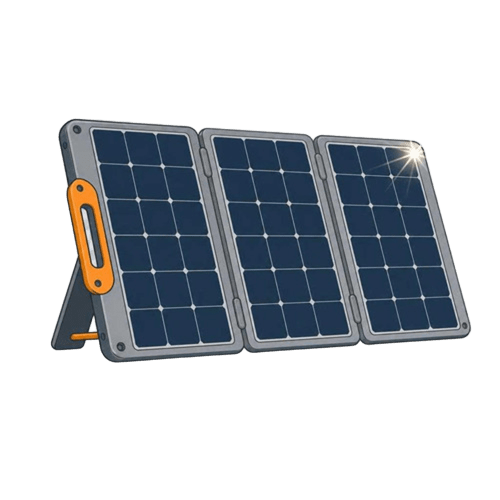
The two solar inputs are each documented for up to 1,200W and 12–60V at 20A, subject to the exact manual and configuration. Treat them as independent MPPT lanes. Calculate each string’s cold-corrected Voc and current, document connector and polarity, and avoid merging their ceilings into an imaginary single input. Two different array orientations can improve daily harvest, but only after both designs are electrically valid.
At about 83.8 pounds, the Apex 300 is transportable with planning, not casual carry. Check stairs, lift height, ventilation, floor location, cable protection, and restraint. Expansion batteries increase duration but also make the system more stationary. Measure the base mission first; otherwise expansion can become an expensive response to an undefined load.
Any home-circuit connection raises questions about neutral-ground behavior, overcurrent protection, transfer isolation, permits, and local code. Use listed compatible hardware and qualified help where required. Never backfeed a home through an improvised cord.
Evidence-led verdict: the Apex 300 is compelling when a measured 240V load fits its 3,840W envelope and native split-phase output avoids a two-unit system. Buyers chasing a 240V headline without a circuit and energy plan should stop before ordering.
Apex 300: Native 240V Is Useful Only With a Circuit Plan
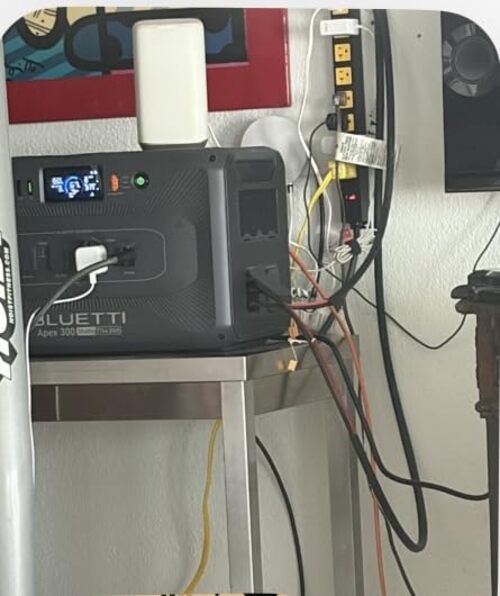
If you want a quiet 120V/240V backup system for home circuits, RV gear, a cabin, or a well pump, the Apex 300 makes a lot of sense. It has the output to run appliances most smaller power stations cannot touch, and customers using transfer boxes or off-grid setups tend to sound pleased once the system is configured correctly. That said, the BLUETTI Apex 300 review takeaway is not all rosy: it’s heavy, the documentation could be clearer, solar voltage compatibility needs checking, and customer support complaints are too common to ignore.
An 83.8-Pound System Core With Real Outlet Ambitions
The Apex 300 has the solid heft you expect from a 2764.8Wh LiFePO4 power station. You’re not tossing this into a backpack or casually moving it from room to room every day.
Worth knowing, the listing shows 66.14 lb, but several owners describe it as feeling extremely heavy in real life. One buyer wished it had wheels, and that’s a fair gripe for a home-backup unit that may need to move between a garage, RV, shelf, porch, or transfer-box area.
In practice, this power station fits better as a semi-stationary backup hub than a portable camping toy. You can carry it, but a small cart is the smarter move if you’re not comfortable lifting a big battery with both hands.
Buyer Heads-Up — Treat this like a compact home-backup battery, not a casual portable charger. If you plan to move it often, budget for a sturdy cart.
The body layout seems built around power delivery rather than travel convenience. The 6 AC outputs and dual-voltage support are the stars here, while the listing is less clear about USB-C, USB-A, and smaller DC port details.
Schedule 2,764.8Wh Across 120V and 240V Loads
The Apex 300 has a 2764.8Wh battery — enough to run serious outage loads, but not enough to ignore basic power math. In real use, owners report using it for refrigerators, freezers, routers, computers, cabin loads, RV equipment, and peak-rate energy shifting. Fridge cycling math is modeled in our powering a full-size refrigerator guide.
Here’s the thing: AC output always loses some energy through the inverter. Using a realistic 0.85 AC efficiency and a 10% battery reserve, you’re working with roughly 2,115Wh of practical AC energy.
| Device | Typical Power Draw | Estimated Runtime | Realistic with Margin |
|---|---|---|---|
| Smartphone charging | 10-15Wh per charge | 175-210 charges | About 150 charges |
| Laptop charging | 50-80Wh per charge | 26-42 charges | About 25-30 charges |
| Wi-Fi router | 10-20W | 105-210 hours | About 95-130 hours |
| CPAP, no humidifier | 30-60W | 35-70 hours | About 30-45 hours |
| Smart TV + router + computer | 100-130W combined | 16-21 hours | About 14-18 hours |
| Mini fridge | 40-80W cycling | 26-52 hours | About 22-35 hours |
| Full-size refrigerator | 100-200W cycling | 10-21 hours | About 9-15 hours |
| Electric blanket | 50-80W | 26-42 hours | About 22-32 hours |
| Drone batteries | 60-100Wh per pack | 21-35 charges | About 18-28 charges |
| 1500W kettle | 1500W | About 1.4 hours total | Brief use only |
Real-World Math — At 0.85 AC efficiency, the listed 2764.8Wh battery delivers roughly 2,350Wh through the AC outlets. Subtract a 10% reserve, and you’re working with about 2,115Wh of practical AC energy.
That lines up with owner feedback. One buyer said it ran a smart TV, router, and computer for about 18 hours, which is believable for a steady mid-size load.
On the flip side, heavy appliances eat capacity fast. A microwave, toaster, kettle, washer motor, pump, or AC unit may run fine, but it can drain a big battery much faster than a fridge or router.
3,840W Total Does Not Mean Every 240V Appliance Fits
In practice, owners report running a well pump, washer, gas dryer, cross-cut saw, microwave, toaster, fridge, freezer, and RV equipment. The catch is that high-output systems still need correct wiring, proper breakers, and realistic expectations around startup surge.
| Device | Typical Draw | This Unit? |
|---|---|---|
| Phone / tablet | 10-25W | Easy |
| Laptop | 50-100W | Easy |
| LED lights | 5-15W each | Easy |
| Wi-Fi router | 10-20W | Easy |
| CPAP, no humidifier | 30-60W | Easy |
| CPAP with humidifier | 50-90W | Easy |
| Mini fridge | 40-80W cycling | Easy |
| Full-size refrigerator | 100-200W cycling, higher startup surge | Easy |
| Microwave, 700W class | Around 1100W draw | Easy |
| Toaster | 1000-1500W | Easy |
| Electric kettle | 1500W | Easy, but drains fast |
| Washer | 500-1200W depending on cycle | Easy |
| Gas dryer controls / motor | Usually under 1000W | Easy |
| Window AC, 5000 BTU | 500W running, 1000W+ surge | Easy to Borderline |
| Well pump | Varies widely | Borderline without checking surge |
| 4500W load | 4500W+ | Briefly only |
Worth Knowing — Continuous output is the real ceiling. The 7680W surge or lifting rating is for short bursts or special load handling, not for running every high-watt appliance all day.
This is where the Apex 300 earns its place. Most portable power stations are fine for a fridge and laptop, but they get nervous around pumps, tools, and RV circuits.
To be fair, one owner said it would short around 4,500W. That does not erase the strong output story, but it does mean you should not treat the 7680W number like a normal continuous rating.
Two 1,200W Solar Inputs Change Array Design
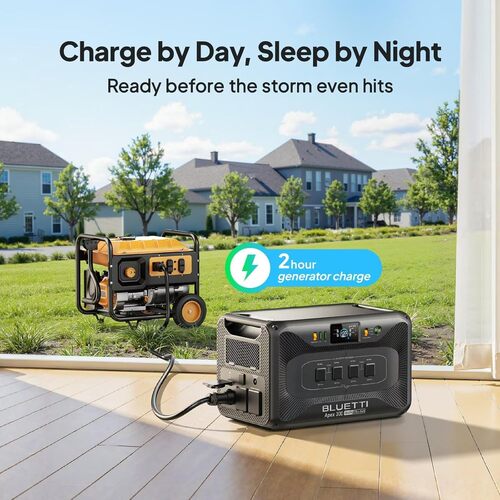
The Apex 300 supports AC charging, solar charging, car charging, lead-acid charging, and generator charging. For home backup, that flexibility matters because you may need to recharge between outage windows or top off from a generator before the next storm band hits.
The manufacturer documentation states 80% AC recharge in 45 minutes and mentions TurboBoost 2000W fast charging. At the same time, real charging speed depends on settings, temperature, firmware, battery level, and whether you’re charging while running loads.
| Charging Mode | Time from Empty | Noise Level |
|---|---|---|
| Reduced AC input | Not specified | Quiet to moderate |
| Standard AC | About 2-3 hours estimated | Moderate |
| Fast AC, TurboBoost | 80% in 45 minutes claimed | Louder fan likely |
| Generator charging | Around 2-3 hours reported by one owner | Generator noise only |
| Car charging | Roughly 28-35 hours estimated | Silent from the unit |
| 100W solar | Roughly 31-35 hours strong sun | Silent |
| 200W solar | Roughly 15-18 hours strong sun | Silent |
| 2400W solar | Roughly 1.3-1.7 hours ideal sun | Silent |
| 6400W expanded solar | System-dependent | Silent |
Adapter Check — Check your panel voltage before buying around this unit. One owner liked the Apex 300 but found their existing solar array sat between the built-in input limit and the higher-voltage accessory range.
Solar is the trickiest part of this setup. The built-in solar input is strong on paper at 2400W, but one experienced owner complained about a 60V limit on the integral PV input because their 110Voc array did not fit neatly.
At the same time, BLUETTI offers a Solar X4K route for higher-voltage arrays, and the expanded system can claim much more solar input. That said, this is not the kind of solar setup where you should guess and hope your panels work.
TT-30, L14-50, and the Adapter Trap
The Apex 300 is built around serious AC output. You get 6 AC outputs, 120V/240V support, and a claimed total of 14 versatile ports.
The listing does not give a clean breakdown of USB-C, USB-A, 12V car socket, or DC barrel counts, so don’t assume the smaller-port layout until you check the current seller page or manual. That matters if you plan to charge laptops directly over USB-C or run DC fridge gear without using the inverter.
In real use, owners seem to care most about the AC side. RV users, transfer-switch buyers, cabin owners, and outage-prep customers are buying this for big loads, not just phone charging.
Cooling and Cable Clearance for a Split-Phase Station
The Apex 300 seems quiet under light loads. The manufacturer documentation states silent operation around 22 dB, and one owner described it as very quiet with basically no noise while plugged in. Safe garage and bedroom placement is covered in our indoor portable power safety notes.
That said, fan noise usually rises during fast AC charging or heavy inverter loads. You’ll likely notice more whoosh when it’s taking in 2000W from the wall or feeding a serious appliance.
For indoor backup, the quiet profile is a major advantage over gas generators. You can keep it in a utility room, office, garage, RV, or cabin without fumes, fuel, or engine noise.
Treat Firmware and Modes as Infrastructure
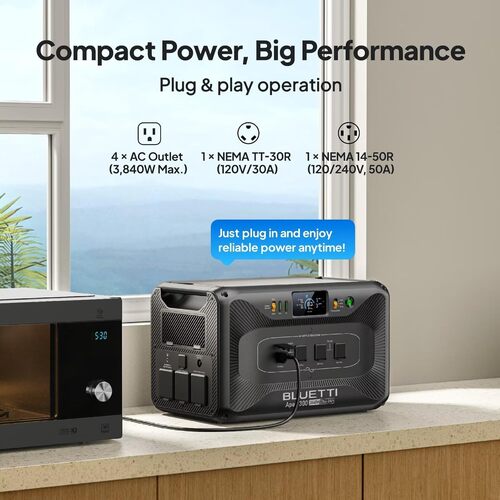
The display and app experience are useful, but not every owner found the software side smooth. Some buyers mention app setup, firmware updates, time-of-use settings, and serial-number pairing steps as part of the learning curve.
Worth knowing, one Canadian buyer had a time-of-use mode behaving backward until higher-tier support fixed it with a software update. Another owner said the product was solid but the app initially kept them from feeling satisfied with the purchase.
For beginners, the Apex 300 may feel less plug-and-play than a small camping unit. Once configured, though, owners use it for UPS backup, time-of-use power shifting, off-grid cabins, and transfer-box setups without babysitting it constantly.
Expansion Requires a Versioned System Record
The Apex 300 uses a LiFePO4 battery, which is the right chemistry for this kind of product. LiFePO4 is heavier than older NCM lithium-ion packs, but it usually wins for cycle life, safety, and frequent charging.
The manufacturer documentation states 6,000+ cycles to 80% capacity and a 17-year lifespan. Honestly, the lifespan claim depends heavily on storage habits, temperature, charge limits, and daily cycling, but the cycle rating is still strong for RVers, cabin owners, and outage-prep users.
Long-Term Ownership — 6,000 cycles to 80% means the battery is built for frequent use, not just once-a-year storm prep. Daily cyclers should still avoid leaving it at 100% or 0% for long stretches.
Reliability feedback is mixed. Many owners sound happy, but some report early failures, solar-input issues, damaged or used-looking deliveries, slow support, and return headaches.
For this BLUETTI Apex 300 review, that support pattern is the biggest warning sign. The hardware looks capable, but a backup power system is only as reassuring as the help you can get when something goes wrong.
Best Practice — For storage, leave the unit around 50-80% charge and top it off every 3-6 months. LiFePO4 is forgiving, but poor storage habits can still shorten battery life.
Apex 300 120/240V Deployment Map
| Use Case | Fit | Why |
|---|---|---|
| Weekend car camping | Solid fit | Huge capacity, but too heavy for casual campsite moving |
| RV side-trip / van life | Strong fit | 120V/240V output and high AC power suit RV appliances |
| Home blackouts under 8 hours | Strong fit | Plenty for fridge, router, lights, and key electronics |
| Multi-day off-grid cabin | Solid fit | Works well, especially with generator or solar recharge |
| CPAP overnight backup | Strong fit | Capacity is far beyond one-night CPAP needs |
| Refrigerator backup | Strong fit | Output and capacity are well matched for fridge duty |
| Well pump backup | Solid fit | Owners use it this way, but pump surge must be checked |
| Jobsite power tools | Solid fit | High inverter output handles many tools, but runtime varies |
| Quiet bedroom UPS | With caveats | UPS behavior helps, but size and standby draw may be overkill |
| Hurricane / multi-day outage | Solid fit | Strong if paired with solar, generator charging, or expansion batteries |
| Tailgating / outdoor events | Borderline | Plenty of power, but heavy to move around |
| Backpacking / lightweight EDC | Skip | Far too large and heavy |
| Apartment without solar access | Solid fit | Fast AC recharge makes sense, but storage space matters |
You’ll probably be happy if you want a 240V-capable backup battery for key outage circuits, a LiFePO4 power station for RVs, cabins, or transfer-box use, enough output for appliances that smaller power stations cannot run, a system you can expand with extra batteries, and quiet backup power without fuel, fumes, or engine noise.
You might want to skip it if you need a light power station you can carry one-handed, a simple camping battery for phones and laptops only, solar compatibility without checking panel voltage first, a support experience with no reported friction, or a full-home backup system without extra batteries or wiring.
Pros & Cons Analysis
Based on documented specifications and owner feedback
Pros
- Native split phase simplifies some systems — One Apex 300 can serve selected 120V and 240V loads without synchronizing two inverter units.
- Solar architecture is substantial — Two separately designed inputs can support high daily harvest and different array orientations.
- Base energy fits meaningful essentials — 2.76kWh can cover a measured refrigerator, communications, lighting, and selected motor schedule.
- Connection options are unusually broad — TT-30, L14-50, conventional AC, DC, and USB roles span RV, cabin, workshop, and backup use.
- Expansion offers a growth path — Compatible battery modules can extend runtime after the base daily-energy model is proven.
Cons
- 240V marketing can obscure amperage — Many large 240V appliances expect more current than a 3,840W total inverter can supply.
- Electrical integration is not plug-shape matching — Neutral, grounding, transfer isolation, overcurrent protection, and adapter wiring require exact documentation.
- Physical scale needs a route — Weight, stairs, vehicle lifting, floor placement, and cable clearance must be planned.
- Two solar lanes require two calculations — Combining wattage ceilings without verifying voltage and current per input is unsafe.
- Commissioning evidence must be preserved — Firmware, modes, loads, sources, photos, and logs strengthen troubleshooting and warranty support.
Our Verdict
The clearest takeaway from this BLUETTI Apex 300 review is that the hardware is aimed at serious backup users, not casual weekend campers. It has the battery size, inverter output, dual-voltage support, and expansion path to make sense for RVs, cabins, fridges, well pumps, and outage circuits.
That said, don't buy it blindly. Check your solar array voltage, understand your transfer-switch setup, plan for the weight, and keep the support complaints in mind. If you want a heavy-duty BLUETTI Apex 300 portable power station for 240V backup and you're comfortable with a more system-like setup, this is a strong pick. If you just need a small power station for camping, it's more machine than you need.
Frequently Asked Questions
Can the BLUETTI Apex 300 run a refrigerator during an outage?
Yes. The 3840W output and 2764.8Wh battery make it a strong fit for refrigerator backup, as long as the starting surge is within the unit's limits. Runtime depends on how often the compressor cycles, but a full-size fridge is a realistic load for this class of power station.
Can the BLUETTI Apex 300 run a well pump?
Several owners specifically bought it for 120V/240V backup, and one buyer reported using it for a well pump during power outages. Pump surge varies a lot, so check your pump's starting watts before relying on it.
How long will the BLUETTI Apex 300 run a TV, router, and computer?
One owner reported about 18 hours for a smart TV, router, and computer. Your result may be longer or shorter depending on screen size, computer draw, inverter losses, and whether other loads are connected.
Does the BLUETTI Apex 300 work as a UPS?
Yes, the listing claims ≤10ms UPS backup, and owners mention using it as a UPS and backup power source. It is better suited for home backup and electronics than for replacing a dedicated rack UPS in a critical server setup.
How fast does the BLUETTI Apex 300 recharge from AC?
The listing claims 80% in 45 minutes and also mentions TurboBoost 2000W fast charging. In real use, full recharge time depends on charging mode, battery temperature, and whether the unit is powering loads at the same time.
Can I use third-party solar panels with the BLUETTI Apex 300?
Yes, but solar compatibility needs careful checking. One owner liked the unit but was frustrated by the 60V limitation on the built-in PV input because their existing array sat in a voltage range that did not fit neatly without an added accessory.
Is the BLUETTI Apex 300 easy to move?
Not really. The listing shows 66.14 lb, while some owners describe it as feeling closer to a very heavy 80-plus-pound lift in real handling. A cart is a good idea if you move it often.
Does the BLUETTI Apex 300 need expansion batteries?
Not for basic outage backup, but many buyers will want extra storage for overnight fridge use, cabin power, or multi-day outages. Owners using it heavily often mention the B300K expansion path as a useful upgrade.
Is the BLUETTI Apex 300 quiet indoors?
Customer feedback suggests it is very quiet under light loads, and the listing claims silent operation around 22 dB. Expect more fan noise during fast charging or heavier AC loads.
Are there customer support concerns with the BLUETTI Apex 300?
Yes. While many owners like the hardware, some report slow support, difficult returns, app or firmware confusion, and poor communication. That matters if this is your main emergency backup system.
Technical Specifications
| Brand | BLUETTI |
|---|---|
| Model / SKU | Apex 300 (ASIN: B0F42JY551) |
| Battery capacity | 2764.8 Wh |
| Battery chemistry | LiFePO4 (LFP) |
| Cycle-life rating | 6,000+ cycles to 80% capacity |
| Expandable capacity | Yes — supports B300K expansion batteries and up to 58 kWh manufacturer-rated system capacity |
| Continuous AC output | 3840 W continuous |
| Surge / peak output | 7680 W peak / power lifting |
| AC voltage, frequency, and waveform | 120V/240V AC, pure sine wave; frequency not published for this exact model |
| AC outlets | 6 × AC outputs |
| High-current, RV, or 240V output | 120V/240V dual-voltage output; exact high-current receptacle set is not published in the current source set |
| USB-C outputs | Not published for this exact model in the current source set |
| USB-A outputs | Not published for this exact model in the current source set |
| 12V / DC outputs | Not published for this exact model in the current source set |
| Maximum solar input | 2400 W built-in; up to 6400 W expanded (PV voltage compatibility requires checking) |
| Solar input range and connector | Not published for this exact model in the current source set; exact PV voltage/current window and connector are unavailable |
| Maximum AC input | 2000 W |
| AC recharge time | 80% in 45 minutes manufacturer-rated; full recharge time not specified |
| Solar recharge estimate | Planning estimate: ~1.3-1.7 hours with 2400W ideal solar input; longer in real sun |
| UPS / EPS support and transfer time | Yes — ≤10ms switchover manufacturer-rated |
| App / connectivity | Yes — BLUETTI smart app control |
| Operating temperature / weather rating | Not published for this exact model in the current source set |
| Dimensions | 20.67"L × 12.87"W × 12.6"H |
| Weight | 66.14 lb (30 kg) |
| Warranty | Not published for this exact model in the current source set |