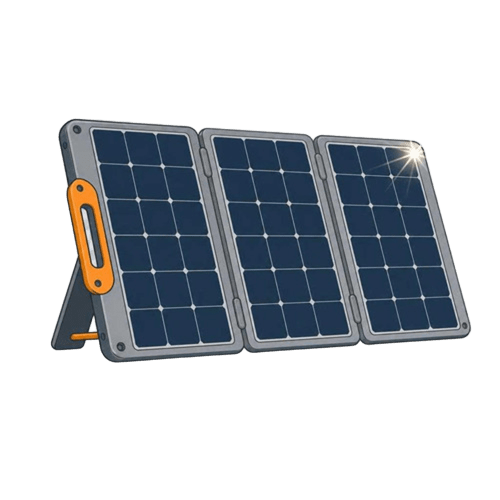
GRECELL SP-100 Review: A Practical Budget 100W Folder
At a Glance
KEY FEATURES
- 100W folding monocrystalline panel.
- 20V and 5A published operating point.
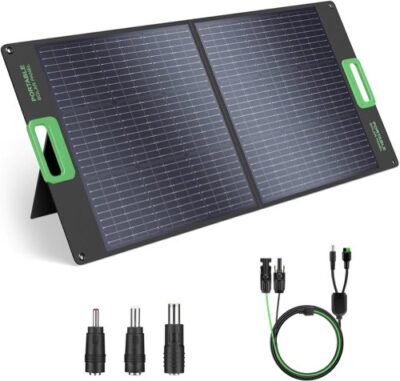
- MC4 output with DC and Anderson adapters.
- Compact portable format for power-station charging.
- Best for fair-weather occasional use.
PROS
- Useful budget 100W format
- Broad adapter concept
- Portable folded package
- Metal-backed cells noted in owner evidence
- No certified IP rating retained
- Short output lead
- Not every station tip is included
- Kickstands can be fiddly
CONS
- No certified IP rating retained
- Short output lead
- Not every station tip is included
- Kickstands can be fiddly
Best budget station folder
Based on exact documentation, retained exact-ASIN evidence, and the expanded qualitative Amazon owner-text review; no hands-on test claimed
This 100W portable solar panel review is for the buyer staring at a foldable panel with great-looking specs, a no-name label, and a price that seems too good to pass up. The goal here is simple: tell you what this thing actually does in the real world, and where the savings might bite.
You’ve seen the listing. A 100W foldable panel, monocrystalline cells, a pouch of adapters, and a sticker price that’s often half what the big brands charge. On paper it promises the same output as panels that cost twice as much. The catch is figuring out whether that low price comes with consequences that matter once you’re parked off-grid with a half-dead battery.
Here’s the honest framing: the hardware is often genuinely decent, but the quality control wanders from batch to batch, the warranty is whatever a rotating seller says it is, and there’s no brand standing behind it if things go sideways. For a cheap way to try solar on a weekend trip, that can be a fair trade. For a permanent setup you’re relying on for years, the math changes.
The expanded owner evidence strengthens one conclusion without pretending to quantify buyer outcomes: the SP-100 is most convincing as a budget panel that is deployed, watched, and packed away. Owners describe charging GRECELL and other portable stations, experimenting with angle and shade, adding extension leads, and using the folded panel around vehicles and campsites. They also describe adapter gaps, short cable reach, awkward stand geometry, output that changes sharply with sun and receiver behavior, and a smaller set of service or longevity problems.
Amazon pools reviews across variations, and the available owner evidence includes references to other wattages. Those reports can illuminate family-level handling or service themes, but they are excluded from SP-100 wattage conclusions unless the reviewer clearly identifies the 100W version. That boundary matters more than collecting a larger headline number.
What Devices and Stations It Fits
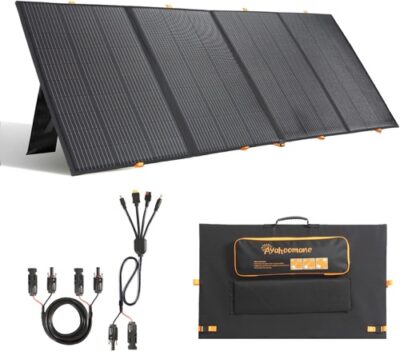
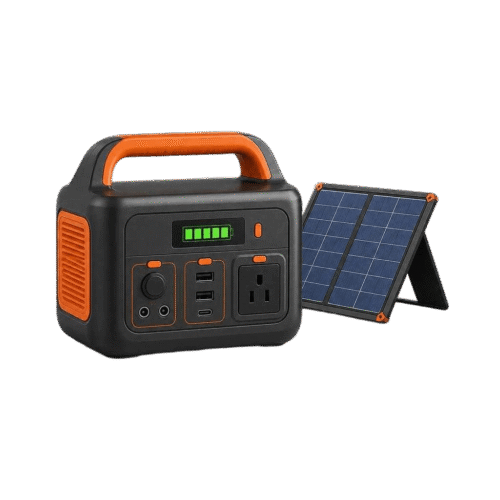
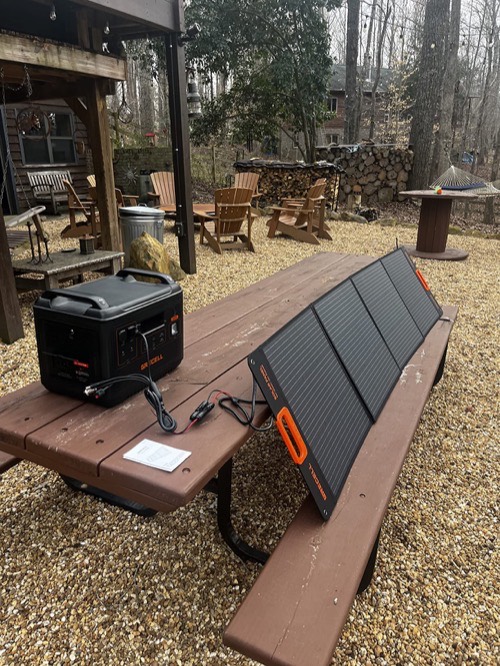
The big question for a panel like this is “will it plug into the gear I already own?” The answer is usually yes. It ships with an MC4 cable plus a pouch of adapters — a 2-in-1 Anderson cable and DC tips in several sizes — and owners report success across Jackery, EcoFlow, Bluetti, Anker, Goal Zero, and Rockpals stations.
Here’s the catch, though: the fit isn’t truly universal. A few buyers opened the box and found that none of the included tips matched their station, with specific misses called out on the Jackery Explorer 300 and one Jackery 1000. A couple even reported the main cable missing from the box entirely and had to wait for the seller to ship one.
| Power Station / Battery | Typical Use | Compatible? | Notes |
|---|---|---|---|
| Jackery Explorer (most models) | Camping, backup | Compatible | Use the 8mm / 7.9×0.9mm adapter; verify Explorer 300 fit |
| EcoFlow River / Delta | Camping, home backup | Compatible | Works via included DC or Anderson tips |
| Bluetti EB / AC series | Off-grid, backup | Compatible | Owners report easy connection |
| Anker SOLIX / 5xx series | Camping, overland | Needs adapter | Some owners add an MC4-to-XT60 adapter |
| Goal Zero Yeti | Off-grid | Compatible | Use the included adapter set |
| 12V battery (AGM / lead-acid / LiFePO4) | RV, boat, car | Needs adapter | Requires a separate MPPT or PWM controller |
Adapter Check — Before you buy, look up the exact input port on your power station and match it against the included tips (5.5×2.1mm, 3.5×1.35mm, 5.5×2.5mm, and 7.9×0.9mm/8mm, plus Anderson). If your station uses XT60 or a proprietary plug, plan on a cheap adapter so you’re not stuck on day one.
Real Output in Actual Sunlight
The panel is rated at 100W — which in good sun translates to roughly 72W of real output, or about 288 Wh on a typical day with four solid peak sun hours. In practice, owners regularly report 65-86W when the sky is clear and the angle is right, and a few catch higher peaks when they fuss with the position.
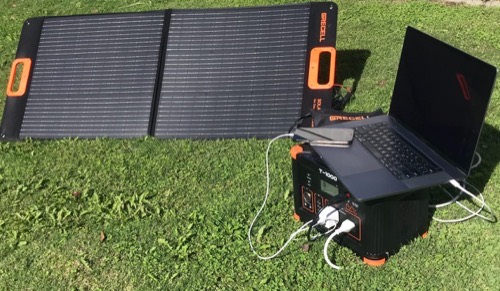
What does that mean day to day? Plenty to recharge a 500Wh station in a few hours of good sun, or top a 1000Wh station over a couple of bright days. One owner watched a Jackery climb from 58% to full in an hour or two on a partly sunny afternoon. To be fair, that’s the panel at its best — real life is messier.
Heat is the surprise limiter. A recurring observation is that on still, hot days above roughly 85°F the panel runs warm and throttles back, and one buyer watched output stop entirely until it cooled off. Cloudy days behave better than you’d think — most owners still pull 7-15W on overcast or even rainy skies, so it keeps trickling rather than dying outright.
| Condition | Estimated Output | What That Means |
|---|---|---|
| Full sun, ideal angle | ~72-86 W | Recharges a 500Wh station in a few hours; strong daily gain |
| Partly cloudy sky | ~35-50 W | Still meaningful charging; just slower to fill the battery |
| Overcast / heavy clouds | ~7-15 W | Keeps trickling; won’t fully charge but holds ground |
| Panel angle 45° off optimal | ~45-55 W | Noticeable hit; reposition for the best return |
| Winter / weak sun | ~40-50 W | Still usable; expect fewer peak sun hours overall |
| Hot, still day (85°F+) | Drops sharply | Cells heat up and throttle; shade the airflow if you can |
Real-World Math — Using a 0.72 real-world factor, this 100W panel delivers roughly 72W in good sun. Over a 4-hour peak sun day, that’s about 288 Wh. That’s enough to put a real dent in a mid-size power station every day — far more than a phone-charging panel could dream of.
These are estimates. Your actual numbers depend on angle, sky, shade, temperature, and how long your cable run is.
How It Looks and Feels in Hand
First impression for most buyers is that it’s heavier than expected — and that’s a good thing. Owners note there’s metal backing behind the cells to keep them from cracking, and the fabric shell is thick enough to cushion the edges. Folded up and buttoned closed, it feels like a piece of real gear, not a toy.
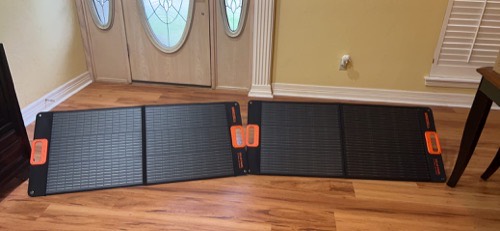
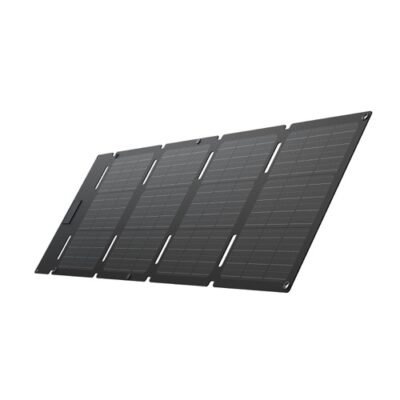
The design is the classic briefcase fold. It folds in half, a rigid carry handle runs across the top, and the two halves hold shut with snaps or magnets depending on the batch. A zippered pouch on the back swallows the MC4 cable and all the adapters, which buyers love because nothing gets lost between trips. Several owners even stuff their extension cables in there too.
The weak spot is the kickstands. They work, but they’re finicky — lift the panel and they fold right back in, and the velcro keepers hold on with a grip that some owners find annoying. A few wish the legs locked at an open angle instead. It’s a minor gripe, but it’s the one design complaint that comes up over and over.
What the Warranty and Safety Look Like
There are no safety certifications listed for this panel beyond the manufacturer’s own claims. For charging a power station — which has its own protection circuitry — that’s lower stakes. For wiring it directly to a 12V battery bank, you’re leaning entirely on the separate controller you add, so choose a reputable one.
Warranty is where the unbranded reality bites hardest. Terms vary by listing, and with rotating house-brand sellers there’s no brand-level accountability if a panel dies. Some owners do report smooth replacements from responsive sellers, but that’s seller-by-seller luck, not a guarantee. Buy from a listing with a clear return window and test the panel the day it arrives.
On safety incidents, the feedback is reassuring — no melting junction boxes or cracking insulation in normal use. The main heat-related issue is performance, not danger: the panel throttles output when it bakes in still, hot air, then recovers once it cools.
Long-Term Ownership — Monocrystalline cells themselves usually last for years, degrading slowly. On a budget folding panel, the real weak points are the cable, connectors, and fabric hinge — and on an unbranded unit, batch quality. Test output on arrival, store it dry and folded, and you’ll know early whether you got a good one.
How It Survives Outdoor Use
There’s no certified IP rating here, just marketing that leans on the Oxford cloth shell and ETFE lamination. That’s an important distinction. Owners are blunt about it — the connection ports aren’t sealed, and several specifically warn to keep the panel out of heavy rain.
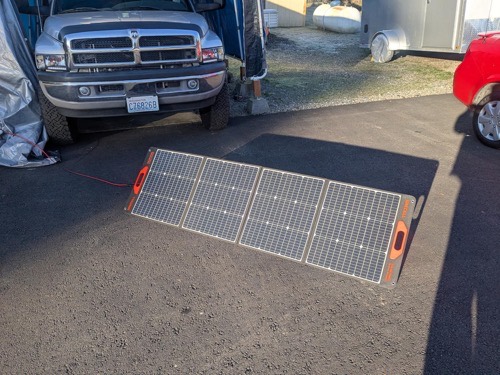
In day-to-day use, that’s less of a problem than it sounds. Dew, light moisture, and a passing shower won’t kill it, and one owner reported it surviving an ice storm outside. But this isn’t a panel you leave staked out through a weekend of downpours. Bring it in when the weather turns, and you’ll be fine.
Build durability is mostly a bright spot. The metal-backed cells and thick fabric hold up to normal trip wear, and plenty of owners report months of regular use with no issues. The honest caveat is the unbranded QC lottery — a small group report units that underperformed from the start or failed within weeks to months.
| Feature | This Panel | What It Means Outdoors |
|---|---|---|
| IP rating | None certified | Water-resistant claim only — keep out of heavy rain |
| Frame / backing | Metal backing behind cells | Resists cracking; adds reassuring heft |
| Panel surface | ETFE lamination | Wipes clean easily; decent UV and abrasion resistance |
| Junction / ports | Not sealed | Exposed connections — moisture risk if left in rain |
| Connector weatherproofing | Not stated | Treat connections as not weatherproof |
| Operating temperature | Up to 60°C (140°F) rated | Covers most climates; throttles in hot, still air |
| Long-term owner reports | Mostly positive, some early failures | Solid for most; QC variance is the real risk |
Worth Knowing — “Weather resistant” and “waterproof” aren’t the same thing. With no IP rating and open ports, this panel is fine for sun and the odd light shower, but not for sitting through a storm. Mount it where water can drain off and bring it in when the sky opens up.
Up and Running
Setup is about as easy as solar gets. Unfold it, prop it toward the sun on the kickstands, plug the cable into your power station, and you’re charging. First-time solar buyers consistently describe it as intuitive, and it doubles nicely as a supplement to roof-mounted RV or van panels when your parking spot is shaded.
The two things that’ll trip you up are the legs and the cable. The kickstands fold in when you lift the panel and the velcro keepers are stubborn, so getting it standing takes a little patience. More importantly, the cable runs short — owners routinely add 20-50 ft of extension so they can put the panel in full sun while the station sits in the shade.
Connector fit is the other thing to check before your trip, not after. Most owners click straight into their station, but the buyers who hit trouble all hit it the same way: the right tip for their specific station wasn’t in the box. Five minutes of matching ports beforehand saves a ruined first day off-grid.
Practical Tip — Buy a 20-30 ft extension cable in your connector type at the same time as the panel. The included cable is short enough that owners almost universally end up adding length, and you do not want to discover that at a campsite. Keeping the same connector type avoids voltage drops from cheap adapters.
Who Should Buy This? — Use-Case Fit Matrix
| Use Case | Fit | Why |
|---|---|---|
| Charging a power station while camping | Strong fit | Real 65-86W in sun; plugs into most stations |
| RV / van supplemental solar | Strong fit | Reposition for sun when roof panels are shaded |
| Home emergency / power-outage backup | Strong fit | Folds away small; recharges a station during outages |
| Off-grid overland trips | Solid fit | Portable and expandable; just pack an extension |
| Trying solar cheaply for the first time | Solid fit | Low cost to learn what you actually need |
| 12V battery maintenance (with controller) | With caveats | Works, but you supply the MPPT/PWM controller |
| Leaving it out through heavy rain | Skip | No IP rating; ports aren’t sealed |
| Hot-climate midday charging | Borderline | Output throttles in still, 85°F-plus heat |
| Direct phone / device charging | Not recommended | No onboard USB — needs a station or controller |
| A set-and-forget permanent install | Borderline | Unbranded QC and unclear warranty raise the risk |
| Buyer who wants certified, exact specs | With caveats | Voc, Isc, and efficiency aren’t officially published |
| High-draw loads without a battery | Not recommended | It’s a charging panel, not a generator |
GRECELL SP-100: Decision Snapshot
| Spec | Value |
|---|---|
| Max Power Output | 100 W (monocrystalline) |
| Output Voltage | 20 V DC |
| Connector | MC4 + Anderson + DC adapters (no USB) |
| Cell Efficiency | Up to 23.5% claimed (not verified) |
| Weatherproof Rating | No IP cert — water-resistant only, not rainproof |
| Charge Controller | None — direct output |
| Cable Length | Not specified (runs short — extension usually needed) |
| Mount Type | Two built-in kickstands + hanging grommets |
| Best For | Charging power stations on camping, RV, and van trips |
100W Portable Solar Panel: The Short Take
If you want a foldable panel to keep a portable power station topped up on camping and RV trips, this 100W portable solar panel does the job for a lot less than the name brands. In good sun it pulls a real 65-86W, it folds down small, and the adapter pouch connects it to nearly any station you already own. Just know going in: it’s not truly waterproof, the kickstands are fiddly, the cable runs short, and unbranded quality control means you should test it the day it arrives — because the seller is your only safety net.
You'll probably be happy if you want: — GRECELL SP-100
- A cheap, foldable way to keep a power station charged on camping and RV trips
- Broad compatibility with the Jackery, EcoFlow, Bluetti, or Goal Zero gear you already own
- A panel you can expand later by adding a second one in parallel
- Real 100W-class output without paying name-brand prices
You might want to skip it if you need: — GRECELL SP-100
- A panel that survives sitting out through heavy rain
- Direct USB device charging without a power station in the line
- Guaranteed, certified specs and a strong brand warranty
- Rock-solid quality control you can count on batch to batch
This is a different tool for a different job — not a bad panel, just one with clear edges.
The Real Bottom Line
For most buyers, this 100W portable solar panel review lands in a pretty practical place: it’s a genuinely capable foldable panel that costs a lot less than the big names, and in good sun it delivers the kind of real 65-86W output that keeps a power station alive on a trip. The compatibility is broad, the build is sturdier than the price suggests, and it folds away small. Those are real wins.
The trade-offs are just as real. It’s not waterproof, the kickstands and short cable are minor annoyances, the heat throttling is worth planning around, and the unbranded quality control means you’re rolling dice on the batch. So here’s the if/then: if you want an affordable panel to charge a station on weekends and you’ll test it the day it arrives, this 100W portable solar panel is an easy yes. If you need a sealed, certified, warranty-backed panel for a permanent install you’ll trust for years, spend more on a known brand and buy the peace of mind.
Pros & Cons Analysis
Based on documented specifications and owner feedback
Pros
- Solid real-world output in good sun — owners regularly report 65-86W from this 100W panel on clear days, and a few catch higher numbers when the angle is dialed in. For a foldable budget panel, that's a respectable chunk of the rated wattage.
- Genuinely portable foldable design — it folds in half like a briefcase, weighs around 10 pounds, and the built-in handle plus snap or magnetic closures make it a grab-and-go panel. Buyers tuck it behind a seat or in a small closet without fuss.
- Wide power-station compatibility out of the box — the MC4 cable plus a pouch of DC and Anderson adapters connects to Jackery, EcoFlow, Bluetti, Anker, Goal Zero, Rockpals, and similar stations. Owners consistently mention it "just worked" with the gear they already owned.
- Series and parallel expansion — owners pair two panels to roughly double output, and one chains three in series through a Victron MPPT for serious off-grid amps. The clean 20V building block makes it easy to grow a setup later.
- Built-in cable pouch and decent build feel — the zippered pocket holds the cables and adapters so nothing gets lost, and buyers describe the panel as heavier and sturdier than expected thanks to metal backing behind the cells. It feels like real gear when buttoned up.
- Charges power stations quickly when conditions are right — owners report topping a 500Wh-1000Wh station in a few hours of good sun, and one charged a Jackery from 58% to 100% in roughly an hour or two on a partly sunny day.
- Monocrystalline cells with claimed high efficiency — the panel uses monocrystalline silicon rated up to around 23.5%, and owners who tested it cloud-side still pulled 7-15W on overcast and rainy days rather than nothing.
- No-fuss setup for casual use — unfold, prop it at the sun, plug into your station, done. First-time solar buyers describe it as intuitive and easy, and it pairs well as a supplement to roof-mounted RV or van panels.
Cons
- Output drops hard in heat and weak sun — a recurring complaint is that the panel runs hot and chokes back in 85°F-plus weather with no breeze, with one owner watching it stop producing until it cooled off. Late-day and winter sun pulls some buyers down to 40-50W.
- Kickstands are clunky and finicky — the most common usability gripe. The built-in legs fold back in when you lift the panel, the velcro keepers are aggressively strong, and several owners call the stands flimsy or fixed-angle. They work, they're just awkward.
- Connector fit isn't universal — some buyers found none of the included tips matched their station, with specific misses on the Jackery Explorer 300 and one Jackery 1000. A few report the right cable was missing from the box entirely and had to be shipped after the fact.
- Not actually waterproof — despite the Oxford cloth and weather-resistant marketing, multiple owners warn the connection ports aren't sealed and the panel should be kept out of heavy rain. Treat it as water-resistant, not rainproof.
- Spotty quality control batch to batch — a few units underperform badly out of the gate, capping at 6-20W in full sun, and one buyer received an entirely different green-labeled panel than the orange one ordered. This is the classic unbranded-market risk.
- Included cables run short — a steady theme is that the panel cable forces the power station to sit too close to the panel. Buyers routinely add 20-50 ft extensions to place the panel in the best sun.
- Early failures show up in feedback — separate from normal QC variance, a handful of owners report panels dropping to half output within weeks or dying after a few months of light use. Without a strong brand behind it, recourse depends entirely on the seller.
- No onboard USB and unverified warranty — there's no USB-C port for stand-alone device charging, so you need a power station to use it. Warranty terms vary by listing, and with rotating house-brand sellers there's no brand-level accountability if something goes wrong.
Bottom Line: A Fair-Weather Budget Folder
The GRECELL SP-100 is a useful budget 100W folder for occasional power-station charging. Short cables, adapter matching, and uncertified weather protection require planning before taking it away from home.
Frequently Asked Questions
What is the GRECELL SP-100 designed for?
It is designed for occasional portable charging of compatible power stations and supported battery systems in fair weather.
Will it charge a Jackery, EcoFlow, Bluetti, or Anker station?
Possibly with the correct adapter. Verify exact PV voltage, current, watts, connector, and polarity for the station.
Is the SP-100 waterproof?
No certified complete-panel IP rating was retained for this exact product. Owner feedback cautions that ports are not sealed, so protect it from heavy rain.
How much energy can it make daily?
At four peak-sun hours and a 0.70–0.85 factor, roughly 280–340Wh is a planning range, not a measured promise.
Does it include every power-station adapter?
No. Check the current package against the exact station input because some buyers will need a separate cable or adapter.
Technical Specifications
| Brand | GRECELL |
|---|---|
| Model / SKU | SP-100 (ASIN B0B5H1BC51) |
| Panel format | Four-section folding portable |
| Rated output (Pmax) | 100W |
| Cell technology | Monocrystalline |
| Module efficiency | — |
| Voltage at maximum power (Vmp) | 20V |
| Current at maximum power (Imp) | 5A |
| Open-circuit voltage (Voc) | — |
| Short-circuit current (Isc) | — |
| Power tolerance | — |
| Maximum system voltage | — |
| Maximum series fuse | — |
| Output connector | MC4 with DC and Anderson adapters |
| Output cable | — |
| Deployed dimensions | 50.5 × 21.1 × 0.2 in |
| Folded dimensions | 25.25 × 10.55 × 3 in |
| Weight | 10.3 lb |
| Surface and frame | ETFE surface with Oxford-fabric body |
| Positioning / mounting | Integrated kickstands and hanging eyelets |
| Environmental protection | — |
| Wind / snow load | — |
| Operating temperature | — |
| Included accessories | Panel, adapter cable set, and carry configuration |
| Product warranty | — |