HQST Bifacial 100W Solar Panel Review: The 12V Panel That Pulls Extra Power From Reflected Light
At a Glance
KEY FEATURES
- Power output: 100 W rated (manufacturer claims up to ~115W with bifacial gain); 9-busbar monocrystalline cells
- Output voltage: 12V nominal (open-circuit measures roughly 18-22V — normal for a 12V-class panel used with a controller)
- Cell efficiency: Up to 25% (manufacturer rating); Grade A+ PERC cells
- Weatherproofing: IP68 rated junction box; anti-corrosion aluminum frame; 2400 Pa wind and 5400 Pa snow load rating
- Charge controller: None included — pair with your own PWM or MPPT controller (MPPT recommended)
- Best for: 12V battery maintenance, off-grid sheds and cabins, RV/boat/van roofs with clearance, ground- and pole-mounted arrays on reflective surfaces
PROS
- Real rear-side output gain over a reflective surface with an air gap
- Renogy-grade build for less money — owners run them side by side
- Tough aluminum frame and tempered glass — survives drops and storms
- Fast, helpful customer service that honors replacements
- Scales cleanly into 400W+ series/parallel arrays
CONS
- Bifacial boost is minimal when mounted flat on a dark roof
- Output often 80-90W rather than a clean 100W rated
- Short MC4 cables — fine side-by-side, awkward for roof routing
- Defect warranty is short despite "up to 30 years" marketing
- Bare panel — no brackets, wiring, controller, or adapters included
Editor's Choice
Based on exact documentation and qualitative exact-ASIN Amazon owner evidence; no hands-on test or population-rate claim
This HQST bifacial 100W solar panel review answers the one question that actually matters before you buy: is dual-sided output worth the small premium at 100W, or are you paying extra for a feature you’ll never see? The short answer is that it depends almost entirely on how — and where — you mount it.
Here’s the real-world choice most buyers face. You’re standing between this HQST and a standard 100W panel from Renogy or a similar brand. Both are rated 100W. The bifacial costs a little more. The question isn’t whether the panel works — it does — it’s what that extra spend actually buys you, and whether your install spot can deliver it.
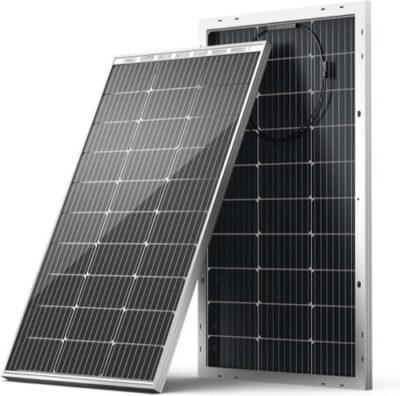
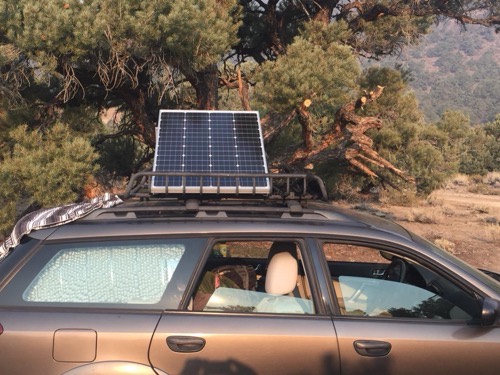
So let’s be specific. Bifacial pays off when the back of the panel can see reflected light: ground-mounted over light gravel, sand, or snow, pole-mounted with open sky behind it, or on an RV roof with real clearance and a white or silver surface below. Bolt it flat to a dark roof with no air gap, and the rear-side bonus mostly vanishes. That single distinction shapes whether this panel is a smart upgrade or a slight overpay.
The most important finding is not a promised percentage. Bifacial output is a site property as well as a panel property. Owners describe useful installations on RVs, vehicle racks, ground frames, sheds, and reflective experimental setups. Some saw rear-side contribution or strong overall current; others used the panel almost like a normal 100W module. Surface reflectance, clearance, sun angle, rear shading, rack geometry, and controller behavior explain why those experiences can all be plausible.
| Mounting context | Rear-side opportunity | Main design check |
|---|---|---|
| White membrane roof with clearance | Meaningful potential | Airflow, uplift, and rack shadows |
| Ground rack over pale gravel | Good experimental control | Seasonal angle and rear obstruction |
| Dark roof nearly flush | Limited | Whether bifacial price still makes sense |
| Temporary vertical fence | Variable | Morning/evening exposure and structural loading |
Use the 100W front rating as the conservative planning basis. The Amazon page’s “up to” rear-gain language describes a favorable scenario, not bankable daily energy. Measure any rear contribution by comparing the same module, controller, battery state, time, and sky with the rear exposed and then masked. A comparison between different days or different batteries cannot isolate bifacial gain.
The expanded owner record also surfaces ordinary module issues that bifacial marketing can distract from: short leads, shipping condition, support responses, output decline in individual long-term accounts, and confusion over “12V” terminology. The reviewed module’s nominal-system label does not mean it outputs exactly 12V; it is intended to work through a controller or compatible solar input. Whole-array voltage and current still require calculation.
HQST documents a rigid bifacial format, tempered glass, predrilled frame, IP68 junction box, and structural load figures. Those specifications make it more appropriate for an engineered mount than casual leaning. Use hardware suited to the substrate and wind environment, avoid frame distortion, protect connectors from standing water, and leave the rear optical path as open as the structural design allows.
Out in the Sun: Field Performance
Let’s talk numbers, because this is where expectations need a reality check. The 100W rating is a lab figure, and in the field most owners measure 80-90W in good sun. Dial in the angle on a cool, clear day and full 100W is achievable — some even report more in multi-panel arrays.
| Conditions | Typical reported output (per panel) |
|---|---|
| Cool, clear day, good angle | 90-100W+ |
| Hot, sunny midday, flat or rough angle | 75-90W |
| Reflective surface + air gap (bifacial active) | 100-115W |
| Overcast / cloudy | 15-25W |
| Rain / heavy shade | 2-6W |
On the flip side, not every report is rosy. A few owners saw only around 60W even in good sun, and one measured roughly 10W in perfect Texas sun — almost certainly a faulty unit, since it’s wildly out of line with everyone else. If you ever see numbers that low, that’s a warranty call, not normal behavior.
Real-World Math — At a 0.82 real-world factor with an MPPT controller, a 100W panel delivers about 82W of usable power in good sun. Over 4 peak sun hours, that’s roughly 328 Wh per day — enough to replace what a typical RV fridge and lights pull in a frugal day of boondocking.
Where this panel genuinely shines for a lot of buyers is scale. Owners run 4, 8, even 16 of these in series/parallel for golf carts, sheds, and whole-home backup, with reports of 400-650W from strings. The panels behave predictably when ganged up, which is exactly what you want when you’re building something bigger.
Mounting and Getting It Angled
Setup itself is simple: snap the MC4 connectors together, run the leads to your controller, and you’re charging. Owners describe the basic process as nearly foolproof. The friction comes from what’s not in the box.
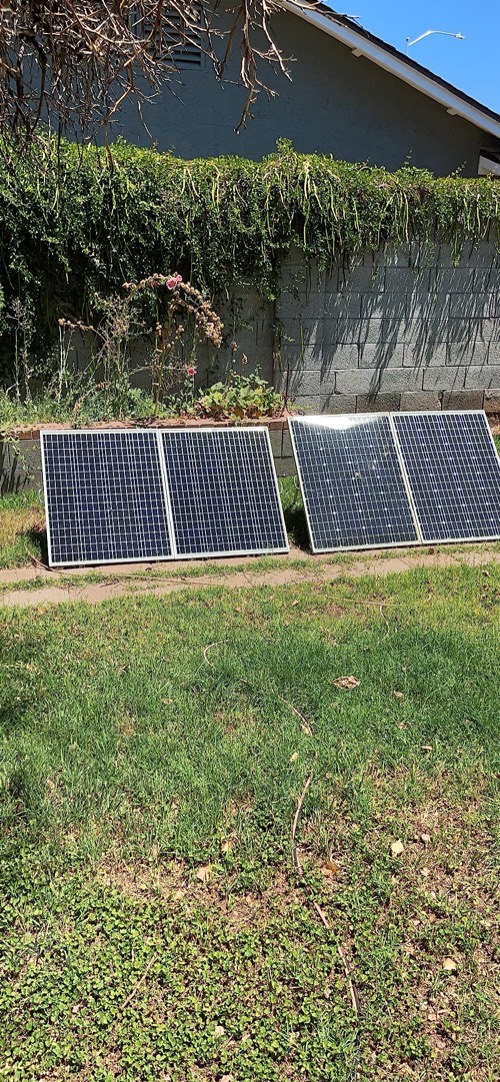
You get the panel and MC4 connectors — that’s it. No brackets, no extra wiring, no adapters, no controller. Solar newcomers especially feel this; one buyer lost a couple of weeks figuring out the parts list (controller, wiring, brackets, adapters) that the listing doesn’t spell out.
Practical Tip — The MC4 leads are short — owners say among the shortest of any brand. They’re fine for panels sitting right next to each other, but if you’re routing around a roof fan or AC unit, budget for MC4 extension cables before install. Extensions are cheap and lose almost no power over short runs.
For ground or pole use, tilt brackets are the popular pairing — they let you chase the optimal angle seasonally and, crucially, create the air gap that makes the bifacial side useful. Several owners DIY their mounts from PVC or aluminum for a few dollars a panel.
Battery and Device Compatibility
This is a bare 12V-class panel, so compatibility comes down to your controller and battery. Owners charge lead-acid, AGM, and LiFePO4 banks without issue, as long as a PWM or MPPT controller sits between the panel and the battery. Never wire the panel straight to a battery — the open-circuit voltage runs around 19-22V, well above a battery’s level.
That voltage reading trips up a lot of first-timers. The panel is sold as “12V” but reads 18V or higher, and one buyer’s manual even said 18V. That’s completely normal — a 12V panel has to produce more than 12 volts so the controller can regulate it down to a safe charging level. Nothing’s wrong with your panel.
| Use it with | Works? | Notes |
|---|---|---|
| 12V lead-acid / AGM battery | Yes | Standard pairing through a PWM or MPPT controller |
| 12V LiFePO4 battery | Yes | Confirm your controller has a lithium charge profile |
| Jackery / EcoFlow / Bluetti power station | Yes | Use an MC4-to-station adapter; check the station’s max input |
| 24V / 48V system | Yes | Wire panels in series; size your controller’s voltage limit |
| Direct to battery, no controller | No | Voc is far too high — always use a controller |
Adapter Check — Owners successfully feed Jackery, EcoFlow, Bluetti, Pecron, and AFERIY stations with this panel using an MC4-to-input adapter, and note it’s much cheaper than the brand’s own panels. Before you buy, check your station’s maximum solar input voltage and current so a single panel — or a series string — stays within limits.
Build and Portability
Build quality is where this panel quietly overdelivers. The aluminum frame and tempered glass feel solid, and owner stories back that up — one buyer had a 6-foot ladder fall on the glass with no damage, another had the wind rip panels off a temporary mount and fling them onto each other, again with no breakage. A few have survived highway speeds on roof racks and even multiple hurricanes.
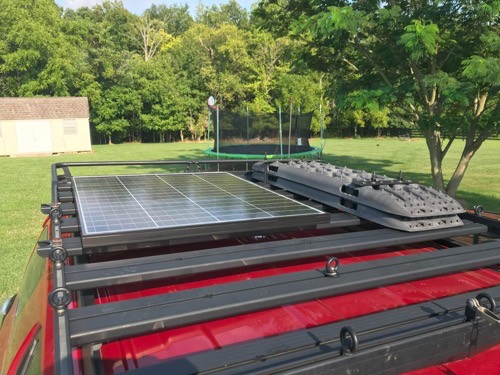
The footprint is a little unusual. At roughly 38 x 23 inches it’s shorter and wider — closer to square — than most 100W panels. Some RV owners love that it fits two side by side on a topper; others find the squat shape harder to lay out on a roof than a longer, skinnier panel. Weight runs about 12-15 pounds, light enough for one person to carry and reposition.
Worth Knowing — Several owners note the predrilled mounting holes sit only on the long sides, and the 1.18-inch frame is thick enough that some rail end-clamps won’t fit. If you mount on rails, confirm your end-mount clamps clear a 1.18-inch frame before ordering.
One recurring nitpick on the physical side: packaging is hit or miss. Some panels arrive on a padded pallet with thick foam; others show up with a punched-in box and minor frame dents. The damage owners report is almost always cosmetic, but it’s worth inspecting on arrival.
The Long-Term Ownership Picture
There are no third-party safety certifications (UL, CE, ETL) listed on the product page, so the IP68 weather rating is the main certified spec to lean on. For most off-grid and RV buyers that’s not a dealbreaker, but it’s worth knowing if your install needs certified equipment.
Warranty terms are the part to read carefully. The listing details cite a 3-year manufacturer warranty, while one long-term owner was told defects were covered for 5 years — and the marketing leans on “up to 30 years” of output. Those are three different numbers, so confirm the current terms before you buy on the strength of the longevity promise.
Buyer Heads-Up — A few buyers received the wrong item entirely (non-bifacial panels, or the wrong model variant with an extra letter in the SKU). If you’re matching this into an existing array, verify the exact model and check the Voc on arrival before you wire it in.
The redeeming counterweight is service. Owners who contacted HQST about missing junction-box covers, bubbling cells, or a lost shipment describe replies within about a day and free replacements or refunds. That responsiveness is a recurring reason buyers come back for more panels.
Is It the Right Panel for You?
| Buyer type | Fit |
|---|---|
| Off-grid shed or cabin on a 12V/24V battery bank | Good fit — scales cleanly, strong value |
| RV/van owner who can raise panels off a light roof | Good fit — bifacial gain plus solid front output |
| Ground or pole array over gravel, sand, or snow | Best fit — this is where bifacial earns its keep |
| Power-station owner (Jackery, EcoFlow, Bluetti) | Good fit — cheap charging with the right adapter |
| Flat dark-roof install, no air gap | Workable, but you’re overpaying for bifacial you won’t use |
| Solar newcomer wanting an all-in-one kit | Borderline — bare panel means buying controller, wiring, brackets separately |
| Buyer needing a guaranteed 30-year warranty | Look closely — defect coverage is far shorter than the output claim |
| Tight-space install with strict dimensions | Borderline — verify actual dimensions; some arrive squarer/wider than listed |
HQST 100W bifacial panel: Decision Snapshot
| Spec | Value |
|---|---|
| Max Power Output | 100 W (monocrystalline, bifacial) |
| Output Voltage | 12 V nominal (Voc measures ~19-22 V) |
| Connector | MC4 |
| Cell Efficiency | Up to 25% (manufacturer rating) |
| Weatherproof Rating | IP68 junction box |
| Charge Controller | None — bring your own PWM or MPPT |
| Cable Length | Not specified (owners report short leads) |
| Mount Type | Pre-drilled long-side holes; no brackets included |
| Best For | 12V battery maintenance, off-grid sheds, RV/boat roofs, reflective ground/pole arrays |
Is It Built to Last Outdoors?
The IP68 junction box and anti-corrosion aluminum frame are built for permanent outdoor duty, and owner experience supports that. People report years of trouble-free service, including panels that rode out multiple hurricanes and others that shrugged off drops and rough-road vibration on roof racks.
The panel is rated for 2400 Pa wind and 5400 Pa snow load, which covers most residential and RV conditions. Tempered glass holds up well to hail and impact, and the sealed junction box keeps moisture out.
Long-Term Ownership — One multi-year owner reported snail trails (fine discoloration lines) developing on all four of his panels, and learned the defect warranty was shorter than the marketed 30-year output claim. Snail trails don’t always kill output, but if longevity is your priority, treat the “up to 30 years” figure as a best case, not a guarantee.
To be fair, that snail-trail report is an outlier against a generally strong durability record. Most owners describe these panels as built to last — but the gap between the marketing lifespan and the actual defect warranty is the one thing to weigh if you’re buying for a decade-plus install.
HQST Bifacial 100W Solar Panel: First Impressions and Final Thoughts
If you want a tough, affordable 100W panel for 12V charging — and you can mount it where the back side catches reflected light — this HQST bifacial 100W solar panel review lands firmly in the “buy it” column. Owners praise the build, the price against name brands, and customer service that actually replaces problem panels. In practice, most people pull 80-90W in good sun, with reflective setups reaching or beating 100W. Just know going in: the MC4 cables are short, nothing but the panel and connectors comes in the box, and the bifacial gain only shows up with an air gap and a light surface underneath — not flat on a dark roof.
Bifacial at 100W: The Use Case That Makes It Worth It
Here’s the thing about bifacial at this size: the rear-side bonus is proportionally bigger relative to a 100W base than it is on a 300W panel, so a modest gain feels more meaningful per dollar. To be fair, that gain is conditional. The back of the panel needs to actually see bounced light — think mylar, a silver tarp, sheet metal, light gravel, sand, or snow — and the panel needs an air gap so light can reach it. One Pacific Northwest owner laid mylar behind four of these and hit 110W per panel, and said his bifacial set beat his non-bifacial panels by up to 25% on cloudy days.
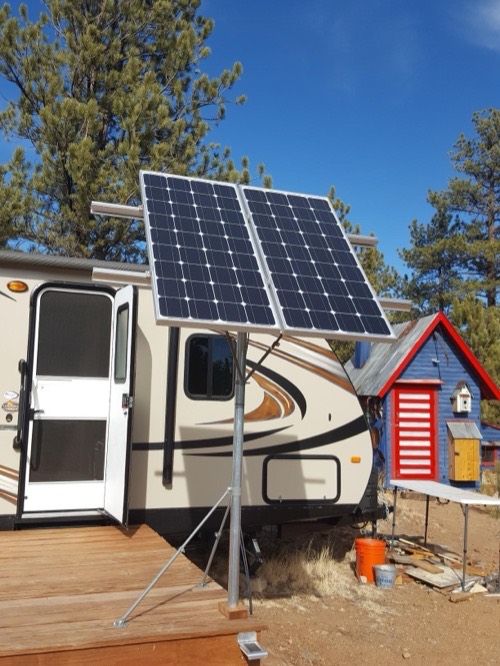
In owner accounts, the difference between a good and a wasted bifacial setup comes down to two things: clearance and surface. Mount the panel flush against a dark RV roof and you’ve basically bought a standard 100W panel. Lift it on a pole or ground rack over something reflective, and the rear side earns its keep.
| Mounting scenario | Expected output behavior |
|---|---|
| Pole or ground rack over light gravel/sand/snow, with air gap | Best case — rated 100W or higher, real rear-side bonus |
| RV/van roof raised on brackets over a light surface | Moderate bifacial gain on top of typical 80-90W front output |
| Flat on a dark roof, no air gap | Minimal rear-side gain — performs like a standard 100W panel |
The Verdict
Pull it all together and this HQST bifacial 100W solar panel review lands on a clear recommendation with a couple of honest caveats. For 12V battery maintenance, off-grid sheds, and RV or ground arrays, you get Renogy-grade build and broad compatibility for less money — and customer service that actually backs the product up. That’s a strong package at this price.
The catch is matching the panel to your situation. Mount it where the rear side can catch reflected light and you’ll see the bifacial bonus owners rave about; bolt it flat to a dark roof and you’ve paid a small premium for a standard 100W panel. Plan for short cables, a controller you’ll buy separately, and a defect warranty shorter than the 30-year marketing.
Honestly, for most off-grid and RV buyers who can give the panel an air gap and a reflective surface, the HQST bifacial 100W is one of the better value plays in the 100W class right now — and it scales beautifully when you inevitably want to add more.
Pros & Cons Analysis
Based on documented specifications and owner feedback
Pros
- Real bifacial gain in the right setup — owners who mounted these with a reflective surface underneath (silver tarp, mylar, sheet metal, light gravel) report measurably higher output. One buyer in the cloudy Pacific Northwest said his bifacial panels beat his non-bifacial Eco-Worthy panels by up to 25% on overcast days.
- Strong value versus name brands — a recurring theme is that the HQST is essentially the same panel as a Renogy 100W (some buyers note identical MC4 labeling and build) for less money. Several owners ran HQST and Renogy side by side and found the HQST matched or beat output on sunny days.
- Genuinely tough build — customers describe surviving a 6-foot ladder falling on the glass, getting flung off a temporary mount by wind, riding rough roads on a roof rack, and even three hurricanes — all with no damage. The aluminum frame and tempered glass feel solid.
- Compact, near-square footprint — at roughly 38 x 23 inches and about 12-15 pounds, it's shorter and wider than typical 100W panels. RV and camper owners like that it's light and easy for one person to position, and several toss single panels in a car.
- Responsive customer service and honored warranty — buyers who hit problems (missing junction-box cover, bubbling cells, a lost shipment) describe replies within about a day and free replacements or refunds. Several call out HQST support as a reason they bought again.
- Solid low-light and cloudy-day behavior — owners report useful output on overcast days, and the bifacial design seems to help here. One PNW buyer pulled 15-20W on overcast days and a few watts in rain, and credits the rear side for extra cloudy-day yield versus standard panels.
- Scales well into bigger arrays — heavy users run 4, 8, 12, even 16 of these in series/parallel for golf carts, sheds, grid-tie, and whole-system setups. Reports of 400-650W from multi-panel strings are common, and owners keep coming back to add more.
- Works with common power stations and controllers — owners successfully charge Jackery, EcoFlow, Bluetti, Pecron, and AFERIY stations with an adapter, and pair the panel with PWM, MPPT, and Victron controllers without drama.
- Listing accuracy is mostly good — most buyers say the panel performs as described and is well made for the price, with build quality holding up over years of outdoor use.
Cons
- Bifacial advantage disappears mounted flat — customers who bolted the panel flat to an RV or camper roof saw little to no rear-side benefit. With no air gap and a dark surface below, the reflected-light boost is minimal, so you're effectively paying a small premium for a standard 100W panel.
- Output often lands below the rated 100W — plenty of buyers measure 80-90W in good sun rather than a clean 100. A few report worse — one saw only 60W, another about 10W in perfect Texas sun (likely a faulty unit). Real numbers depend heavily on angle, controller, and temperature.
- Inconsistent packaging — the most common shipping gripe. Some panels arrive on a padded pallet with thick foam; others show up with a hole punched in the box and only thin padding. Minor frame dents and a couple of bent corners get mentioned, usually cosmetic.
- Short MC4 cables — mentioned again and again. Fine when panels sit right next to each other, but too short for roof installs that route around a fan or AC unit. Owners wish the leads were 12-18 inches longer or that extensions were offered on the same listing.
- Warranty is shorter than the marketing implies — the panel is sold on "up to 30 years" of output, but the manufacturer warranty against defects is short. One long-term owner reported snail trails developing and was told the panel warranty was 5 years, not 30 — a gap worth knowing before you buy on the longevity promise.
- "12V" label confuses newcomers — the panel reads around 18-22V open-circuit, and one buyer's manual even said "18V." That's normal for a 12V-class panel with a charge controller, but it trips up first-timers who expect a literal 12 volts.
- Thick frame complicates some mounting — at 1.18 inches the frame is taller than some rail end-mounts expect, and one buyer couldn't find end clamps that fit. Pre-drilled holes are only on the long sides, and a few owners had to ream holes to line up with brackets.
- Bare panel — no hardware or wiring included — you get the panel and MC4 connectors, nothing else. Solar newcomers note the lack of a parts list, brackets, or adapter cables meant extra orders and a couple of lost weeks figuring out the rest.
- Occasional wrong-item and spec mismatches — a few buyers received non-bifacial panels, the wrong model variant (an extra "P" in the SKU), or noticed listed dimensions that didn't match the panel in hand. Verify the exact model before installing in a matched array.
Our Verdict
Charging performance (4.1/5) — Most owners pull a solid 80-90W in good sun, with reflective-surface setups reaching or exceeding 100W and multi-panel arrays consistently hitting strong totals. A handful of below-spec and faulty-unit reports (60W, 10W) and the gap between rated and typical real-world output keep it under 4.5.
Value & compatibility (4.5/5) — This is the standout: Renogy-equivalent build for less, broad compatibility with PWM/MPPT controllers and major power stations, and it scales beautifully into big arrays — with customer service that honors replacements. The short defect warranty versus the 30-year output claim is the main asterisk.
Build & weatherproofing (4.4/5) — Genuinely tough — survives ladder drops, wind, rough roads, and years outdoors including hurricanes. The IP68 junction box and anti-corrosion aluminum frame are well regarded. Inconsistent packaging and a long-term snail-trail report shave it slightly.
Install & usability (3.6/5) — Easy basic setup, but the short MC4 cables, bare-panel contents (no brackets or wiring), thick frame versus some end clamps, and the "12V vs 18V" confusion add friction for newcomers.
Bottom line — Best for 12V battery maintenance, off-grid sheds, RV/boat roofs with clearance, and ground- or pole-mounted arrays over a reflective surface. Skip it if you need an all-in-one kit, a guaranteed clean 100W, or a literal 30-year defect warranty.
Frequently Asked Questions
Is the HQST Bifacial 100W actually worth it over a standard 100W panel?
It depends entirely on how you mount it. If the rear side can see reflected light — ground-mounted over light gravel, sand, or snow, on a pole with sky reflection, or on an RV roof with an air gap and a light surface below — owners report real extra output, sometimes noticeably better than standard panels on cloudy days. Mounted flat against a dark roof with no gap, the bifacial boost is minimal, and you're paying a small premium for what amounts to a regular 100W panel.
Why does my HQST 100W panel only put out 80-90 watts?
That's normal and matches what most owners see. The 100W rating is measured under lab conditions (STC), and real-world output is reduced by panel angle, heat, sun strength, and your controller type. Customers consistently report 80-90W in good sun, with full 100W or more possible when the angle is dialed in, temperatures are cool, or a reflective surface boosts the rear side. If you're seeing far less — like 10-20W in full sun — you likely have a faulty unit and should contact HQST.
The panel reads 18-22 volts, but it's sold as 12V. Is something wrong?
No, that's how 12V-class panels work. The open-circuit voltage (Voc) of a 12V panel typically sits between about 18V and 24V — it has to produce more than the battery voltage to actually charge it through a controller. One buyer's manual even listed it as 18V, but a charge controller (PWM or MPPT) steps that voltage down to a safe level for a 12V battery. Never connect the panel straight to a battery without a controller.
Do I need an MPPT or a PWM charge controller with this panel?
Either works, and owners use both successfully. A PWM controller is cheaper and fine for simple single-panel 12V setups. An MPPT controller costs more but pulls more usable power, especially in higher-voltage series strings or cooler weather, and several owners specifically recommend spending up for MPPT. Whichever you choose, the panel ships with no controller, so budget for one.
Can I charge my Jackery, EcoFlow, or Bluetti power station with it?
Yes, with the right adapter cable. Owners report charging Jackery, EcoFlow, Bluetti, Pecron, and AFERIY stations by adapting the panel's MC4 connectors to the station's solar input — and note it's far cheaper than the brand's own panels. Before buying, check your power station's maximum solar input voltage and current so the panel's output stays within its limits, especially if you wire more than one panel.
Are the MC4 cables long enough for an RV or van roof install?
This is the most common complaint. The leads are fine for connecting panels sitting right next to each other, but they're short — among the shortest of any brand, according to owners with multiple panels. If your roof has a fan, AC unit, or any obstacle to route around, plan on buying MC4 extension cables. The good news is extensions are cheap and don't meaningfully reduce output over short runs.
How does it perform on cloudy or overcast days?
Better than many standard panels, according to owners — partly thanks to the bifacial design and PERC cells. Expect a big drop from full-sun numbers (one buyer saw 15-20W on overcast days and a few watts in rain), but the panel keeps charging. Several owners in cloudy regions like the Pacific Northwest chose bifacial specifically because it gave them extra low-light yield versus their non-bifacial panels.
Will it survive being mounted outdoors year-round?
Build quality is one of its strengths. The aluminum frame and tempered glass have survived ladder drops, being thrown by wind, highway speeds on roof racks, and years of exposure including multiple hurricanes in owner reports. The junction box is IP68 rated and the frame resists corrosion. The one long-term caution: a multi-year owner reported snail trails forming, and the defect warranty is shorter than the marketed 30-year output claim, so don't buy purely on the longevity promise.
What comes in the box — do I get brackets and wiring?
Just the panel and MC4 connectors. There are no mounting brackets, no extra wiring, no adapters, and no charge controller. Newcomers should plan to also buy a controller, mounting brackets (tilt brackets work well for ground or roof use), and any adapter or extension cables for your battery or power station. A few buyers wished the listing included a basic parts list to avoid guesswork.
Technical Specifications
| Brand | HQST |
|---|---|
| Model / SKU | HSP100D-30AT (ASIN B08SVXMK3V) |
| Panel format | Rigid bifacial panel |
| Rated output (Pmax) | 100W |
| Cell technology | PERC 9BB bifacial monocrystalline |
| Module efficiency | — |
| Voltage at maximum power (Vmp) | — |
| Current at maximum power (Imp) | — |
| Open-circuit voltage (Voc) | — |
| Short-circuit current (Isc) | — |
| Power tolerance | — |
| Maximum system voltage | — |
| Maximum series fuse | — |
| Output connector | MC4-compatible solar connectors |
| Output cable | — |
| Deployed dimensions | 38.2 × 22.7 × 1.18 in |
| Folded dimensions | — |
| Weight | 12.1 lb |
| Surface and frame | Bifacial tempered glass with aluminum frame |
| Positioning / mounting | Predrilled framed mounting |
| Environmental protection | IP68 junction box |
| Wind / snow load | 2400Pa wind / 5400Pa snow |
| Operating temperature | — |
| Included accessories | One 100W bifacial panel |
| Product warranty | 3-year product warranty |