200W Portable Solar Panel Review: 24% ETFE Efficiency at a Budget Price — What You’re Actually Getting
At a Glance
KEY FEATURES
- Power output: 200 W (claimed), A+ grade monocrystalline cells
- Output: 19.8 V DC via MC4 (200W max); plus USB-C PD60W, QC3.0 18W, USB-A 5V/3A 15W
- Cell efficiency: 24% (high tier as claimed; real-world output frequently lands lower)
- Weatherproofing: IP65 — rain and spray resistant; ETFE laminated surface; high-density polyester canvas back
- Charge controller: None — MC4 output relies on your power station's built-in controller, or a separate controller for 12V batteries (not included)
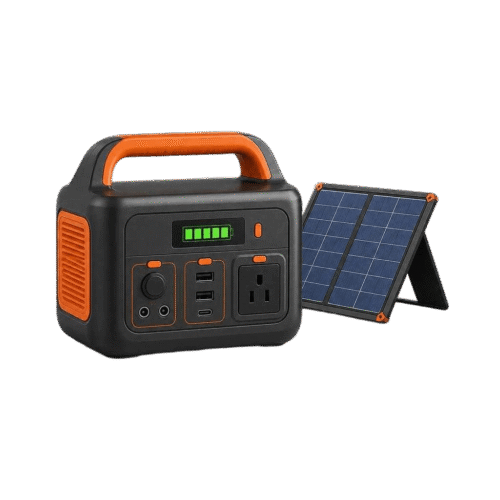
- Best for: Charging Jackery / EcoFlow / Bluetti / Anker power stations on camping, RV, van life, and boondocking trips; emergency backup power
PROS
- Strong 180-200W output in clear full sun for a budget price
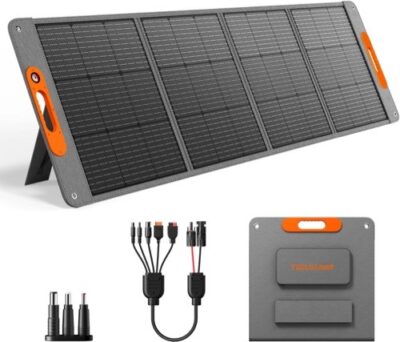
- 5-in-1 MC4 cable plus DC adapters fit most major power stations
- Built-in USB-C 60W, QC3.0, and USB-A ports for charging small gear
- IP65 ETFE surface sheds dew and handles outdoor weather
- Half the price of an equivalent Jackery panel with similar build
CONS
- Many owners cap at 110-125W even in good sun; rated 200W is hard to hit
- Reports of smoke, popping, and fire when connected to power stations
- Output can drop to 110-120W after a few months of daily use
- Fabric backing leaves the real-world weather sealing uncertain over time
- Flimsy, too-short kickstands and a heavy 15.7 lb two-person setup
Editor's Choice
Based on exact documentation and qualitative exact-ASIN Amazon owner evidence; no hands-on test or population-rate claim
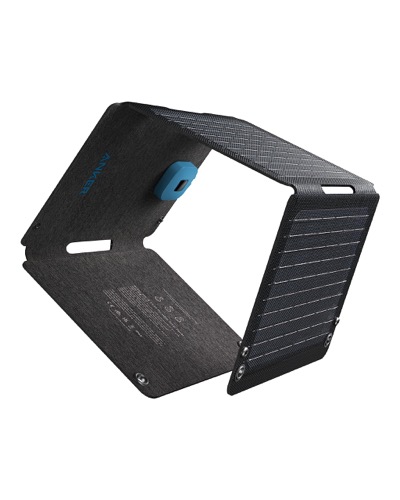
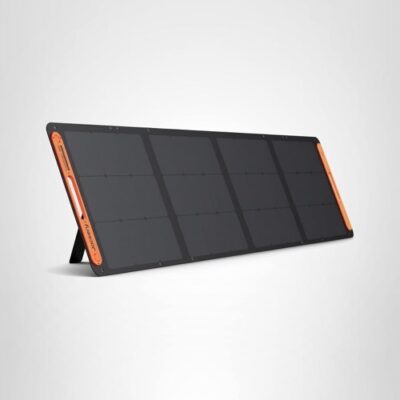
This 200W portable solar panel review looks at what you really get when you buy a no-name foldable panel off the search results — in this case the TWELSEAVAN, a 24% ETFE panel that lands at roughly half the price of a name-brand 200W. The promise is simple: same watts, same connectors, fraction of the cost. The reality is more interesting, and worth a few minutes before you click buy.
Here’s the scene most buyers know. You search “200W solar panel for Jackery,” and past the Jackery and EcoFlow listings sit a row of panels with unfamiliar brand names, big efficiency numbers, and prices that look too good. The hardware photos look identical. The temptation is obvious — so is the question: what am I risking to save that money?
Let’s be straight about it. A no-brand panel can be genuinely good hardware with a lousy support story, inconsistent quality control, and a warranty that may or may not mean anything. For occasional camping use, that trade can be smart. For unattended, permanent power, it’s a bigger gamble. This review helps you tell which buyer you are.
The expanded owner evidence separates two experiences that marketing often merges: electrical usefulness and physical setup. Many accounts describe productive charging with Jackery and other stations, appreciate the long lead and adapter collection, and regard the folded package as good value for a 200W-class panel. Critical accounts focus on weak or awkward stands, missing tips or instructions, a unit that did not charge, low displayed input, and limited support. Those observations point to arrival inspection and a supervised first cycle; they do not establish how frequently a problem occurs.
Compatibility advantage
MC4 plus Anderson, XT60, DC8020, DC7909, DC5521, USB-C, and USB-A covers many common routes.
Compatibility trap
The right-looking tip does not prove that 23.4V Voc, available current, polarity, or station firmware fits.
The receiving station can also explain seemingly contradictory output reports. A battery near full may taper. A small model may cap input. A panel lying too flat may run hotter and collect less direct irradiance. Partial shade across one section can depress the whole series path. An extension or adapter can add loss or an intermittent connection. The defensible approach is to record sky, angle, cell temperature, receiver, battery percentage, and steady-state input together.
A strong use when the panel can be deployed outside and the battery sheltered indoors.
Good when a free-standing panel can follow the sun instead of being roof-fixed.
Conditional: the four support points need independent restraint.
Wrong category; use a framed module and engineered mount.
The panel is described as IP65, but outdoor use still has boundaries. Keep the adapter junctions, USB electronics, and station dry. Do not fold or store it wet. Inspect fabric edges, stands, cable exits, and connector strain after trips. Portability shifts the wear points away from a rigid frame and toward hinges, textile seams, closures, and frequently handled cables.
A practical unboxing test matters because missing adapters were part of the owner record. Lay out every tip against the included inventory, photograph the panel label, inspect the laminate under angled light, and confirm each stand operates before the return window advances. That process catches a logistics problem before it becomes a campsite problem.
What It's Like to Handle and Carry
First impressions are good. Owners describe it as “nicely assembled,” “built like a tank,” and “good quality you can feel.” The ETFE laminated surface looks clean and sheds morning dew well, and the high-density polyester canvas back feels tough for outdoor use.
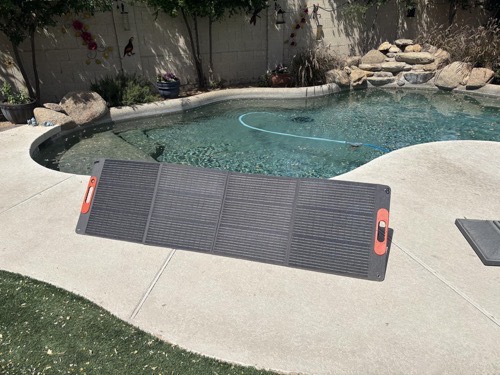
That said, two things stand out the moment you pick it up. It’s heavy — 15.7 lbs earns plenty of “whew, heavy!” comments — and there’s no rigid frame, so the panel is fabric-backed and folds flat. The magnetic handle and magnetic open-close action get genuine praise for making transport easier.
Handle it gently, though. One owner heard a crack just repositioning the panel, and a few mention the cells flexing against the floppy support legs. It feels solid at rest, but the rigidity isn’t there once you’re moving it around — a fair trade-off for a foldable design, but worth knowing before you toss it in the truck bed.
What You Can Plug In
The headline strength here is compatibility. The MC4 output plus the 5-in-1 cable and three DC adapters cover almost every major power station — Jackery, EcoFlow, Bluetti, Anker, OUPES, FlashFish, Goal Zero, and more. Owners repeatedly call out that the right tip fit their station straight out of the box.
There is one quirk worth flagging. On an EcoFlow Delta 2, one owner found the XT60i adapter registered as a DC charging input rather than a solar input, which capped the input at 8 amps. If your station treats the connection as DC instead of solar, you lose the higher solar limit — so check you’re using the correct solar adapter for your exact model.
| Power Station / Battery | Connector | Compatible? | Notes |
|---|---|---|---|
| Jackery Explorer 1000 / 1000 v2 | 8020 adapter | Compatible | Owners charge to 100% with no trouble |
| Jackery Explorer 240/300/500/1000 | 7909 adapter | Compatible | Verify 7909 vs 8020 — they look similar |
| EcoFlow River / Delta 2 | XT60i adapter | Verify first | May register as DC, capping input at 8A |
| Bluetti AC180 / EB series | 7909 adapter | Compatible | Charged AC180 60-100% on a cloudy day |
| Anker SOLIX C300 / Solix 2000 | DC adapter | Compatible | Over-paneling works; station regulates input |
| FlashFish / Rockpals / PAXCESS | 5521 adapter | Compatible | 5.5×2.1mm tip included |
| 12V battery (AGM/LiFePO4/lead-acid) | MC4 + controller | Needs adapter | Requires a separate charge controller (not included) |
| Device (via USB) | Port | Compatible? | Notes |
|---|---|---|---|
| Phone / tablet | USB-C PD60W | Compatible | Fast top-up straight off the panel |
| Drone / camera battery | USB-C / QC3.0 | Compatible | Charge while the station fills via MC4 |
| Apple Watch / earbuds | USB-A 15W | Compatible | Small gear charges quickly |
| 24V battery bank | MC4 | Verify first | Panel is ~20V output; needs proper controller and wiring |
Adapter Check — Before you buy, match your station’s solar input port to the included tips (XT60, 8020, 7909, 5521, Anderson). Refer to the printed guide in the box rather than the online diagrams — owners say the listing photos place the connectors confusingly.
How Waterproof Is It Really?
The panel carries an IP65 rating — which means it’s protected against dust and low-pressure water jets from any direction. Rain and spray are fine, and several owners specifically mention the ETFE surface shedding morning dew without issue. It is not rated for submersion, so don’t leave it sitting in standing water.
Here’s the catch buyers raise: the back is high-density polyester canvas, not a sealed hard shell. One owner who set it up on a cloudy day flat-out said they weren’t sure how the IP rating holds up given the fabric back. For a panel you fold and stow, that’s a fair question — let it dry before storing, and don’t treat IP65 as bombproof long-term sealing.
| Feature | This Panel | What It Means Outdoors |
|---|---|---|
| IP rating | IP65 | Protected against rain and spray jets, not submersion |
| Frame material | Fabric-backed, no rigid frame | Light and foldable, but less rugged than aluminum |
| Panel surface | ETFE laminate | Sheds dew well; lighter than glass but flexible |
| Junction box seal | Not stated | Unknown long-term sealing; keep connectors dry |
| Connector weatherproofing | Exposed unused tips | Unused adapter tips lack caps — keep them dry |
| Operating temperature range | Not stated | Owners use it winter to summer; cells crack if flexed |
| Long-term owner reports | Mixed | Some happy after 9 months; others see output fade |
Worth Knowing — The unused tips on the 5-in-1 cable don’t have caps, so they can collect moisture — especially if you run an extension cable. Keep the spare connectors dry and tucked away to avoid corrosion over time.
Mounting and Cables in Use
Setup is where this panel frustrates people. The 9.8 ft MC4 cable is a decent length and reaches most power stations parked next to your campsite, and one owner extended it further with a homemade cord to get the panel away from their van. So far, so good.
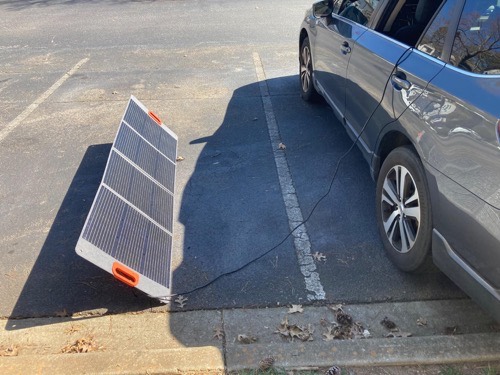
The kickstands are the problem, and it’s the single most consistent gripe. The four legs are flimsy, flex under the panel’s weight, and — critically — they’re too short to hit the steep angle low winter sun demands. Owners describe bracing the panel with camp chairs and “random stuff” to get a usable angle. There’s elastic in the legs that helps hold a moderate position, but don’t expect a rock-solid stand.
Weight makes solo setup harder. At 15.7 lbs, several buyers note it’s awkward to deploy the supports alone, and a second pair of hands genuinely helps. To be fair, owners also like the built-in solar angle guide — a small sundial that helps you point the panel right.
Practical Tip — If you camp in winter or anywhere the sun sits low, plan to prop the panel against a chair, cooler, or wall. The stock legs won’t get you to a steep enough angle, and a quick lean fixes most of the lost output.
What the Warranty Covers
There’s no listed UL, ETL, or CE safety certification here — just the IP65 rating and the manufacturer’s claims. For a budget panel, that’s the norm, but it matters more than usual because of the safety reports below.
The serious issue: several owners describe the panel smoking, popping, or catching fire when connected to a power station. One lost roughly $1,800 in burned Jackery batteries; another had a panel start smoking on a third camping trip. These aren’t the majority of reports, but they’re frequent enough that you should never leave this panel charging unattended — especially indoors, in a vehicle, or in a fire-prone area.
Here’s the redeeming part. TWELSEAVAN’s warranty actually works. Owners who hit failures — including the fire incidents — report full refunds, replacement panels and cords shipped out, and the company even paying FedEx to collect the failed unit. The 24-month warranty and 30-day money-back guarantee aren’t just marketing; buyers confirm they’re honored.
Long-Term Ownership — Monocrystalline cells normally degrade about 0.5% a year, so a real panel shouldn’t lose 20-30% of its output in a few months. When owners here report drops to 110-120W within months, that points to a hardware fault, not aging — exactly what the 24-month warranty exists to cover. Document your output early so you have a baseline.
Is It Right for You? — Use-Case Fit Matrix
| Use Case | Fit | Why |
|---|---|---|
| Charging a 1000W-class power station (camping) | Strong fit | Connector kit fits, output suits the capacity, owners charge to 100% |
| RV / van life boondocking power | Solid fit | Extends dry-camping range; portable and foldable |
| 12V car / RV battery maintenance | With caveats | Works, but needs a separate charge controller (not included) |
| Boat / marine battery charging | With caveats | IP65 helps, but fabric back and salt air raise sealing questions |
| Charging a 2000W+ power station | Borderline | Too slow alone; run two panels or step up to 400W |
| USB charging phones, drones, tablets | Strong fit | Built-in USB-C PD60W, QC3.0, and USB-A ports |
| Permanent unattended / indoor charging | Skip | Fire and smoke reports make unattended use a real risk |
| Winter / low-sun deployment | Borderline | Kickstands too short for steep angles; expect to prop it |
| Emergency backup power kit | Solid fit | Portable, broad compatibility, decent full-sun output |
| Buyer who wants certified safety specs | With caveats | No UL/ETL/CE listed; specs published but no safety cert |
| Off-grid cabin running real loads | Borderline | Fine for trickle/station charging, not a high-draw generator |
| Buyer chasing the absolute lowest price | Solid fit | About half a name-brand panel with similar build |
TWELSEAVAN 200W portable panel: Decision Snapshot
| Spec | Value |
|---|---|
| Max Power Output | 200 W (A+ monocrystalline) |
| Output Voltage | 19.8 V DC (MC4) + USB-C PD60W |
| Connector | MC4 + 5-in-1 cable (XT60 / 8020 / 7909 / 5521 / Anderson) |
| Cell Efficiency | 24% (claimed) |
| Weatherproof Rating | IP65 (ETFE surface, fabric back) |
| Charge Controller | None — uses your power station’s controller |
| Cable Length | 9.8 ft |
| Mount Type | 4 adjustable kickstands + magnetic handle |
| Best For | Charging a 1000W-class power station on camping and RV trips |
200W Portable Solar Panel: The Short Take
If you want a budget panel to charge a power station on camping or RV trips, this 200W portable solar panel review lands on a cautious yes. In clear sun it can push real numbers — owners report 180-200W feeding a Jackery — and the connector kit fits nearly every station out there. It’s portable, the USB-C and QC ports are handy, and the price is hard to argue with. Just know going in: the kickstands are flimsy, output can fade after a few months, and there are real reports of panels smoking or catching fire on power stations — so never leave it charging unattended.
Charging Performance: Claimed vs. Reality
The panel is rated at 200W — which, using a real-world factor of about 0.75, translates to roughly 150W of usable output in good sun, or around 600 Wh on a typical four-hour peak-sun day. In practice, the spread is wide.
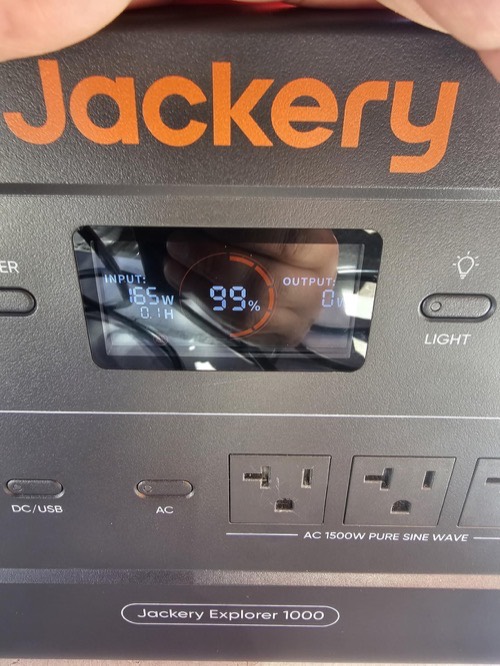
On the strong end, owners report 180-200W feeding a Jackery or EcoFlow in clear sun, with one measuring an impressive 177W in winter at 10 a.m. On the disappointing end, plenty cap at 110-125W even in full midday sun, and one buyer on a sunny island never got past 110W. The truth sits in between: expect about 150W most days, treat 190W-plus as a good-conditions bonus.
Cloudy days hold up better than you’d think. One owner over-paneled an Anker SOLIX C300 and still charged a Bluetti AC180 from 60% to 100% on a mostly cloudy day, and two panels pulled about 280W combined in partly cloudy light.
| Condition | Estimated Output | What That Means |
|---|---|---|
| Full sun, ideal angle | ~150-190 W | Charges a 1000W-class station fast; best case nears the rated 200W |
| Partly cloudy sky | ~75-100 W | Still useful; about half output, steady trickle into a station |
| Overcast / heavy clouds | ~40-60 W | Slow charge only; keeps a station topped, won’t fill it quickly |
| Panel angle 45° off optimal | ~95-130 W | Noticeable hit; the weak kickstands make this common in real use |
| Winter sun (northern US) | ~90-110 W avg | Still charges; one owner saw 177W on a clear cold morning |
| Panel in partial shade | ~20-50 W | Big drop; shading even part of the panel tanks output |
Real-World Math — Using the 0.75 output factor, this 200W panel delivers roughly 150W in good sun. Over a 4-hour peak-sun day that’s about 600 Wh. A Jackery Explorer 1000 holds around 1000 Wh — so from empty you’re looking at roughly two good sun days, or much faster if you run two panels.
One more honest note: a recurring complaint is output that starts near 150W and fades to 110-120W within a few months of daily use. If that happens to you, it’s a warranty conversation — not normal wear.
You'll probably be happy if you want: — TWELSEAVAN 200W portable panel
- A budget panel that charges a 1000W-class power station on camping and RV trips
- One connector kit that fits Jackery, EcoFlow, Bluetti, Anker, and most other stations
- Built-in USB-C and QC ports to top up phones and small gear off the panel
- Roughly half the price of a name-brand 200W panel with similar build quality
You might want to skip it if you need: — TWELSEAVAN 200W portable panel
- A panel you can leave charging unattended or indoors without worry
- Rock-solid kickstands for steep winter-sun angles without propping
- Guaranteed long-term output with no risk of fade in the first few months
- Certified safety ratings (UL/ETL/CE) before you trust it on expensive gear
The Final Word
For the right buyer, this 200W portable solar panel review comes down to value with eyes open. The TWELSEAVAN 200W solar panel charges a 1000W-class power station well in good sun, fits nearly every station thanks to its connector kit, and costs about half what a name-brand panel does — and when something goes wrong, the warranty actually pays out. For camping, RV trips, and emergency backup where you’re around to keep an eye on it, that’s a genuinely strong deal.
The catch is real, though. If you need a panel you can mount and forget — unattended, indoors, or permanently wired to expensive batteries — the fire reports and output-fade complaints make this a harder recommendation, and the brand premium starts to look like cheap insurance. Buy it for what it’s good at: an attended, portable, budget panel for trips. Set it up where you can watch it, prop it for a good angle, and you’ll likely be glad you saved the money.
Pros & Cons Analysis
Based on documented specifications and owner feedback
Pros
- Strong full-sun output for the price — owners who tested in clear conditions consistently report 180-200W, with several hitting 190-200W charging a Jackery or EcoFlow. One buyer measured 177W in winter around 10 a.m., which is genuinely good for a budget panel.
- Huge connector kit covers most power stations — the 5-in-1 MC4 cable plus three DC adapters work with Jackery, EcoFlow, Bluetti, Anker, OUPES, FlashFish, and more. Buyers repeatedly call out how nice it is that "all adapters included" and that the right tip fit their station out of the box.
- Built-in USB-C, QC3.0, and USB-A ports — the PD60W Type-C and 18W QC3.0 ports let you charge phones, tablets, drones, and Apple Watches straight off the panel while the MC4 output feeds a power station. Customers like topping up small gear without the station connected.
- Decent cloudy-day and over-panel performance — one owner over-paneled an Anker SOLIX C300 and charged a Bluetti AC180 from 60% to 100% on a mostly cloudy day. Two panels on a partly cloudy day pulled 280W combined (about 140W each), which holds up reasonably well in mixed light.
- Genuinely portable and quick to fold — at 23×22 inches folded with a magnetic handle, it stores and carries more easily than rigid panels. The magnetic open-and-close action gets called out, and vanlifers and boondockers say it has extended their dry-camping range.
- Solid, well-made first impression — across the feedback, the panel reads as "nicely assembled," "built like a tank," and "good quality you can feel." The ETFE surface sheds morning dew, and the protective backing feels tough for outdoor use.
- Warranty actually gets honored — owners who hit a failure (including the fire incidents) report TWELSEAVAN refunded the full purchase price, shipped a replacement panel and cord, and even paid FedEx to collect the failed unit. The 24-month warranty and 30-day money-back are backed up in practice.
- Great value versus name brands — buyers repeatedly frame it as half the price of the equivalent Jackery 200W panel with similar build and materials. For occasional and emergency use, many feel it works "just as good if not better" than the brand-name option.
Cons
- Serious fire and smoke incidents — the most alarming theme in the feedback. Multiple owners describe the panel smoking, popping, or catching fire when connected to their power stations, with one reporting roughly $1,800 in burned-up Jackery batteries. This is a safety pattern that can't be ignored.
- Output drops off after a few months — a recurring complaint is panels that start near 150W and fall to 110-120W within a few months of daily use. Several owners say it "loses input fast" and won't climb back above 110W even in direct sun.
- Flimsy, too-short kickstands — the single most consistent build gripe. The four legs feel flexible and don't brace the panel well, and they're too short to hit the steep angle needed for low winter sun. Owners resorted to camp chairs and "random stuff" to prop them up.
- Falls well short of 200W for many buyers — plenty of owners report a hard ceiling of 110-125W even in full midday sun, with one on a sunny island capping at 110W. Hitting the rated 200W takes near-perfect 90-degree sun and constant repositioning.
- Heavy and a two-person setup — 15.7 lbs draws a lot of "whew, heavy!" comments, and several buyers note it's awkward to deploy the supports solo. A second pair of hands makes setup noticeably easier.
- Fragile cells and cracking under handling — one owner heard a crack just repositioning the panel, and others mention the cells flexing against the floppy legs. The panel feels solid until you handle it roughly, then the rigidity isn't there.
- QC and connector quirks — reports include a DOA panel, a returned item resold as new (missing adapters, no instructions, retaped box), and an XT60i that registered as DC charging instead of solar on an EcoFlow Delta 2, capping input at 8 amps.
- Too slow for 2000W-class stations — owners say one 200W panel takes forever to fill a 2000W generator and recommend it only for 1000W-or-smaller stations. For bigger banks you'll want two panels in parallel or a 400W unit.
Our Verdict
Charging performance (3.4/5) — In clear full sun the best reports land at 180-200W feeding a Jackery, which is strong for a budget panel. But a large group of owners cap at 110-150W, and several report output sliding to 110-120W after a few months, so the honest picture is good when conditions and the unit cooperate, inconsistent otherwise.
Value & compatibility (4.0/5) — This is the panel's strongest area: roughly half the price of a comparable Jackery, a 5-in-1 MC4 cable and DC adapters that fit nearly every major power station, and a 24-month warranty owners confirm is honored — the fire risk is the asterisk on an otherwise excellent value story.
Build & weatherproofing (3.2/5) — The ETFE surface and first-impression build read well, but the fabric back leaves long-term sealing questions, the cells crack under rough handling, and multiple fire and smoke incidents pull this score down hard.
Install & usability (3.1/5) — The connector kit and magnetic handle help, but the universally panned kickstands (flimsy and too short for low winter sun) plus the 15.7 lb two-person setup drag the experience down.
Bottom line — Best for attended, vehicle-based portable power — charging a 1000W-class power station on camping, RV, and boondocking trips, plus emergency backup. Skip it for permanent, indoor, or unattended charging, steep winter-sun angles without propping, or if you require certified UL/ETL/CE safety ratings.
Frequently Asked Questions
Does the 200W panel really put out 200 watts?
In ideal conditions — clear sky, panel pointed straight at the sun at about 90 degrees, no shade — owners do report 180-200W, with several measuring 190-200W on a Jackery. In everyday use it's more common to see 135-150W, and a number of buyers cap at 110-125W even in full sun. The 200W rating is a lab figure under perfect conditions, so plan around roughly 150W of real-world output and treat anything higher as a bonus.
Will this 200W portable solar panel charge a power station?
Yes — that's its main job. The included 5-in-1 MC4 cable and three DC adapters fit Jackery, EcoFlow, Bluetti, Anker, OUPES, FlashFish, and many others. Owners report charging a Jackery 1000 to 100%, filling a Bluetti AC180, and topping up an OUPES box from 20% to 100% in about six hours. Just confirm your station's input port and adapter tip before you rely on it.
Is it safe — are there reports of it catching fire?
This is the honest concern. Several owners describe the panel smoking, popping, or catching fire when connected to their power stations, with one losing around $1,800 in burned Jackery batteries. These are not the majority of reports, but they're serious enough that you should never leave the panel charging unattended, especially indoors, in a vehicle, or in a fire-prone area. The company has refunded and replaced affected units under warranty.
Does it charge on cloudy days?
It does, just slower. One owner over-paneled an Anker SOLIX C300 and still charged a Bluetti AC180 from 60% to 100% on a mostly cloudy day, and two panels pulled about 280W combined in partly cloudy light. On heavy overcast expect output to drop to roughly 20-30% of rated — enough to keep things trickling, not enough for fast charging.
Why won't my EcoFlow recognize it as solar input?
One owner found the XT60i adapter registered on an EcoFlow Delta 2 as a DC charging input rather than a solar input, which capped the input at 8 amps. If your station treats the connection as DC instead of solar, you lose the higher solar input limit. Check that you're using the correct solar-input adapter for your specific EcoFlow model before assuming the panel is faulty.
How are the kickstands?
Weak — this is the most consistent complaint. The four legs are flimsy, flex under the panel's weight, and are too short to hit the steep angle low winter sun needs. Owners regularly brace the panel with camp chairs or other gear. The legs do have elastic that helps hold a moderate angle, but don't expect a rock-solid stand.
Will it work for a big 2000W power station?
It can, but it's slow. Owners say one 200W panel takes a long time to fill a 2000W-class generator and recommend it mainly for 1000W-or-smaller stations. For larger banks, run two of these in parallel or step up to a 400W panel. Many buyers find buying two 200W panels cheaper and more flexible than a single 400W unit.
Does the output hold up over time?
Mixed. Plenty of owners are happy after months of use, including one nine-month vanlife stretch. But a recurring complaint is panels that start near 150W and fall to 110-120W within a few months of daily use. If your output drops noticeably and stays low in direct sun, contact the seller while you're still inside the 24-month warranty.
What does the IP65 rating actually cover?
IP65 means it's protected against dust and low-pressure water jets from any direction — rain and spray are fine, and the ETFE surface sheds morning dew well. It is not rated for submersion. The back of the panel is high-density polyester canvas rather than a sealed hard shell, so some owners are unsure how the rating holds long-term. Let it dry before folding and storing it.
Is it worth buying a no-name panel over a Jackery?
For occasional, emergency, and camping use, many owners say yes — it's about half the price of an equivalent Jackery panel with similar build and materials, and it works just as well or better in their testing. The trade-offs are QC consistency, the fire reports, and weaker kickstands. If you want a set-and-forget panel for permanent or unattended use, the brand premium and a longer track record may be worth it.
Technical Specifications
| Brand | TWELSEAVAN |
|---|---|
| Model / SKU | 200W portable panel (ASIN B0DK6TM95M) |
| Panel format | Folding portable panel |
| Rated output (Pmax) | 200W |
| Cell technology | A+ monocrystalline |
| Module efficiency | — |
| Voltage at maximum power (Vmp) | 19.8V |
| Current at maximum power (Imp) | 10.1A |
| Open-circuit voltage (Voc) | 23.4V |
| Short-circuit current (Isc) | 10.8A |
| Power tolerance | — |
| Maximum system voltage | — |
| Maximum series fuse | — |
| Output connector | MC4 with Anderson, XT60, DC8020, DC7909, DC5521, USB-C, and USB-A |
| Output cable | 9.8 ft |
| Deployed dimensions | 82.9 × 23 in |
| Folded dimensions | 23 × 22 × 1.9 in |
| Weight | 15.7 lb |
| Surface and frame | ETFE surface with polyester-canvas body |
| Positioning / mounting | Four integrated kickstands |
| Environmental protection | Panel IP65 |
| Wind / snow load | — |
| Operating temperature | — |
| Included accessories | Panel, output lead, adapter set, and storage bag |
| Product warranty | 24 months |