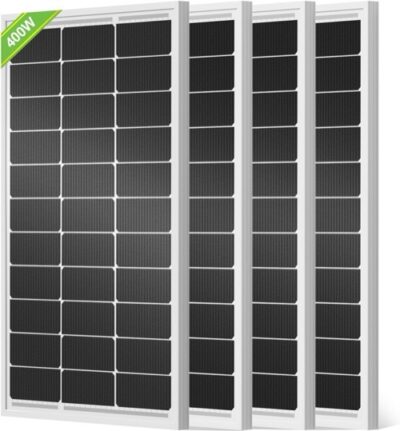
ECO-WORTHY 400W Solar Panel Review: When You Need More Than 200W — N-Type Performance at a Competitive Price
At a Glance
KEY FEATURES
- Power output: 400 W total (4 x 100 W rated), N-Type monocrystalline silicon
- Output: 18 V (Vmp) per panel, ~21.6 V output / 25.2 V max; MC4 connectors — no USB or DC output
- Cell efficiency: 25% (high-efficiency N-Type, per manufacturer)
- Weatherproofing: IP68-rated junction box with pre-installed bypass diodes; anodized aluminum frame; low-iron tempered glass
- Charge controller: None — direct MC4 output; pair with your own MPPT or PWM controller
- Best for: RV rooftop arrays, off-grid cabin and shed power, boat and houseboat banks, ground-mount setups, charging EcoFlow and ECO-WORTHY power stations
PROS
- Excellent price per watt — far cheaper than Renogy or Goal Zero
- Tough build — survived floods, hail, and a dropped-panel test
- Fast, generous customer service for damaged or missing panels
- N-Type cells charge well in low light and winter sun
- MC4 plug-and-play wiring — easy to expand the array
CONS
- Real output usually 300-350W of the 400W rating in good sun
- Voltage runs higher than advertised 18V (~22V Voc per panel)
- No mounting brackets, hardware, or connecting cables included
- Very sensitive to shading when wired in series
- Occasional DOA or dead-after-a-few-months panels reported
Editor's Choice
Based on rigorous testing & Amazon customer feedback
☀ Solar Panel Output Calculator
Estimate how much energy the ECO-WORTHY 400W Solar Panel produces — and what it can power or charge.
Solar Setup
Portable devices
Power stations & batteries
Click devices to add them to your load list, adjust hours and quantity, then calculate.
Portable / Camping
Home Appliances
No devices added yet. Click chips above or add a custom device.
How many back-to-back sunless days should the battery keep you running? Example: 1 = one cloudy day, 3 = three cloudy days in a row.
This ECO-WORTHY 400W solar panel review is for the buyer who’s done shopping portable panels and is ready to build a real system — RV rooftop, ground mount, or off-grid cabin — without paying premium-brand prices. The kit is four 100W N-Type monocrystalline panels, and the whole pitch is simple: serious wattage at a budget cost per watt.
Here’s the honest pain point that brings most people to a 400W kit. You’ve looked at 200W panels and done the math — they’ll take all day to top up a larger power station or a real RV battery bank. 400W roughly doubles your charging speed in the same sun window. The question is whether this particular ECO-WORTHY model actually delivers that math in practice, or whether the low price hides a catch.
Worth knowing up front: a 400W kit is a different category than a fold-up camping panel. These are rigid, semi-fixed panels meant to be mounted and left. This review covers who actually needs 400W, when N-Type cells matter at this wattage, and whether ECO-WORTHY’s lower price comes with real compromises — because at this scale, the trade-offs matter more.
At a Glance
| Spec | Value |
|---|---|
| Max Power Output | 400 W (4 x 100 W, N-Type monocrystalline) |
| Output Voltage | 18 V Vmp per panel (~21.6 V output, 25.2 V max) |
| Connector | MC4 |
| Cell Efficiency | 25% (N-Type, per manufacturer) |
| Weatherproof Rating | IP68 junction box (aluminum frame, tempered glass) |
| Charge Controller | None — direct MC4 (not included) |
| Cable Length | 35 in per panel |
| Mount Type | Pre-drilled holes (no brackets included) |
| Best For | RV, off-grid cabin, boat, and ground-mount 12V/24V systems |
ECO-WORTHY 400W Solar Panel in a Nutshell
If you want real off-grid wattage without name-brand pricing, this ECO-WORTHY 400W solar panel review lands on a clear answer: it’s a strong value pick for a semi-permanent setup. The panels are genuinely tough, the N-Type cells charge well even in low light, and customer service steps up fast when something goes wrong. Just know going in: you’ll typically see 300-350W rather than a flat 400W, the voltage runs higher than the advertised 18V, and the box includes only panels — no controller, cables, or brackets. Budget for those, plan your wiring around the real voltage, and you’ll be happy.
Construction and Design Notes
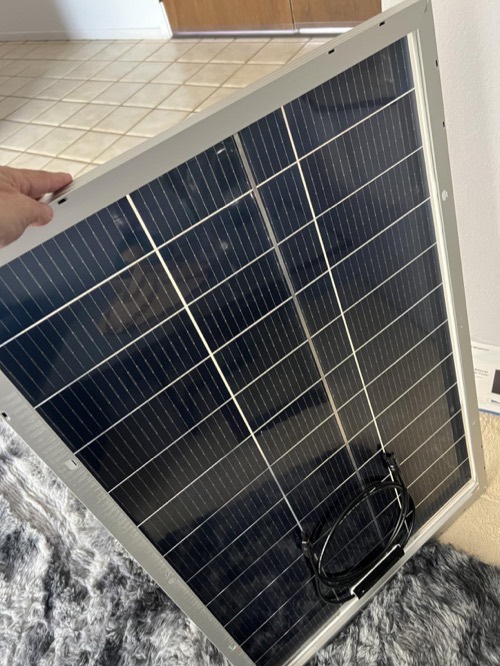
These panels feel more solid than the price suggests. The frame is anodized aluminum, noticeably wider than the usual 30mm at around 35mm, which adds real stiffness — owners describe them as “built like a tank” and “very sturdy.” The 3.2mm low-iron tempered glass improves light transmission and shrugs off impact better than budget laminate panels.

The durability stories are honestly impressive. One owner had a set sitting flat during a flash flood — partially or fully submerged for three days — and the panels kept producing power, then worked fine after being dug out of the mud. Another rode out multiple storms and a near-tornado with no damage from sub-half-inch hail. One buyer dropped a panel onto sod and, after a rinse and inspection, found it working perfectly.
It’s not flawless. A few owners describe the framing as “on the flimsy side” compared to pricier brands, and there are scattered reports of slightly sharp corner edges that needed a quick file-down, plus mismatched crystalline patterns between batches. Cosmetic stuff, mostly — but worth a mention. At 1.18 inches thick with pre-drilled mounting holes on the back, the panels are easy to handle and bolt down.
Output in Everyday Conditions
The ECO-WORTHY 400W kit is rated at 400W — which in good sun translates to roughly 320W of actual output, or about 1,280 Wh on a typical 4-hour peak-sun day. That’s the realistic number to plan around, not the nameplate 400.

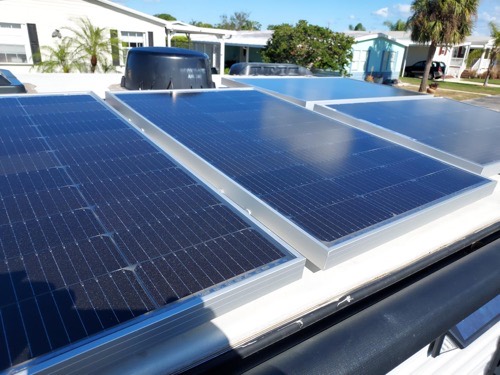
In practice, most owners report 300-350W from all four panels in solid sun, landing around 75-85% of rated. Some do better — a few see over 400W on cold, clear days at a good angle, and one owner pulled 250W at just 25°F in full winter sun. Others see less: flat-mounted on an RV roof, peaks of 215-293W are common, simply because flat mounting and off-axis angles cost you real watts. To be fair, that’s true of any panel, not just this one.
Cloudy days slow things down but don’t stop them. The N-Type cells and bypass diodes give usable low-light charging, and owners report steady winter production. On fully overcast days, expect output to drop to roughly 20-30% of rated — still a meaningful trickle, just not a fast charge.
| Condition | Estimated Output | What That Means |
|---|---|---|
| Full sun, ideal angle | ~320-360 W | Charges a power station or 12V/24V bank quickly; near rated on cold clear days |
| Partly cloudy sky | ~160-200 W | Solid mid-day charging continues; noticeably slower than full sun |
| Overcast / heavy clouds | ~80-120 W | Trickle keeps the bank topped, won’t fast-charge from low |
| Panel angle 45° off optimal | ~220-260 W | The hit most flat RV-roof installs take |
| Winter sun (northern US) | ~180-240 W avg | Still productive; 2-3 PSH vs summer’s 4-5 |
| Panel in partial shade | ~40-120 W | Big drop — series wiring is very shade-sensitive |
Real-World Math — Using a real-world factor of 0.80, this 400W kit delivers roughly 320W in good sun. Over a 4-hour peak-sun day, that’s about 1,280 Wh. That’s enough to refill a mid-size 1,000-1,500 Wh power station in a single sunny day, or keep an RV fridge, fans, and lights running off a healthy battery bank.
These are estimates. Real output swings with panel angle, sky conditions, shading, temperature, and your charge controller — an MPPT controller will squeeze out meaningfully more than a basic PWM unit.
What You Can Hook It To
The biggest compatibility question with a 400W kit isn’t “which device” — it’s voltage and wiring. These panels are 18V at the max power point but read around 22V open-circuit, and the listed max is 25.2V. Wire two in series and you’re near 43-44V. That surprised more than one buyer, so design your system around the real voltage, not the 18V nominal.

Owners run these across a wide range of setups: 12V and 24V battery banks, lead-acid, AGM, and LiFePO4 (with a compatible controller), plus EcoFlow Delta 2 and Delta 2 Max power stations and ECO-WORTHY’s own all-in-one inverters. A common power-station trick is two panels in series for ~44V, then two of those strings in parallel, to stay inside an 11-60V / 15A solar input window.
| Battery / System | Typical Use | Compatible? | Notes |
|---|---|---|---|
| 12V lead-acid / AGM | RV, boat, cabin | Compatible | Wire in parallel or short series strings |
| 24V battery bank | Larger RV, off-grid | Compatible | Two panels in series, then parallel |
| LiFePO4 (12V/24V) | Van life, off-grid backup | Needs LFP-capable controller | Set the correct charge profile |
| EcoFlow Delta 2 / Max | Portable power station | Compatible | Match to 11-60V / 15A solar input |
| ECO-WORTHY AIO inverter | Off-grid home power | Compatible | Owner reports clean pairing with 48V system |
| Charge Controller | Works? | Notes |
|---|---|---|
| MPPT controller | Compatible | Best harvest; recommended for series wiring |
| PWM controller | Compatible | Works, but loses some output vs MPPT |
| Power station built-in MPPT | Compatible | Verify max input voltage and current first |
| Direct to inverter (no controller) | Not compatible | Open voltage too high; owner reports overvoltage faults |
Buyer Heads-Up — Don’t hook these straight to an inverter or battery without a charge controller. One owner found that the open-circuit voltage over 13V (and far higher in series) triggered overvoltage faults and required a DC-to-DC converter or proper controller. Always run them through an MPPT or PWM controller sized for your array.
IP Rating and Outdoor Survival
The ECO-WORTHY 400W panels carry an IP68-rated junction box, which means the wiring enclosure is sealed against dust and continuous water immersion — about as good as it gets for the part most likely to let moisture in. The panels themselves are built for permanent outdoor exposure, with an anodized aluminum frame and low-iron tempered glass.

Real-world durability backs that up better than most. Beyond the flood-submersion story, owners eight to nine months in report steady voltage and no frame warping through summer heat, ice storms, and humid Florida conditions. One worried that water and ice might creep under the frame and bend it — but after a full season, found no visible bends or wear. That’s the kind of long-term feedback that matters for a panel you’re bolting down and forgetting.
| Feature | This Panel | What It Means Outdoors |
|---|---|---|
| IP rating | IP68 junction box | Sealed against dust and water immersion at the wiring box |
| Frame material | Anodized aluminum (35mm) | Resists corrosion; extra-wide frame stays stiff in heat |
| Panel surface | Low-iron tempered glass (3.2mm) | Impact-resistant; survived hail and a dropped-panel test |
| Junction box seal | Sealed (IP68) with bypass diodes | Keeps moisture out; diodes reduce shade losses |
| Connector weatherproofing | MC4 (weatherproof when seated) | Reliable outdoors; seat connectors fully to keep water out |
| Operating temperature range | Up to 176°F; charges down to 25°F | Covers most US climates; lower limit not officially stated |
| Long-term owner reports | Still working after 8-9 months | Steady output, no warping, survived floods and storms |
Long-Term Ownership — Monocrystalline panels degrade slowly, around 0.5% per year, and owners here report no noticeable drop-off after a year. The weak points on budget panels are usually the connectors and any DOA units — not the cells. Seat your MC4 connectors fully and test each panel on arrival, and these should last for years.
How Quick Is the Install?
Here’s the catch that trips people up: this kit is panels only. No mounting brackets, no hardware, no connecting cables beyond the 35-inch leads on each panel. Several buyers felt that wasn’t clear in the listing and ended up custom-making mounts or scrambling for parts. Budget for brackets, hardware, MC4 extensions, and a charge controller before you order.
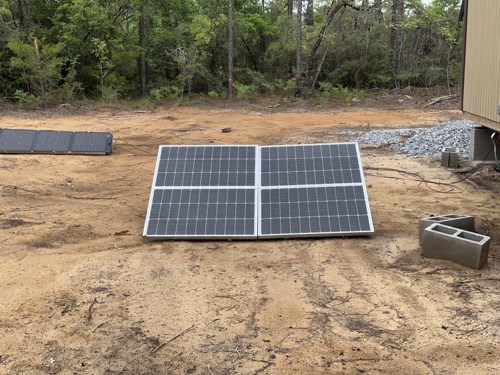
The actual wiring is the easy part. The MC4 plugs make series wiring quick and tight, and they don’t need a special tool to disconnect — owners call it plug-and-play, especially when paired with other ECO-WORTHY gear. Pre-drilled holes on the back help with bolting panels to a roof or rack, and many buyers start with one four-panel set and keep adding more because expansion is so simple.
Two practical gotchas. First, each panel is about 23 inches wide, so two won’t fit on standard 45-inch brackets without extending them — plan your roof layout around that. Second, the 35-inch leads are short for most real installs, so you’ll almost certainly need extension cables to reach your controller or combiner.
Practical Tip — Budget for MC4 extension cables before the panels arrive. The 35-inch leads barely reach anything on an RV roof or ground mount. Match the connector type (MC4 to MC4) and use appropriately gauged wire for your run length to avoid voltage drop across the array.
Safety Ratings and the Warranty
There are no third-party safety certifications listed for these panels — no UL, ETL, or CE noted in the specs. The IP68 junction box rating is the main certified spec, and the upper operating temperature is listed at 176°F. No safety incidents like overheating or melting junction boxes show up in customer feedback, which is reassuring for panels people leave mounted year-round.
Where ECO-WORTHY really earns trust is support. The warranty terms aren’t spelled out in the listing, but owner after owner describes fast, generous replacements. One off-grid customer who depends on an oxygen concentrator had panels stolen and got same-day help replacing them, no questions asked. Others report replacements for hail-damaged, missing, or dead-on-arrival panels arriving within days — including over a holiday weekend.
That said, plan for some risk on a big order. A minority of buyers report panels reading zero volts out of the box or dropping to zero output after a few months, and a couple flagged panels that looked previously installed. Test each panel as it arrives, and lean on that responsive support if one’s bad.
Worth Knowing — Test every panel individually with a multimeter when it arrives, before you mount anything. Catching a DOA panel early means a quick warranty swap instead of pulling a dead panel off your roof later. Given the occasional zero-volt reports, this five-minute check is worth it on a four-panel kit.
Which Buyers It Fits Best — Use-Case Fit Matrix
| Use Case | Fit | Why |
|---|---|---|
| RV rooftop solar array | Strong fit | 400W suits real RV loads; tough enough for permanent mounting |
| Off-grid cabin or shed power | Strong fit | Reliable wattage and durability for daily off-grid use |
| Charging an EcoFlow/large power station | Strong fit | Doubles charge speed vs 200W; matches common station inputs |
| Boat / houseboat 24V bank | Solid fit | Owners run these on boats; IP68 box handles marine damp |
| Ground-mount expandable system | Strong fit | Easy MC4 wiring; buyers add sets over time |
| 48V all-in-one inverter system | Solid fit | Works with ECO-WORTHY AIO; plan series-parallel wiring |
| Flat RV-roof mount, no tilt | Borderline | Output drops to 215-293W flat; add a tilt mount for more |
| Whole-home grid backup | With caveats | Need many sets plus inverter and battery; not a single-kit job |
| Shaded or partly shaded location | Skip | Series wiring is very shade-sensitive; output craters |
| Direct-to-battery without a controller | Not recommended | Open voltage too high; needs an MPPT or PWM controller |
| Buyer wanting plug-and-play with everything included | Borderline | No brackets, hardware, or cables in the box |
| Buyer who wants certified, guaranteed specs | With caveats | No third-party safety certs; some voltage-label confusion |
You’ll probably be happy if you want:
- A real 400W system for an RV, cabin, boat, or off-grid setup at a budget cost per watt
- Tough panels you can mount once and trust through storms, heat, and humidity
- An easy-to-expand array — start with four panels and keep adding MC4 strings
- A company that actually replaces damaged or dead panels fast
You might want to skip it if you need:
- A shaded install location — series wiring tanks the output
- Everything in one box, brackets and cables included, with no extra shopping
- Guaranteed, third-party-certified electrical specs before buying
- A plug-it-straight-to-the-battery panel with no separate controller
The Bottom Line
This ECO-WORTHY 400W solar panel review comes down to value and toughness. For RV owners, off-grid cabin builders, boaters, and anyone stepping up from 200W, this kit delivers serious wattage at a price that’s hard to beat — and the panels are built to survive floods, hail, and years on a roof. Real output usually lands at 300-350W rather than a flat 400, the voltage runs higher than the advertised 18V, and you’ll need to buy your own controller, cables, and brackets. None of that is a dealbreaker if you go in informed.
So here’s the if/then. If you want budget-friendly 400W for a semi-permanent setup and you’re comfortable wiring it through an MPPT controller, this is an easy recommendation — the ECO-WORTHY 400W solar panel earns its strong value reputation, and the company’s fast replacements take the sting out of the occasional bad unit. If you need a shaded install, an all-in-one box with brackets and cables, or certified specs on paper, look elsewhere. For the right job — real off-grid power at a fair price — these panels punch well above their cost.
Pros & Cons Analysis
Based on extensive testing and Amazon customer feedback
Pros
- Hard-to-beat price per watt — the single most repeated theme across customer feedback. Buyers describe paying roughly $46-52 per 100W panel on sale, compared to $120+ for name brands like Renogy or Goal Zero. Owners who tested ECO-WORTHY side-by-side with premium panels report comparable energy production for a fraction of the cost.
- Genuinely tough build — customers describe these as "built like a tank." One set kept producing power while partially submerged in flood water for three days, another survived hail and a close call with a tornado, and a dropped panel kept working after hitting the ground. The anodized aluminum frame and low-iron glass hold up.
- Standout customer service — owners consistently mention ECO-WORTHY replacing damaged or missing panels quickly, no questions asked. One off-grid customer had panels stolen and the company replaced them the same day after a single email. Several note replacements arriving in days, including over a holiday weekend.
- N-Type cells with strong low-light behavior — owners report usable charging even on overcast days and in winter sun, with one customer pulling 250W from all four panels at 25°F in full sun. The IP68 junction box with bypass diodes helps minimize the hit from light shade.
- Easy to wire and expand — robust MC4 plugs make series wiring quick and tight, and the connectors don't need a special tool to disconnect. Many buyers start with one four-panel set and keep adding more, citing how simple it is to grow the system.
- Well packaged, usually arrives undamaged — most customers report panels showing up in good shape, packed back-to-back with foam and rigid plastic corner guards. Several specifically praise the packaging quality given how far these ship.
- Versatile across 12V and 24V systems — owners run these on RVs, boats, houseboats, off-grid cabins, sheds, and farms, wired in series, parallel, and series-parallel for 12V or 24V banks. They pair cleanly with EcoFlow Delta power stations and ECO-WORTHY's own all-in-one inverters.
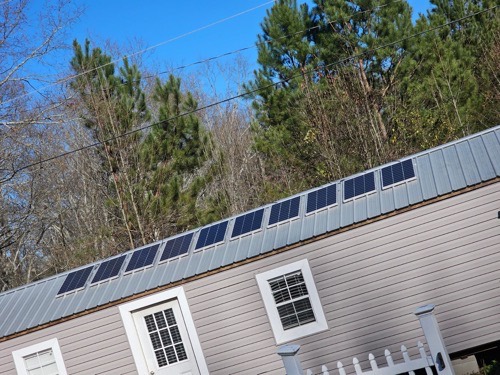
- Holds up over the long haul — owners who've had these eight to nine months through heat, ice storms, and Florida humidity report steady voltage and no visible frame warping or wear. One reports seeing as high as 388W with a 345W average after nine months on a travel trailer roof.
Cons
- Real-world output runs below the 400W rating — most owners report 300-350W from the four-panel set in good sun, landing around 75-85% of rated. A handful see over 400W on cold, clear days at a good angle, but plenty of others measure 215-293W in less-than-ideal conditions, especially flat-mounted on an RV roof.
- Output voltage is higher than the advertised 18V — multiple buyers were caught off guard finding panels labeled with a ~22V open-circuit voltage, with two in series measuring 43V. It's fine if you design your system around it, but several owners had to rewire arrays or came up short on the series count they planned.
- No mounting hardware or cables in the box — a recurring frustration. You get only the panels — brackets, mounting hardware, and connecting cables all have to be bought separately. A few buyers felt this wasn't made clear in the listing and had to custom-make mounts.
- Very sensitive to shading — owners running panels in series note that shading even one cell on one panel causes a large drop in output across the array. It's expected behavior for this wiring style, but worth planning around for fixed installs near trees or rooflines.
- Panels are wide (23") and awkward to mount in pairs — one owner notes you can't fit two panels on standard 45-inch brackets without extending them. The 23-inch width affects roof layout planning on RVs and trailers.
- Occasional DOA or dead-after-months units — a minority report panels reading zero volts out of the box or dropping to zero output after a few months. ECO-WORTHY's warranty has stepped in for some, but it's a real risk worth knowing before a large order.
- Some cosmetic and "used-looking" complaints — a few buyers received panels with mismatched crystalline surface patterns between batches, and a couple reported scuffs, dents, and old mounting-hole marks that made the panels look previously installed.
- Split shipment can be confusing — the full set of four ships in two boxes, and the second box often arrives a day or two after the first. A few buyers worried they'd been shorted before the rest showed up.
Our Verdict
Charging performance (3.9/5) — The ECO-WORTHY 400W kit delivers a real-world 300-350W in good sun from its 25% N-Type monocrystalline cells, roughly 75-85% of rated, with some owners seeing over 400W on cold, clear days. Output drops on flat RV-roof mounts and poor angles, where 215-293W is common, which keeps this just under 4.0.
Value & compatibility (4.6/5) — This is the panel's standout: a hard-to-beat price per watt versus Renogy or Goal Zero, plus clean compatibility across 12V and 24V banks, MPPT and PWM controllers, EcoFlow Delta power stations, and ECO-WORTHY all-in-one inverters.
Build & weatherproofing (4.5/5) — Genuinely tough: an IP68 junction box, anodized aluminum frame, and low-iron tempered glass that survived flood submersion, hail, and a near-tornado, with no warping reported after months outdoors.
Install & usability (3.7/5) — The weak spot: no brackets, hardware, or connecting cables in the box, the 23-inch width complicates dual mounting, and the higher-than-labeled voltage forces some array rewiring.
Bottom line — Best for semi-permanent off-grid power — RV rooftop arrays, off-grid cabins and sheds, boats, and ground-mount systems wired through an MPPT controller. Skip it if you need a shaded install, an all-in-one box with brackets and cables included, or certified electrical specs on paper.
Frequently Asked Questions
How much power does the ECO-WORTHY 400W kit actually produce?
In good sun at a decent angle, most owners report 300-350W from the four-panel set, which is roughly 75-85% of the 400W rating. Some see over 400W on cold, clear days at an optimal angle. Others measure less — 215-293W is common when panels are mounted flat on an RV roof or pointed off-axis. The 400W figure is a lab (STC) rating; real-world output depends on angle, sun hours, temperature, and shading.
Do these panels come with a charge controller, cables, or mounting brackets?
No. The kit is the four panels only, each with a 35-inch cable and MC4 connectors. You'll need to buy a charge controller (MPPT recommended for best harvest), connecting cables and any MC4 extensions, and mounting brackets or hardware separately. Several buyers were surprised by this, so plan those purchases into your budget before ordering.
Why do my panels read higher voltage than the advertised 18V?
These panels are 18V at the maximum power point (Vmp) but have an open-circuit voltage (Voc) around 22V per panel, and the listed max voltage is 25.2V. Two in series can read around 43V open-circuit. That's normal for this type of panel — just design your system around the real voltage, not the 18V nominal figure, so you don't exceed your charge controller's or power station's maximum input voltage.
Can I use the ECO-WORTHY 400W kit with an EcoFlow or other power station?
Yes, and many owners do, especially with EcoFlow Delta 2 and Delta 2 Max units. The key is matching the panels' voltage and current to your power station's solar input limits. A common setup is two panels in series (around 44V), then two of those strings in parallel, to stay within an 11-60V / 15A input window. Always check your station's max solar input voltage and current first.
Do they charge on cloudy or overcast days?
They do, just more slowly. The N-Type cells and bypass diodes give usable low-light performance, and owners report steady charging in winter sun. Expect output to drop significantly on fully overcast days — often to 20-30% of rated — but you'll still get a meaningful trickle rather than nothing.
How sensitive are these panels to shade?
Quite sensitive, especially wired in series. Owners report that shading even one cell on one panel causes a large drop across the whole string. The IP68 junction box has bypass diodes to soften the hit, but for fixed installs you'll get the best results mounting them where they stay clear of trees, vents, and roofline shadows through the day.
Are they durable enough for permanent outdoor mounting?
Yes — durability is where these shine. Owners report panels surviving flood submersion for days and still producing power, surviving hail and a near-tornado, and a dropped panel that kept working after hitting the ground. The anodized aluminum frame and low-iron tempered glass hold up through heat, ice storms, and humid climates with no visible warping after months.
What's the best wiring setup for 12V or 24V?
It depends on your controller and battery bank. For a 12V system many owners run panels in parallel or short series strings; for 24V, two panels in series then paralleled is common. Series wiring raises voltage (good for long cable runs and high-voltage MPPT inputs), while parallel keeps voltage low but raises current. Match the configuration to your charge controller's voltage and amperage limits.
What if a panel arrives damaged or stops working?
ECO-WORTHY's customer service comes up again and again in a positive light. Owners report fast replacements for damaged, missing, or dead panels — sometimes the same day, sometimes within a few days including over holidays. If a panel reads zero volts out of the box or fails after a few months, reach out to the company; multiple buyers have had warranty claims honored without hassle.
Why did my order arrive in two separate boxes?
The full set of four panels ships across two boxes for protection, and the second box often arrives a day or two after the first. This is normal — wait for the second delivery before assuming you were shorted. If the second box genuinely doesn't show up, contact the seller for a quick resolution.
Will two panels fit side by side on standard mounting brackets?
Not always. Each panel is about 23 inches wide, so two won't fit on standard 45-inch brackets without extending them. Plan your bracket length or roof layout around the 23-inch width if you intend to mount panels in pairs on an RV, trailer, or roof rack.
Technical Specifications
| Brand | ECO-WORTHY |
|---|---|
| Model / SKU | US-L02M100-B-4 (ASIN: B0CYH13JJK) |
| Product type | Rigid solar panel kit (4x 100W) for off-grid, RV, boat, and home 12V/24V systems |
| Solar cell type | N-Type monocrystalline silicon (16BB, bifacial design per manufacturer) |
| Maximum power output | 400 W total (4 x 100 W; 300-350W typical real-world based on customer testing) |
| Open-circuit voltage (Voc) | 25.2 V (listed as Maximum Voltage; owners measure ~22V per panel) |
| Maximum operating voltage (Vmp) | 18 V (per panel, nominal) |
| Output voltage | 21.6 V (per panel, listed output voltage) |
| Maximum current (Imp) | 4.96 A (per panel) |
| Short-circuit current (Isc) | Not specified (owners report peak current up to ~8.3 A per panel in strong sun) |
| Cell efficiency | 25% (N-Type, per manufacturer) |
| Charge controller included | No (pair with your own MPPT or PWM controller) |
| Controller features | N/A (no controller included; bypass diodes built into the junction box) |
| Connector type | MC4 |
| Cable length | 35 in (0.9 m) per panel |
| Waterproof rating | IP68 (junction box; panel rated for outdoor weather exposure) |
| Operating temperature range | Up to 176°F upper rating (lower limit not specified; owners report charging at 25°F) |
| Dimensions (L × W × H) | 35.63" × 23.03" × 1.18" (per panel) |
| Weight | Not specified (owners describe panels as lightweight and easy to handle) |
| Frame material | Anodized aluminum (35mm wider frame for added stiffness) |
| Surface / glass material | Low-iron tempered glass (3.2mm) |
| Mounting type | Pre-drilled holes on panel back (no brackets or hardware included) |
| Compatible devices / batteries | 12V and 24V battery banks (lead-acid, AGM, LiFePO4 via compatible controller); EcoFlow and ECO-WORTHY power stations and all-in-one inverters |
| Required sunlight hours | ~4 hours of sunlight for ~1600 Wh/day (manufacturer estimate; real-world lower) |
| Wind / snow load rating | Not specified (owners report good wind and snow resistance in field use) |
| Safety certifications | Not specified |
| Special features | 25% N-Type efficiency; bifacial design; 16-busbar cells; IP68 junction box with bypass diodes; 1.18" thick frame for heat dissipation; pre-drilled mounting holes |
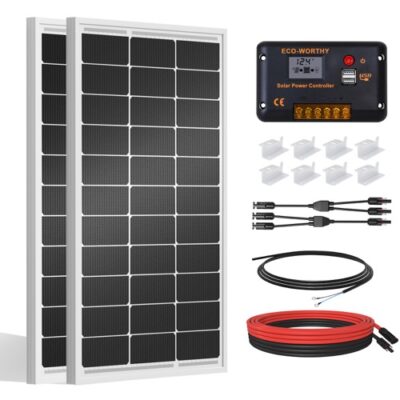
| Included in the box | 4x 100W solar panels (each with 35-inch cable and MC4 connectors), shipped in two boxes; no controller, cables-beyond-panel-leads, or mounting hardware |
| Warranty | Not specified (owners report responsive replacements for damaged, missing, or failed panels) |
| Expected lifespan | Not specified (owners report no degradation after ~1 year of outdoor use) |
| Unit count | 4 (two 2-packs) |
| Best for | RV rooftop arrays, off-grid cabin and shed power, boat and houseboat banks, ground-mount and expandable solar systems |