
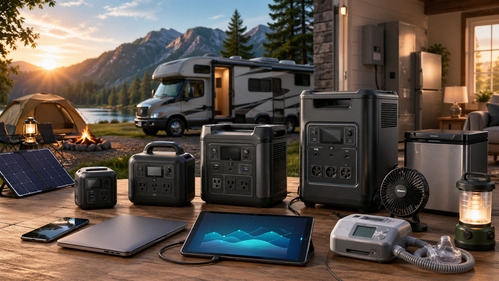
Portable Power Station Size Calculator
Choose the devices you want to run and estimate the power station capacity you need for camping, blackouts, RV trips, or backup power.
1. Choose your use case
2. Add devices
Click a device to add it. You can edit watts, quantity, hours per day, and days for each one.
No devices added yet. Click a device above to add it, or pick a use case.
3. Battery reserve
Keeping some battery in reserve gives you a more realistic recommendation and avoids planning around a completely drained battery.
4. Will you recharge during use?
Fine-tune inverter losses, solar conditions, and device power type.
Portable power stations lose some energy when converting battery power into AC outlet power. "Typical" matches most modern units.
When this section is open, each device row also shows a "Power type" picker (Auto / AC inverter / DC or USB).
Use this portable power station size calculator to estimate how much battery capacity you need for camping, blackouts, RV trips, CPAP use, work gear, or emergency backup power.
The basic idea is simple: your devices use watts, your power station stores watt-hours, and your runtime depends on how long you want those devices to run. This calculator helps turn that into a practical battery size recommendation, so you do not have to guess between a small 300Wh unit, a mid-size 1000Wh station, or a larger 2000Wh+ backup system.
How to Use This Calculator
Start by choosing your main use case. This gives the calculator a better starting point for the kind of devices you are likely to run.
Then add the devices you want to power. You can adjust the watts, quantity, hours per day, and number of days for each device. For example, a phone charger may only need 10W for a few hours, while a refrigerator, CPAP machine, laptop, fan, or router may need a very different battery size.
Finally, choose your battery reserve. A 20% reserve is a good default because real-world portable power station runtime is rarely perfect. Inverter losses, battery protection settings, temperature, and device startup surges can all reduce usable capacity.
The Simple Formula
A portable power station size estimate starts with this formula:
Device watts × hours used = watt-hours neededFor multiple devices:
Total watt-hours = all device watt-hours added togetherFor a more realistic estimate, include efficiency losses and battery reserve:
Required nominal Wh = load Wh ÷ efficiency ÷ (1 − reserve fraction)For example, 800Wh of device use ÷ 0.85 efficiency ÷ 0.80 usable after reserve ≈ 1,177Wh of nominal capacity. These are illustrative assumptions, not measured performance. A 1,000Wh station would supply about 680Wh to the loads under the same assumptions. Solar recovery, standby consumption, and output limits need separate checks.
Quick Size Guide
| Power Station Size | Best For | Not Ideal For |
|---|---|---|
| 200Wh–500Wh | Phones, laptops, lights, routers, small fans, short trips | Fridges, heaters, microwaves, long outages |
| 500Wh–1000Wh | Camping, CPAP, laptops, routers, lights, small appliance backup | Heavy kitchen appliances or multi-day home backup |
| 1000Wh–2000Wh | RV use, refrigerator backup, longer camping trips, short outages | Whole-home backup or long high-watt loads |
| 2000Wh–3000Wh | Fridges, sump pumps, RV loads, power tools, longer outages | Lightweight travel or backpack-style portability |
| 3000Wh+ | Home backup, large RV setups, off-grid use, high-demand appliances | Casual camping or small-device charging |
What Size Portable Power Station Do You Need?
For basic camping, a smaller power station can be enough if you are only charging phones, laptops, LED lights, cameras, and a fan. In that case, a 300Wh to 700Wh unit may be realistic.
For CPAP overnight use, the right size depends heavily on your machine, pressure settings, heated humidifier, and heated tube. Many setups can work with a mid-size power station, but you should always check your CPAP power requirements and manufacturer guidance before relying on any backup battery.
For refrigerator backup, capacity and surge output both matter. The power station needs enough continuous output to run the fridge and enough surge capacity to handle compressor startup. Runtime also depends on how often the fridge cycles on and off.
For RV or van life, think beyond one device. Add your fridge, lights, router, fan, water pump, laptop, Starlink, and small appliances together. A 1000Wh unit may work for light use, while a 2000Wh to 3000Wh system is more realistic for longer trips or higher comfort.
Common Runtime Examples
| Setup | Estimated Use | Practical Size Range |
|---|---|---|
| Phone, laptop, LED light | 300Wh–500Wh per day | 500Wh–700Wh |
| CPAP for one night | 300Wh–600Wh depending on settings | 500Wh–1000Wh |
| Router, modem, laptop, lights | 500Wh–900Wh per day | 700Wh–1200Wh |
| Camping fridge, lights, fan, devices | 800Wh–1500Wh per day | 1000Wh–2000Wh |
| Refrigerator backup | 1000Wh–2000Wh+ depending on runtime | 1500Wh–3000Wh |
| RV essentials | 1500Wh–3000Wh+ per day | 2000Wh–3000Wh+ |
These ranges are starting points, not guaranteed runtimes. Use measured watts and hours in the calculator; preset devices are estimates. The power-station sizing guide explains how to turn the result into an output and capacity shortlist.
Do Not Choose by Battery Capacity Alone
Battery capacity tells you how long a power station can run your gear. Output wattage tells you what it can run in the first place.
For example, a 1000Wh power station may have enough stored energy for a small fridge, but it still needs enough AC output and surge capacity to start the compressor. The same applies to coffee makers, microwaves, kettles, heaters, power tools, and pumps.
Before buying, check three things:
- Battery capacity in Wh — how much energy it stores
- Continuous AC output in watts — what it can run steadily
- Surge rating — whether it can handle startup spikes
Battery Reserve Matters
Planning to drain a battery from 100% to 0% is not ideal. A reserve gives you extra room for real-world losses, unexpected loads, cold weather, and devices that use more power than expected.
For most people, a 20% reserve is a good default. For emergency backup, CPAP use, or longer outages, a larger reserve can make sense.
Should You Add Solar Charging?
Solar can replace some consumed energy while it is available, but the battery still has to bridge the hours without useful input. Test a low-sun scenario before reducing storage. Our 100W solar-panel load budget shows the distinction between daily harvest and continuous power.
A 100W panel is helpful for small units, but it is slow for a 1000Wh or 2000Wh station. For larger power stations, look for higher solar input and consider 200W, 400W, or more depending on your daily energy use.
Solar is most useful for:
- Keeping a power station topped off between uses
- Camping longer than one night
- RV and van life
- Off-grid work
- Emergency backup during extended outages
Buying Guides
SEE ALL →Latest Reviews
SEE ALL →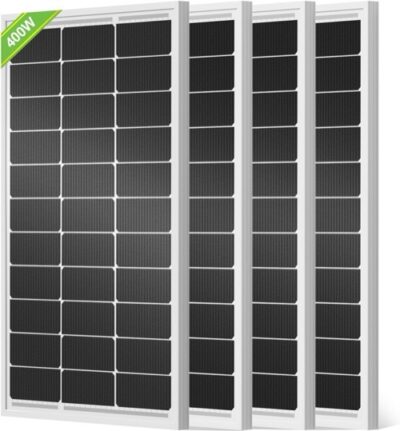
Frequently Asked Questions
How do I calculate what size portable power station I need?
Add device watts multiplied by quantity and hours across the required period. Divide load watt-hours by the assumed efficiency and by the fraction of battery available after reserve. For example, 500Wh divided by 0.85 and 0.80 is about 735Wh nominal, before any additional contingency. Check continuous output and startup separately.
What size portable power station do I need for camping?
For light camping with phones, laptops, lights, and a small fan, a 300Wh to 700Wh power station may be enough. For a camping fridge, CPAP machine, Starlink, or several days off-grid, a 1000Wh to 2000Wh power station is usually more practical.
What size portable power station do I need for a refrigerator?
Many refrigerator backup setups need a mid-size or large power station, often around 1500Wh to 3000Wh depending on how long you want backup power. You also need to check the refrigerator’s startup surge, because compressor appliances can briefly require much more power when they turn on.
What size portable power station do I need for a CPAP machine?
The right size depends on your CPAP model, pressure settings, humidifier use, heated tube, and how many nights of backup you need. Many CPAP users should start by estimating overnight watt-hours and then choosing a power station with extra reserve. Always check your CPAP manufacturer’s power guidance before relying on a backup setup.
Is a 1000Wh power station enough?
A 1000Wh power station is enough for many camping, router backup, laptop, light, fan, and short CPAP use cases. It can also help with short refrigerator backup, depending on the fridge and runtime goal. It is usually not enough for long outages, heavy cooking appliances, heaters, or whole-home backup.
What is the difference between watts and watt-hours?
Watts measure how much power a device uses at one time. Watt-hours measure how much energy a battery can store. A 100W device running for 5 hours uses about 500Wh. This is why both output wattage and battery capacity matter when choosing a portable power station.
Why does the calculator include battery reserve?
Battery reserve makes the recommendation more realistic. Portable power stations lose some energy through inverter conversion, battery protection, wiring, and normal operation. Keeping a reserve also helps avoid planning around a completely drained battery.