Solar Power Picks logo with sun, solar panel, and green energy icon

  • Home
  • Reviews
  • Best
    • Best portable power stations
  • Guides
    • Portable Power Stations Guides
  • Comparisons
    • Portable Power Stations Comparisons
  • Calculator

Anker F3800 vs F3800 Plus: The Real Difference Before You Buy

COMPARED PRODUCTS

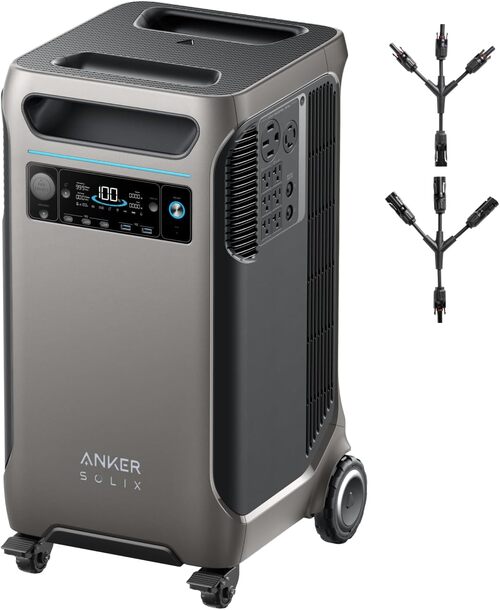
Anker SOLIX F3800 Review: Big 240V Backup Power Without the Generator Noise

Best Standard 240V Backup Pick

Anker SOLIX F3800 Review: Big 240V Backup Power Without the Generator Noise

Check price at Amazon Jump to details
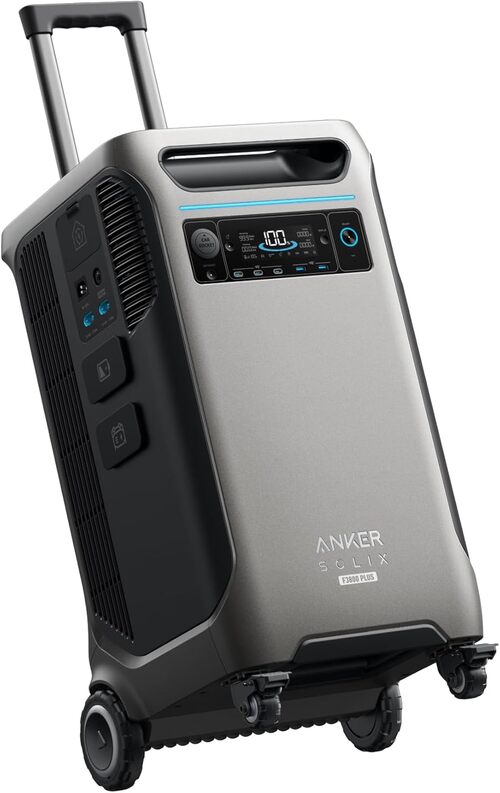
Anker SOLIX F3800 Plus Review: Big Battery Backup for Homes, RVs, and Cabins

Best Upgraded 240V Backup Pick

Anker SOLIX F3800 Plus Review: Big Battery Backup for Homes, RVs, and Cabins

Check price at Amazon Jump to details

The Anker F3800 vs F3800 Plus comparison looks simple at first. Both have a 3,840Wh LiFePO4 battery, both deliver 6,000W AC output, and both are built for serious 120V / 240V backup. Start with our Anker SOLIX F3800 base model review.

But that’s exactly why the choice can feel annoying. Planning solar recharge? Pair this decision with our solar-panel-ready power station guide. If the base numbers are so close, what are you actually paying for with the F3800 Plus?

The answer comes down to system design. The standard F3800 is the cleaner pick for essential backup and RV-style power. The Plus adds features detailed in our Anker SOLIX F3800 Plus cabin review. The F3800 Plus is better if you care about higher solar input, generator-supported charging, and building a larger backup setup over time. If you’re still deciding what size class you need, start with our portable power stations hub first.

Start Here: The Real Difference

QuestionBetter PickWhy It Matters
Do you want the simpler 240V backup option?Anker SOLIX F3800Same base battery and same 6,000W output
Do you want more solar input?Anker SOLIX F3800 Plus3,200W solar beats 2,400W
Do you want RV and cabin flexibility?Anker SOLIX F3800 PlusStronger outlet and charging story
Do you want the lowest sensible cost?Anker SOLIX F3800The Plus only pays off if you use its extras
Do you need easy portability?NeitherBoth are over 130 lb

Here’s the practical answer: buy the Anker SOLIX F3800 if you mostly want essential home backup, garage backup, or RV shore-style power. Buy the Anker SOLIX F3800 Plus if you’re building a larger solar, cabin, RV, or outage-prep system.

What Changes on the Plus Model?

The F3800 Plus does not radically change the core power station formula. You still get the same listed battery capacity and the same listed inverter output.

The upgrade is more about how the system can be used.

The Plus model gives you:

  • Higher solar input
  • More outlet flexibility
  • Better fit for RV and cabin setups
  • Larger two-unit expansion path
  • 240V generator support through a 6,000W bypass setup

The standard F3800 still makes sense because the core performance is already strong. If you don’t need the Plus model’s system-level upgrades, the cheaper standard unit may be easier to justify.

Choose by Setup, Not Just Specs

Buyer TypeBetter PickWhy
Essential home backup buyerF3800Same battery and output may be enough
RV ownerF3800 PlusMore RV-friendly outlet story
Cabin ownerF3800 PlusBetter solar and generator support
Short outage prepF3800Lower-cost route if expansion isn’t needed
Long outage prepF3800 PlusHigher solar input matters more
Well pump / sump pump backupTieSame listed output and surge rating
Solar-heavy setupF3800 Plus3,200W input gives more recovery room
Buyer worried about weightTieBoth are heavy rollable systems

For most backup buyers, the decision is not about whether the Plus is “more powerful.” It’s about whether your setup benefits from the added solar, outlet, and expansion flexibility.

Runtime Reality: Same Battery, Similar Limits

Both models start with a 3,840Wh battery, so runtime is more similar than the product names suggest.

Using a practical AC estimate, the standard F3800 gives roughly 2,868Wh after inverter losses and a small reserve. The F3800 Plus lands around 2,938Wh using a slightly higher efficiency estimate. In real use, that difference is not huge.

What matters more is load size. A fridge cycling on and off is very different from a heater pulling 1,500W nonstop.

LoadTypical DrawF3800 EstimateF3800 Plus Estimate
Wi-Fi router10-20W~143-286 hours~147-294 hours
LED lights20W~143 hours~147 hours
CPAP without humidifier40-60W~48-72 hours~49-73 hours
Electric cooler40-80W average~36-72 hours~37-73 hours
Full-size fridge100-200W average~14-29 hours~15-29 hours
Microwave1,000-1,500WShort bursts onlyShort bursts only
Space heater1,500WAbout 2 hoursAbout 2 hours

These are estimates, not measured test results. Compressor appliances can swing widely because they cycle.

Where the 6,000W Inverter Helps

Both units list 6,000W continuous AC output and 10,200W starting wattage. That is the big reason either model makes sense for home backup and RV power.

That output gives you room for:

  • Refrigerators and freezers
  • Well pumps and sump pumps
  • RV power setups
  • Microwaves and coffee makers in short bursts
  • Shop tools
  • Some 240V appliances
  • Transfer-switch backup loads

However, output is not the same thing as runtime. A 6,000W inverter can run serious gear, but the 3,840Wh battery can still drain fast.

So don’t think of either model as a normal whole-home battery unless you add expansion packs. Think of them as high-output backup stations for priority loads.

Power output result: tie. The F3800 Plus does not win on inverter output because both models list the same 6,000W continuous rating.

Charging and Solar: The Plus Pulls Ahead

Charging is where the two models separate more clearly.

The standard Anker SOLIX F3800 has the clearer wall-charging story in the supplied data. Owners report AC charging around 1,800W, with full recharges often landing around 2-3 hours when the battery is warm and charge settings allow it.

The F3800 Plus has less clearly stated standard AC wall input in the provided data. Instead, its stronger charging story is built around solar and generator-supported use.

The solar difference is important:

Charging PathF3800F3800 Plus
Max solar input2,400W3,200W
Standard AC inputAbout 1,800W reportedNot clearly specified
Generator supportNot emphasized240V generator support via 6,000W bypass listed
Best charging use caseHome pre-charge and solar backupSolar-heavy and generator-supported backup

If you only charge from the wall before storms, the F3800 is probably fine. If you want to recover energy during long outages, the Plus has the stronger setup.

Before buying panels, confirm voltage, amperage, connector type, and adapter compatibility. Solar input numbers only help if your panels actually match the power station’s limits.

Moving These Around Is the Same Problem

The F3800 weighs 132.28 lb. The F3800 Plus weighs 135.58 lb.

That 3.3 lb difference does not matter in real life. Both are rollable backup systems, not normal portable camping batteries.

Use this weight context:

Weight ClassWhat It Feels Like
Under 10 lbGrab-and-go power
10-30 lbEasy car camping and room-to-room use
30-50 lbMovable, but not fun
50+ lbSemi-portable backup power
100+ lbWheels matter more than handles

Both Anker units belong in the last category. They can move across smooth floors, but stairs, gravel, truck beds, and returns are a different story.

Plan the storage location before delivery. A garage, utility room, RV bay, cabin corner, or backup panel area makes more sense than a closet upstairs.

Portability result: tie, with a tiny edge to the standard F3800. In practice, both need the same handling plan.

Battery Chemistry: Good News for Both

Both power stations use LiFePO4, also called LFP. That’s the right chemistry for this kind of large backup battery.

Battery TypeWhy It MattersTradeoff
LiFePO4 / LFPBetter for frequent cycling and long-term ownershipHeavier
NMC / lithium-ionOften lighter in small unitsUsually shorter cycle life

The supplied data does not list a specific cycle-life number for either model. Both are marketed around a 10-year lifespan, and both list a 5-year warranty.

That said, battery care still matters. Avoid storing either unit at 0% for long periods. For normal storage, keeping the battery around 50-80% is usually a safer habit, then topping off before storms.

Cold weather is also worth watching. Owner feedback around the F3800 points to charging slowdowns in cold conditions. Unless Anker confirms different behavior for the Plus, treat both as batteries that prefer moderate temperatures.

App, Outlets, and Day-to-Day Use

The app experience is similar because both use the Anker app with Wi-Fi and Bluetooth. You can monitor power, adjust charge settings, update firmware, and check system behavior remotely.

That’s useful when the unit sits in a garage, RV bay, or utility corner.

The bigger difference is outlet layout. The standard F3800 gives you strong high-power support with NEMA 14-50 and L14-30 use cases. The F3800 Plus lists 15 total outlets and includes RV-friendly support such as L14-30 and TT-30P.

That gives the Plus a more flexible plug-in story, especially for RV owners.

However, the supplied data does not fully specify USB-C, USB-A, DC, or car-socket details for either model. So don’t buy either unit based on phone-charging ports. Buy them for high-output AC, 240V use, solar, and backup integration.

Value: Don’t Pay for Upgrades You Won’t Use

The F3800 Plus is only the better value if you’ll use what makes it different.

If your plan is simple — charge from the wall, run a fridge, power a router, keep lights on, and maybe feed a transfer switch — the standard F3800 may be the smarter buy.

If your plan includes solar recovery, RV use, cabin loads, generator charging, and long-term expansion, the Plus starts to make more sense.

Value FactorF3800F3800 Plus
Lower likely upfront costBetterWorse
Same base capacityYesYes
Same inverter ratingYesYes
Better solar ceilingNoYes
Better expansion pathGoodBetter
Better RV flexibilityGoodBetter
Best for simple backupYesNot necessary
Best for larger systemsLimitedYes

Current prices change too often to lock in a fair $/Wh number here. Before publishing, divide the live price by 3,840Wh, then compare the result against features, not just capacity.

Best Standard 240V Backup Pick

Anker SOLIX F3800 Review: Big 240V Backup Power Without the Generator Noise

Anker SOLIX F3800 Review: Big 240V Backup Power Without the Generator Noise

Get it now:

Check latest price

What to know

  • 3840Wh LiFePO4 battery supports refrigerators, routers, medical devices, and short outages
  • 6000W continuous 120V/240V output with 10200W surge for pumps and RV loads
  • Up to 2400W solar input, but voltage and amperage limits need planning
  • App controls charge speed, output settings, monitoring, and firmware updates
  • 132.28 lb body rolls well on flat floors but needs help for lifting

Best if

  • You want standard 240V backup for essentials, RV power, or a transfer-switch setup
  • You value clear wall charging up to about 1800W from a household circuit
  • You’re powering fridges, routers, lights, well pumps, or short high-wattage loads

Skip if

  • You need the higher solar input and generator-focused flexibility of the Plus
  • You expect automatic 240V pass-through while charging from standard AC
  • You need multi-day whole-home runtime from the base battery alone

The Anker SOLIX F3800 is the better fit if you want large 120V / 240V backup without paying extra for Plus features you may not use. It has the same 3,840Wh base battery, same 6,000W continuous output, and same 10,200W starting-wattage rating as the Plus. The main tradeoff is solar input. At 2,400W max, it’s still strong, but it gives up headroom to the F3800 Plus.

Capacity3840Wh (expandable up to 26.9kWh with extra batteries)
AC Output6000W continuous, 10200W surge (pure sine reported by owners)
Solar Input2400W max via solar input; connector not specified in provided data
AC Charging~2–3 hours full when warm, up to about 1800W
Weight132.28 lb (60 kg)
Best EdgeLighter standard pick with clearer wall-charging behavior
Main TradeoffLower solar ceiling than the Plus — less flexible for long outages
Best Upgraded 240V Backup Pick

Anker SOLIX F3800 Plus Review: Big Battery Backup for Homes, RVs, and Cabins

Anker SOLIX F3800 Plus Review: Big Battery Backup for Homes, RVs, and Cabins

Get it now:

Check latest price

What to know

  • 3840Wh LiFePO4 battery supports home essentials, RVs, cabins, and workshops
  • 6000W continuous output handles serious 120V/240V appliance and pump loads
  • 3200W solar input gives it stronger recovery potential than the F3800
  • 240V generator bypass support helps reduce gas-generator runtime during outages
  • 135.58 lb design is rollable, but stairs and vehicle loading are tough

Best if

  • You’re building a higher-input backup setup with solar, generator charging, or expansion
  • You’re powering an RV, cabin, shed, workshop, or essential home circuits
  • You value faster solar recovery for longer off-grid use

Skip if

  • You just need simpler standard 240V backup for occasional short outages
  • You want a lightweight unit one person can lift into a vehicle
  • You need fully specified standard AC wall-charging details before buying

The Anker SOLIX F3800 Plus is the better choice if you’re treating this as the start of a larger power system. The battery and inverter match the standard model, but the Plus adds stronger solar input, broader outlet flexibility, and a bigger expansion story. It’s especially appealing for RV owners, cabin users, and buyers who want more ways to recharge during long outages.

Capacity3840Wh (expandable to 26.9kWh with one unit, or 53kWh with two units)
AC Output6000W continuous, 10200W surge (pure sine not explicitly listed in provided specs)
Solar Input3200W max via solar input; connector not specified in provided data
AC ChargingStandard AC time not specified; supports 240V generator use via 6000W bypass
Weight135.58 lb (61.5 kg)
Best EdgeHigher solar ceiling plus stronger generator-support story
Main TradeoffHeavier unit with less clearly defined standard AC charging specs

Product Comparison

Feature Anker SOLIX F3800 Review: Big 240V Backup Power Without the Generator Noise Anker SOLIX F3800 Plus Review: Big Battery Backup for Homes, RVs, and Cabins
Product Image
Anker SOLIX F3800 Review: Big 240V Backup Power Without the Generator Noise
Anker SOLIX F3800 Plus Review: Big Battery Backup for Homes, RVs, and Cabins
Price $2599 $1799 $2699 $2294.99
Rating
4.1 / 5
4.3 / 5
Category Portable Power Stations Portable Power Stations
Brand Anker Anker
Model / SKU Anker SOLIX F3800 / A1790 (ASIN: B0C5C9HMQ2) SOLIX F3800 Plus / A1790 (ASIN: B0DTSSCHG6)
Battery capacity 3840 Wh 3840 Wh
Battery chemistry LiFePO4 (LFP) LiFePO4 (LFP)
Cycle life Not specified (marketed for a 10-year lifespan) Not specified (manufacturer claims 10+ year lifespan)
Expandable battery Yes — supports up to 6 battery packs for 26.9 kWh; two F3800 units with 12 battery packs are marketed for larger backup setups Yes — supports up to 6 extra batteries with one unit for 26.9 kWh, or up to 12 extra batteries with two F3800 Plus units for 53 kWh
AC output 6000 W continuous (120V/240V output; pure-sine quality mentioned by owners) 6000 W continuous (120V / 240V dual-voltage output; pure sine not explicitly stated in provided specs)
Surge output 10200 W peak / starting wattage 10200 W peak / starting wattage
AC outlets 6 × 120V outlets plus NEMA 14-50 and L14-30 high-power outputs (from customer-reported use and product bullets) 15 total outlets claimed (includes NEMA L14-30 and NEMA TT-30P; exact AC outlet breakdown not fully specified)
USB-C ports Not specified (USB-C fast-charging ports mentioned by owners) Not specified (reviews mention front USB ports, but exact count and wattage are not listed)
USB-A ports Not specified Not specified
12V car socket Not specified Not specified (one bundle review mentions a 12V DC lighter adapter cable, but the built-in socket is not confirmed in the provided specs)
Max solar input 2400 W (MPPT; 11-60V input range and 25A limits reported by owners) 3200 W (solar input; connector details not specified)
Max AC input 1800 W (customer-reported AC charging rate) Not specified (240V gas generator support via 6000 W bypass is listed)
AC recharge time About 2-3 hours at high AC charge rate when warm; slower when charge rate is limited or battery is cold Not specified (owners report very fast 240V generator charging in some setups)
Solar recharge time As fast as a few hours with a high-output solar setup in strong sun; much longer with 400W portable panels or poor panel matching Approximately 1.5-2 hours with full 3200W solar in ideal sun (real-world time depends on panels, weather, angle, and losses)
UPS / EPS support Limited — some 120V UPS-style use reported, but 240V / high-power pass-through behavior has important limitations Limited (owners use it for backup and UPS-like roles, but some pass-through and charge-while-supplying setups have caveats)
App support Yes — Anker app with Wi-Fi + Bluetooth Yes — Anker app with Wi-Fi and Bluetooth
Built-in light Yes — front light mentioned by owners Not specified
Weight 132.28 lb 135.58 lb (61.5 kg)
Best for Home outage essentials, RV power, refrigerator backup, well pumps, sump pumps, off-grid shops, cabins, power tools, and short-term high-wattage backup Home backup, RV power, cabins, sheds, workshops, refrigerator backup, well pumps, and reducing gas-generator run time during outages
Buy Now View Deal View Deal

Final Verdict

Choose the Anker SOLIX F3800 if you want serious 240V backup power but don’t need the most expandable setup. It’s the cleaner pick for shorter outages, essential home circuits, RV power, fridge backup, routers, lights, pumps, and buyers who want to keep the system simpler.

Choose the Anker SOLIX F3800 Plus if you’re planning around longer outages, bigger solar input, RV use, cabin power, generator-supported charging, or future expansion. The 3,200W solar input is the biggest practical reason to step up because it can help you recover energy faster when the grid stays down.

For most buyers comparing Anker F3800 vs F3800 Plus, I’d pick the F3800 Plus if the price gap is reasonable. The base battery is the same, but solar input and expansion flexibility age better. However, if you’re buying for essential backup and the standard F3800 is meaningfully cheaper, it’s the smarter value play.

For other brand-level matchups, see our Anker vs EcoFlow and Anker vs Jackery comparisons.

Frequently Asked Questions

Is the Anker F3800 Plus worth it over the F3800?

Yes, if you’ll use the upgrades. The Anker F3800 Plus has the same 3,840Wh battery and 6,000W output as the standard F3800, but it adds higher 3,200W solar input, stronger expansion potential, and a better fit for RV, cabin, and longer-outage setups. If you only need essential backup for a fridge, router, lights, and a few circuits, the standard F3800 may be the better value.

What is the biggest difference between the Anker F3800 and F3800 Plus?

The biggest practical difference is solar and system flexibility. The Anker F3800 supports up to 2,400W solar input, while the F3800 Plus supports up to 3,200W. The Plus also has a stronger expansion story and 240V generator support via a 6,000W bypass setup. The battery capacity and continuous AC output are the same, so runtime from the base unit is very similar.

Can either Anker F3800 model run a refrigerator?

Yes. Both the Anker F3800 and F3800 Plus list 6,000W continuous output and 10,200W starting wattage, which is far above what most refrigerators need. Runtime depends on compressor cycling, temperature, and other loads. Based on practical AC energy estimates, either model may run a full-size fridge for roughly 14-29 hours, but real results vary.

Which one is better for RV use?

The Anker F3800 Plus is the better RV pick for most buyers because it lists 15 total outlets and includes RV-friendly support such as L14-30 and TT-30P. The standard F3800 still works well for RV shore-style power and includes high-power output options, but the Plus gives you more flexibility if you’re powering a larger rig or adding solar.

Can the Anker F3800 or F3800 Plus power a whole house?

Not from the base battery alone. Both models have enough output for serious appliances and essential circuits, but the 3,840Wh base battery drains quickly under heavy home loads. They’re better treated as essential backup systems unless you add expansion batteries. For whole-home-style backup, you’ll need careful load planning, transfer hardware, and likely extra battery capacity.

Which one is better for solar charging?

The Anker F3800 Plus is better for solar charging because it supports up to 3,200W solar input. The standard F3800 supports up to 2,400W. That extra solar headroom matters during long outages, cabin use, and off-grid RV setups. Before buying panels, confirm voltage range, amperage, wiring layout, and connector compatibility.

Are these better than a gas generator?

They’re better for quiet indoor backup, but they don’t fully replace a gas generator for every situation. The Anker F3800 and F3800 Plus produce no exhaust, don’t need fuel, and can run indoors when used properly. A gas generator still wins for raw multi-day runtime if you can refuel it. For many homes, the best setup may combine battery backup with solar or generator charging.

Which Anker F3800 model is the better value?

The standard Anker F3800 is probably the better value if it costs meaningfully less and you only need essential backup. The F3800 Plus becomes the better long-term value if you’ll use its 3,200W solar input, larger expansion path, RV-friendly outlet setup, or generator-supported charging. Don’t compare price by capacity alone because both have the same 3,840Wh base battery.

×

About Solar Power Picks

Portable Solar Power, Backup Power, and Off-Grid Gear Guides

Your trusted source for honest, in-depth product reviews and comparisons.

Quick Links

  • Best Picks
  • Reviews
  • Guides
  • Comparisons
  • Calculator
  • Privacy policy
  • Favorites

Categories

  • Portable Power Stations

© 2026 Solar Power Picks. All Rights Reserved.

We may earn a commission when you purchase through links on our site. Learn more